Do you want to install spray foam in your home? But afraid to do so because one question keeps haunting you: whether it is safe or not? Right? The answer is simple. If installed by professional crews and allowed to properly cure, it is a very safe option. Otherwise, it may result in serious health issues if mixed or applied the wrong way.
In this blog, we will shed light on the facts and myths associated with spray foam insulation. After reading this blog, all your doubts will be cleared, and you will get a clear-cut answer to whether to install it or not. So, let’s begin now!
Key Takeaways: Spray Foam Safety at a Glance
- Is Spray Foam Insulation Safe? Yes. Once fully cured, spray foam is inert, non-toxic, and creates an airtight seal that improves energy efficiency and indoor air quality by preventing mold and draft intrusion.
- Primary Health Risks: Risks occur only during application when raw isocyanates (MDI) and volatile organic compounds (VOCs) are sprayed. Inhalation or contact can cause lung, eye, and skin irritation or trigger asthma.
- The Re-Entry Window: Homeowners, children, and pets must vacate the property during installation and remain out for 24 to 72 hours while the foam cures and off-gassing completes.
- Why Professional Installation Matters: Over 95% of safety issues, such as lingering chemical odors or unreacted spots, stem from improper chemical mixing ratios or lack of active job-site ventilation.
- Fire & Code Safety: Cured spray foam requires an approved thermal barrier (such as 1/2-inch drywall) under local building codes to ensure fire resistance.
What is spray foam insulation?
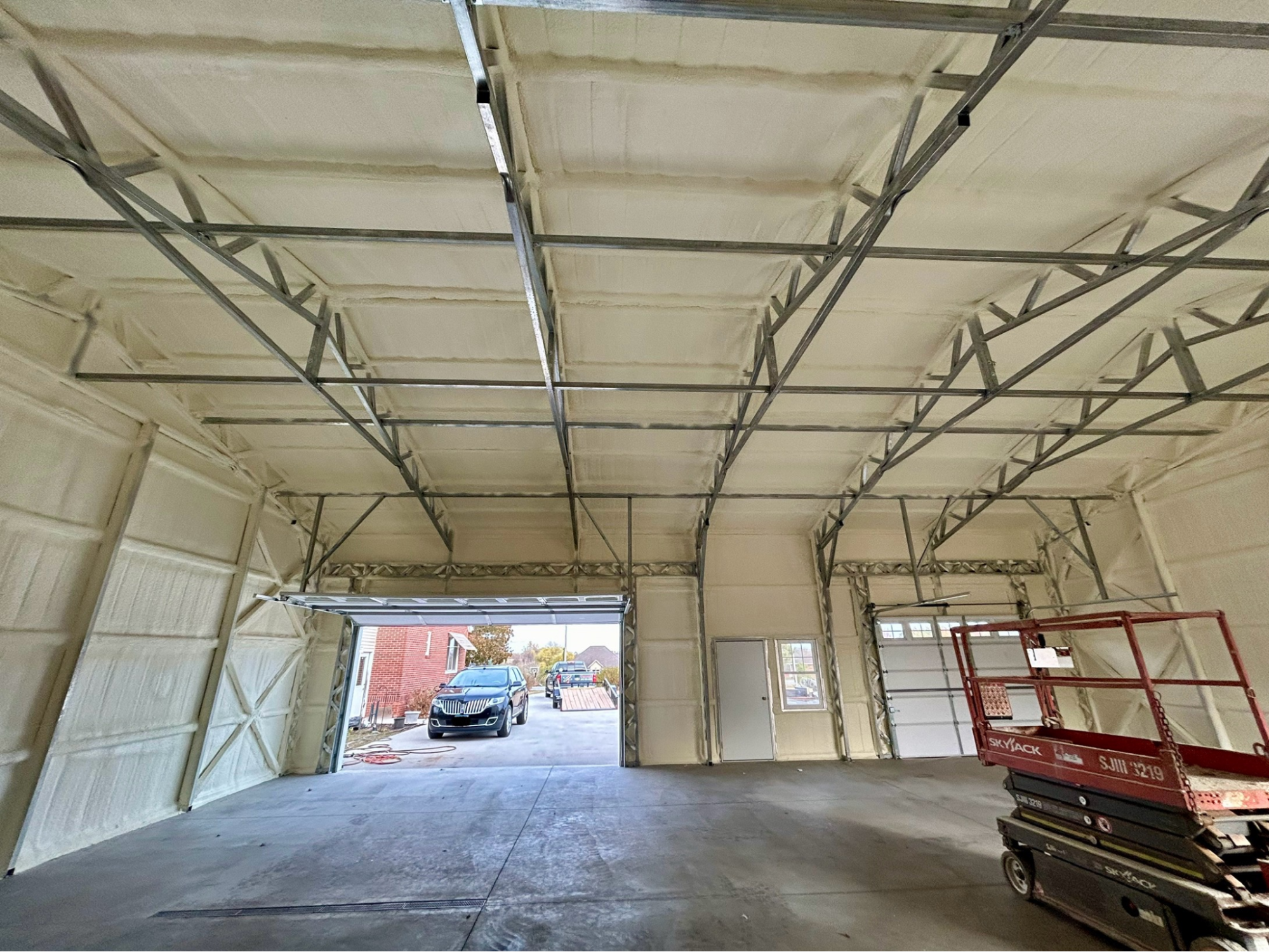
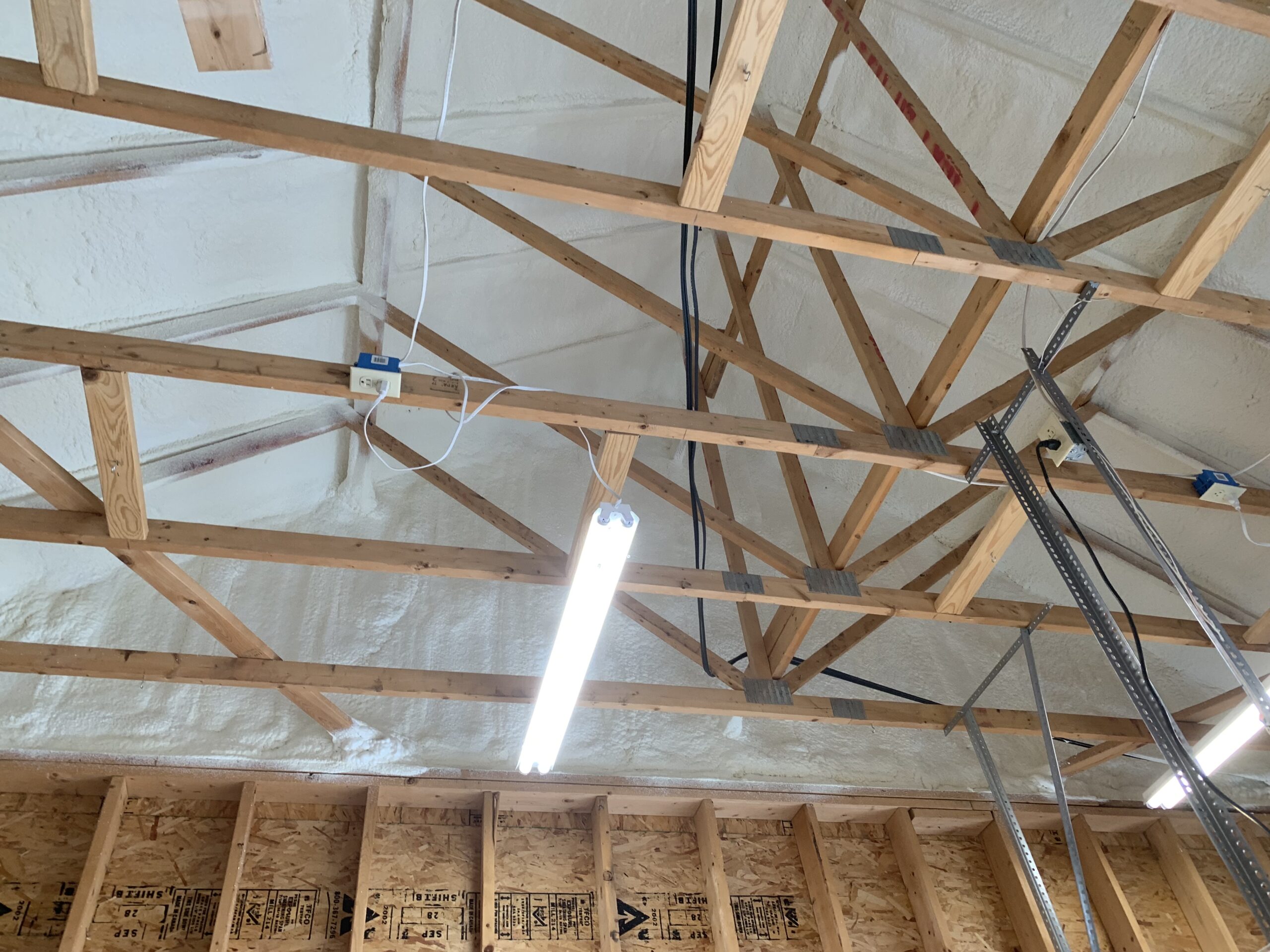
Spray foam insulation is a two-part product. Part A is MDI, short for methylene diphenyl diisocyanate (an active isocyanate). Part B contains amines, catalysts, fire retardants, and blowing agents that help the chemical reaction. The two parts meet at the spray gun tip under high heat and pressure, expand fast, and fill cracks in wood, brick, or metal.
As the foam sets, it hardens and makes an airtight seal. That seal blocks drafts and helps control moisture inside wall cavities, attics, and crawl spaces. You get fewer cold spots and better energy savings.
Types of Spray Foam Insulation
There are two main types of spray foam insulation used in modern residential and commercial projects:
- Open-Cell Spray Foam Insulation: Open-cell foam is softer, lighter, and highly flexible. It excels at sound absorption and air sealing inside interior walls, attics, and roof decks.
- Closed-Cell Spray Foam Insulation: Closed-cell foam is denser, provides structural rigidity, and acts as a bulk water barrier. It delivers a higher R-value per inch (typically R-6 to R-7 per inch) for maximum thermal resistance.
Cost, Composition, and Longevity
Cost varies by type and location. Many homes see prices from about $1.50 to $5 per square foot, per inch of thickness.
Most ingredients come from petroleum. A small share, often 2 to 4%, can be plant-based polyols such as soy. High-performance closed-cell formulations utilize modern blowing agents (such as hydrofluoroolefins or HFOs) designed to maintain low global warming potential.
Foam can last many years. Still, it may shrink or pull away if applied to a surface that moves or was not prepped properly. That can bring back air leaks. Because foam bonds tightly to building materials, recycling those parts later is difficult.
Want a quick visual overview? Watch this short explainer: Spray Foam Basics Video.
Myths About Spray Foam Insulation
You have likely heard some wild claims about it online. Some stories spread faster than a cat with its tail on fire. Let us clear up the biggest myths so you can decide with confidence.
Myth 1: Spray foam insulation is toxic after it cures
Once spray foam fully cures, it stops releasing strong fumes. The United States Environmental Protection Agency (EPA) notes that the main concern is off-gassing during the first 24 to 72 hours of chemical reaction. After that time period, properly cured foam becomes completely inert, which means it does not react or give off vapors in daily living spaces.
Trouble pops up when there are mixing errors or when people disturb uncured material. Bad mixing or a cold surface can leave small uncured spots. That can cause lingering odors or chemical irritation. Cutting or sanding cured foam without protection can also release dust. Those particles may bother people with allergies or asthma.
Use certified installers who follow safety steps, like powered respirators and proper ventilation. Then wait the full re-entry time they set. Your patience will pay off with healthy indoor air.
| Timeline Phase | Chemical State | Safety Status | Occupant Action |
|---|---|---|---|
| 0–24 Hours | Active Exothermic Chemical Reaction | High Hazard / Off-Gassing Active |
VACATE PROPERTY. Active ventilation. |
| 24–72 Hours | Secondary Curing & Stabilization | Low / Residual Fumes | Re-entry only after contractor clearance. |
| 72+ Hours | Inert Polyurethane Matrix | Non-Toxic / Stable Barrier | Safe for full normal occupancy. |
Myth 2: Spray foam insulation causes cancer
This myth scares many homeowners. But the fact is that the cured foam in finished spaces is not known to cause cancer. And it is based on current guidance from major health and environmental agencies.
During installation, though, diisocyanates such as MDI can irritate lungs and skin. They can also cause asthma in people who become sensitized. Health agencies, including the EPA, OSHA, and NIOSH (National Institute for Occupational Safety and Health), warn about exposure during application work. During this time period, the risk is very high.
Good controls reduce this risk but do not erase it. Hire trained pros, leave the space during application, and follow the cure time. There have been complaints and lawsuits tied to poor installs. Most cases point to bad mixing, thin coverage, or poor ventilation. Quality control matters a lot with spray foam.
Myth 3: Spray foam insulation is flammable
Foam contains organic chemicals, so it can burn if exposed to high heat or an open flame. However, building codes require fire retardants to be formulated directly into the raw chemistry.
Building codes require flame retardants and fire barriers in most areas. During installation, the liquid mix is also a fire risk until it cures. Many homes need a thermal barrier, like 1/2-inch drywall, over interior foam in living spaces. In attics or crawl spaces, you may need an ignition barrier coating. Ask your contractor which code rules apply to your home.
Keep open flames and sparks away from unfinished foam during and immediately after spraying. After installation, keep heat sources away from exposed foam. The risk is manageable with proper barriers and common sense.
Facts About Spray Foam Insulation
Spray foam can keep your home cozy, and it also helps control moisture when used in the right places.
| Common Misconception | Verified Industry Fact |
|---|---|
| Toxic forever in living areas | Inert and stable once the 24–72 hour cure window finishes |
| Known to cause cancer | Irritant/sensitizer during spray phase only, non-carcinogenic |
| Extreme indoor fire hazard | Fire-retarded by code; protected by thermal/ignition barriers |
| Easy weekend DIY project | Requires specialized ratio pumps, protective gear, and skills |
Fact 1: It is safe once fully cured.
After the cure window, spray foam becomes stable. The EPA notes it is generally safe and effective once installed correctly. Odors fade as off-gassing stops in 24 to 72 hours.
Think of cured foam as a solid plastic barrier. It does not release vapors in normal use. Troubleshooting only arises when unreacted ingredients remain due to improper proportioning settings on equipment. Hire crews who use the right equipment and follow the product data sheet. Then give the space time to air out.
Fact 2: Proper installation ensures minimal risks.
Quality installation is the key. Skilled crews measure temperatures, check moisture on wood or concrete substrates, and tune the spray pattern. They wear full protective gear, including sealed suits, gloves, and supplied-air respirators to avoid fumes and skin contact.
Low bids can be a red flag for rushed prep or thin coverage. Families with kids should plan to be away during and after installation until clearance is given. Good contractors ventilate well, monitor the space, and document cure times.
- Verify certifications and references.
- Ask about re-entry and re-occupancy times in writing.
- Request the product’s safety data sheet for your records.
Fact 3: Off-gassing occurs only during the curing process.
Off-gassing starts when foam is applied and continues while it cures. Temperature, humidity, and airflow directly affect how long that chemical reaction takes. Most jobs need 24 to 72 hours.
Stay out of the treated areas until the contractor clears them. If odors last beyond the window, call the installer. Strong airflow helps. Box fans in window openings can move lingering chemical fumes out faster.
If a mix goes wrong or foam is applied too thick in a single pass (exceeding recommended lift limits), curing can slow down. That can extend odors and delay move-in. Good crews prevent that with careful layering technique.
Potential Risks of Spray Foam Insulation
Most health risks show up during application, not long after. Knowing these helps you plan and protect your family.
| Identified Risk | Required Control Measure |
|---|---|
| MDI Isocyanate Inhalation | Fresh-air-supplied respirator |
| Skin/Eye Contact with Part A/B | Impermeable chemical suits/gloves |
| Off-gassing Airborne VOCs | Continuous mechanical exhaust |
| Uncured Spot Off-gassing | Ratio monitoring on equipment |
Exposure to isocyanates during installation
MDI is the common isocyanate in Part A of spray foam. It can irritate eyes, skin, and lungs. It can also lead to occupational asthma in sensitized individuals. Even short exposure to concentrated chemical mist can be harmful.
Installers lower risk with sealed suits, gloves, and supplied-air respirators. The biggest dangers arise with sloppy mixing or spraying when surfaces are too cold. That can leave unreacted chemicals around longer.
Homeowners should not be on site during work. Clear pets and personal items out of the area first.
Respiratory and skin irritation
While foam cures, fumes can bother the nose, throat, and eyes. Some people get rashes or coughing spells from contact with uncured foam. Amines and catalysts in Part B can also irritate.
Good ventilation helps protect anyone nearby. Pros should control the work zone and ventilate directly to the outdoors with high-cfm exhaust fans. If irritation occurs, leave the area immediately and get fresh air. Seek medical care if respiratory symptoms persist.
Safety Measures for Spray Foam Insulation
Strong safety steps make a big difference. These reduce exposure and help ensure a reliable, airtight install.
Use of personal protective equipment (PPE)
Full-body protection is standard for professional installers. That includes chemical-resistant suits, gloves, eye protection, and a fresh-air-supplied respirator designed to block isocyanates. This gear blocks skin contact and inhalation during chemical mixing and spraying.
Safety programs often include thick manuals for a reason. Training and safety checklists keep everyone on track. If you see a crew working without PPE, stop the job and ask questions immediately.
- Ask which respirator they use and how it is maintained.
- Confirm disposable suits and gloves are changed as needed.
- Request a clean work zone and masking of nearby items.
| Personal Protective Equipment (PPE) | Safety Function |
|---|---|
| Full Hood Air-Supplied Respirator | Prevents Isocyanate Intake |
| Chemical Protective Suit | Prevents Skin Absorption |
| Heavy-Duty Nitrile / Neoprene Gloves | Protects Hands & Wrists |
| Protective Boot Covers | Prevents Overspray Tracking |
Importance of professional installation
Spray foam looks simple in short DIY videos, but real installs are detail-heavy. Surface temperature, ambient humidity, hose pressure, and lift depth all matter to prevent heat buildup or improper chemical ratios.
Certified installers follow manufacturer rules and local building codes. They also test small areas first, then build up in layers. DIY kits often miss these critical controls and raise the risk of lingering odors, voids, or thermal bypasses.
Ask about training, years in business, and insurance coverage. A careful pro saves money and stress in the long run.
Adequate ventilation during and after application
Ventilation is the ultimate partner to good PPE. Run exhaust fans that vent outdoors continuously during work and throughout the cure phase. Open windows if weather allows. Many jobs use temporary negative-pressure fans to push fumes out fast.
The EPA notes indoor air can be more polluted than outdoor air in tight homes, especially after new insulation work. Heat recovery ventilators (HRVs) or energy recovery ventilators (ERVs) can help exchange indoor air while preserving home energy efficiency.
Plan to stay elsewhere until your contractor says it is safe to return. Your nose is a good guide. If strong odors remain, wait longer and keep the air moving.
Conclusion
Spray foam insulation can seal leaks and lower energy costs. It can also manage moisture in many wall and roof assemblies better than fibrous batts like fiberglass or cellulose. So, is it safe? Yes, when it is installed by trained pros, ventilated well, and allowed to cure fully. Make sure that if you have any health conditions like asthma, consult your doctor before its installation.
If you want to make your home cozier this year, Precision Insulation and Coatings can help you. Contact us to get a free estimate now!
Frequently Asked Questions (FAQs)
Q 1. Is spray foam insulation safe for homes with kids and pets?
Yes, after it cures completely, spray foam insulation is safe for families, kids, and pets. During installation and the active curing window (24 to 72 hours), keep everyone away from the work zones. Re-enter only when your contractor provides formal clearance.
Q 2. Does spray foam really cause health problems, or is that a myth?
Most health issues come from bad mixing ratios, poor ventilation, or rushing the cure time. When trained crews install it correctly, the health risks drop fast. If strong chemical odors or fishy smells remain days after application, contact your installer right away to evaluate the job.
Q 3. Will spray foam trap moisture inside my walls?
Not if the design and installation are correct. Closed-cell foam blocks bulk water and acts as a vapor barrier, yet the overall wall assembly can still manage moisture when detailed right. A skilled pro will choose the right type (open-cell vs. closed-cell) and thickness for your climate zone.
Q 4. Can I install spray foam myself to save money?
DIY spray foam kits may look easy but often lead to problems, including lingering odors, uneven expansion, and unreacted chemical voids. Pros know how much to apply, how fast to build lifts, and how to set up negative-pressure air ventilation systems. Mistakes can cost far more to strip out than hiring help in the first place.