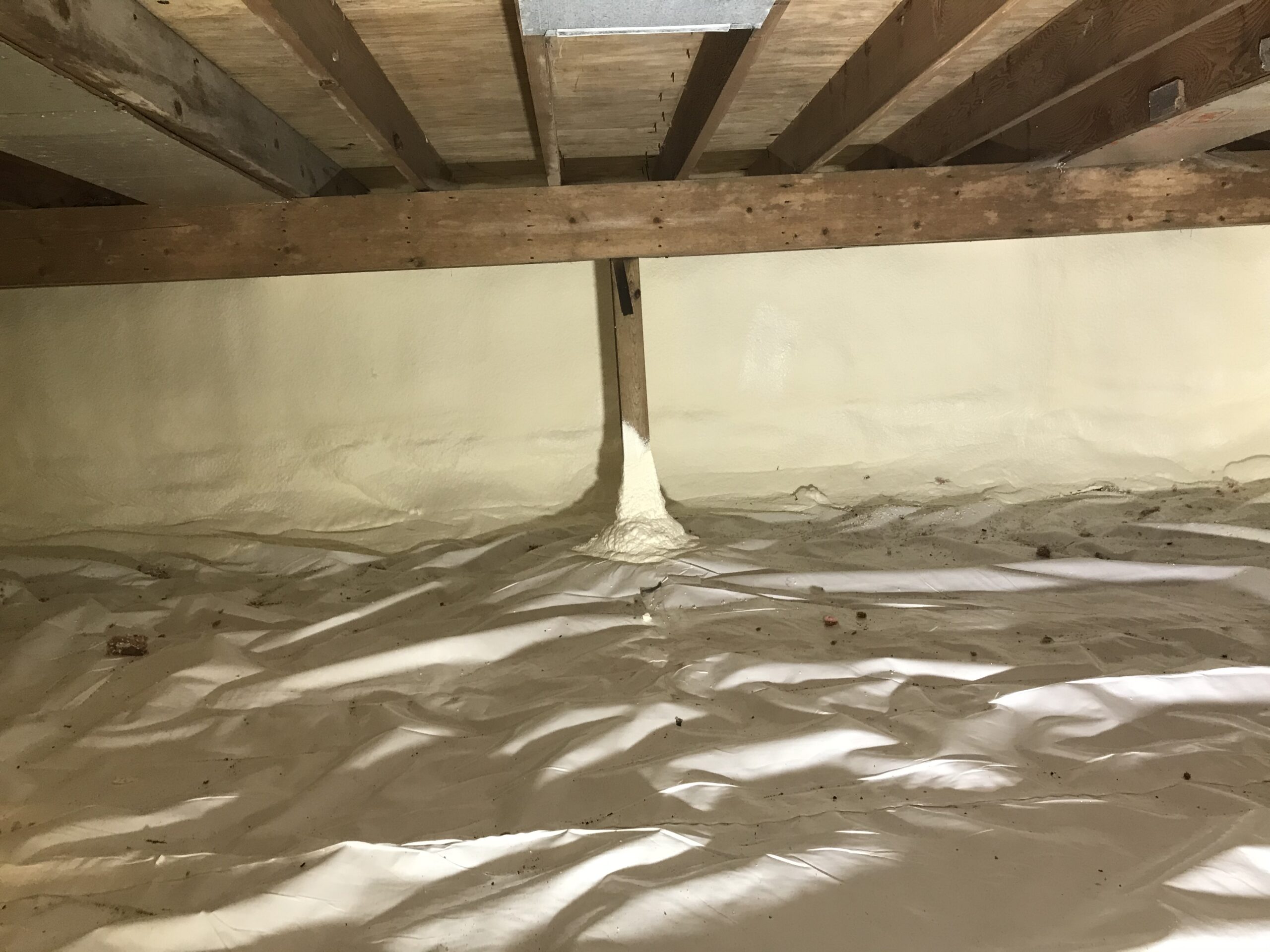
Is your garage too cold in the Iowa winters or too hot in the summers? Garage insulation in Iowa can make a big difference. Spray foam, whether open cell or closed cell, is one of the best ways to keep your garage comfortable year-round.
Keep reading to find out which option works best for you!
Importance of Garage Insulation in Iowa
Iowa’s cold winters and hot summers can make garages unbearable. Without proper insulation, cold drafts seep into homes, causing chilly floors above garages. Summers are no better, as heat creeps in, making nearby rooms stuffy.
Insulating a garage reduces energy waste and increases comfort in living spaces attached to it. Spray foam insulation for garage walls in Iowa helps block moisture too, preventing mold issues while boosting energy savings.
A sealed wall between the garage and home enhances safety by reducing fire risks and keeps running costs low year-round.
“Good insulation turns a drafty space into an energy-efficient zone.”
Spray Foam Insulation: Open Cell vs. Closed Cell
Choosing between open cell and closed cell spray foam can be tricky. Each type has its strengths, depending on your garage’s needs and Iowa’s climate.
Key Differences Between Open Cell and Closed Cell Spray Foam
Spray foam insulation is a smart choice for Iowa garages. But picking between open cell and closed cell foam depends on understanding their differences.
- Open cell foam is soft and flexible, while closed cell foam is dense and rigid. This makes closed cell better for adding strength to garage walls or ceilings.
- Closed cell foam has a higher R-value per inch, usually around 6 to 7. Open cell foam offers about 3.5 to 3.7 per inch, making closed cell more effective at trapping heat in Iowa winters.
- Moisture resistance is stronger in closed cell spray foam. It acts as a barrier against water and vapor, protecting garages from leaks or dampness common in Iowa’s weather.
- Open cell spray foam expands more during installation, filling gaps better in tight spaces or oddly shaped areas.
- The cost of open cell spray foam insulation for an Iowa garage is generally lower than closed cell spray foam insulation costs for similar spaces.
- Soundproofing works better with open cell because its spongy texture absorbs noise, ideal if the garage doubles as a workshop or hobby space.
- Closed cell offers superior durability under extreme conditions like heavy winds or storms that can hit places like Des Moines or Cedar Rapids.
- Installing open cell spray foam may be quicker due to its lighter weight and ease of application compared to the denser material used in closed-cell options.
Understanding these differences helps homeowners pick the right solution for their needs, whether it’s adding warmth during harsh Iowa winters or reducing energy bills year-round.
R-Value Comparison: Which Option Performs Better?
Choosing the right spray foam insulation type can feel like deciding between apples and oranges. But let’s compare their R-values, side by side, to see which one suits your garage in Iowa better.
Feature | Open Cell Spray Foam | Closed Cell Spray Foam |
R-Value Per Inch | Approximately R-3.5 to R-3.8 | Approximately R-6 to R-7 |
Space Efficiency | Requires thicker applications to meet insulation needs | Takes up less space to achieve higher thermal resistance |
Performance in Iowa’s Cold Winters | May need additional layers to meet R-49 or R-60 recommendations | Can achieve target R-values with fewer layers |
Cost Consideration | Lower upfront cost, but may require more material | Higher upfront cost, offset by long-term energy savings |
Best Use Case | Great for soundproofing and budget-friendly projects | Ideal for maximum energy efficiency and moisture resistance |
Closed cell spray foam edges ahead with its higher R-value per inch. In Iowa, this is a game-changer against freezing winters.
Benefits of Open Cell Spray Foam for Garage Insulation
Open cell spray foam can stretch into tight spaces, making it great for tricky corners. Plus, it helps cut down noise between your garage and home.
Affordability and Flexibility
Spray foam insulation for garages in Iowa can be cost-effective. Open cell spray foam costs less upfront compared to closed cell options, making it budget-friendly for homeowners. Its lightweight design allows it to cover large areas without breaking the bank.
Plus, it’s a smart choice if you want good coverage on a smaller budget.
This material is also flexible during application. It expands easily into gaps and hard-to-reach spots, providing full coverage in tricky areas like corners or around pipes. The flexibility ensures no space goes unfilled, making your garage walls more energy-efficient while keeping costs reasonable.
Soundproofing Capabilities
Open cell spray foam absorbs sound better than closed cell foam. Its unique open-cell structure reduces noise between the garage and indoor spaces. This makes it a great option for Iowa homeowners who use their garages as workshops or for noisy hobbies.
It dampens vibrations, cutting down on echoes and outside sounds.
This can be especially helpful in busy neighborhoods like Des Moines or Cedar Rapids, where traffic noise is common. Whether using power tools or watching sports in the garage, this insulation helps maintain peace indoors.
Homeowners looking to block sound should consider its benefits when planning their garage insulation project in Iowa.
Benefits of Closed Cell Spray Foam for Garage Insulation
Closed cell spray foam provides excellent energy savings and keeps garages warmer in Iowa’s cold winters. It also creates a strong barrier against moisture, protecting your garage from dampness.
Superior Insulation and Energy Efficiency
Closed cell spray foam creates a tight barrier that blocks heat exchange. Its high R-value, about 6.5 per inch, keeps garages warmer in Iowa’s cold winters and cooler during hot summers.
Homeowners notice lower energy bills because it reduces heating and cooling needs.
The dense insulation limits air leaks and stops drafts effectively. This makes it ideal for extreme weather conditions common in cities like Des Moines or Cedar Rapids. Its superior performance also adds long-term value to properties by reducing wear on HVAC systems.
Moisture control is another key factor to consider next when insulating with spray foam in Iowa garages.
Moisture and Vapor Barrier Properties
Closed cell spray foam acts like a shield against moisture. Its dense and rigid structure keeps water and vapor from sneaking into garage walls. This is vital for Iowa’s wet springs and humid summers, which can lead to mold or mildew in unprotected spaces.
The foam blocks both air and water better than open cell spray foam. It creates an airtight seal that reduces leaks and prevents water damage. For homes in Iowa dealing with rain, snowmelt, or high humidity, this material provides peace of mind by keeping garages dry and safe.
Factors to Consider When Choosing Spray Foam Insulation
Picking the right spray foam insulation needs careful thought. Weather, costs, and savings play a big role in your choice.
Climate and Weather Conditions in Iowa
Iowa’s weather swings between cold winters and hot summers. January often brings temperatures below 20°F, while July climbs above 80°F. These shifts stress garages without proper insulation.
High humidity and rainfall add to the challenge. Moisture can seep into unprotected spaces, causing damage over time. Proper garage spray foam insulation in Iowa keeps spaces dry, energy-efficient, and ready for year-round comfort.
Budget and Long-Term Savings
Closed cell spray foam costs more upfront but pays off over time. It blocks air better, lowers heating and cooling bills, and gives long-term energy savings. Homeowners in Iowa with cold winters often find the investment worth it for their garage insulation needs.
Open cell spray foam is cheaper to install but may cost more in the long run due to lower R-value performance. For those focused on saving now, this might seem like a good choice. Comparing these options can help pick what’s best for specific budgets or garage conditions.
Conclusion
Choosing the right spray foam insulation for your Iowa garage depends on your needs. Open cell offers flexibility and cost savings, while closed cell provides stronger insulation and a vapor barrier.
Think about energy savings, moisture control, and comfort when deciding. Both options can improve your garage’s performance and value over time. Local experts can help you make the best choice for Iowa’s climate!
FAQs
1. What is the difference between open cell and closed cell spray foam for garage insulation in Iowa?
Open cell spray foam is softer, less dense, and better for soundproofing your garage. Closed cell spray foam is denser, provides higher R-value per inch, and offers superior moisture control in Iowa’s climate.
2. How much does garage spray foam insulation cost in Iowa?
The cost depends on factors like garage size, type of spray foam used (open or closed cell), and location within Iowa. On average, expect to pay $1 to $2 per square foot for open cell and $1.50 to $3 per square foot for closed cell insulation.
3. Is it possible to use spray foam on an existing detached garage in Iowa?
Yes! Spray foam can be applied to an existing detached garage’s walls or ceiling as long as the surfaces are clean and accessible.
4. What are the benefits of using spray foam insulation for garages in Iowa?
Spray foam improves energy efficiency by creating airtight seals that reduce heating and cooling costs during extreme weather seasons common in Des Moines or Cedar Rapids areas.
5. Should I DIY or hire a professional for insulating my pole-barn-style garage with spray foam in Ames or nearby cities?
DIY may save money upfront but risks mistakes like uneven coverage; hiring professionals ensures proper installation tailored to local conditions across IA towns such as Ames or Iowa City.
6. What R-value should I aim for when insulating a garage with spray foam in Iowa’s climate?
Closed-cell options typically offer an R-value of 6-7 per inch while open-cell ranges around 3-4 per inch; choose based on whether you prioritize thermal resistance over affordability depending upon needs specific-to-location