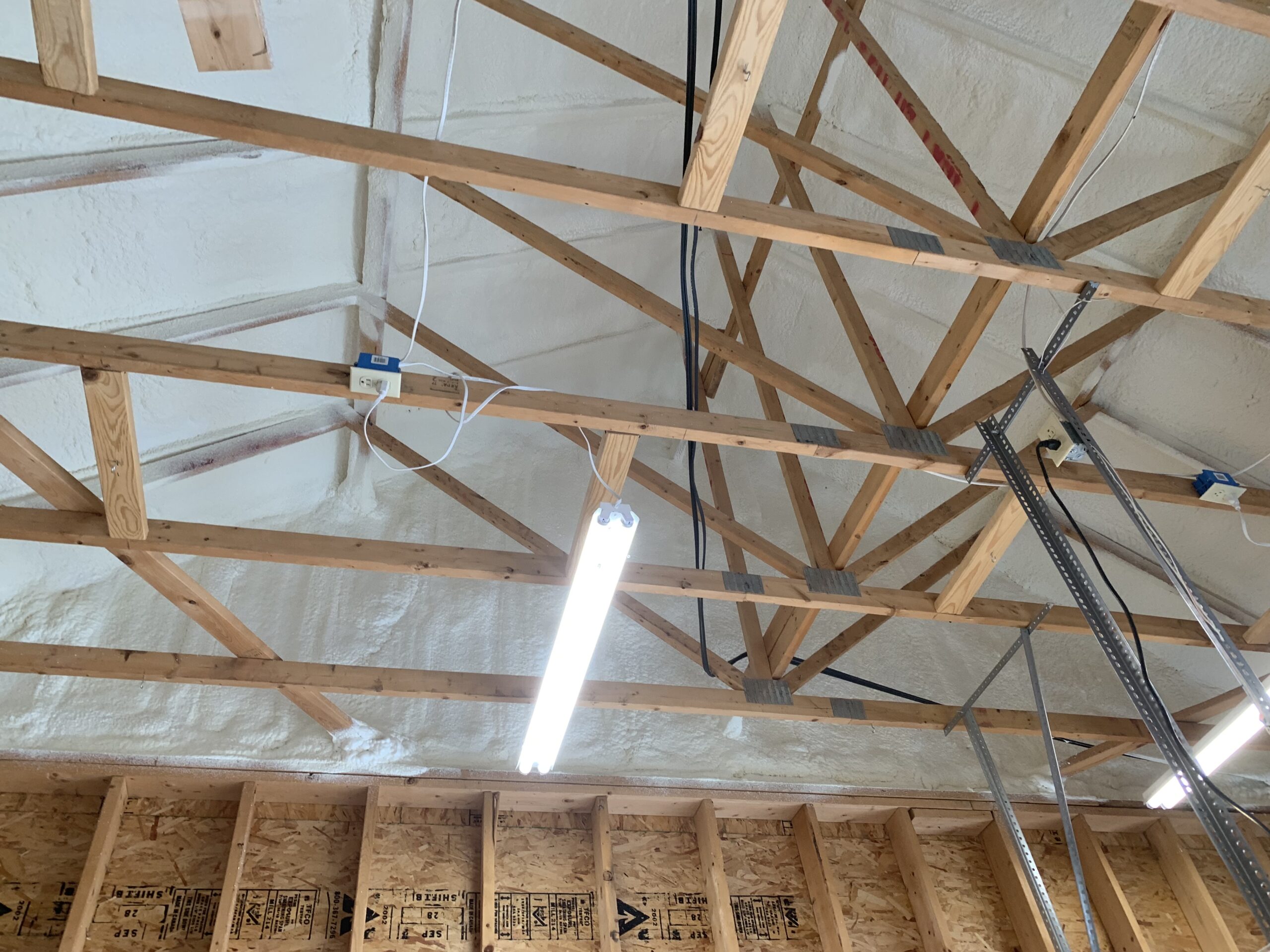
Commercial insulation projects usually start because something is failing in real life: a warehouse that’s hard to heat, a retail space with uncomfortable hot spots, rising HVAC runtime, or a flat roof that keeps creating leaks and maintenance headaches. In Des Moines, IA, winter heating loads and summer humidity make weak building envelopes show up fast. The good news is that most buildings don’t need “everything at once.” They need the right scope, done cleanly, with minimal interruption. This guide explains how to evaluate commercial insulation contractors in Des Moines, IA, when insulation removal is worth it, and where roof coatings can fit into the plan.
What Do Commercial Insulation Contractors In Des Moines, IA, Improve First?
Before anyone talks product, a contractor should answer one question: Where is the building losing performance?
Quick checklist (10-minute walkthrough you can do):
- Drafts near overhead doors, dock areas, or rim transitions
- Condensation on metal framing or roof deck
- Uneven temperatures by zone (front of house vs back of house)
- Visible gaps around penetrations (pipes, conduit, curbs)
- Wet, sagging, or contaminated insulation in ceiling cavities
Common mistake: Picking insulation thickness before addressing air leakage. Even high R-value materials underperform if air is moving through or around them. DOE’s guidance on air sealing emphasizes that reducing uncontrolled air leakage can improve comfort and reduce heating/cooling costs.
Decision rule: If the building has noticeable drafts or dust movement, prioritize air leakage control (sealing + targeted insulation) before “adding more inches everywhere.” ENERGY STAR’s seal-and-insulate guidance reflects this sequencing logic.
How Do You Know Whether You Need Insulation Removal Before Upgrading?
This is where buyers get burned. Some buildings can “cap” old insulation with new material. Others can’t. You should strongly consider removal when:
- Insulation is wet (leaks, condensation, roof failures)
- There’s visible contamination (rodents, heavy debris, odors)
- Old material is blocking access to the air sealing details
- The cavity is uneven, and you can’t get consistent coverage
That’s where insulation removal contractors in Des Moines, IA come in, because removal is as much about jobsite control (dust, disposal, containment) as it is about tearing material out.
Local factor: Older commercial spaces in and around Des Moines often have mixed retrofit layers from past tenant build-outs. That can hide gaps and make “quick add-on” insulation less effective than expected.
Which Materials Fit Commercial Jobs Best In Des Moines?
A good bid should explain “why this material here,” not just list products.
Option | Where it fits best | What it does well | Watch-outs / decision rule |
Spray foam insulation | Metal buildings, rim transitions, and hard-to-seal areas | Can reduce air leakage while insulating (when installed properly) | Requires planning for ventilation during install; discuss re-occupancy and work-zone isolation. |
Fiberglass insulation | Large areas with stable cavities (walls/ceilings) | Cost-effective coverage | Needs strong air control; if air moves through it, results drop. Pair with sealing details. |
Roof coatings / waterproof roof coatings | Flat/low-slope roofs with aging membranes (when suitable) | Can extend roof performance and reduce leak risk when properly prepped (system-dependent) | Prep is everything: moisture trapped under coatings can cause failures. Demand a roof condition assessment first. |
Spray foam roofing + coating | Some commercial roofs need insulation + seamless coverage | Adds insulation and a monolithic layer (system-dependent) | Must be protected from UV with a coating; scope should include drains, curbs, and details. |
Decision rule:
- If you need to reduce air leakage quickly around complex geometry, spray foam often has a role. DOE notes insulation and air sealing work together; the best outcomes come from addressing both.
- If you’re dealing with a flat roof with recurring leaks, consider whether roof coatings Des Moines, IA (or waterproof roof coatings) make sense after an inspection; don’t skip prep.
What Does A Clean Commercial Install Process Look Like?
This is what the best commercial insulation contractors in Des Moines, IA, do every time, because commercial buildings can’t afford chaos.
Site walkthrough + scope definition
They document problem zones, access points, operating hours, and safety requirements.
Moisture + air leakage checks
They look for roof leaks, condensation pathways, and major bypasses.
Plan the sequence (phasing)
For occupied buildings, the plan should include after-hours work options, containment zones, and how they’ll protect inventory/equipment.
Containment + ventilation controls (if spraying)
EPA’s ventilation guidance for spray polyurethane foam includes establishing airflow across the work area, directing vapors away from workers/occupants, and exhausting to a safe location.
Install + thickness/coverage checks.
They confirm continuity, no voids at edges, corners, penetrations, or curbs.
Code and documentation discussion
Commercial energy-efficiency work is often guided by code baselines such as the IECC. A contractor doesn’t need to quote code chapters to you, but they should build to a defensible standard.
Verification + closeout
You get photos, punch-list resolution, and clear notes on maintenance (especially for coatings).
What Mistakes Drive Callbacks & Change Orders On Commercial Insulation Projects?
Mistake #1: Treating the roof and envelope as separate problems
If the roof leaks, interior insulation can get ruined. If the envelope leaks air, HVAC runs harder. Coordinating insulation with roof coatings can prevent “fix it twice.”
Mistake #2: No plan for occupants and operations
A commercial contractor should talk about scheduling, dust control, and access. If they don’t, you’ll feel it mid-project.
Mistake #3: Skipping removal when it’s obviously needed
Wet insulation doesn’t magically dry inside a closed cavity. That’s why insulation removal contractors in Des Moines, IA, are part of many successful retrofit scopes.
Mistake #4: Vague proposals
If the bid doesn’t specify areas, thickness targets, prep steps, and verification, you’ll get arguments later.
What Affects Cost And Timeline For Commercial Insulation In Des Moines?
Instead of throwing out numbers that won’t match your building, here are the cost drivers that matter:
- Access and height: lifts, fall protection, tight ceiling cavities
- Operating constraints: nights/weekends to avoid disruption
- Removal needs: contamination, wet material, disposal requirements
- Detail complexity: penetrations, curbs, dock doors, transitions
- Material choice: spray foam vs fiberglass vs roof coating systems
- Verification/documentation: photos, reports, closeout requirements
Local factor: Des Moines winters and windy conditions make air leakage more costly than many owners expect. Sealing and insulation upgrades can pay off fastest in the leakiest zones.
The Bottom Line
Commercial energy upgrades succeed when they’re practical: fix the wet problems, stop the air leaks, choose the right insulation or roof coating system for the building, and plan the work so your business can keep running. If you’re evaluating commercial insulation contractors in Des Moines, IA, ask for a documented process and a clear closeout plan. For projects that also require cleanup, make sure insulation removal contractors in Des Moines, IA, are part of the conversation from day one.
When you want a contractor who can handle insulation, roof coatings, removal, and commercial scheduling in one coordinated plan, contact Precision Insulation & Coatings.
FAQs
How do I compare Commercial Insulation Contractors in Des Moines, IA?
Compare their process: walkthrough documentation, phasing plan, containment, and how they verify coverage. The best bids read like a plan, not a flyer.
When should I hire Insulation Removal Contractors Des Moines, IA?
When insulation is wet, contaminated, or blocking access to proper air sealing and installation. Removal often prevents repeat failures after upgrades.
Is spray foam good for commercial buildings?
It can be, especially for air-leakage-heavy areas and metal buildings. Spray foam can reduce air leakage when installed correctly, but ventilation during application must be planned.
Do roof coatings replace insulation?
No. Roof coatings protect and restore roof performance in suitable conditions, but they are not a substitute for interior envelope insulation. They can be part of a combined energy strategy when the roof is a major weak point.
How long does a commercial insulation project take?
Many scopes can be phased in days to weeks, depending on access, removal needs, and operating hours. The more your building must stay “live,” the more planning time matters.
What should be in a commercial insulation proposal?
Areas covered, material type, thickness targets, prep steps, containment, ventilation plan (if spraying), and verification closeout.
Can insulation reduce drafts in older buildings?
Often, yes, but drafts are usually an air leakage problem first. Sealing and insulation work best together.