Choosing the best insulation contractor in Eastern Iowa is not just about price; it is about solving comfort, energy, and moisture problems the right way. Cold drafts, uneven temperatures, and high utility bills often point to air leaks or underperforming insulation, especially in older homes and mixed-use buildings.
A qualified contractor should explain where heat is being lost, what performance targets they recommend, and how the work will improve comfort long term. The goal is not more insulation everywhere, but the right insulation in the right places, installed with attention to air sealing and moisture control.
Determine Your Insulation Needs
Before comparing insulation installers in Eastern Iowa, clarify where the building is losing comfort and energy. Older homes and farm properties often suffer from attic air leaks and under-insulated rooflines. ENERGY STAR guidance for Climate Zones 5–8 commonly targets R-49 to R-60 for uninsulated attics, and R-38 to R-49 when some insulation already exists.
Your estimate should clearly list target R-values by area and how they’ll be achieved. A proper assessment looks at attics, walls, crawl spaces, and basements, matching materials to the problem, spray foam for air sealing, fiberglass for standard framing, and attic insulation upgrades based on budget and performance.
Assess the areas that need insulation.
Start by identifying heat loss, air leaks, and moisture risks using visual checks and tools like thermal imaging or blower door tests.
- Attics: Seal top plates and penetrations; include baffles and insulation depth to meet R-value goals.
- Rim joists: Common air leaks; spray foam is often effective.
- Crawl spaces: Check for water, exposed soil, and missing vapor barriers.
- Walls and ceilings: Cold spots may indicate empty cavities or wind washing; dense-pack retrofits can help.
- Basements: Insulation choice depends on moisture conditions and vapor control.
- Garages/bonus rooms: Comfort issues often trace to air leaks above garages.
Include rural buildings, metal barns, additions, and any insulation removal needs in the scope so bids align.
Identify the type of insulation required.
Once problem areas are clear, material selection is straightforward. A good bid explains why a product is used.
- Closed-cell spray foam: Air sealing and moisture control; confirm thickness by location.
- Open-cell spray foam: Sound control and assemblies needing drying potential.
- Blown-in cellulose: Attics and retrofits; confirm density and settled depth.
- Fiberglass batts: Standard cavities; must be cut and fitted correctly.
- Dense-pack systems: Retrofit walls with fewer voids.
- Rigid board/mineral wool: Specialty uses; confirm fastening, sealing, and code needs.
For best results, ask how insulation and air sealing will work together.
Explore different options
Connect materials to real-world performance.
- Spray foam: Effective for sealing gaps; ask for product data and lift limits.
- Attics: Ventilation details matter, baffles and proper vent ratios are key.
- Fiberglass: Performs well only with careful installation.
- Blown-in products: Ideal for irregular cavities; depth markers help verify coverage.
- Cellulose: Can reduce air movement better than loose fiberglass when properly installed.
- Commercial needs: Specialty products like K13 require experience and clear thickness specs. Energy audits can help prioritize the biggest comfort gains, and insulation removal may be necessary if materials are damaged or contaminated.
Research Local Insulation Contractor Eastern Iowa Options
With clear requirements, comparing contractors is easier. Look for experience, clear explanations, and proof of state registration. Strong contractors explain building science and tailor solutions instead of pushing one product.
Look for contractors in Eastern Iowa.
Choose crews with a real local presence and experience that matches your project type. Ask for examples similar to your building, confirm service areas, and use energy audits to align all bids. When comparing companies, require written scopes listing areas covered, target R-values, and exclusions.
Check their experience and expertise in commercial and residential insulation.
Detail-heavy work demands experience.
- Request photos and descriptions of similar projects.
- Confirm who supervises the job and the crew’s training.
- Look for a system-level approach to air, moisture, and insulation.
- Ask how results are verified (photos, depth markers, walkthroughs).
The best contractors can clearly explain what was sealed, insulated, and why.
Verify Credentials and Licenses
Credentials protect you when something goes wrong, and they also protect the building long after the crew leaves. We check registration, insurance, and job-specific certifications before we schedule work.
Ensure the contractor is licensed and insured
Start with the basics, then get more specific based on the job.
- State registration: Ask for the company’s Iowa contractor registration details and confirm they are current.
- Insurance: Request a current certificate of insurance that lists general liability and workers’ compensation (if they have employees).
- Bonding: For some contractors, bonding requirements apply based on how the business is structured and staffed. Ask what bond coverage they carry and what it covers.
- Written scope: Your contract should state the areas to be insulated, target R-values, air sealing tasks, and any removal or cleanup included.
We verify proper qualifications for insulation removal services. On jobs where building science details matter, we look for teams that can explain the “why” behind each step, not just the product name.
Confirm certifications for insulation services.
Certifications should match the risk in the building. EPA’s Renovation, Repair, and Painting program requires firm certification for renovations that disturb painted surfaces in pre-1978 housing, and Iowa’s licensing program covers asbestos workers and contractors. On older homes and commercial properties, ask for proof before work starts.
- Lead-safe work practices: If the home is pre-1978, ask if the firm is certified for lead-safe renovation work and how they plan to contain dust.
- Asbestos licensing for removal: If any suspect materials are present, ask how testing is handled and who performs licensed asbestos work if it is needed.
- Manufacturer training: For spray foam, ask whether the crew has current training for the exact foam system being installed, and whether the bid follows the product’s installation limits.
- Fire protection layers: If spray foam will be left exposed in an attic or crawl space, ask the contractor to list the thermal barrier or ignition barrier approach in the scope, including the exact product and thickness where required.
Consider Specialized Insulation Services
Some Eastern Iowa buildings need more than basic attic or wall insulation. Specialized projects require better prep, moisture control, and clear code compliance, which is where experienced contractors stand out.
Metal building insulation
Metal buildings change temperature quickly, often causing condensation.
- Ask for a condensation control plan, not just an added R-value.
- Confirm assembly details: how seams, penetrations, and air spaces will be sealed.
- Match material to use: closed-cell foam for air/moisture control, mineral wool for fire resistance.
- Request recent metal-building examples that match your building’s use.
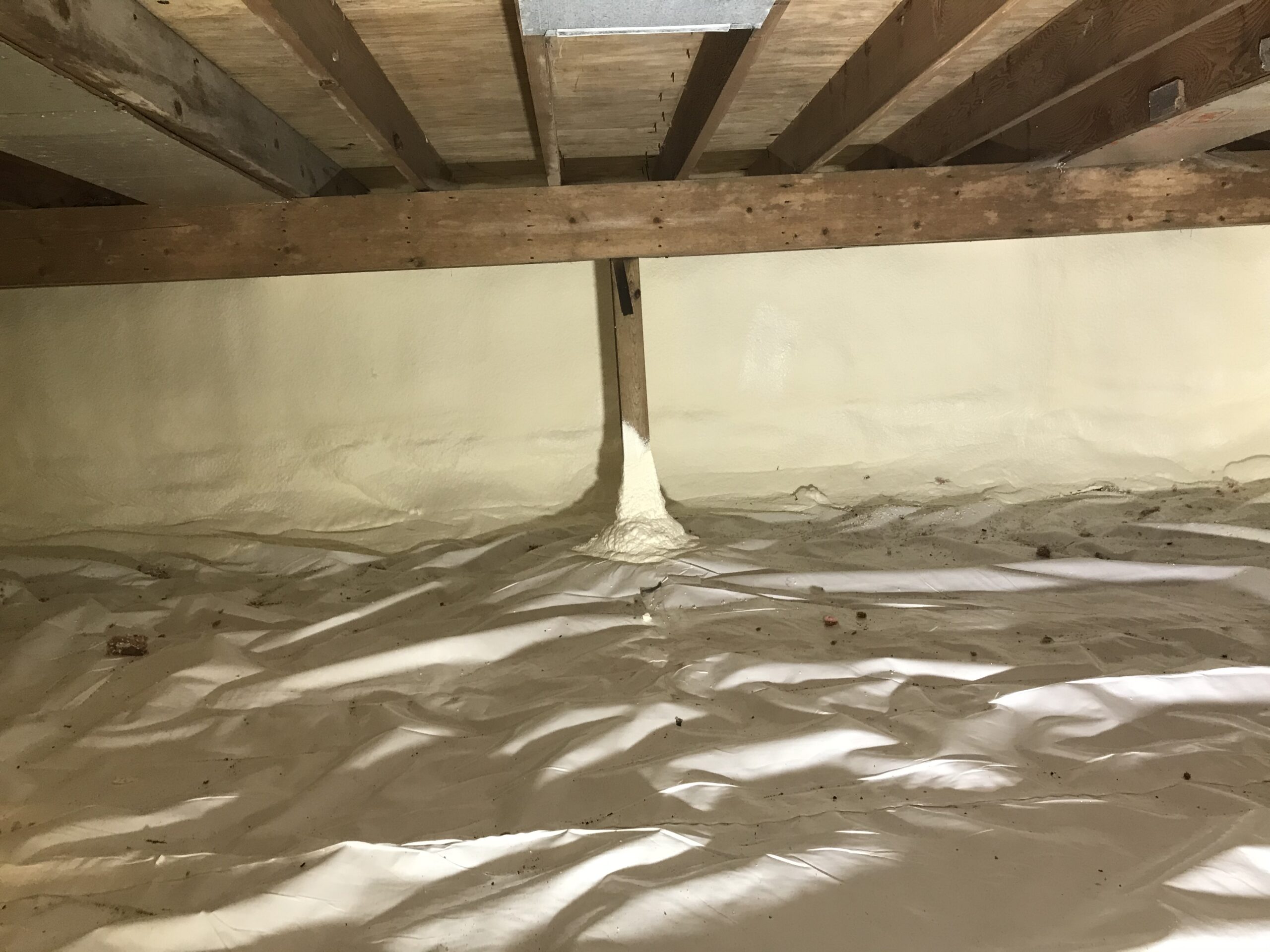
Crawl space insulation
Crawl spaces often combine air leaks, moisture, and soil gas risks.
- Start with moisture control, including a sealed ground vapor barrier.
- Rim and band joists are prime air-leak areas; spray foam is common here.
- Radon awareness matters; test before and after air sealing and keep mitigation systems accessible. Ask contractors to clearly explain their crawl space moisture strategy.
Insulation removal services
Removal is appropriate when insulation is wet, moldy, compressed, or pest-contaminated, or when it hides major air leaks.
- Removal should be justified, not automatic.
- Be cautious with vermiculite until tested.
- Get disposal details in writing, including containment and destination.
- Use licensed specialists when asbestos or lead is involved.
Garage insulation contractors
Garages require balancing comfort, fire separation, and air quality.
- Ask how air sealing will limit fumes and drafts into the house.
- Confirm thermal or ignition barriers if spray foam is used.
- Match insulation to the garage type (framed, metal, or pole-barn). Request photos of projects similar to your garage construction.contractor
Barndominium spray foam insulation
Barndominiums often have complex rooflines and large temperature swings.
- Confirm whether the roof is vented or unvented and how moisture is managed.
- Ensure fire protection layers are included where required. Closed-cell spray foam is often chosen for tight air sealing and moisture resistance.
Pole barn insulation contractors
Pole barns commonly fail when warm interior air condenses on cold metal.
- Ask how condensation is prevented at the roof and wall transitions.
- Confirm durability details, including protection from damage and pests. Good results depend on getting the assembly details right before installation begins.
Request References and Reviews
References and reviews tell you what the proposal cannot: how the company communicates, how clean they work, and whether they show up when something needs attention.
Ask for past client references.
We ask for references on every job, and we suggest you do the same.
- Ask for similar projects: “Do you have a recent attic retrofit like mine?” or “Can I talk to a pole barn customer?” is more useful than a random list of names.
- Ask one performance question: “Did comfort improve where it was supposed to?” helps you cut through polite praise.
- Confirm cleanup and protection: Overspray, dust, and debris are common complaints in insulation work, so ask how the crew protected floors, furniture, and HVAC returns.
Read online reviews and ratings
Online reviews help you spot patterns, good and bad.
- Check the dates: Recent feedback gives you the clearest picture of current crews and current scheduling.
- Look for details: Reviews that mention specific rooms, comfort changes, or how a warranty issue was handled are more useful than one-line ratings.
- Cross-check the business: Match the company name and location, and confirm you are reading reviews for the same contractor entity you are hiring.
Compare Services and Materials
Two bids can look similar in price and still deliver very different results. We like to compare quotes the same way we compare insulation assemblies, detail by detail.
Evaluate the insulation materials offered
Ask each bidder to list the exact products and how they will be installed.
- Spray foam: Confirm open-cell vs closed-cell, target thickness by area, and what will cover the foam (thermal barrier or ignition barrier) where required.
- Blown-in insulation: Confirm target R-value, installed thickness, and how they will verify coverage across the attic. Depth markers make this simple.
- Retrofit walls: If dense-pack or injected foam is proposed, ask how they prevent voids and how patches will be finished.
- Metal buildings: Ask how seams, laps, and penetrations are sealed, and how condensation control is handled.
If you want one fast “quality signal,” ask whether the crew will air seal the attic floor before adding attic insulation. Contractors who take that seriously tend to be more consistent in the details.
Check if they provide eco-friendly options.
Eco-friendly can mean recycled content, lower emissions, or simply a tighter building that wastes less energy.
- Cellulose: Often made from recycled paper, it can be a solid choice for attic top-ups and some wall retrofits.
- Fiberglass: Many fiberglass products include recycled glass content. Ask what product line they plan to install, and whether they will avoid compression and gaps.
- Spray foam choices: Ask what blowing agent technology is used for closed-cell foam and whether the product has low-VOC certifications, especially if you are sensitive to odors.
One more smart check, the Federal Trade Commission’s insulation rule requires installers to give you a contract or receipt that shows the coverage area, thickness, and R-value installed, and for loose-fill, it also requires initial thickness, minimum settled thickness, R-value, and the number of bags used. If a contractor cannot describe how they document this, push for clarity before you sign.
Get Multiple Quotes
We like at least three written quotes, because it shows you how different contractors think about the same building. The goal is not picking the lowest number; it is picking the clearest scope with the least risk.
Request detailed estimates from different contractors
A good estimate reads like a plan, not a guess.
- Ask for line items that separate labor, materials, disposal, and any add-ons like ventilation baffles, air sealing, or ignition barriers.
- Require the estimate to state the target R-values by area (attic, walls, crawl space, garage), plus the installation method for each.
- Ask how they will verify results, such as attic depth markers for blown-in, job photos, and a final walkthrough.
- If you have an older home, ask what they need to confirm before they start (knob-and-tube wiring, bath fan venting, vermiculite concerns, roof leaks).
- Request a timeline that includes prep, installation days, and cure or ventilation time if spray foam is used.
If tax incentives matter to your decision, note that the IRS energy-efficient home improvement credit was listed for qualifying improvements placed in service before December 31, 2025. For projects started in 2026, it is worth confirming the current rules before you count on a credit.
Compare pricing and services included in the quotes
When you line up bids, do it with a highlighter.
- Scope gaps: One bid may include air sealing, baffles, and cleanup, while another lists insulation only.
- Removal assumptions: If one contractor includes removal and another does not, ask why, then decide if removal is justified by the condition of your existing insulation.
- Code and safety items: For spray foam, confirm thermal barrier or ignition barrier steps, plus any combustion safety checks if you have fuel-burning appliances near the work area.
- Warranty details: Compare what is covered, what is excluded, and what the claim process looks like.
Understand Warranties and Guarantees
Warranties matter most when the job is hard to inspect later, like a finished wall cavity or a sealed roofline. We want everything in writing, with clear coverage and clear next steps.
Check for warranties on materials and labor
Ask for two separate answers: material warranty and workmanship warranty.
- Materials: Ask which manufacturer’s warranty applies (if any) and whether it depends on certified installation.
- Workmanship: Confirm what happens if there are voids, missed areas, or adhesion problems, and how quickly they respond.
- Exclusions: Ask what is not covered, such as roof leaks, plumbing leaks, or pest damage.
Confirm post-installation support
Support after the job is where strong contractors earn repeat business.
- Final walkthrough: Ask for photos of key areas (attic corners, rim joists, crawl transitions) so you can see the work you paid for.
- Documentation: Request your receipt details, including installed R-values and thickness, plus any product data sheets you might need for future remodeling.
- Follow-up: For air sealing projects, a follow-up audit or blower door test can confirm improvements and help you prioritize the next upgrade.
We always suggest keeping your paperwork together so you can act fast if you need a warranty visit.
Conclusion
Picking the right insulation team is easier when you treat it like a checklist: define the problem, set target R-values, and confirm the company can document what they install.
For an insulation contractor Eastern Iowa property owners can feel good about, look for clear credentials, solid reviews, detailed written estimates, and a plan that covers air sealing plus insulation. Call Precision Insulation & Coatings for a free estimate, and choose the crew that explains the work clearly and puts it in writing.
FAQs
1. How do I choose the best insulation contractor in Eastern Iowa?
Pick a licensed, insured insulation contractor with local Eastern Iowa experience, and ask for references. Don’t get cold feet, compare photos of past work, and clear written estimates.
2. What should I ask during an estimate?
Ask how they will inspect your home, which insulation material they recommend and why, and what energy savings you can expect. Ask for a timeline, a cleanup plan, and warranty details.
3. How can I check a contractor’s reputation quickly?
Read online reviews, call past customers, and ask neighbors in Eastern Iowa who have had insulation work done.
4. How do I avoid surprises on cost and performance?
Get at least two itemized quotes, compare scope, materials, and labor, and insist on a written contract. It may feel risky, so do a final walk-through and a clear warranty before you pay.