If you run a building in Iowa, you already know the truth most owners learn the expensive way: your utility bill is a building-performance report card. When heating and cooling costs keep climbing, it’s rarely because your HVAC “isn’t big enough.” It’s because your building can’t hold conditioned air, your roof and walls are bleeding energy, and moisture is doing slow damage behind the scenes.
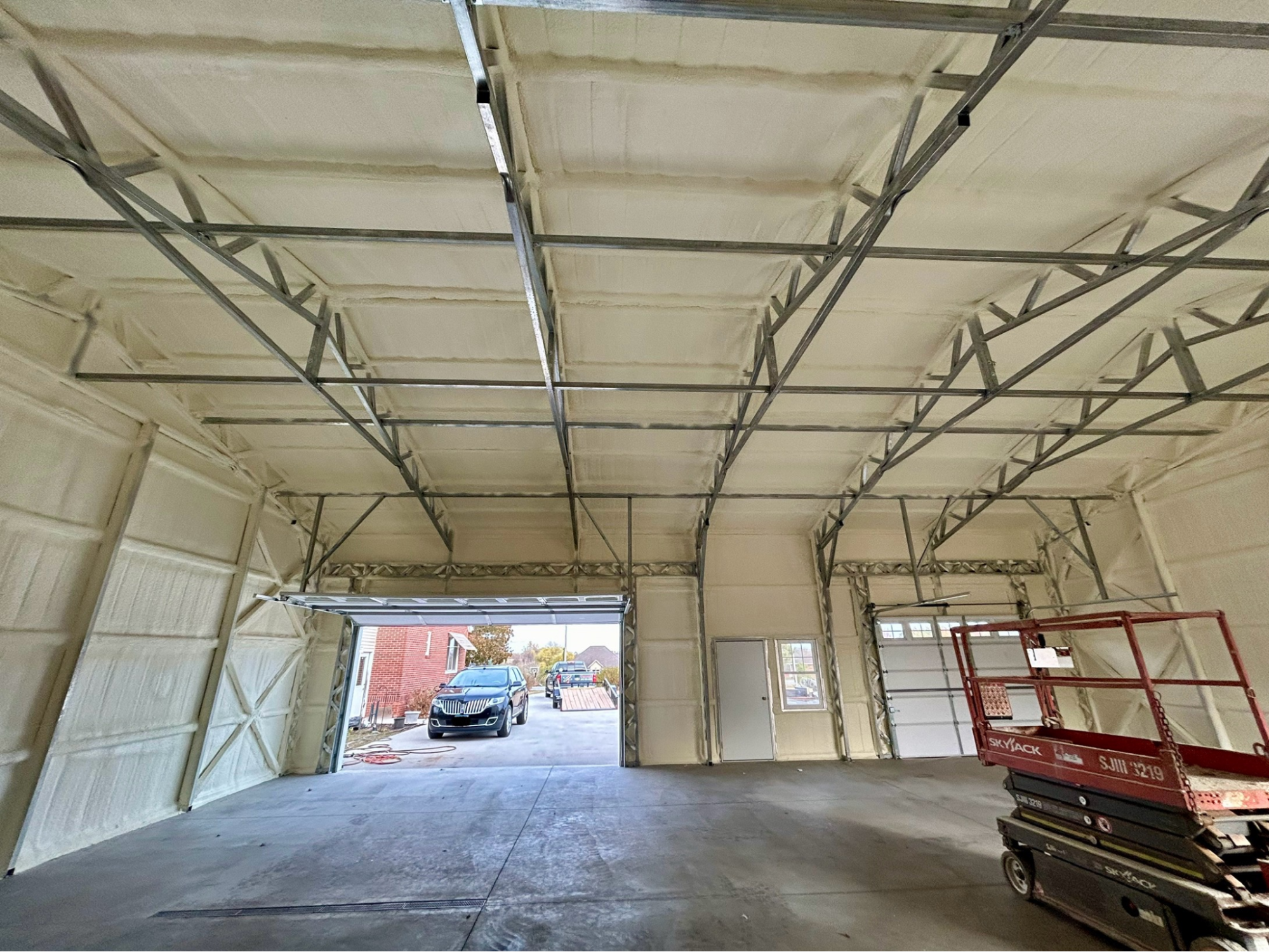
That’s where commercial spray foam insulation keeps winning in real-world Iowa facilities, metal buildings, warehouses, shops, agricultural structures, offices, retail spaces, and light manufacturing. The appeal isn’t hype. It’s the way spray foam solves multiple building problems at once: insulation + air sealing + moisture control (when designed correctly), often with less disruption than multi-layer assemblies.
Below is why so many Iowa businesses choose spray foam, what it does well (and where it needs expert planning), and how to decide if it’s the right fit for your facility.
1) Iowa’s Climate Punishes Leaky Buildings
Iowa swings hard: bitter winter cold, humid summers, shoulder-season temperature flips, and wind that finds every crack. In commercial buildings, especially metal buildings and older facilities, air leakage is often the silent budget killer. Even high R-value insulation can underperform if your building is full of gaps.
Spray foam’s biggest advantage is that it not only insulates. It reduces air movement through the assembly, which is one of the fastest ways to improve comfort and cut waste. The U.S. Department of Energy consistently emphasizes that air sealing is a major driver of energy performance, and it’s often the missing piece when insulation alone doesn’t deliver the results people expect.
What that means for Iowa businesses:
- Fewer drafts and hot/cold zones
- Steadier interior temperatures
- Less HVAC run time during peak winter and summer
- Better employee comfort and productivity in conditioned spaces
2) Air Sealing Is Where Spray Foam Separates Itself From “Insulation Only.”
Most insulation materials are good at slowing heat transfer. But many don’t stop the air. In commercial buildings, air leakage is expensive because it multiplies: it carries heat, humidity, dust, and pollutants through your roof and walls.
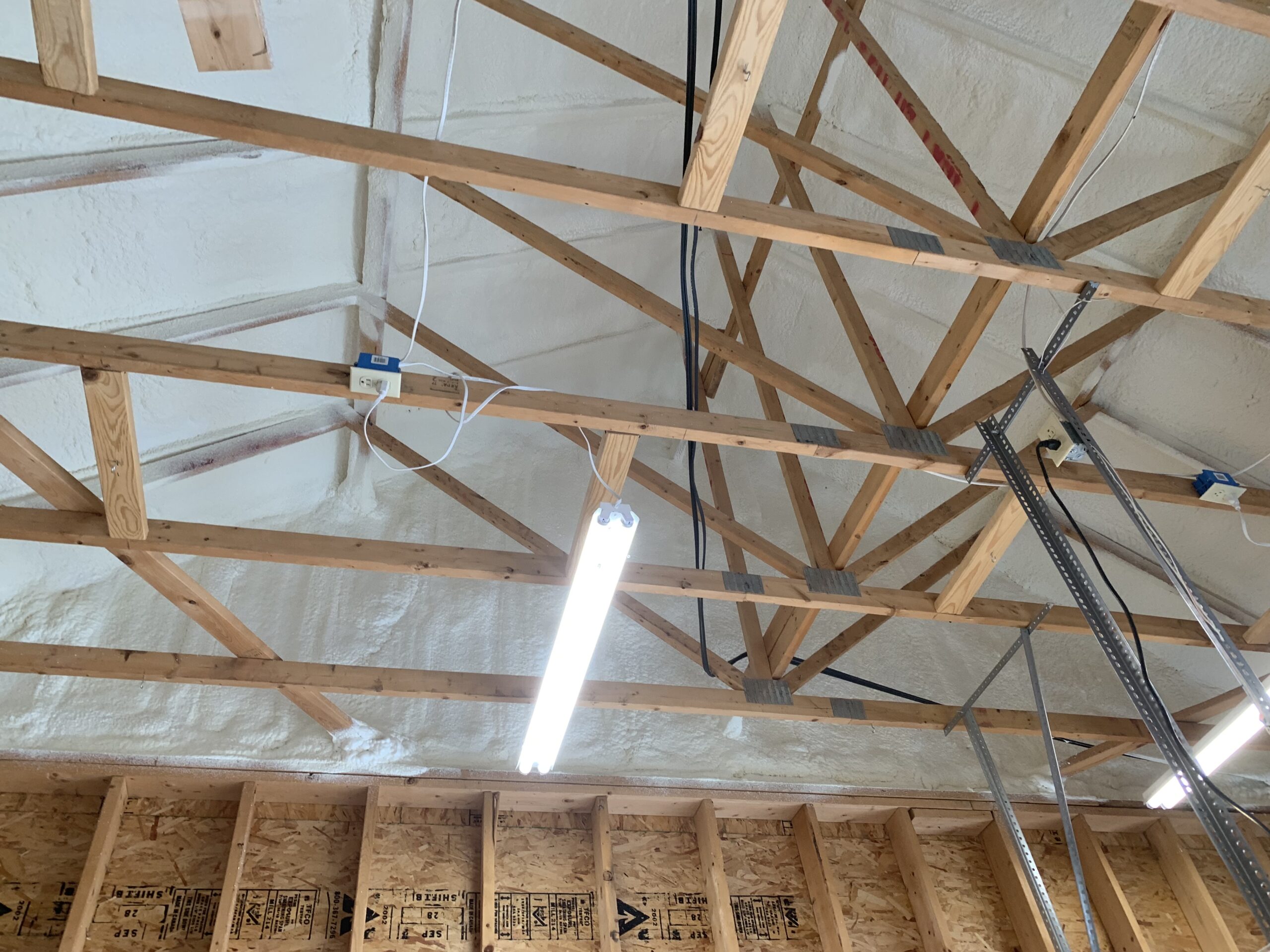
Spray foam, installed properly, creates a more continuous barrier across irregular surfaces, fasteners, joints, and penetrations. As an air leak spray foam solution helps seal gaps and improve overall energy efficiency.
On real job sites, that matters because commercial buildings aren’t perfect rectangles. They’re full of:
- pipes, conduit, and junction boxes
- roof penetrations and curbs
- steel framing transitions
- overhead door openings
- wall-to-roof interfaces
In Iowa warehouses and metal buildings, those interfaces are exactly where you see condensation, comfort complaints, and rising energy costs.
3) Condensation Control Is A Big Reason
If you own or manage a metal building, you’ve probably dealt with at least one of these:
- dripping ceilings
- rusting fasteners or purlins
- damp insulation that “looks fine” but performs terribly
- musty odors or humidity issues
Condensation happens when warm, moisture-laden air hits a colder surface, and the water vapor turns into liquid. Spray foam, especially closed-cell in the right application, can help by reducing warm air contact with cold surfaces and by adding a layer that limits vapor movement when designed and installed appropriately for the assembly.
That “appropriate” part matters. A commercial installer should understand the building’s moisture behavior, ventilation, and intended use of the space. When done right, foam is one of the most effective solutions for metal-building condensation problems in Iowa.
4) Closed-Cell Vs Open-Cell: Iowa Businesses Like Having Options
A lot of facility owners think spray foam is one product. It isn’t. The two common categories have different strengths:
Closed-cell spray foam (typically higher R-value per inch)
- Strong air sealing and good moisture resistance characteristics
- Adds rigidity to assemblies in many applications
- Useful where space is limited, and performance needs are high
- Commonly chosen for metal buildings, roofs, and demanding environments
Open-cell spray foam
- Excellent air sealing
- Often used in certain wall/roof assemblies where vapor design is handled through other layers
- Can be a cost-effective choice depending on the building and goals
A qualified commercial insulation contractor will recommend the right foam type (or a hybrid approach) based on building use, moisture risk, code requirements, and ROI, not based on a one-size-fits-all pitch.
5) Code Compliance Matters More In Commercial Buildings
Commercial projects in Iowa are typically held to stricter code expectations than residential work, and energy code requirements affect insulation levels, air leakage control, and performance targets.
Iowa’s State Energy Code applies broadly to commercial construction and certain work on existing buildings. That’s one reason businesses prefer solutions that can help meet performance requirements without overcomplicating the assembly.
Spray foam can support compliance because it addresses insulation and air leakage, two areas that often trigger “why doesn’t this building perform?” problems when they’re treated separately.
6) Less Disruption, Faster Payoff For Many Operating Businesses
Commercial upgrades aren’t just about “best insulation.” They’re about the business impact: downtime, access, mess, and speed. Many Iowa owners choose spray foam because:
- It can be installed in phases
- It adheres to irregular surfaces without extensive framing changes
- It can reduce the need for multiple layers in some applications
- It performs immediately after installation (no settling like certain loose-fill materials)
For operating facilities in Des Moines and Iowa City, that practicality matters. You can’t shut down production for weeks because the building envelope needs improvement.
7) Comfort And Humidity Control Protection
Commercial comfort isn’t just about “feels nicer.” In many spaces, it affects:
- Stored materials (paper goods, packaging, certain chemicals)
- Equipment longevity (corrosion, electronic issues)
- Employee performance and safety
- Customer experience in retail and office environments
By tightening the envelope, spray foam can reduce uncontrolled humidity swings, especially important in Iowa summers.
If you want to reduce drafts, moisture problems, and HVAC strain in a metal building or commercial facility, explore our Commercial Spray Foam Insulation Services in Iowa to see which system fits your building and budget.
8) “Spray Foam Insulation Contractors Near Me” Is Searched For A Reason
When owners search for spray foam insulation contractors near me, they’re usually not looking for a product; they’re looking for an outcome:
- “My warehouse is freezing in winter.”
- “Our metal building sweats and drips.”
- “The HVAC runs nonstop.”
- “We can’t keep consistent temps in offices.”
- “Our utility bills are out of control.”
The contractor matters as much as the foam. Commercial spray foam success comes down to:
- Correct product selection
- Surface prep and adhesion
- Proper thickness and coverage
- Attention to penetrations and transitions
- Ventilation and safety practices during application
- Moisture design appropriate to the building assembly
This is where working with a commercial-focused team like us can make the difference between a long-term solution and a costly redo.
9) Safety And Professionalism: Why Reputable Contractors Win Commercial Work
Spray foam is a high-performance material, but it also requires serious jobsite discipline. Commercial clients care about safety documentation, containment, and worker protection, especially in occupied buildings or active sites.
OSHA highlights health concerns associated with isocyanates and the importance of controlling exposure in workplaces. A professional contractor plans ventilation, PPE, access control, and application procedures that protect both workers and occupants.
For business owners, this isn’t “extra.” It’s part of doing the job correctly.
10) Why Iowa Decision-Makers Keep Choosing Spray Foam
If you had to sum it up, Iowa businesses prefer commercial spray foam insulation because it tends to deliver measurable building outcomes:
- Energy savings through air sealing + insulation
- Reduced condensation risk in the right assemblies
- More consistent comfort in offices, retail, and conditioned production spaces
- Lower HVAC load and fewer temperature complaints
- Durability in demanding environments
- Practical installation for active facilities
- Code alignment for performance expectations
How To Know If Spray Foam Is Right For Your Building
Here’s a quick decision framework used in many commercial projects:
Spray foam is usually a strong fit when:
- You have a metal building with condensation or comfort issues
- Your facility has obvious air leaks and temperature swings
- You need high performance in a limited space
- HVAC costs are high, and you want a long-term fix
- You’re improving a roof/wall assembly and want fewer weak points
You’ll want a careful plan when:
- The building has unusual moisture loads (certain processes, washdowns, indoor pools, etc.)
- You need specific fire-rating/thermal barrier requirements (common in commercial)
- You’re insulating an assembly where vapor behavior must be engineered carefully.
A reputable contractor will talk through these points clearly and propose a system that matches the building, not just the square footage.
Conclusion: Make The Building Easier To Operate
Iowa businesses don’t choose spray foam because it’s trendy. They choose it because it solves problems that show up in real facilities: drafts, condensation, uneven temps, and HVAC systems that never get a break. When installed and designed correctly, commercial spray foam insulation is one of the most practical ways to tighten a building envelope and protect long-term operations.
If you’re ready to fix comfort issues and control energy waste, Precision Insulation & Coatings can help you evaluate your building and recommend the right spray foam approach. To reduce condensation and improve comfort fast, explore our Commercial Spray Foam Insulation Services in Iowa and request a site assessment for your facility.
FAQs
1) Is spray foam worth it for commercial buildings in Iowa?
Often, yes, especially when air leakage and condensation are part of the problem. Spray foam can deliver a strong ROI by improving comfort and reducing HVAC run time, particularly in warehouses, metal buildings, and older facilities.
2) What’s the best spray foam for a metal building?
Many metal-building projects use closed-cell spray foam because it provides high R-value per inch and strong control of air movement. The “best” choice depends on the building’s use, moisture conditions, and code requirements.
3) How do I find reliable insulation contractors in Iowa?
Look for commercial experience, clear scope, safety procedures, and knowledge of building assemblies, not just a low bid. Search terms like insulation contractors in Des Moines, commercial insulation contractors in Cedar Rapids, or spray foam insulation contractors near me can help you compare providers, but always verify experience and process.
4) Will spray foam help lower my utility bills?
Spray foam often helps because it combines insulation with air sealing, two factors that strongly affect energy performance. The Department of Energy notes that air sealing and insulation together are key to improving efficiency.