When you are dealing with sagging crawl space insulation in Iowa, you must inspect for moisture, safely remove damaged fiberglass batts, and replace them with spray foam or vapor sealing systems. Addressing fallen insulation fixes drafty floors, stops mold growth, and lowers high heating bills immediately.
If your kitchen floors feel ice-cold in January or your rooms smell musty in July, look underneath your home. Standard fiberglass batts suspended between floor joists frequently fail in Midwest climates. High soil moisture and severe temperature changes cause fiberglass rolls to absorb water, grow heavy, and drop to the ground.
Leaving wet, sagging insulation on your dirt floor creates major structural threats. Damp material acts like a sponge against wooden floor joists, inviting wood rot, severe mold, and pest infestations. Upgrading your crawl space protection creates a dry foundation that keeps your entire living space comfortable.
Why Crawl Space Insulation Sags in Iowa Homes
Fiberglass insulation relies on gravity-defying wire fasteners or friction to stay between subfloor joists. Over time, high humidity in unconditioned under-floor spaces causes these batts to lose structural tension.
Iowa experiences wide seasonal weather shifts. Ground moisture rises through bare dirt floors through a process called capillary action. As moist air enters crawl space vents, it condenses against cool fiberglass material.
According to building science research from the U.S. Department of Energy, nearly 50% of the air inside your ground-floor rooms originates directly from your crawl space. When insulation hangs loose, cold winter air drafts directly into your living spaces.
Why Traditional Fiberglass Fails Under Subfloors
Traditional fiberglass batts are designed to trap still air between tiny glass fibers. However, they lack air-sealing capabilities and lose insulating power when exposed to moisture.
| Performance Factor | Standard Fiberglass Batts | Closed-Cell Spray Foam Insulation |
| Air Sealing Ability | Poor (Air passes through easily) | Superior (Creates a continuous air barrier) |
| Moisture Resistance | Absorbs dampness and sags | Impermeable to liquid water and vapor |
| Pest Protection | Provides nesting grounds | Deters rodents and insects |
| Structural Longevity | Fails in 3 to 5 humid years | Remains in place for decades |
| Wood Protection | Traps water against wooden joists | Seals wood away from humid ambient air |
The Dangers of Ignoring Fallen Subfloor Material
Leaving dirty, drooping insulation on your crawl space floor leads to widespread home issues:
- Rotting Subfloors: Trapped water degrades wooden support beams, causing floorboards to squeak, sag, or buckle upstairs.
- Rapid Mold Spore Growth: High moisture levels combined with paper backing on fiberglass batts produce ideal conditions for toxic mold.
- Unwanted Pest Invasion: Rodents, mice, and insects use fallen material for winter nesting sites.
- Spiking Energy Costs: Open joist gaps allow furnace heat to leak out rapidly during cold winter months.
Step-by-Step Solution for Drooping Foundation Insulation
Fixing sagging subfloor material requires a systematic approach to ensure lasting protection for your home’s structure.
1. Perform Safe Material Extraction
Step one is thorough insulation removal Iowa homeowners rely on to clear out contaminated material. Damaged fiberglass batts must be bagged and removed safely to prevent mold spores and dust from entering your living space’s air.
2. Treat Wood and Remediate Moisture
Once framing is exposed, technicians inspect floor joists for fungal growth or rot. Wooden support beams are cleaned, treated, and completely dried before applying new protective coatings.
3. Seal Foundation Vents and Rim Joists
Outside vents allow humid summer air and freezing winter drafts to enter unhindered. Sealing vents prevents rapid humidity spikes under your house.
4. Apply Closed-Cell Spray Foam
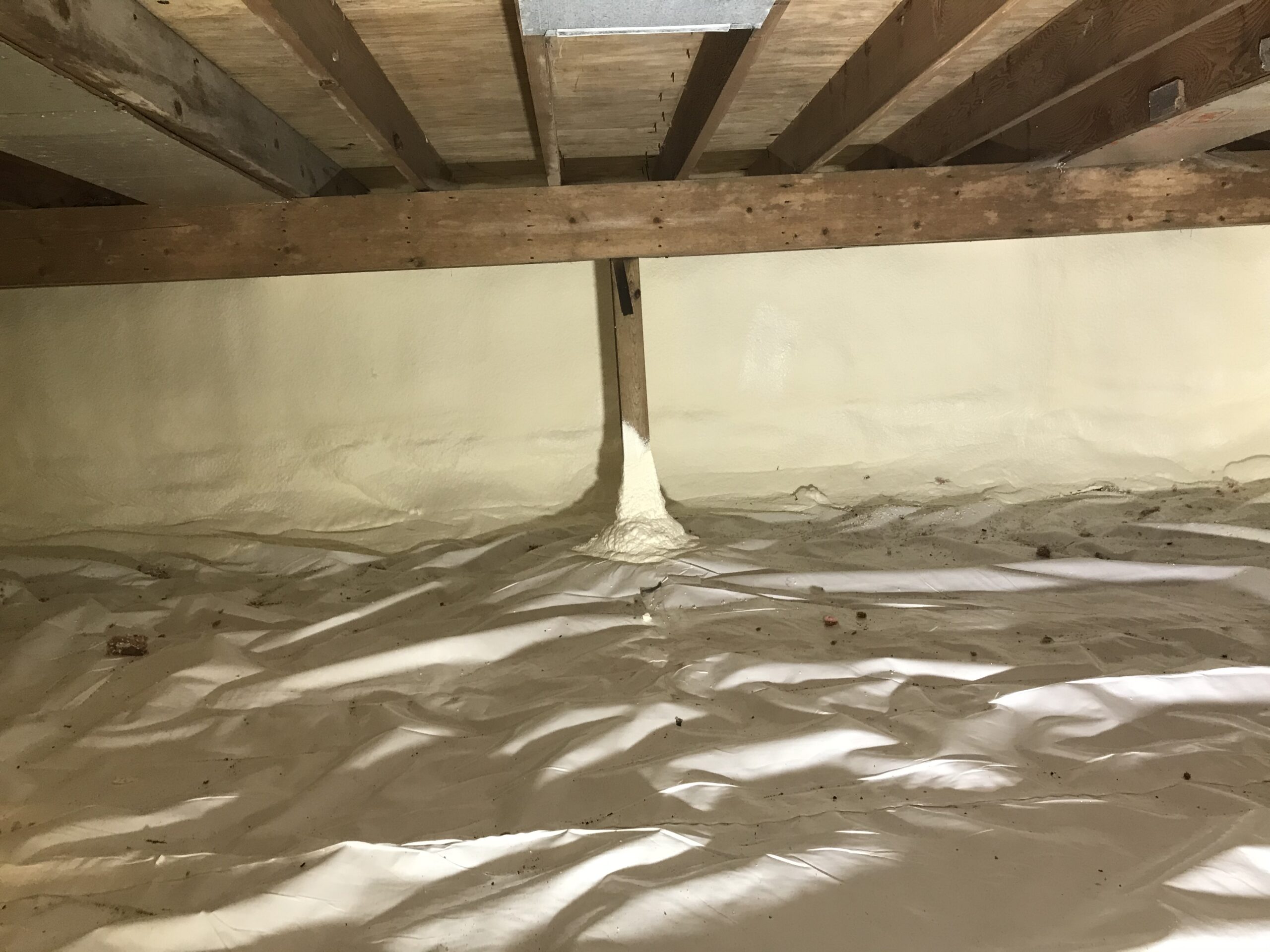
A professional spray foam contractor Iowa residents hire will apply closed-cell foam along foundation walls and rim joists. Closed-cell foam seals air leaks, adds structural strength, and blocks groundwater vapor.
5. Install Full Foundation Encapsulation
A heavy-duty 12-mil or 20-mil vapor barrier is laid across the earth floor and sealed up the foundation walls. Professional crawl space encapsulation Des Moines services transform damp crawl spaces into clean, dry storage zones.
Complete Building Envelope Protection Options
Managing moisture and air leakage requires consistent insulation standards across every part of a building structure.
Residential Foundation Upgrades
Protecting residential subfloors lowers heating demands and improves indoor air quality. Hiring an experienced home insulation contractor that Iowa families trust ensures proper air-sealing and insulation placement.
Commercial Building Solutions
Large facilities, warehouses, and offices face high energy loss through unsealed foundations and wall joints. Custom commercial building insulation Iowa applications keeps indoor temperatures stable while reducing long-term maintenance overhead.
How to Choose the Right Local Insulation Team
Remediating foundation spaces requires heavy-duty safety gear, specialized tools, and deep building science knowledge.
Consider these critical factors when searching for an insulation contractor Des Moines homeowners recommend:
- Proven Regional Track Record: Work with established contractors who understand local soil moisture challenges and freeze-thaw cycles.
- Comprehensive Services: Select teams that handle old material extraction, spray foam application, and vapor barrier installations.
- On-Site Safety Protocols: Proper containment equipment keeps dust, mold, and old fiberglass particles out of your living space.
- Transparent Project Estimates: Dependable companies offer clear pricing breakdowns and thorough foundation evaluations.
Protect Your Foundation with Precision Insulation & Coatings
Drooping foundation insulation ruins indoor comfort, wastes energy dollars, and exposes your home to wood decay. Upgrading your crawl space insulation in Iowa stops cold drafts at the source while preserving your structural foundation.
The expert team at Precision Insulation & Coatings provides specialized air-sealing, insulation removal, and spray foam application tailored to Midwest climate challenges. We help homeowners across Iowa eliminate dampness, lower energy bills, and maintain healthy indoor living environments.
Ready to fix your sagging subfloor insulation for good? Visit Precision Insulation & Coatings today to request your free insulation inspection and estimate!
Frequently Asked Questions
Why is my crawl space insulation hanging down?
Insulation sags when gravity pulls down batts that have absorbed groundwater vapor or airborne humidity. Weak wire stays and rodent damage also cause fiberglass rolls to fall away from wooden joists.
Should I replace sagging fiberglass with more fiberglass?
No. Installing new fiberglass batts in an unsealed under-floor space will lead to the same sagging, mold, and moisture problems within a few years. Closed-cell spray foam is a superior long-term fix.
What is crawl space encapsulation?
Crawl space encapsulation is a moisture-proofing process where thick plastic vapor barriers line the floor and walls, vents are sealed, and air is dehumidified. This transforms damp spaces into dry, energy-efficient building sections.
How much energy can I save by insulating my foundation space?
Sealing and insulating a damp under-floor space can reduce monthly heating and cooling bills by 15% to 30% by stopping air leakage through floor joists.
Can I clear out damaged insulation myself?
Self-removal is not recommended. Old insulation often contains rodent waste, sharp fiberglass fibers, and mold spores that require industrial vacuums, respirators, and protective suits to handle safely.