Every summer, Iowa homeowners spend money cooling their homes, only to lose that cooled air through gaps and poorly insulated areas. Meanwhile, hot, humid air can enter through an unprotected crawl space, creating moisture problems that affect comfort, energy use, and indoor air quality.
If you notice musty odors, cold floors in winter, or rising summer energy bills, your crawl space may be part of the problem. Moisture from the soil can contribute to mold growth, wood decay, and damage to floor structures. Air from the crawl space can also carry moisture and pollutants into your living areas.
For homeowners researching crawl space encapsulation in Des Moines, the big question is whether to insulate the underside of the floor or encapsulate the entire crawl space.
The right choice depends on moisture levels, existing insulation, ventilation, and the condition of the crawl space. Floor insulation can help reduce heat transfer between the crawl space and your home, while encapsulation addresses moisture by covering the ground and sealing the crawl space from outside air. In damp conditions, moisture control may need to come before adding insulation.
This guide compares crawl space encapsulation and floor insulation, explains when each option makes sense, and helps you choose the right approach for your Iowa home.
Why Iowa Weather Matters
Iowa’s cold winters, hot, sticky summers, and large fluctuations of moisture throughout the year create a challenging environment for home construction. When spring arrives and brings rain, it may reveal previously undetected moisture or drainage issues at the base of the foundation wall.
Weather changes can be very hard on crawl spaces. Warm, humid air coming into contact with cold concrete and wood will cause them to “sweat”. Additionally, water vapor can enter a crawl space via exposed dirt or cracks in the foundation. If moisture becomes trapped beneath your home, it may make the wood framing so wet that mold grows, and structural beams begin to rot.
The use of simple insulation for your floors does not stop water from coming up from the ground. However, the use of only a plastic sheet to prevent heat loss in your home will not work.
Therefore, when people require reliable crawl space insulation services in Des Moines, they must search beyond the scope of simple insulation rolls and thermal rating systems. A thorough assessment of the home will include an examination of ground moisture, identifying hidden air leaks, assessing the drainage around the foundation, and determining the appropriate location for the heat barrier within the home.
How Your Crawl Space Works
To stop wet air and mold, it helps to understand how air moves through a house. Homes act just like a chimney. Building scientists call this air movement the stack effect. Here is what happens inside your house every day:
- Warm air inside your home naturally moves up and leaks out through the attic.
- As that warm air leaves, it creates a light suction at the bottom of the house.
- That suction pulls air up out of your crawl space and right into your kitchen, living room, and bedrooms.
In fact, according to building science studies from the U.S. Department of Energy, up to 50% of the air you breathe on your main floor comes directly out of your crawl space.
Many older homes were built with open vents in the crawl space walls. Builders used to think these vents would let air blow through and dry things out. But during humid Iowa summers, outdoor air often holds over 75% relative humidity.
When hot, sticky summer air blows through those open vents, it hits cold wooden floor beams and metal AC ducts. That hot air drops below its dew point and turns into liquid water drops. That water pools on the wood, causing rot, sagging floors, and heavy mold growth within 24 to 48 hours.
What Is Crawl Space Insulation?
Crawl space insulation helps keep your home warm in winter and cool in summer by slowing the movement of heat between your home and the crawl space below it.
Traditionally, workers install pink fiberglass insulation between the wooden joists that support the first floor. They push the insulation against the underside of the floor and hold it in place with support wires.
However, this method does not cover the dirt floor or seal the crawl space from outside air. Moisture can still enter through the soil and foundation vents, which may lead to dampness, mold, and wood damage if left untreated.
That is why insulation alone may not solve every crawl space problem. If moisture is a concern, you may also need to control ground moisture and seal unwanted air gaps.
Why Fiberglass Insulation Fails in Damp Places
Fiberglass is fine for use in a home that has dry interior wall cavities. However, when used as insulation beneath an open, moist floor, fiberglass creates major issues.
- Fiberglass acts as an enormous sponge: It absorbs moist air quickly. Once it becomes saturated with water, it becomes heavier, loses its capability of preventing cold, and drops to the ground.
- Fiberglass insulation will cause wood to rot: The water that is held within the large amount of wet fiberglass will get caught between the fiberglass and your floors. As long as this water remains trapped there, it will begin to damage the wood joists and subfloor that support your home.
Insects and rodents will find a place to live when you have a falling fiberglass ceiling; they will make their home in the debris. These pests will leave a mess and waste, which is then pulled through the air of your living area.
When considering basic floor insulation, keep in mind that placing a fluffy fiberglass product in a wet area will typically cause the moisture problem to become worse.
What Is Crawl Space Encapsulation?
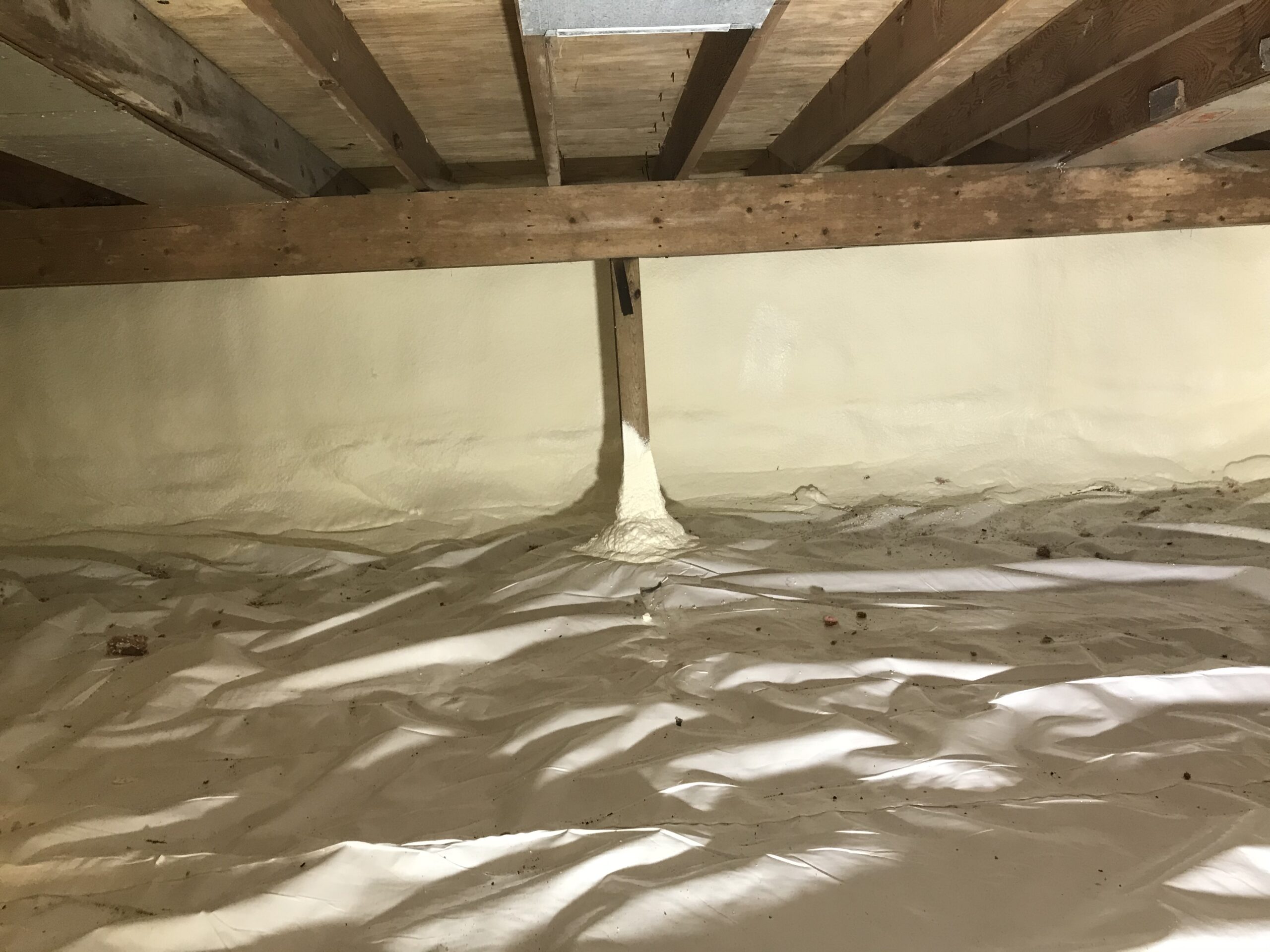
Crawl space encapsulation transforms a damp, dirty, and poorly lit crawl space into a cleaner, drier, and better-controlled environment. For homeowners considering crawl space encapsulation in Des Moines, the process typically involves covering the ground with a vapor barrier, sealing gaps and vents where appropriate, insulating the foundation walls when suitable, and managing moisture.
A qualified insulation contractor will assess the crawl space and determine the right approach for the home’s condition. A proper encapsulation project generally involves four primary steps:
- Closing All Wall Vents: Outside air vents and wall cracks are sealed tight with solid foam blocks and airtight spray.
- Laying a Heavy Plastic Floor Shield: A thick, heavy-duty plastic sheet (the protective crawl space vapor barrier Iowa homes need) covers the entire dirt floor and climbs up the foundation walls. Every seam is taped tight.
- Insulating the Outer Walls: Solid foam boards or closed-cell spray foam applied by a certified spray foam insulation company Iowa are attached directly to the concrete foundation walls.
- Adding Humidity Control: A small, heavy-duty crawl space dehumidifier runs automatically to keep relative humidity strictly below 50% year-round.
According to data from the U.S. Department of Energy, 1,000 square feet of exposed dirt can release 10 to 15 gallons of water vapor per day into your home. Encapsulation stops that water before it ever touches your floor beams.
Side-by-Side Comparison: Insulation vs. Encapsulation
| What You Need | Floor Insulation Alone | Full Crawl Space Encapsulation |
| Blocks Moisture & Wet Air | No — Wet air and groundwater still come right in | Yes — Completely blocks wet dirt and outdoor air |
| Cleans Indoor Air | No — Allows mold spores and damp air into your home | Yes — Keeps air dry, clean, and safe to breathe |
| Protects Floor Beams | Poor — Traps water against wood, causing rot | Great — Keeps floor wood bone-dry and strong |
| Cuts Energy Bills | Small — Floors feel slightly warmer | Big — Cuts heating and cooling loss by up to 15% to 20% |
| Stops Bugs & Mice | No — Pests love nesting in soft floor rolls | Yes — Seals off entry holes and food sources |
| How Long It Lasts | Short — Sags, gets wet, and ruins within a few years | Long — Tough materials built to last for decades |
Should You Combine Encapsulation and Insulation?
In addition to encapsulation, some homeowners may also need insulation because the two solutions address different problems. For homeowners considering crawl space encapsulation Des Moines, understanding this difference can help them choose the right combination for their home.
Encapsulation stops water vapor from the ground from getting into your crawlspace and prevents uncontrolled outside air from coming in. Insulation helps slow down the rate at which heat transfers through the foundation wall, as well as through the rim joist. Both of these improvements help to increase the level of comfort in your home, while at the same time decreasing the potential risk of moisture damage.
If your crawlspace is affected by both excessive moisture and extreme temperature fluctuations (either cold or hot), or if you are changing a traditional crawlspace that is ventilated into a sealed, clean crawlspace, then a combined system would be appropriate for your situation.
Before work begins, ask your contractor to answer these important questions:
- Where is the moisture coming from?
- Do you need drainage improvements or plumbing leak repairs first?
- Should the crawl space stay vented or become fully closed?
- Where exactly will the insulation and air barrier be installed?
- Do you need dedicated humidity control or air conditioning?
- Which specific materials and methods suit your home’s foundation?
You do not need every upgrade product on the market. You need a custom system designed specifically for the conditions beneath your home.
Common Crawl Space Mistakes to Avoid
Even when homeowners decide to upgrade, simple installation mistakes can ruin an expensive project. Here are the most critical mistakes to watch out for before you start:
- Treating a vapor barrier as waterproofing: A plastic ground membrane stops water vapor rising from the soil, but it will not fix bulk water leaks or standing puddles. Water intrusion and drainage problems must be fixed with proper sump pumps or exterior drains first.
- Installing insulation before checking for moisture: Always investigate and solve damp conditions before adding insulation. Otherwise, you end up trapping moisture against your home’s wood framing rather than solving the leak.
- Closing vents without a complete plan: Sealing off foundation vents alone is not a complete fix. A closed crawl space needs an active moisture-control strategy, including dedicated dehumidification or conditioned air.
- Choosing a contractor based only on price: Don’t just compare final quotes. Look at the full scope of work, material thickness, site prep, and moisture-control details offered by each team.
- Ignoring installation quality: Unsealed membrane seams, gaps around pipes, and poorly installed wall insulation drastically reduce performance. Ask your contractor exactly how they handle seam taping and air-sealing penetrations.
Avoiding these common pitfalls ensures your crawl space upgrade actually delivers long-term protection instead of creating new hidden problems.
Which Choice Is Best for Humid Weather?
States that experience very hot summers and very cold winters, and are also quite humid, have a definite advantage in using both crawl space encapsulation and wall insulation.
Installing simple floor insulation in a wet crawl space is like placing a small Band-Aid over a leaking pipe. It masks the damage for a short period of time, while the water continues to damage your home’s structural framing below. When you combine encapsulation with wall insulation and avoid some of the most common installation mistakes, you will create a long-term protective barrier for your foundation.
Frequently Asked Questions
Does sealing the crawl space mean I don’t need a dehumidifier?
You still need a small crawl space dehumidifier. While the thick plastic liner stops groundwater, small bits of damp air can still sneak in when you open the crawl space access door. A dedicated dehumidifier keeps humidity under 50% so mold can never grow.
Can I put down a plastic sheet by myself?
Laying down a basic plastic sheet helps a little bit, but full encapsulation takes specialized tools and materials. You must seal wall vents, wrap support posts, tape seams airtight, insulate walls, and set up proper moisture controls. Small mistakes leave hidden gaps where mold can grow unseen.
Does encapsulation add real value to a home?
Yes! Encapsulation protects your house foundation from wood rot and structural failure. It makes your home much easier to sell, lowers your monthly power bills, and reassures home buyers that the building is structurally sound.
Don’t Wait Until Your Floors Start to Sag
Every single day you leave your crawl space open to Iowa’s humidity, moisture quietly eats away at your subfloor joists, inflates your power bills, and sends dirty air into your living room.
What starts as a minor musty smell can quickly turn into tens of thousands of dollars in structural floor repairs and mold cleanup.
Stopping ground moisture today is the single most effective step you can take to safeguard your home’s structural integrity, protect your family’s respiratory health, and permanently stop energy loss from the floor up.
Take control of your home’s air quality and structural strength right now. Contact our local specialists today for a professional inspection and secure your custom solution for crawl space encapsulation Des Moines homeowners depend on before the next season hits.