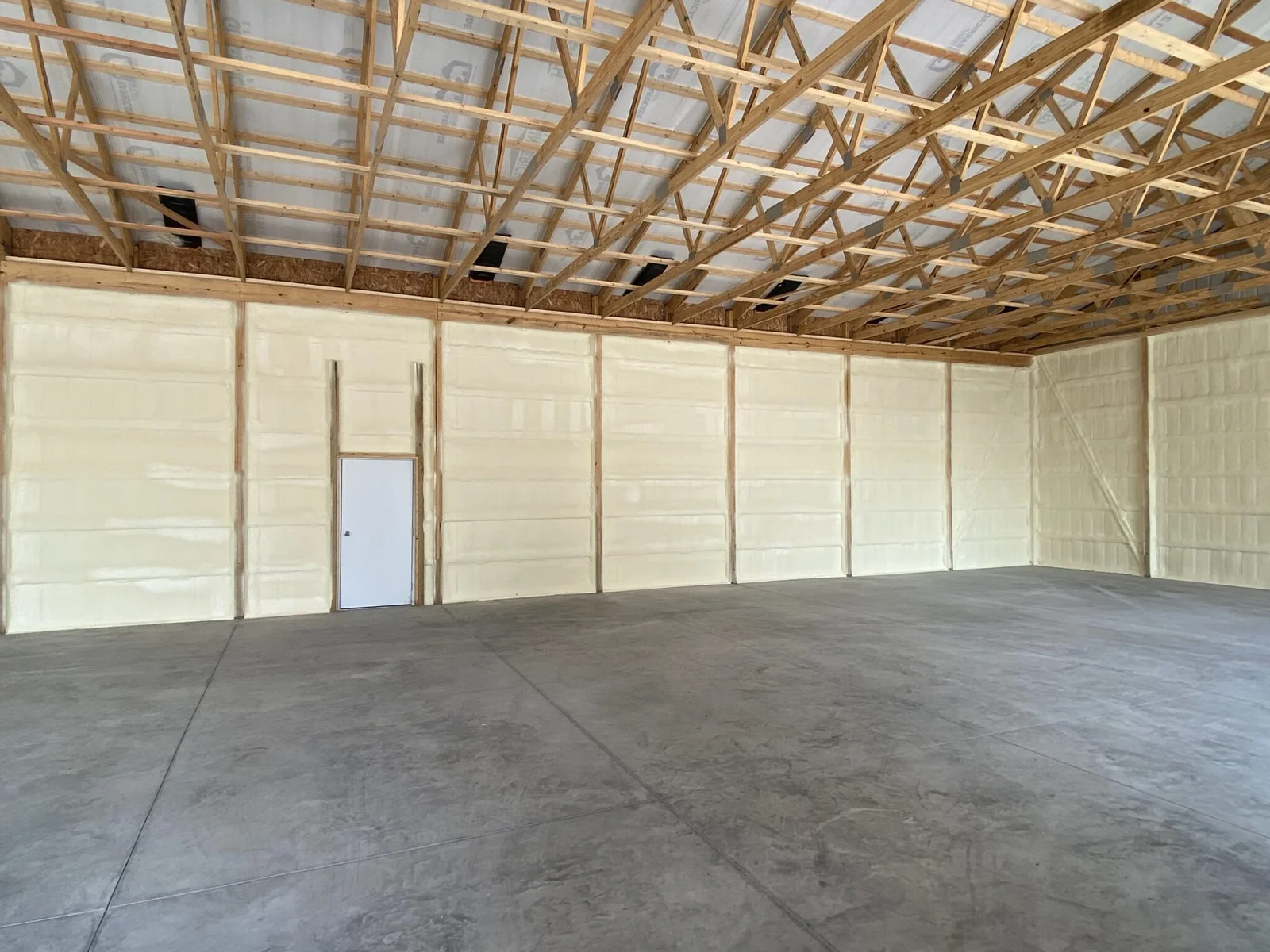
Are you planning to build a new barndominium in Iowa? It’s such a wonderful experience to have one, right? But amidst the excitement, don’t forget to make provisions for its proper protection. You may be thinking, what can you do? Well, all you have to do is insulate your building!
But with which material, as there are so many options available in the market? Good question! You can opt for spray foam insulation for garages in Iowa. Now, you will ask why? To know the reason, read this blog post till the end.
Let’s begin reading now!
How Spray Foam Works Inside a Garage or Barn Wall
Spray foam insulation is made of two liquids that expand to fill cracks and harden against surfaces. Because a lot of heat is lost through air moving through even thick insulation, expansion is important. The Department of Energy says a blower door test can reveal a lot of hidden leaks. Foam stops those pathways while also providing an insulating barrier.
Beware! Don’t try to adopt the insulation plan for barndominiums and garages altogether. They are two different things. The former is a large post frame or steel building that a person or people reside in. Whereas the latter is a small box with large doors that open all day.
Other than the structural differences, they differ in the manner of protection. Garages need buffering and moisture protection. On the other hand, barndominiums need steady comfort, humidity control, and a continuous envelope.
What a Cold, Leaky Garage Costs You Every Winter
Temp swings in garages cause expansion and contraction in materials and can cause rust. Paint thickens, and the garage floor stays cold. The best way to deal with temps swings is to install insulation on the walls and ceiling to maintain a steady temperature.
Attached garages
Attached garages share walls and ceilings with living space. Heat leaks through those shared surfaces, which can leave bedrooms above the garage cold. Insulating them protects comfort inside the house too.
Detached garages and workshops
Detached buildings have no house to lean on, so the shell does all the work. The right garage spray foam insulation Iowa shops can use should control moisture as well as heat. Warm, humid air meeting cold surfaces creates condensation, and condensation invites rust and mold. A steady interior also helps with finishes, adhesives, and long days at the bench. Storage corners benefit as well, because stable temperatures protect paint, batteries, and equipment.
Barndominiums Need a Different Plan Than a Shop
Steel moves heat fast. Warm indoor air touching a cold metal wall or roof deck can condense into water. Spray foam bonds directly to the metal, which removes the cold surface that moisture needs.
Roof decks and exterior walls usually come first, since they face the weather. Ceilings over living areas may call for a different approach, depending on how the roof is built. Air sealing around doors, windows, and penetrations matters as much as thickness. Every transition between roof, wall, and ceiling is a possible leak point. A barndominium insulation contractor Iowa owners hire should explain how those areas connect.
Living and shop sections also behave differently. Bedrooms and kitchens need tight air sealing and planned ventilation. A shop may tolerate a lighter assembly, though fumes, dust, and humidity still need attention. The Department of Energy calls moisture control critical in airtight, well-insulated homes.
Open-Cell or Closed-Cell? Match the Foam to the Space
Both types seal air leaks, but they behave differently in a garage or barndominium. The right choice depends on building design, location, moisture conditions, and intended use.
| Factor | Open-cell | Closed-cell |
| Typical R-value per inch | About R-3.5 to R-3.7 | About R-6 to R-6.5 |
| Moisture | Vapor permeable | Resists water and vapor |
| Air sealing | Strong | Strong |
| Common fits | Interior walls, conditioned ceilings | Metal roofs and walls, damp areas |
| Installation | Needs more thickness for the same R-value | Needs less thickness |
Closed-cell foam usually suits steel roofs and walls, where condensation risk runs high. Open-cell foam often works well inside conditioned spaces, where moisture risk is lower and cost matters. Garage spray foam insulation Iowa projects sometimes use both types in different areas. Your installer should explain why a given choice fits your building, not just quote a price.
Iowa Weather Makes Half Measures Expensive
The garage spray foam insulation buildings need must handle cold winters, humid summers, and big temperature swings. Those swings push air through leaks and create condensation on cold surfaces.
Four pieces have to work together. Insulation thickness sets thermal resistance. Air sealing stops leaks. Ventilation moves stale, humid air out. Moisture management keeps water from collecting where it can’t dry. The Department of Energy’s consumer guide to air sealing explains that air sealing and ventilation go hand in hand.
Anyone pricing spray foam insulation Des Moines, Iowa projects should ask how a plan handles all four.
What to Expect From a Garage Spray Foam Insulation Iowa Contractor
Experience with the building type matters more than a polished brochure.
| What to look for | What it tells you |
| Garage and metal building experience | They understand steel, slabs, and door openings |
| Open-cell and closed-cell knowledge | They can match foam to moisture conditions |
| Surface preparation | Foam bonds better to clean, dry substrates |
| Moisture assessment | They plan for condensation before spraying |
| Code and safety awareness | They address barriers, ventilation, and reentry times |
| Clear written estimates | You can compare scope, thickness, and areas covered |
When researching barndominium insulation contractors in Iowa, go with the one who walks the building first and simply outlines the plan.
Precision Insulation and Coatings works along these lines. Based in Elkhart, we offer spray foam insulation for Des Moines, Iowa property owners and can book through a free on-site estimate. We also serve Central Iowa and handle garages, barndominiums, and metal buildings with open-cell and closed-cell foam
Paying Once Instead of Paying Twice
Pricing insulation by the installed cost only benefits the insulation contractor. They don’t factor in prep time and quality. It’s not uncommon for condensation and drafts to remain after the insulation is installed. Sometimes it costs more to do it right than to do it wrong.
Done well, garage spray foam insulation in Iowa improves comfort, trims energy waste, and protects the structure.
Make sure to look at the building itself before settling on a system. Note how various spaces are used, where drafts and condensation occur. Look to see if the walls and roof are steel, wood, or a combination of both. Then, arrange for a site visit to review plans and examine prices. Look at plans, not just prices.
Call now (515) 417-2025 or use the contact page to book a free on-site estimate.
Frequently Asked Questions
Q1. Is spray foam insulation suitable for garages in Iowa?
Yes. Spray foam seals air leaks and insulates, which makes it a good choice for Iowa’s humid summers and freezing winters. Open-cell and closed-cell foams both work; closed-cell foam is better if the space is exposed to moisture and/or if the space is unconditioned.
Q2. What is the difference between open-cell and closed-cell spray foam?
Open-cell foam is softer and also vapor-permeable, about R-3.5 to R-3.7 per inch. Closed-cell foam is denser and resistant to water, about R-6 to R-6.5 per inch. Closed-cell is also more expensive.
Q3. How much spray foam insulation does a barndominium need?
It depends on the roof and wall assembly, local energy code, and how the space is used. An installer should calculate thickness for each area during an on-site inspection rather than applying one number everywhere.
Q4. Can spray foam insulation help prevent condensation in metal garages?
Yes, when applied correctly. Foam bonds to the metal surface, so warm, humid air has no cold steel to condense on. Closed-cell foam is commonly chosen here, and ventilation still matters for controlling indoor humidity.
Q5. How do I choose the right garage spray foam insulation in Iowa?
Start with how you use the space, then check moisture conditions and building type. Ask contractors for written plans covering foam type, thickness, preparation, and ventilation, and compare them side by side.