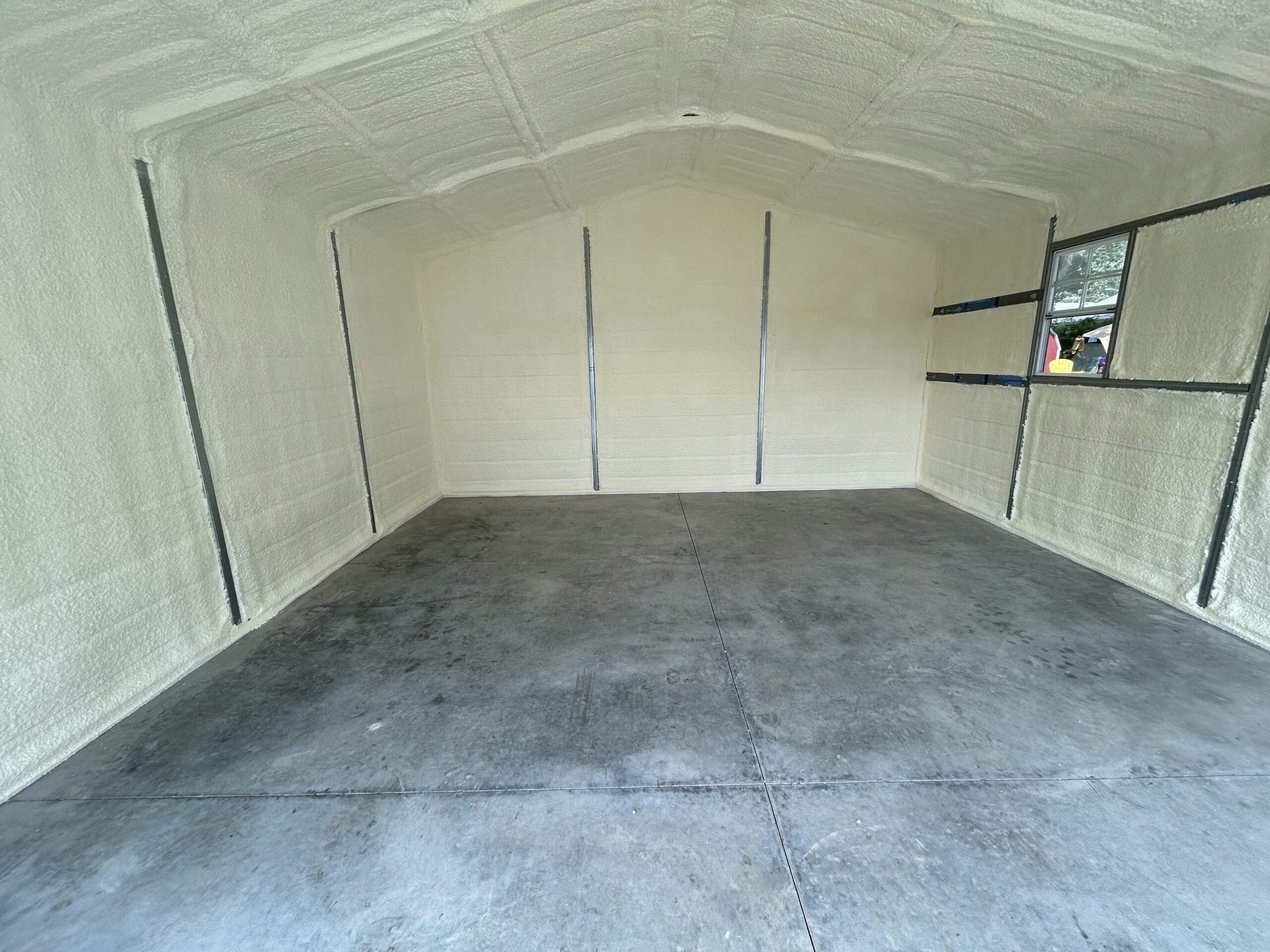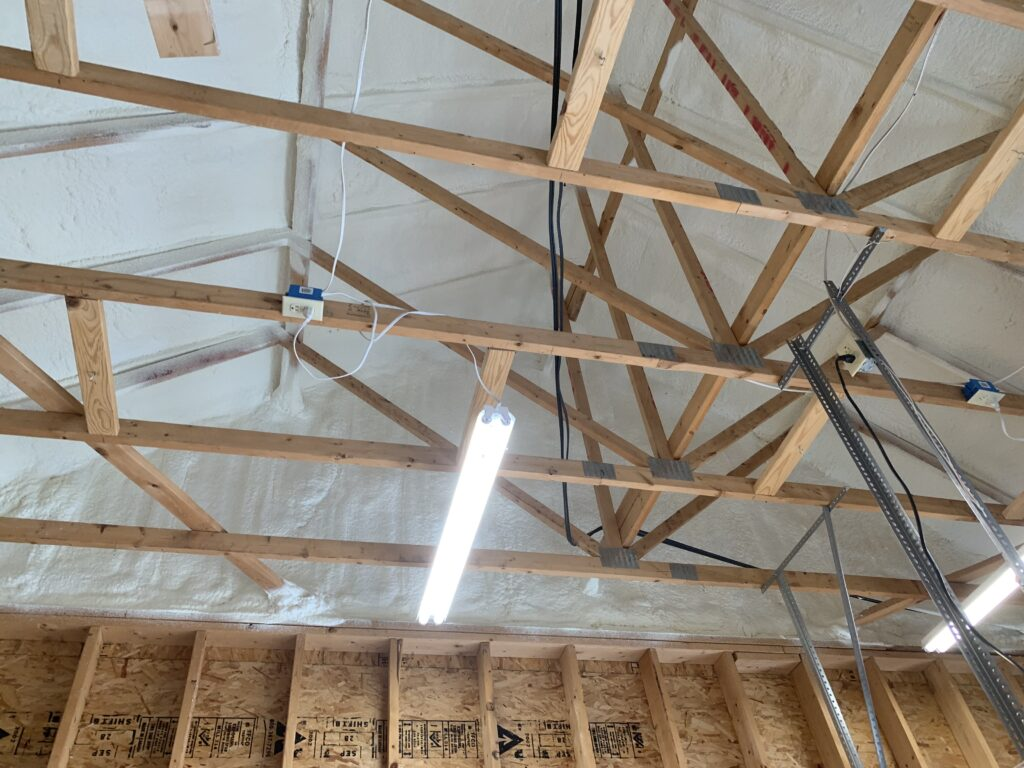
Running a commercial building in Des Moines means dealing with big temperature swings, humid summers, windy shoulder seasons, and long stretches where HVAC runs harder than you’d like. If you manage an office, retail space, warehouse, medical facility, or mixed-use building, energy waste usually isn’t coming from “bad equipment” first; it’s coming from the building envelope. It has tiny gaps, leaky rooflines, rim areas, wall penetrations, and aging insulation that no longer performs as it should.
That’s where spray foam insulation earns its reputation in commercial work. When it’s designed and installed correctly, it does two jobs at once: insulates and air-seals. And in a commercial building, where square footage is high, operating hours are long, and comfort complaints are expensive, those two things matter.
Below is a practical breakdown of the real-world benefits of spray foam insulation in Des Moines commercial buildings, where it makes the biggest impact, and what to look for when you’re searching “spray foam insulation contractors near me” or comparing insulation contractors in Des Moines, IA.
1) Stops Air Leakage
Most buildings don’t lose money because the insulation R-value is a little low. They lose money because air is moving through the assembly, around penetrations, at roof-wall transitions, at dock doors, through wall cavities, and above drop ceilings.
Spray foam helps because it expands into cracks and seals irregular surfaces. That continuous seal can reduce drafts, hot spots, cold spots, and the constant battle between thermostat settings and actual comfort.
The U.S. Department of Energy highlights air sealing as a key part of improving building comfort and energy performance, because uncontrolled air movement undermines insulation and drives HVAC load.
What this means in a Des Moines commercial space:
- Fewer cold drafts near perimeter offices and conference rooms
- More stable temperatures in retail storefronts and customer areas
- Less “back-and-forth” HVAC cycling in warehouses and light industrial buildings
- Reduced infiltration of dust and outdoor humidity in many building types
2) Better Hvac Efficiency
When the envelope is leaky, HVAC has to “condition the outdoors.” Tighten the building, and the same equipment can often maintain setpoints more easily, especially during heat waves and deep winter cold snaps. ENERGY STAR’s guidance is consistent: sealing leaks and improving insulation can reduce energy waste and improve comfort.
Even though much of ENERGY STAR’s consumer content is home-focused, the building science principle is the same: air leakage + weak insulation = higher energy use. For many commercial property owners, this becomes a straightforward financial decision:
- Less runtime
- Less wear and tear
- More consistent temperatures
- Potentially fewer comfort complaints and tenant issues
3) Moisture Control And Condensation Risk Reduction
Des Moines sees humid months where warm, moisture-laden air tries to migrate into cooler interior spaces and assemblies. In commercial buildings, condensation isn’t just “annoying”; it can damage roof decks, corrode metal components, create odor issues, and contribute to mold conditions in the wrong assemblies.
Spray foam can help manage moisture risk when it’s specified correctly (foam type, thickness, and placement matter). The EPA’s moisture control guidance emphasizes controlling moisture movement through building assemblies and managing the conditions that create condensation problems.
Where this shows up locally:
- Metal buildings and pole-barn style commercial structures
- Rooflines and roof deck assemblies where warm, humid air meets a cold surface
- Perimeter wall cavities with lots of penetrations and thermal bridges
- Older buildings with inconsistent air barriers
4) Strong Performance In Hard-To-Insulate Areas
Commercial buildings are full of awkward spots that traditional insulation struggles to handle:
- Rim joists and band boards
- Mechanical and electrical penetrations
- Parapet walls
- Roof-wall junctions
- Curved or irregular surfaces
- Renovation conditions where framing isn’t perfect
Spray foam’s advantage is coverage and adhesion. It fills, seals, and insulates in places where batts can sag, blow-in can shift, and rigid board can leave seams. If you’ve been hunting for “insulation contractors in Des Moines” because your building has comfort issues you can’t diagnose, these are the places a good contractor will inspect first.
5) Helps Meet Energy Code Expectations For Air Barriers
Commercial energy codes increasingly focus on air leakage control and verified envelope performance. Spray foam is often used as part of an air barrier strategy because it can form a continuous layer in many assemblies.
The International Energy Conservation Code (IECC) includes commercial provisions addressing air barriers and air leakage control. And DOE’s Building Energy Codes resources discuss commercial envelope requirements and documentation in the IECC context.
Important note: Code compliance depends on the full assembly and the project details. Spray foam can support compliance, but it’s not a “magic stamp.” The installer and designer still need to get the assembly right.
6) Improved Indoor Comfort
Comfort is not just temperature; it’s temperature consistency. In commercial buildings, the complaints usually sound like:
- “The back offices are always freezing.”
- “The lobby is hot in the afternoon.”
- “We can’t keep the warehouse stable.”
- “We’re always adjusting thermostats.”
Air sealing plus insulation reduces the swings. That can be a big quality-of-life upgrade for offices and customer-facing spaces, and it can reduce tenant churn in multi-tenant buildings where comfort drives satisfaction.
7) Potential Noise Reduction
Commercial spray foam insulation can help with sound control by reducing air pathways that carry noise. This is especially helpful in:
- Retail strip centers with shared walls
- Offices adjacent to mechanical rooms
- Mixed-use buildings
- Buildings near busy roads where drafts also carry sound
It’s not a full acoustic system by itself, but it can noticeably cut down on “leaky building” noise transmission.
8) Better Longevity In The Right Application
In commercial settings, maintenance headaches cost real money. Spray foam can be durable in many applications because it adheres to surfaces and doesn’t sag like some traditional materials can over time. That said, longevity depends on:
- Proper substrate prep
- Correct foam chemistry and ratio
- Proper thickness for the intended assembly
- Proper curing and protection where required
This is why the contractor matters. When you search “spray foam insulation contractors near me,” you’re not just buying material, you’re buying installation quality.
Where Spray Foam Makes The Most Sense In Des Moines Commercial Buildings
Every building is different, but these are common high-ROI areas:
Rooflines and roof decks
Commercial roofs are notorious for air leakage at transitions, penetrations, and edges. Spray foam can help create a more continuous thermal and air control layer in certain roof assemblies, depending on design.
Rim areas and perimeter leakage zones
Especially common in older commercial construction and renovations. These areas can be “silent energy leaks.”
Metal buildings and warehouses
Condensation control and air sealing are often major drivers here, not just comfort.
Build-outs and tenant improvements
When walls are opened up, it’s a good time to correct envelope weaknesses that are hard (or impossible) to fix later.
Open-Cell Vs. Closed-Cell Spray Foam For Commercial Projects
This is where a real conversation matters, because “spray foam” isn’t one thing.
Closed-cell foam:
- Higher R-value per inch
- More rigid
- Lower permeability (can function as a vapor retarder in certain conditions)
- Often used where space is tight or added structural rigidity is helpful
Open-cell foam:
- Lower R-value per inch than closed-cell
- Softer, more flexible
- More vapor-permeable
- Sometimes used where drying potential is desired in an assembly
The best option depends on where it’s going (roofline vs walls vs rim areas), what the existing assembly is, and how moisture is expected to move through the building.
What To Ask Before Hiring A Spray Foam Insulation Contractor In Des Moines
If you’re comparing commercial insulation contractors in Des Moines, IA, these questions help separate solid operators from “spray-and-go” crews:
- What problem are we solving: comfort, moisture, energy, or all three?
- Which foam type and why? (Open-cell vs closed-cell should have a reason.)
- How will you address penetrations and transitions? That’s where air leaks live.
- What thickness are you targeting in each area, and what does that achieve?
- How do you handle ventilation and combustion safety where relevant? (Especially in certain retrofit conditions.)
- What does the site protection and cleanup plan look like? Commercial operations can’t afford mess or downtime.
A good local contractor will walk the building, talk through the assembly, and give you a plan that matches how the building actually behaves.
Why Commercial Building Owners In Des Moines Choose Precision Insulation & Coatings
When you’re making envelope upgrades, you want work that’s clean, predictable, and built for long-term performance, not just “more insulation.”
Precision Insulation & Coatings focuses on spray foam solutions that improve the building envelope where it matters most: air leakage control, thermal performance, and moisture-risk awareness for real Midwestern conditions. That’s the goal, one well-designed improvement that makes your HVAC’s job easier every day.
Conclusion: A Tighter Building Is A Cheaper Building To Run
For commercial properties in Des Moines, spray foam insulation is less about “adding insulation” and more about fixing the envelope: stopping air leakage, improving comfort, reducing moisture risk, and easing the load on HVAC. If your building has hot/cold zones, high energy bills, or persistent humidity/condensation issues, the fastest path to improvement is often in the roofline, perimeter, and penetrations, not in another thermostat adjustment.
If you’re ready to get serious about building performance, contact Precision Insulation & Coatings to schedule a site visit and talk through the best spray foam approach for your commercial building in Des Moines. You’ll get clear recommendations based on how your building is built and how it actually runs, so you can invest once and feel the difference every day. Call us now.
FAQs
1) Is spray foam insulation worth it for commercial buildings in Des Moines?
In many commercial buildings, yes, especially if the building has noticeable drafts, inconsistent temperatures, or moisture/condensation concerns. The biggest wins often come from air sealing plus insulation working together, not insulation alone.
2) Where does spray foam perform best in a commercial building?
High-impact areas often include rooflines/roof decks (depending on design), rim and perimeter leakage zones, metal building assemblies, and penetrations where air leakage is hard to stop with traditional materials.
3) Will spray foam help reduce condensation in metal buildings?
It can, when it’s specified correctly and installed as part of a proper moisture-control strategy. Condensation control depends on the assembly, indoor conditions, and how moisture moves through the structure. EPA moisture-control guidance is a helpful reference for understanding the principles.
4) How do I find the best spray foam insulation contractors near me?
Look for contractors who can explain foam selection, thickness targets, and how they’ll handle transitions and penetrations. A quality contractor will inspect first and recommend an approach that fits your building type, not a one-size-fits-all bid.