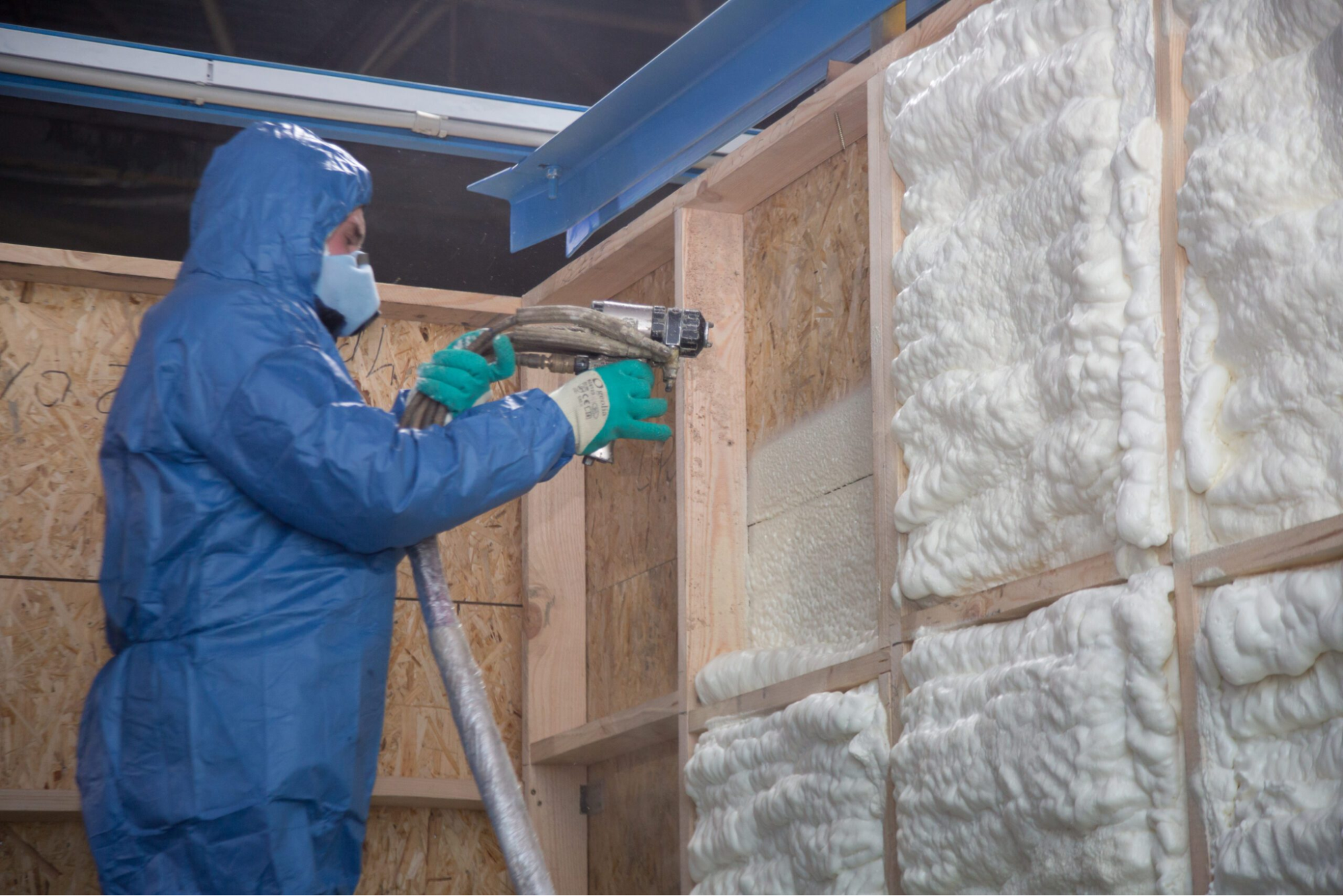
If your garage is too hot in summer and too cold in winter, the fix usually isn’t a bigger heater; it’s stopping air leaks and insulating the right surfaces in the right order.
For most attached garages, the biggest comfort and safety win comes from sealing and insulating the boundary between the garage and the living space before you worry about “finishing the whole garage.”
A garage can be a workshop, home gym, storage space, or simply the room that makes the bedroom above it miserable. When homeowners start looking for Garage Insulation Contractors in Des Moines, IA, they’re usually chasing one of three outcomes:
- Reduce temperature swings,
- Cut drafts into the house,
- Stop garage odors/exhaust from sneaking indoors.
This guide gives you a garage-first plan, plus when Insulation Removal Iowa is the right first move before you install anything new.
Why Do Garages In Iowa Feel Impossible To Keep Comfortable?
Garages are tough because they’re often:
- Unconditioned (no supply air, no return)
- Full of air leaks (rim joists, penetrations, leaky doors)
- Built with big temperature differences across a thin boundary
Proof-of-human check: If a room above the garage is always colder in winter, stand in the garage under that room and look up. If you see gaps, missing batts, or an unsealed rim/band area, you’ve found your comfort leak path.
Decision rule: If the problem shows up in the house (cold floors, garage smells), treat the garage like an exterior zone and focus on air sealing + insulation at the shared boundary first. DOE specifically calls out insulating walls between living spaces and unheated garages.
What Should You Insulate First: The Ceiling, The Shared Wall, Or The Door?
Here’s the order that produces results without wasting money.
1) The shared boundary (house ↔ garage)
That includes:
- the wall between the garage and the house, and
- the ceiling/floor assembly if there’s living space above.
DOE’s DIY guidance for floors over unconditioned garages recommends air sealing gaps first between the garage and the conditioned space (including rim/band joists), then insulating.
Common mistake: Installing insulation but leaving the rim/band area leaky. That’s where a surprising amount of air movement happens.
2) Rim/band joists and penetrations
Building America guidance emphasizes sealing seams, gaps, holes, and openings in the air barrier separating an attached garage from the house before insulating.
3) The garage door (only after the boundary is handled)
A nicer door kit helps, but it won’t fix a leaky ceiling plane or an unsealed shared wall.
When Do You Actually Need Insulation Removal In Iowa Before Upgrading?
You don’t need to remove insulation just because it’s old. You remove it when it’s not trustworthy or is blocking the work.
You should strongly consider Insulation Removal Iowa when:
- Insulation is wet, collapsed, or moldy-looking (moisture problems need inspection, not burial)
- There’s pest contamination (droppings/nesting)
- Insulation is full of debris or drywall dust from past projects
- You need access for air sealing/repairs, and the old material is in the way
Proof-of-human check: Pull back a small area of insulation (if safely accessible). If it’s dirty, clumped, or smells strongly, you’re usually better off removing and starting clean.
Safety note: If you ever encounter suspect vermiculite insulation, avoid disturbing it and follow EPA guidance (vermiculite can be associated with asbestos).
What Does A “Done-Right” Garage Insulation Retrofit Look Like?
This is the workflow you want in writing from Garage Insulation Contractors in Des Moines, IA:
Assessment
- Identify the garage-to-house boundary, the worst leaks, and whether old insulation is compromised.
Air sealing (first)
- Seal gaps between the garage and the conditioned space (rim/band joists, penetrations). DOE’s garage-floor guidance recommends air sealing before insulating.
Insulation Removal Iowa (only if needed)
- Remove wet/contaminated/blocked insulation so the boundary can be sealed correctly.
Install insulation to match the surface.
- Ceiling/floor assembly above the garage, shared wall, and any exposed cavities.
Detailing
- Ensure the air barrier remains continuous (no “open joist bays” or missing blocking at edges).
Verification
- Photos, coverage confirmation, and a walkthrough, especially around the rim/band and shared wall.
Timeline driver: A garage with open framing is faster than a fully drywalled ceiling, where work requires careful drilling/patching.
Which Insulation Material Fits Which Garage Surface?
Here’s a simple table to help you choose the right tool, not the most expensive tool.
| Garage area | Common insulation options | Why it works | What to verify |
| Ceiling in a bedroom | Fiberglass batts or spray foam | Batts add R-value; foam also air seals | No gaps, batts supported, penetrations sealed |
| Shared wall (house/garage) | Fiberglass batts, spray foam at leaks | Walls need consistent cavity fill | Airtight at outlets/penetrations; full cavity contact |
| Rim/band joist | Spray foam or rigid blocking + sealant | Major leak zone; sealing matters first | Continuous seal; no missed edges |
| Garage attic (if present) | Blown-in after air sealing | Great coverage over large areas | Air sealing is completed first |
Decision rule: If air leakage is the dominant issue, a solution that includes sealing (or spray foam at key leak zones) usually outperforms “more batts.”
How Do You Choose Garage Insulation Contractors In Des Moines, Ia Without Guessing?
Use this short interview script. It exposes weak scopes immediately.
Ask:
- “Will you air seal the rim/band and penetrations before insulating?”
- “Which surfaces are you insulating: shared wall, ceiling, rim/band, garage attic?”
- “Do you recommend Insulation Removal Iowa for my garage? And what’s the reason (moisture, pests, access)?”
- “What will you provide for verification: photos, depth markers, coverage checks?”
- “Can you include your {PROCESS}, {WARRANTY}, and {LICENSES_CERTS} in the estimated packet?”
If the quote is one line (“insulate garage”), it’s not a plan. It’s a placeholder.
Conclusion
A comfortable garage starts with the boundary that matters: the shared wall, the ceiling under the living space, and the rim/band leaks that connect the garage to your home. If old insulation is wet, contaminated, or blocking the work, Insulation Removal Iowa is the right first step, so that the new insulation actually performs. When you’re comparing Garage Insulation Contractors in Des Moines, IA, pick the crew that leads with air sealing, writes the scope clearly, and verifies the result. Precision Insulation & Coatings can build that kind of plan.
FAQs
Should I insulate my garage in Iowa?
If the garage shares walls/ceilings with living space, insulating that boundary can improve comfort and help reduce air exchange between the garage and the house.
What should I insulate first in an attached garage?
Start with the boundary between the garage and the house. Air seal first, then insulate the shared wall and the ceiling/floor above.
Do I need insulation removal in Iowa before installing new insulation?
Not always. It’s most common when insulation is wet, contaminated, or blocking air sealing and repairs.
What does insulation removal usually include?
Professional removal often uses high-powered vacuums to extract loose-fill materials and bag them for disposal, plus containment to keep dust down (methods vary by contractor and material).
Is spray foam good for garages?
It can be, especially for rim/band areas and leak-prone transitions. It’s not required everywhere; many garages do well with targeted sealing + fiberglass or blown-in where appropriate.
Can insulating the garage help with fumes entering the house?
Air sealing the garage-to-house boundary helps reduce air movement paths. DOE’s guidance explicitly calls out air sealing gaps between the garage and the conditioned space.
How can I tell if my garage walls are insulated?
Remove an outlet cover on the garage side and look inside with a flashlight (carefully). In older garages, you may find empty cavities.
Will insulating the garage make it a “conditioned space”?
Not by itself. Insulation reduces heat transfer. Conditioning depends on whether the space is heated/cooled and how airtight the boundary is.