Barndominiums are built differently than a typical stick-framed house, and that’s exactly why they can be vulnerable to air leaks, condensation, and moisture damage if the building envelope isn’t handled the right way.
Most barndos have a metal shell, wide spans, fewer interior partitions, and lots of seams and penetrations (roof-to-wall transitions, fasteners, purlins, eave lines, doors, windows, plumbing, electrical runs). All of those details create the same two problems: air finds a way through, and moisture follows the air.
In Iowa, where winters are cold and dry, and summers can be hot and humid, that air movement becomes expensive, fast, drafty rooms, uneven temperatures, high HVAC runtimes, and that “why does it feel damp in here?” problem that shows up around corners, ceilings, and metal surfaces.
The good news: you don’t need a complicated solution. You need a tight air barrier, the right insulation strategy, and smart moisture control so the building can stay warm, dry, and comfortable year-round.
Why Barndominiums Fight Moisture Harder Than Regular Homes
A barndominium insulation in Iowa often uses metal panels and framing components that conduct heat quickly. That matters because condensation happens when warm, moisture-laden indoor air hits a cold surface, and metal gets cold fast. If the envelope leaks, indoor air reaches the underside of roof panels or cold exterior surfaces and condenses. Over time, that can mean:
- Rust and corrosion on metal components
- Damp insulation that loses performance
- Mold-friendly conditions in enclosed cavities
- Stained ceilings, musty smells, and warped finishes
Moisture control isn’t just “adding insulation.” It’s stopping air movement, because air movement is how most moisture gets into building cavities. The U.S. EPA’s moisture guidance is blunt about it: prevent moisture problems by controlling how water and humid air move through the building during design and construction.
The Real Fix: Air Sealing First, Then Insulation
In building design, insulation performance cannot be evaluated solely by its R-value. Uncontrolled air leakage can significantly reduce its effectiveness by allowing conditioned air to escape and unconditioned air to enter. This not only increases energy consumption but also introduces moisture into building assemblies, which can compromise durability and indoor air quality.
The U.S. Department of Energy emphasizes air sealing as a fundamental step in improving energy efficiency, maintaining occupant comfort, and protecting the building structure.
Guiding principle for barndominiums: Air sealing is essential to overall performance; insulation supports and sustains that performance.
Where Barndominiums Leak Air
If you want to prevent moisture, you need to know where it starts. In most barndominiums, the biggest leakage points are:
1) Roof-to-wall transitions and eave lines
These are common “hidden highways” for wind washing and humid air movement.
2) Ridge lines, panel seams, and fastener lines
Even small gaps across long runs add up to a lot of air exchange.
3) Doors, windows, and overhead garage doors
Big openings, frequent use, and imperfect weatherstripping make these high-risk.
4) Penetrations
HVAC linesets, electrical mast, plumbing vents, hose bibs, bath fans, range hood ducts, these are often “good enough” sealed, which isn’t good enough for a barndo.
5) Slabedge/rim area
Where the wall system meets the slab, air leaks and cold surfaces can create condensation risk.
Choosing The Right Insulation For Moisture + Air Leak Control
Different insulation materials behave very differently in barndominiums.
Fiberglass and cellulose
Fiberglass and cellulose can work in barndos only when air sealing is done thoroughly, and the assembly is designed to manage moisture correctly. If air leaks remain, these materials can allow airflow through or around them, and that’s where performance drops.
Spray foam insulation
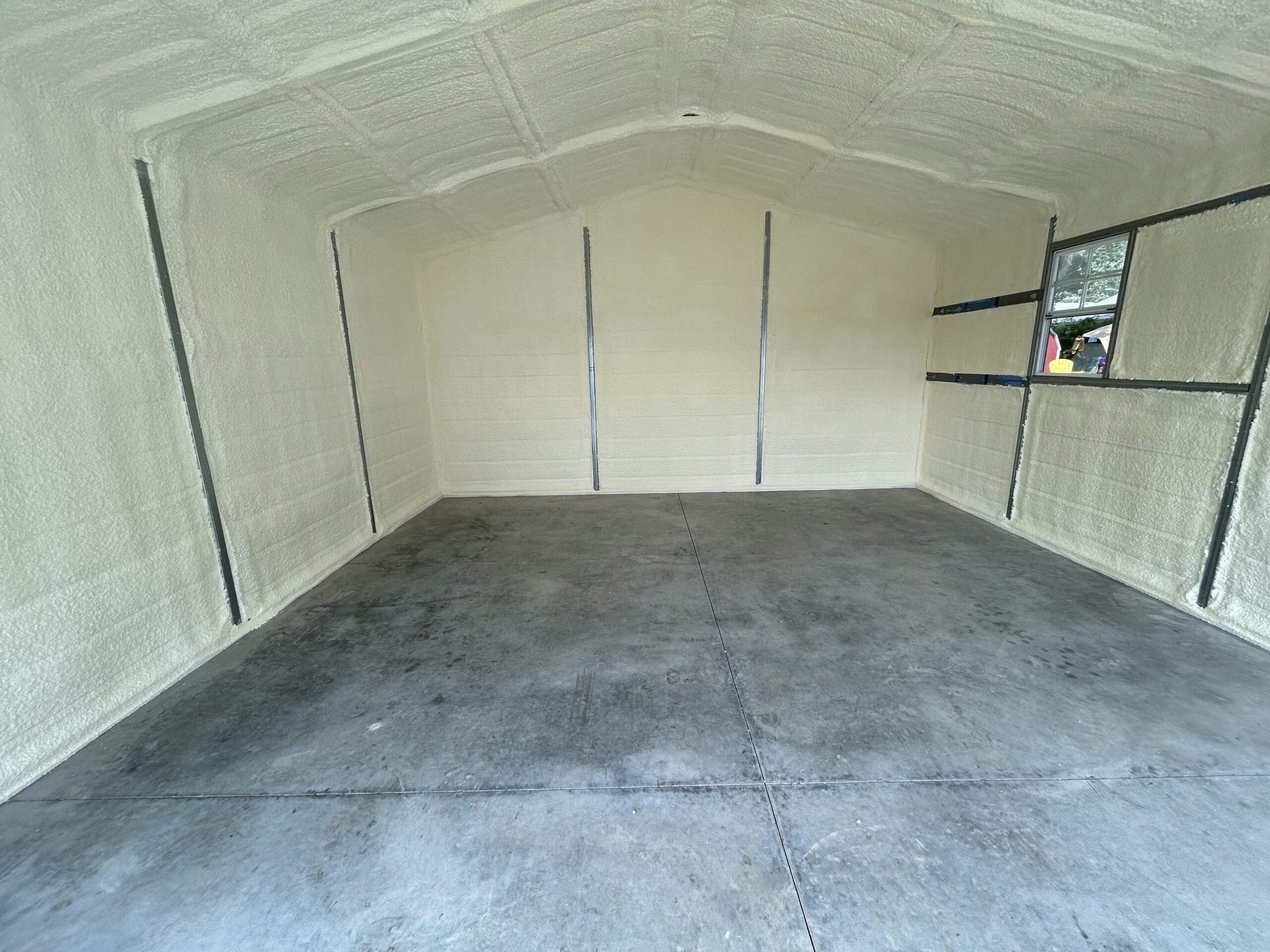
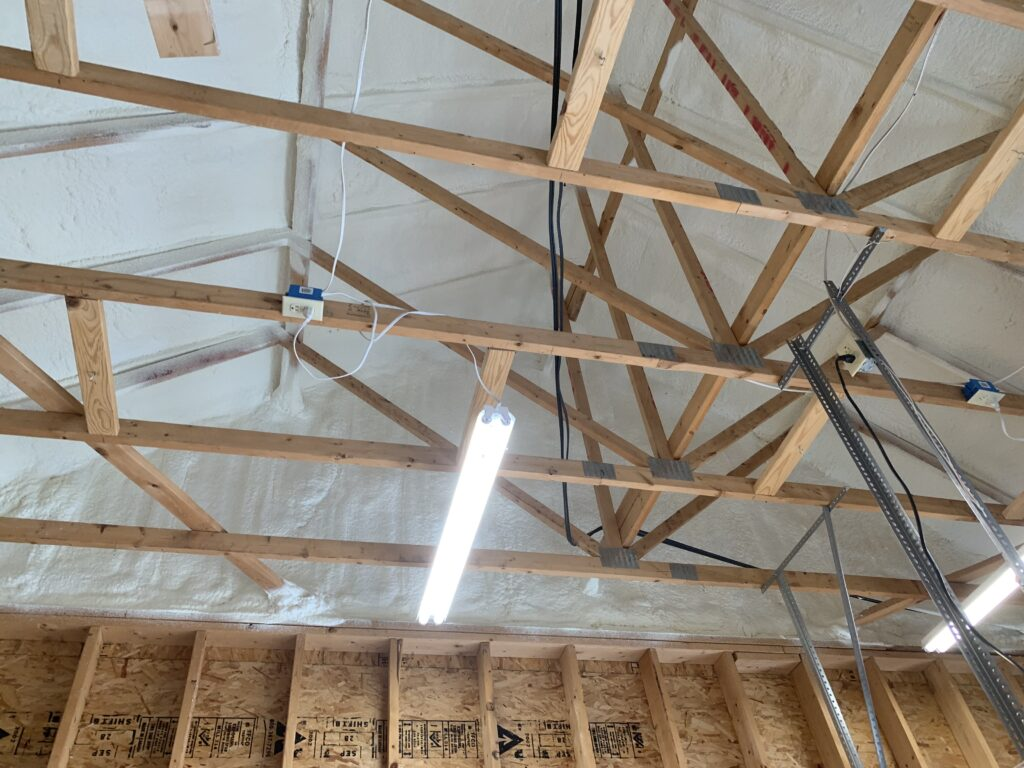
Spray foam expands to fill gaps and cracks and bonds to common building materials, helping create a continuous air barrier. For barndominiums, spray foam is often chosen because it directly tackles the two biggest threats: air movement and condensation risk, especially on metal surfaces.
Open-cell vs closed-cell (what matters for barndos)
- Open-cell: Strong air seal, good sound control, typically used where drying potential is desired and where assemblies are designed accordingly.
- Closed-cell: Higher R-value per inch and adds moisture resistance; commonly used where condensation risk is higher (metal buildings, certain rooflines, some wall assemblies).
If you’re working with metal panels and large temperature swings, closed-cell is often preferred because it helps limit moisture diffusion and adds rigidity, but the “right” answer depends on the assembly and the building’s ventilation.
Also, vapor control is real, and it’s climate and assembly-dependent. DOE’s guidance on vapor barriers/vapor retarders is worth reviewing when you’re deciding how your walls and roof should dry.
The Barndominium Moisture-Control Approach
Here’s the approach that consistently prevents the “sweating building” problem.
Step 1: Decide where your air barrier is
A continuous air barrier means you can trace it around the entire conditioned space without lifting your pen:
- Roof plane → wall plane → slab edge → back to roof plane
Spray foam can serve as that air barrier when applied correctly, but the key is continuity at transitions, especially roof-to-wall.
Step 2: Stop humid air from reaching the cold metal
Condensation doesn’t happen because you “didn’t buy enough insulation.” It happens because moisture-laden air touches a cold surface. Your insulation strategy should prevent that contact. That’s one reason spray foam is widely used in metal buildings: it helps create an airtight layer against surfaces where condensation would otherwise form.
Step 3: Manage indoor humidity
When you tighten a building, you also reduce the “accidental ventilation” that older drafty structures had. That’s good, but it means you should take humidity control seriously:
- Use properly sized bath fans and vent them outdoors
- Use a range hood vented outdoors if you cook often
- Consider a dehumidifier in shoulder seasons if indoor RH climbs
- Make sure HVAC is designed for the load (especially if the envelope becomes very tight)
Energy Star’s air sealing + insulation materials are written for homeowners, but the principles apply: identify major leaks, seal them, and make sure the whole system works together.
If you’re early in the planning stage, the smartest money you’ll spend is on getting the envelope strategy right before finishes go in. If you’re searching “spray foam insulation contractors near me” or “barndominium insulation contractors in Iowa,” ask for a site visit, and we will walk the transitions with you, roofline, eaves, doors, penetrations, and slab edge, before insulation day.
Common Barndominium Moisture Mistakes
Mistake 1: Treating the barndo like a standard vented attic home
Many barndos don’t behave like a typical attic + ceiling plane assembly. Venting choices need to match the insulation approach and the intended air barrier location. If you’re unsure, pull guidance from Building America resources and make decisions with intent, not habit.
Mistake 2: Leaving air sealing as a vague scope item
“Builder will seal all gaps” is not a plan. Air sealing needs to be specific:
- Which transitions?
- What materials?
- Who is responsible before insulation goes in?
Mistake 3: Using the wrong vapor strategy for the assembly
Vapor control is not one-size-fits-all. What matters is whether the assembly can dry to at least one side and whether vapor retarders are placed appropriately for the climate and design.
Mistake 4: Overlooking big openings
Overhead doors, shop doors, and large sliders are comfort killers if they aren’t detailed correctly. Insulation helps, but air sealing details and quality weatherstripping do the heavy lifting.
What To Ask For When Hiring An Insulation Crew
If you’re hiring insulation contractors in Des Moines or nearby areas, you’ll get better results when you ask questions that reveal process, not promises:
- “How do you handle roof-to-wall transitions in barndominiums?”
- “What’s your plan for penetrations and door openings?”
- “How do you prevent condensation on metal roof/wall surfaces?”
- “Do you recommend open-cell or closed-cell here, and why?”
- “What ventilation/humidity plan do you expect after the building is tightened?”
Precision Insulation & Coatings already focuses on barndominium spray foam insulation in Iowa and highlights airtight coverage as a core benefit, which is exactly what a barndo needs when moisture control is the goal.
Conclusion: Prevent Moisture By Building An Airtight, Well-Insulated Envelope
If there’s one takeaway, it’s this: moisture problems in barndominiums usually start with air movement. Stop the air leaks, and you drastically reduce the risk of condensation, damp insulation, and long-term building damage.
For barndos across Central Iowa, Des Moines, West Des Moines, and nearby communities, your best results come from an insulation plan that treats the building envelope as a system: continuous air barrier, correct insulation type, and a realistic humidity strategy.
If you want a barndominium that stays comfortable through Iowa winters and doesn’t “sweat” when weather swings hit, reach out to us at Precision Insulation & Coatings for a site-specific recommendation and a clear installation plan.
FAQs
1) Will spray foam “trap moisture” in a barndominium?
Spray foam reduces air movement, which is how most moisture gets into cavities. The key is using the right foam type for the assembly and making sure the building has an appropriate ventilation/humidity plan once it’s tightened. DOE’s vapor guidance is helpful when deciding how assemblies should dry.
2) What’s the best way to stop condensation on metal panels?
Prevent warm, humid interior air from reaching cold metal surfaces by creating a continuous air barrier and using an insulation strategy designed for metal building conditions. Spray foam is commonly used in metal buildings because it seals and insulates in one layer.
3) I keep seeing “spray foam insulation contractors near me.” What should I look for beyond price?
Look for clear scope, experience with barndominiums, attention to transitions and penetrations, and a plan for humidity/ventilation after the install. A good contractor will talk about air sealing as much as R-value.
4) Do I still need ventilation if my barndominium is airtight?
Yes. A tighter building is more controllable, but it should be paired with intentional ventilation and moisture management to maintain healthy indoor humidity levels. The DOE notes that air sealing improves comfort and durability, but the overall system still needs to work together.