Heavy snowfall, icy winds, and bone-chilling temperatures make Iowa’s winters harsh. This makes it tough to keep homes warm and achieve low energy costs. Traditional insulation methods are not up to the mark, as homeowners have found that their rooms still feel drafty.
That’s where Iowa’s spray foam insulation helps. Every opening and corner is safely sealed, and it blocks cold air and retains heat where it belongs. Spray foam also offers superior insulation, long-lasting comfort, and lower energy costs throughout Iowa’s severe winters.
In this trivia, we’ll look at why spray foam insulation is the best choice for Iowa winters. Moreover, learn how it can help you stay warm, save money, and protect your home all season long.
Knowing Iowa’s Winter Challenges
Iowa’s winter is long and often severe, and average temperatures vary by location. However, statewide statistics and local climatic reports indicate extended periods of low temperatures, frequent snowfalls, and bursts of blowing wind. These circumstances generate three ongoing issues for houses:
- Heat loss around the building envelope: Attics, exterior walls, basements, and rim joists are common places where warm indoor air escapes and cold air infiltrates. When heated air leaves, heating systems work harder and energy bills rise.
- Drafts and unbalanced temperatures: Moving air from cracks and penetrations makes rooms feel cool even with a higher thermostat setting. Drafts reduce comfort and require extended heating cycles.
- Moisture, condensation, and ice dams: Leaky warm air into cold attic environments causes roof snow to melt. Meltwater refreezes at the eaves, forming ice dams that back up water under shingles and into ceilings. Proper air sealing and a continuous thermal barrier reduce condensation and lower the risk of ice dams.
These challenges show why a solution that combines air sealing, thermal resistance, and moisture control is valuable in Iowa, traits that spray foam insulation provides when installed correctly.
Key Advantages of Spray Foam In Iowa Winter
Better Thermal Performance
Iowa spray foam’s high R-value and airtight nature maintain indoor temperatures constant even on sub-zero nights. Since it insulates and seals, less warm air finds its way to cold surfaces where heat escapes. Homes with well-installed spray foam indicate fewer cold spots and more consistent comfort between rooms.
Prevention Of Air Leakage
Common leak channels in Midwestern homes are created by windy winter storms that exacerbate infiltration, and the use of spray foam to seal windows, electrical penetrations, sill plates, and rim joists. Reducing infiltration keeps interior humidity stable and shortens the heating system’s running time. The DOE focuses on energy saving by minimizing uncontrolled airflow when insulation also fills cavities and restricts leakage.
Prevention Of Moisture And Ice Dams
Iowa’s Spray foam reduces roof snow melting and ice dam formation by preventing warm air from moving into attic spaces. Closed-cell foam’s low permeability keeps moisture out of rim joists and roof components. This reduces the risk of rot and attic condensation, which are frequent after freeze-thaw cycles.
Energy Savings And Lower Bills
Insulation retrofits lower heating and cooling requirements. The U.S. Department of Energy conservatively estimates that installing the proper insulation can save a homeowner up to 20% on heating and cooling bills when installed as part of an entire-house strategy. Numerous case studies of high-performance retrofit projects demonstrate even greater savings when both air sealing and insulation are implemented. Some homeowners experience much greater reductions based on their initial conditions and heat fuel.
Durability For The Long Term
Sagging or settling out of cavities is resisted by spray foam, which may occur in loosefill or some batt systems. Decades of effectiveness can be expected from properly installed polyurethane foam, as it ensures consistent R-value and airtightness throughout the life of the building. The return on investment is overall improved with this durability.
Open-Cell vs. Closed-Cell Spray Foam: Which is Best Suited for Winters?
There are two types of spray foam insulation: open-cell and closed-cell. Each one of them has its benefits. However, closed-cell spray foam is usually best suited for winter. Here is the reason for that:
Closed-Cell Spray Foam:
- It is denser and has a higher R-value (R-6 to R-7 per inch), thus offering superior thermal resistance.
- It prevents moisture infiltration as it acts as a vapor barrier.
- It provides better structural strength.
Open-Cell Spray Foam:
- Open-cell spray foam is more budget-friendly but less effective in severe winters.
- It is best suited for interior applications where high moisture resistance is not required.
Common Areas to Insulate with Spray Foam in Iowa Homes
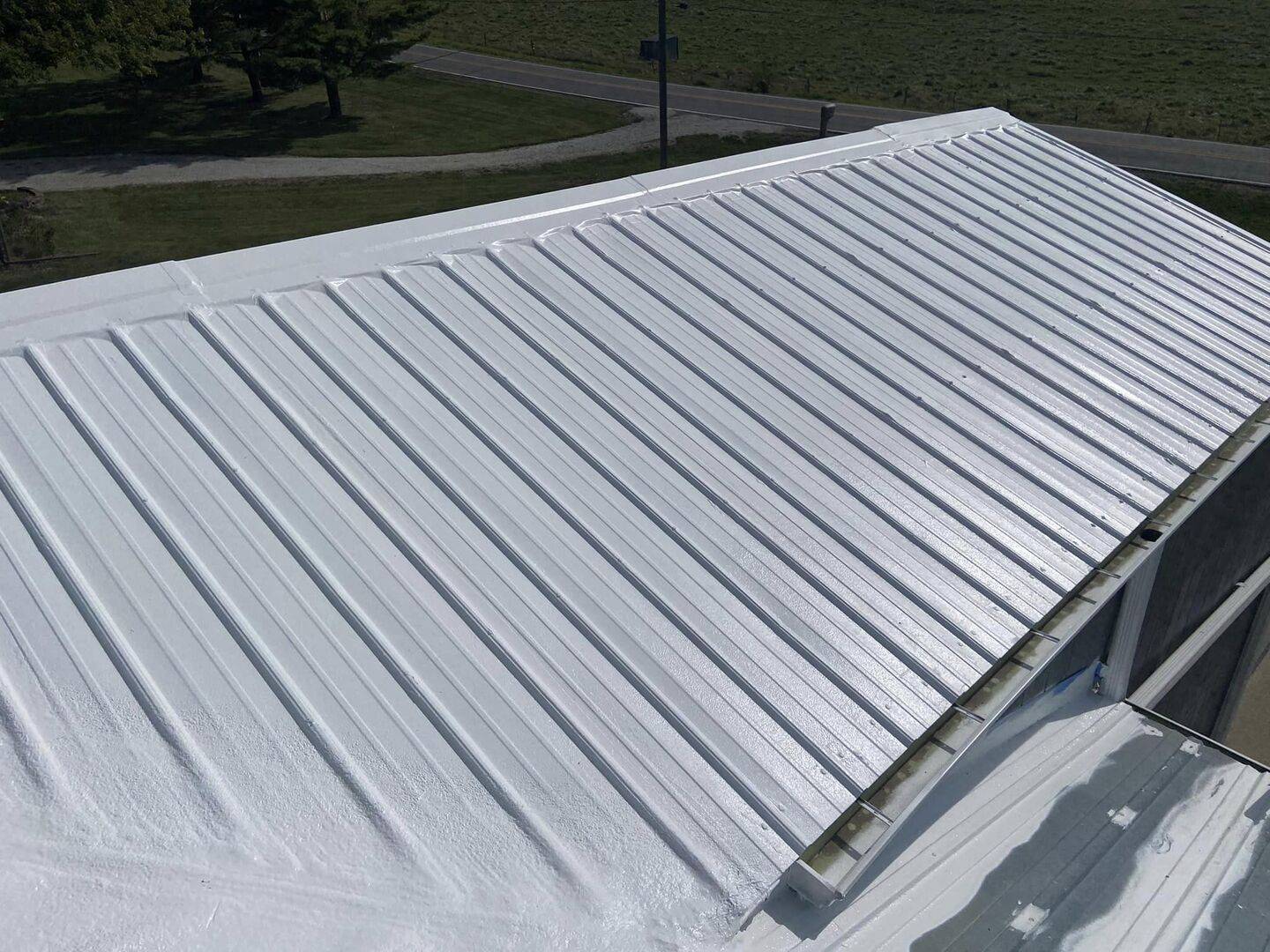
- Attics and roofline: Closing off the attic plane keeps warm, humid air from traveling to cold roof decks and minimizes heat loss up the roof.
- Rim joists and band joists: These small cavities are significant leakage pathways; spray foam seals drafts and secures the thermal boundary.
- Exterior walls and garages: Spray foam reinforces the wall assembly, inhibits thermal bridging, and forms a sealed envelope when applied with caution.
- Basements and crawl spaces: Closed-cell foam stabilizes below-grade walls and rim joists against moisture and temperature swings.
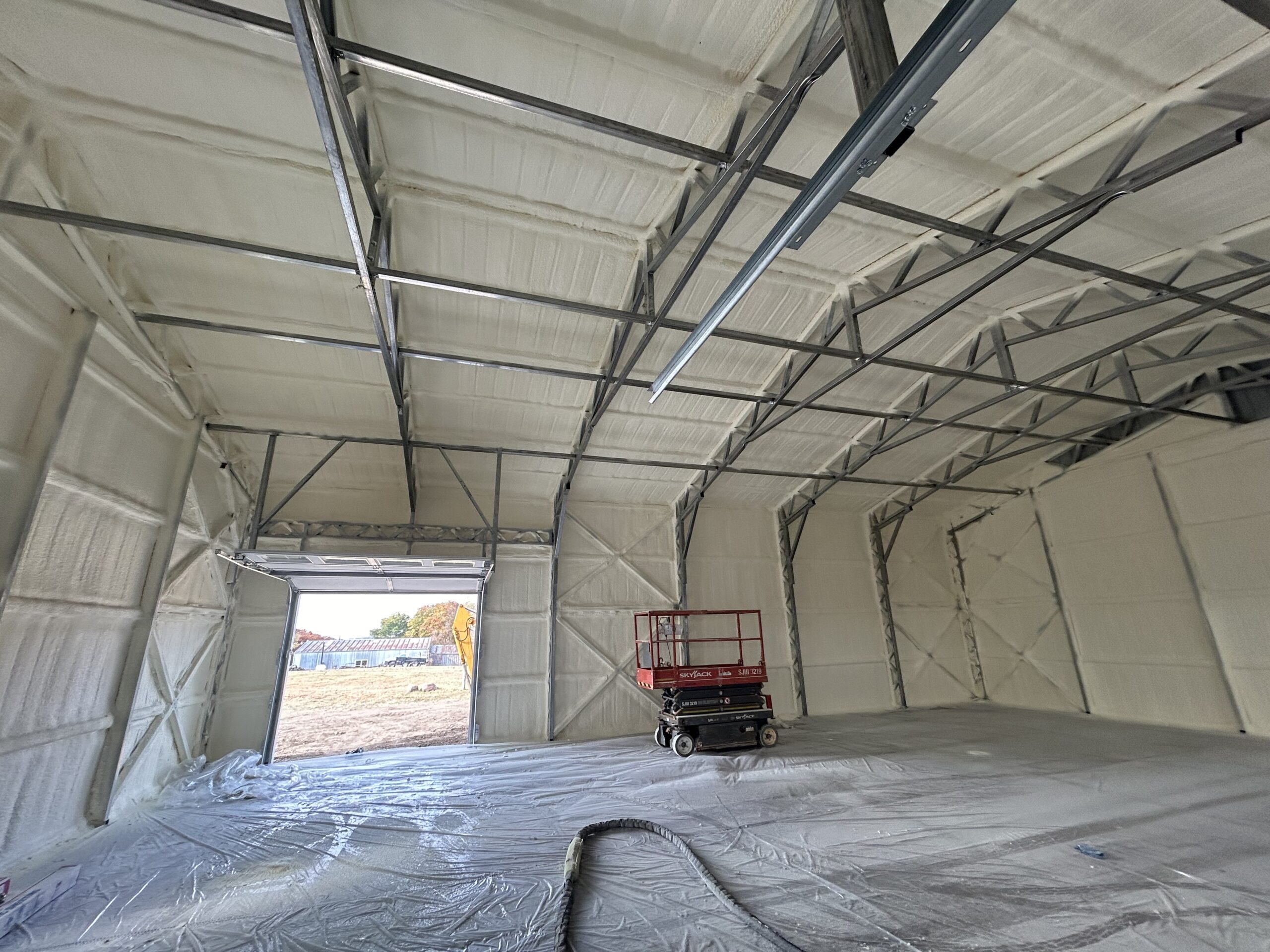
- Pole barns, garages, barndominiums: Large-span and metal buildings common in rural Iowa benefit from spray foam’s ability to seal and insulate irregular panels and framing.
Targeting these zones ensures the heated living space remains protected from cold infiltration and moisture intrusion year-round.
Cost vs. Value: Is Spray Foam Worth It in Iowa?
At the outset, spray foam is often priced higher than fiberglass or blown cellulose. Prices vary widely around the country; what a homeowner pays for whole-house spray foam ranges from a few thousand dollars for an average house to more than $10,000.
But the benefits are more comfort, moisture management, longer life span, and lower utility bills. According to DOE, whole-house air-sealing and insulation upgrades typically pay for themselves more quickly than insulation alone, and they often result in energy savings.
Most homeowners find a payback interval expressed in a few years to less than a decade, depending on fuel costs and initial conditions. Look for local utility rebates and federal incentives that can reduce initial cost and hasten payback.
Professional Installation Matters
Spray foam performance is reliant to a great extent on proper handling and installation. Professional installers control material temperature, substrate conditions, and ratios to ensure foam cures properly and provides the anticipated R-value and adhesion. Misguided DIY or off-ratio application may result in bad curing, diminished performance, odor problems, and forfeited manufacturer warranties.
Installers must follow the manufacturer’s cold-weather instructions and use equipment to heat materials to appropriate temperatures for climate-specific installations, such as Iowa winter spray foam installations. Long-term performance is ensured, and common installation problems are avoided by hiring certified, experienced installers.
Why Precision Insulation & Coatings?
Precision Insulation & Coatings applies local expertise to Iowa insulation jobs. A properly trained installer knows Iowa’s seasonal extremes and how to stage insulation, air sealing, and ventilation to minimize ice dams and energy loss.
Seek out contractors who bear appropriate certifications, offer references, and document material specifications and warranties.
Precision Inspection & Coatings provides expert spray foam insulation in Iowa with attention to job-site procedures, updated equipment, and quality control that ensure anticipated performance and long-term value for Iowa homeowners.
The Bottom Line
Spray foam gives a strong blend of thermal resistance, airtightness, and moisture control that counters the particular challenges of Iowa spray foam applications: cold winter seasons, wind-driven intrusion, and cycles of moisture.
Although it is more expensive upfront than some options, the comfort level, longevity, and energy efficiency of spray foam make it a substantial upgrade for most Iowa homes and structures. Any homeowner looking to upgrade to insulation should arrange an energy-directed inspection and receive thorough estimates.
Call Precision Insulation & Coatings now for professional spray foam installation throughout Iowa!
Frequently Asked Questions
1. Is spray foam insulation worth it for Iowa homeowners?
Yes, homes in Iowa would be wise to invest in spray foam. The long-term advantages are lower energy bills, fewer drafts, and more comfort. It can make the initial expense higher than that of standard insulation, but it can still be worthwhile. In addition to lowering maintenance costs brought on by ice dams and moisture, Iowa spray foam insulation raises the value of your house.
2. What spray foam type is perfect for Iowa’s winters?
Closed-cell spray foam is perfect for Iowa’s winters. Its dense structure provides superior air sealing, moisture resistance, and a greater R-value. During the lengthy Midwest winters, this kind of Iowa insulation works remarkably well against freezing temperatures, avoiding heat loss, moisture, and structural damage from ice development.
3. Can spray foam insulation help prevent ice dams in Iowa homes?
Indeed, spray foam insulation prevents roof snow from melting and refreezing into ice dams by keeping warm interior air from leaking into the attic. Spray foam helps shield Iowa homes from expensive water leaks, roof damage, and energy loss during the snowy winter months by preserving constant roof temperatures.