Barndominiums are awesome until they aren’t: the shop side bakes in summer, the living space runs cold in winter, and you start seeing moisture where you don’t want it, around metal panels, fasteners, and rooflines. That’s not bad luck. It’s physics.
This guide addresses one strategy in Iowa: how to choose the right barn-dominium insulation strategy in Iowa, and when removal is the correct first step, so your project doesn’t turn into a “fix it twice” situation.
Why is Barndominium Insulation in Iowa Different from a Normal House?
Most barndos are a different animal than a stick-framed home: metal skin, big open volumes, fewer interior partitions, and more thermal bridging at framing. In Iowa’s climate, mostly IECC Zone 5 with colder pockets farther north, winter heat loss and shoulder-season condensation become very real if the shell isn’t sealed and insulated correctly.
Common mistake: Treating a barndominium like a typical attic-and-walls house and skipping the air control layer. Metal structures don’t “forgive” leaks; they show them as drafts, noise, and sweat.
Quick checklist (5 minutes):
- Do you feel air movement at outlets, baseboards, or around overhead doors on a windy day?
- Are there water marks on the underside of roof panels in spring/fall?
- Do you see “cold stripes” or frost patterns on the inside of metal in winter?
Decision rule: If you have condensation or wind-driven drafts, you need a plan that emphasizes continuity, especially at roof-to-wall transitions and penetrations.
That’s the core of barndominium insulation in Iowa done right.
Which Insulation Approach Actually Works For Barndos (Spray Foam Vs Fiberglass)?
There’s no single “best,” but there is a best fit for your use case: living space, shop, storage, livestock, or mixed-use.
DOE notes common insulation types include fibrous materials (fiberglass, mineral wool, cellulose) and foams. The right choice depends on what you’re trying to control.
Simple comparison table (barndominium-friendly)
| Option | Where it fits in a barn | What it’s good at | Watch-outs / cost drivers |
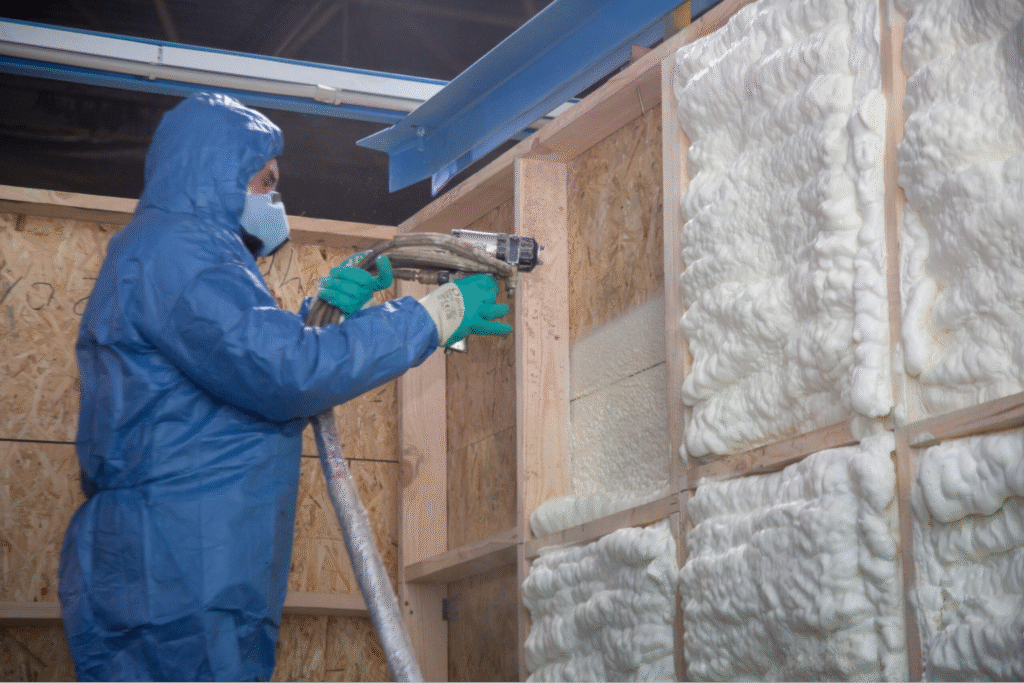
| Spray foam (often closed-cell for metal areas) | Rooflines, walls, rim transitions, tricky seams | Air sealing + insulation in one continuous layer | Thickness targets and access drive cost; needs skilled install |
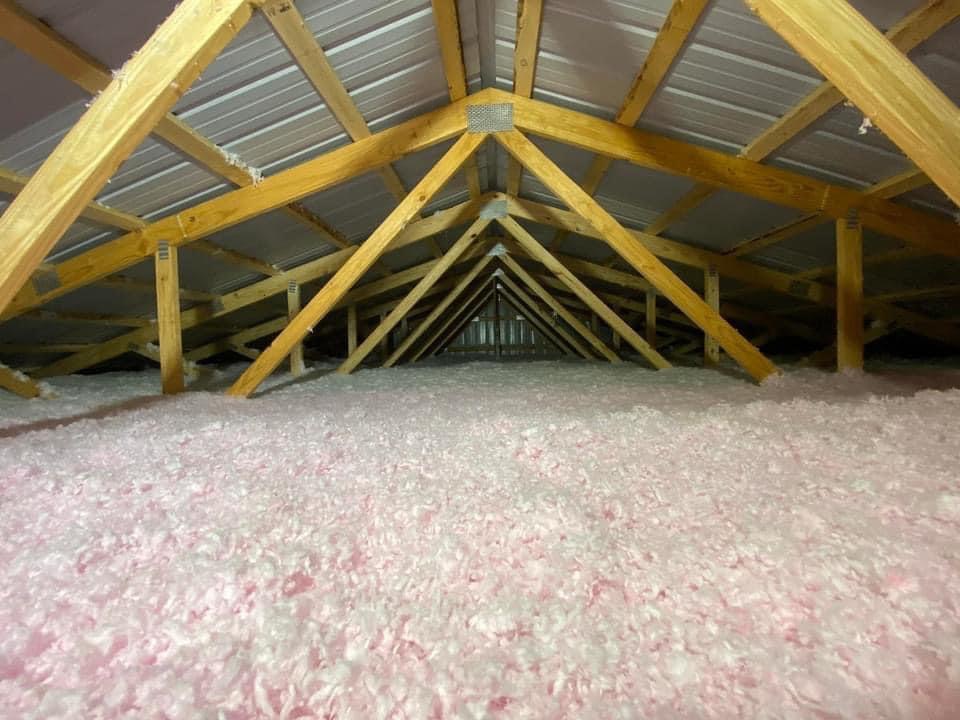
| Fiberglass (batts or blown-in) | Ceiling plane/attic floors; framed cavities | Affordable thermal coverage when air sealing is already handled | Performance drops if air leaks remain; needs proper detailing |
| Hybrid (air seal + foam where needed, fiberglass elsewhere) | Mixed-use barndos | Best balance of cost + performance | Requires a written scope so you’re comparing thoroughly |
Proof-of-human detail: if your shop side has overhead doors, the biggest comfort win often comes from sealing the boundary and addressing the “leakiest seams,” not just packing more insulation into one area.
When Should You Remove Old Insulation Before Upgrading?
Not every barndo retrofit needs full removal. But some do, and pretending otherwise is where projects go sideways.
You should strongly consider removal when:
- Insulation is wet or repeatedly damp (you’ll never “insulate past” moisture)
- There’s visible debris, heavy dust, or odors that keep returning
- You’re dealing with pest contamination or nesting
- You need access for air sealing, wiring, or repairs, and the old insulation is in the way
Common mistake: Blowing new insulation over old, dirty insulation and calling it “upgraded.” That can bury problems and make air sealing harder later.
Safety red flag: If you encounter vermiculite attic insulation, EPA recommends assuming it may contain asbestos and not disturbing it. That’s a “stop and reassess” moment, not a DIY weekend.
For homeowners near Des Moines, IA, planning a barndo upgrade or remodel, this is where Insulation Removal Contractors Des Moines, IA can save you money long-term: clean out what’s compromised, then rebuild the system the right way.
What’s The Step-By-Step Plan For A Clean Retrofit?
This is the sequence that prevents regret. ENERGY STAR’s guidance emphasizes sealing air leaks and adding insulation as a combined strategy, air control first, then thermal.
- Assessment
- Identify condensation points, air leaks, and where the thermal boundary should be (roofline vs ceiling plane).
- Removal (only if needed)
- If insulation is contaminated/wet, or blocking work, remove it so the substrate is clean and inspectable.
- Air sealing
- Seal major bypasses at penetrations, transitions, and large gaps. (This is the step many projects skip.)
- Insulation install
- Spray foam where continuity and air sealing matter most; fiberglass where you need depth/coverage efficiently.
- Ventilation/roofline detailing
- Make sure the assembly strategy matches how the barn is used (conditioned living space vs unconditioned storage).
- Verification
- Photos, depth/thickness confirmation, and a final walk-through to confirm no missed seams.
Realistic timeline driver: access. Tall ceilings, complex rooflines, and shop equipment stored along walls can change scheduling and labor.
What Should You Ask Before Hiring Insulation Removal And Insulation Crews?
Whether you’re in Des Moines, IA, or a nearby community like West Des Moines, Ankeny, or Waukee, ask these questions before you sign.
For removal:
- “What exactly is included: vacuuming, bagging, disposal, and cleanup?”
- “How will you keep dust from spreading into the living area?”
- “What happens if you find vermiculite or another questionable material?”
For insulation:
- “Where is the thermal boundary in this barndo, roofline or ceiling plane, and why?”
- “What thickness/coverage is specified in writing?”
- “How will you handle seams, penetrations, and overhead-door areas?”
Decision rule: If the scope isn’t specific, the result won’t be either.
This is where Precision Insulation & Coatings should lean on your {PROCESS}, {LICENSES_CERTS}, {YEARS}, and {REVIEWS_NOTES}, not hype, so homeowners understand what they’re buying.
Conclusion
If you want barndominium insulation in Iowa that actually works, prioritize continuity: air sealing plus the right insulation in the right places. And if the existing insulation is wet, contaminated, or blocking a proper retrofit, bring in Insulation Removal Contractors Des Moines, IA first, then rebuild the system with a clear scope and verification. Precision Insulation & Coatings can help you plan the insulation boundary, choose materials, and execute the job cleanly so your barn stays comfortable in every season. Contact us today to discuss your project and get expert guidance tailored to your property.
FAQs
What’s the biggest mistake with barndominium insulation in Iowa projects?
Skipping air sealing. You can install plenty of insulation and still feel drafts if the boundary leaks.
Do I need to remove old insulation before adding new?
Not always. Removal is usually for wet/contaminated insulation, pest issues, or when you need access for air sealing and repairs.
How much attic insulation do I need in Iowa?
ENERGY STAR’s recommended levels for colder zones (including Zone 5) commonly fall in the R-49 to R-60 range for attic retrofits, depending on what’s already there.
What is blown-in insulation made of?
DOE says common loose-fill materials include cellulose, fiberglass, and mineral wool.
Can spray foam help with condensation in a barndo?
It can, especially when installed as a continuous layer that limits air movement to cold metal surfaces. The details at seams and penetrations matter most.
Why mention Insulation Removal Contractors Des Moines, IA, in a barndo article?
Because many barndos are retrofits: the “new insulation” only performs if the old compromised material is removed and the air sealing step is completed first.
What if I find vermiculite insulation in the attic?
EPA recommends assuming vermiculite may contain asbestos and not disturbing it.
Can I combine spray foam and fiberglass in one barndo?
Yes. A hybrid approach is common: foam for air sealing and tricky transitions, fiberglass for efficient thermal coverage.