Your pole barn feels like an icebox in winter and a furnace in summer, making it nearly impossible to work comfortably inside. Proper insulation can reduce energy costs by up to 40% while eliminating moisture problems that damage your equipment and stored items.
This guide breaks down the real costs, best materials, and smart strategies to help you decide if pole barn insulation is worth it for your specific situation. The answer might surprise you.
Benefits of Insulating a Pole Barn
Your pole barn doesn’t have to feel like an icebox in winter or a furnace in summer. Smart insulation transforms your space into a comfortable, energy-efficient building that works year-round.
Reduces Heat Transfer
Pole barn insulation acts like a thermal barrier between the inside and outside of your building. Heat naturally moves from warm areas to cold areas, and without proper insulation, your pole barn becomes an energy drain. Insulation slows heat flow through the roof and walls by creating thermal resistance, which is why understanding how insulation works matters before choosing a material.
During Iowa winters, heated air escapes through uninsulated walls and roofs, while cold air seeps in through gaps and cracks. Closed-cell and open-cell spray foam create an effective seal that stops this heat transfer process.
The best insulation for pole barns creates a continuous thermal envelope around the entire structure. Metal buildings conduct heat and cold rapidly, making temperature control nearly impossible without insulation.
Fiberglass batts and spray foam both reduce heat transfer, but spray foam provides superior air sealing properties. Building science principles show that controlling heat flow saves money and improves comfort year-round.
Proper insulation keeps warm air inside during winter and hot air outside during summer. This thermal control becomes especially important when considering pole barn insulation cost versus long-term energy savings.
Lowers Energy Costs
Your energy bills take a serious hit when your pole barn lacks proper insulation. Heat escapes through walls, roof, and gaps during the winter months, forcing your heating system to work overtime.
During summer, hot air infiltrates the space, making cooling systems run constantly. This cycle drains your wallet month after month. Effective insulation solutions reduce heat loss dramatically, contributing to energy cost savings that add up fast.
Precision Insulation & Coatings aims to lower energy costs with various insulation options that fit your specific needs. The company offers free on-site insulation estimates, helping homeowners assess potential savings before making any investment.
Prevents Moisture and Condensation
Pole barn condensation creates serious headaches for property owners across Iowa. Cold metal surfaces meet warm, humid air and create the perfect storm for moisture problems. Insulation acts as a thermal barrier, keeping interior surfaces warmer and reducing temperature differences that cause condensation.
This simple physics principle saves you from dealing with rust, mold, and structural damage down the road. Proper insulation placement stops condensation in pole barn structures by maintaining consistent temperatures throughout the building envelope. We’ve seen countless barns where owners skipped insulation, only to face dripping ceilings and soggy floors during temperature swings.
The right insulation system keeps moisture where it belongs, outside the building. Different insulation types offer varying levels of moisture control, making material selection crucial for long-term success.
Enhances Comfort and Climate Control
Beyond stopping moisture problems, proper insulation creates a comfortable environment year-round. Your pole barn transforms from a drafty, uncomfortable space into a climate-controlled area where you actually want to spend time.
Temperature swings become less dramatic, making your workspace or storage area more pleasant during Iowa’s harsh winters and humid summers. Effective insulation solutions lead to increased long-term energy efficiency while maintaining steady indoor temperatures. You’ll notice the difference immediately when you step inside during extreme weather.
Hot summer days won’t turn your barn into an oven, and cold winter mornings won’t freeze you out. Attic air sealing contributes to enhanced climate control by preventing unwanted air movement that disrupts your barn’s temperature balance.
A well-insulated pole barn feels like a completely different building; you can actually use it comfortably in any season instead of avoiding it when the weather gets rough.
Types of Insulation for Pole Barns
You have three main insulation options for your pole barn, each with distinct advantages that can transform your building’s performance and comfort levels.
Spray Foam Insulation
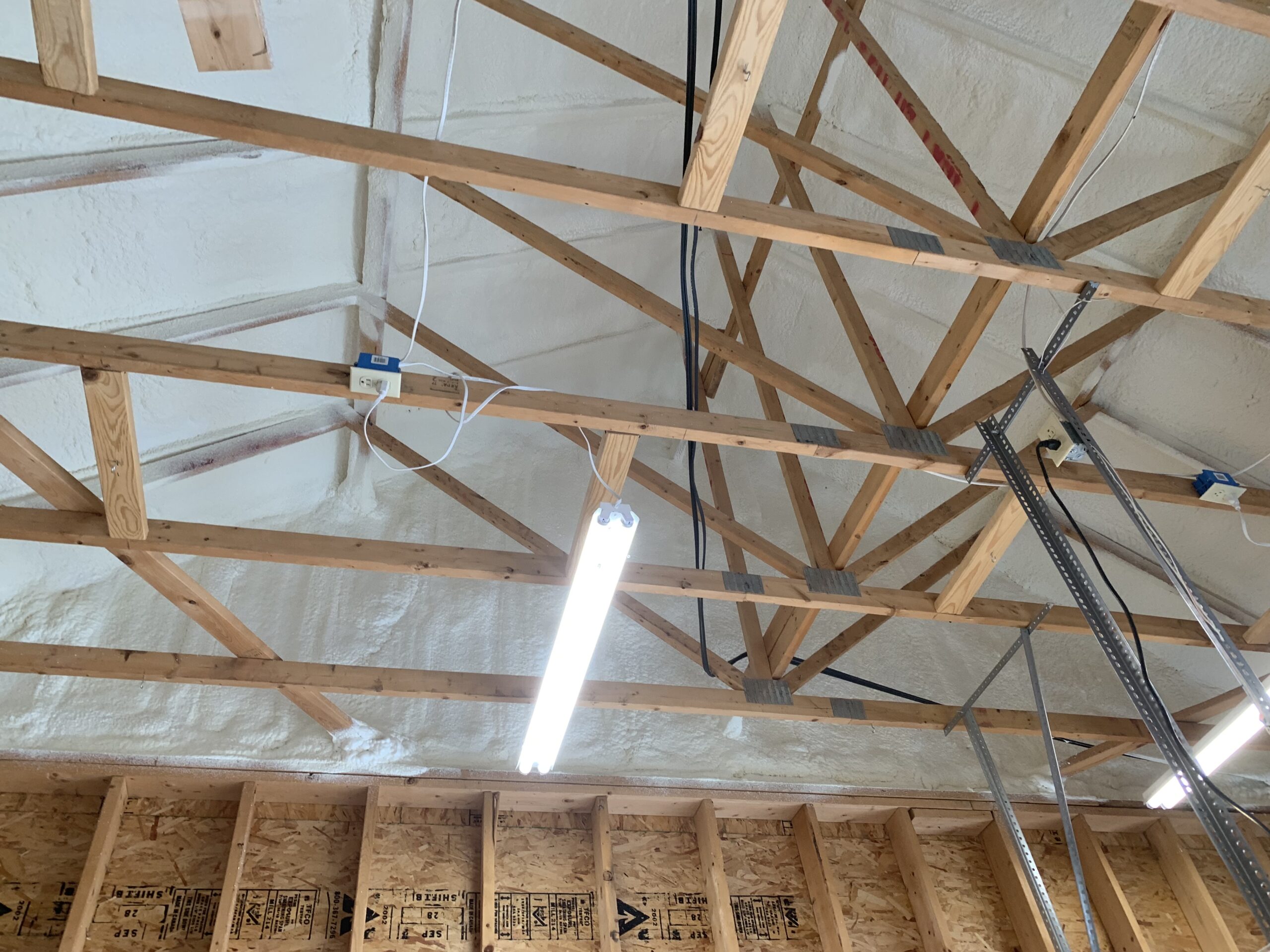
Spray foam insulation stands as the gold standard for pole barn projects, and there’s good reason why. This high-performance material creates an airtight seal that blocks heat transfer while stopping moisture problems in their tracks. Precision Insulation & Coatings offers both closed-cell and open-cell spray foam options for your pole barn needs.
- Closed-cell foam provides maximum insulation value and acts as a vapor barrier.
- Open-cell foam costs less but still delivers excellent thermal performance.
- Both types expand to fill every crack and gap, creating a seamless barrier that traditional insulation simply can’t match.
Professional spray foam installation transforms your pole barn into a comfortable, energy-efficient space year-round. The material adheres directly to walls and ceilings, eliminating thermal bridges that cause energy loss.
This approach helps stop condensation in pole barn structures by controlling temperature differences between inside and outside surfaces. Spray foam reduces heat loss by up to 50% compared to traditional insulation methods.
Reflective Foil Insulation
Reflective foil insulation works like a mirror for heat, bouncing radiant energy away from your pole barn instead of absorbing it. This type of insulation performs best in Iowa’s hot summers, where it can reduce cooling costs by up to 30%.
From our experience installing thousands of square feet across Iowa farms and commercial buildings, we’ve seen property owners cut their energy bills significantly with this solution. The foil barrier reflects heat before it penetrates your building envelope, keeping your space cooler without running air conditioning constantly.
Installing reflective foil insulation requires proper air gaps to maximize performance, which is why professional installation matters. You’ll find this option works well for both new construction and retrofit projects when you want to learn how to insulate a pole barn effectively.
At Precision Insulation & Coatings, we’ve helped countless Iowa property owners choose reflective foil for workshops, storage facilities, and livestock buildings. The material installs faster than traditional batts, and it won’t sag or settle over time like other insulation types.
Fiberglass Batts
Fiberglass batts offer a time-tested solution for pole barn insulation that fits most budgets. These pre-cut panels slide easily between wall studs and ceiling joists, making installation straightforward for contractors and builders.
Precision Insulation & Coatings specializes in fiberglass insulation and provides dense-pack fiberglass options that reduce heat loss while improving indoor comfort. The material works well in Iowa’s varying climate conditions, from humid summers to freezing winters.
The installation of fiberglass batts helps lower energy bills through improved thermal performance. Property owners see long-term energy efficiency gains that offset the initial investment costs.
Factors to Consider Before Investing in Pole Barn Insulation
You can’t just slap insulation on your pole barn and call it a day. Smart property owners weigh several key factors before making this investment, and these considerations can make or break your project’s success.
Climate and Location
Your local climate plays a huge role in determining whether pole barn insulation makes financial sense. Cold climates demand more aggressive insulation strategies to maintain indoor comfort and prevent heat loss. Hot climates benefit from reflective insulation that blocks radiant heat, while cold regions need thick thermal barriers to retain warmth.
Location determines the most beneficial type of insulation due to regional temperature variations that affect your energy bills year-round. Properties in northern states face heating costs that can increase significantly without proper insulation; investing pays for itself faster. Your climate zone affects how much insulation you need, so use ENERGY STAR’s recommended insulation R-values as a quick baseline.
Southern locations deal with cooling expenses that reflective foil insulation can dramatically reduce. On-site estimates help property owners evaluate insulation needs based on climate and location, taking the guesswork out of material selection.
Budget and Cost Efficiency
Budget decisions for pole barn insulation require careful planning and smart financial thinking. Insulation upgrades can lower energy bills and enhance indoor comfort, providing long-term cost savings that make the initial investment worthwhile.
Options for insulation include closed-cell and open-cell spray foam, allowing for specific budget considerations based on your needs and financial constraints. Cost efficiency comes from understanding the real value of professional installation versus cutting corners.
Investment in insulation improves energy efficiency, reducing heat loss and associated costs over many years. Services like attic air sealing and thermal barrier improvements contribute to cost efficiency, creating a comprehensive approach that maximizes return on investment.
Usage of the Pole Barn
Your pole barn’s purpose directly impacts how much insulation you need. A workshop where you spend hours working on projects demands better temperature control than a simple storage shed.
Livestock barns require consistent temperatures to keep animals comfortable and healthy year-round. Machine shops and garages benefit from insulation that prevents condensation on tools and equipment.
Different activities create different insulation needs. Storage areas might only need basic protection from extreme temperatures. Manufacturing spaces often require precise climate control for product quality.
Recreational areas like home gyms or hobby spaces need comfort levels similar to your house. The more time you spend inside your pole barn, the more you’ll appreciate proper insulation.
Conclusion
Pole barn insulation pays for itself through lower energy bills and better comfort. You’ll save money on heating and cooling while protecting equipment from temperature swings and moisture damage.
The right insulation type depends on how you use the space, where you live, and what fits within your budget. Smart property owners recognize that insulating a pole barn boosts the building’s value and makes it more useful year-round.
Contact Precision Insulation & Coatings for a free estimate to see which insulation solution works best for the specific needs of pole barn projects across Iowa.
FAQs
1. Is pole barn insulation worth the money?
Yes, it’s like putting a warm coat on your building. Insulation cuts heating and cooling costs by up to 40%, which means more cash in your pocket each month.
2. What happens if I skip insulating my pole barn?
You’ll be throwing money out the window, literally. Without insulation, your energy bills will skyrocket, and the space becomes uncomfortable for people, animals, or stored items.
3. How long does pole barn insulation last?
Quality insulation can last 20 to 30 years with proper installation. Think of it as a one-time investment that keeps paying you back, year after year, through lower utility bills.
4. Does pole barn insulation help with condensation problems?
Yes, insulation acts like a moisture barrier, preventing that annoying drip, drip, drip you get with temperature swings. It keeps your stored equipment dry and prevents rust damage. Smart farmers know this trick saves thousands in replacement costs.