Pole barns are built to be tough. They go up fast, handle wind and weather, and can serve as anything from equipment storage to a heated workshop, or even a finished “barndominium” shell. The problem is that many pole barns start life as bare metal and open framing, which makes them brutal in both summer heat and winter cold.
If you’re wondering how to insulate a pole barn the right way, the short answer is: start with moisture control and air sealing, then choose an insulation system that fits how you use the building. Skip those steps, and you can end up with condensation, mold, rust, and insulation that underperforms.
This guide walks you through the process of planning, materials, common assemblies, ventilation, condensation control, and the mistakes that cost people the most.
Step 1: Decide What “Insulated” Means for Your Pole Barn
Before anyone touches a foam gun or rolls out batts, get clear on how the building will be used. This changes everything. Ask yourself:
- Will it be heated or cooled regularly, or only occasionally?
- Is it a shop with people working inside, or just storage?
- Will there be livestock, moisture-producing processes, or frequent vehicle washdowns?
- Do you want to finish the interior with drywall/liner panels later?
- Is condensation already an issue (dripping roof, damp tools, rust)?
Why this matters: insulation isn’t only about “R-value.” It’s also about controlling air movement and moisture, because warm, moist air hitting cold metal is where pole barns get into trouble. The U.S. Department of Energy explains insulation as resistance to heat flow and ties performance directly to correct installation and air sealing.
Step 2: Fix Condensation First
Condensation is the most overlooked part of pole barn insulation. The classic problem: warm, humid interior air rises and meets cold roof metal. Water forms, drips, and now you’ve got damp insulation, stains, rust, and eventually mold risk. A good plan usually includes:
- A continuous air barrier to limit warm air from reaching cold surfaces
- Vapor control appropriate for your climate and assembly
- Ventilation strategy (especially if you’re adding a ceiling)
- Avoiding gaps and voids that allow air to bypass insulation
Air barrier continuity is a big deal in modern energy codes, and it’s also practical building science for comfort and moisture control. And for vapor control, DOE’s guidance explains that vapor retarders can help prevent moisture problems in many climates, but placement depends on conditions.
Step 3: Choose Your Pole Barn Insulation System
There are several ways to insulate a pole barn. The “best” one depends on budget, how finished you want the interior, and how critical moisture control is.
Option A: Spray Foam (Common for Pole Barns and Metal Buildings)
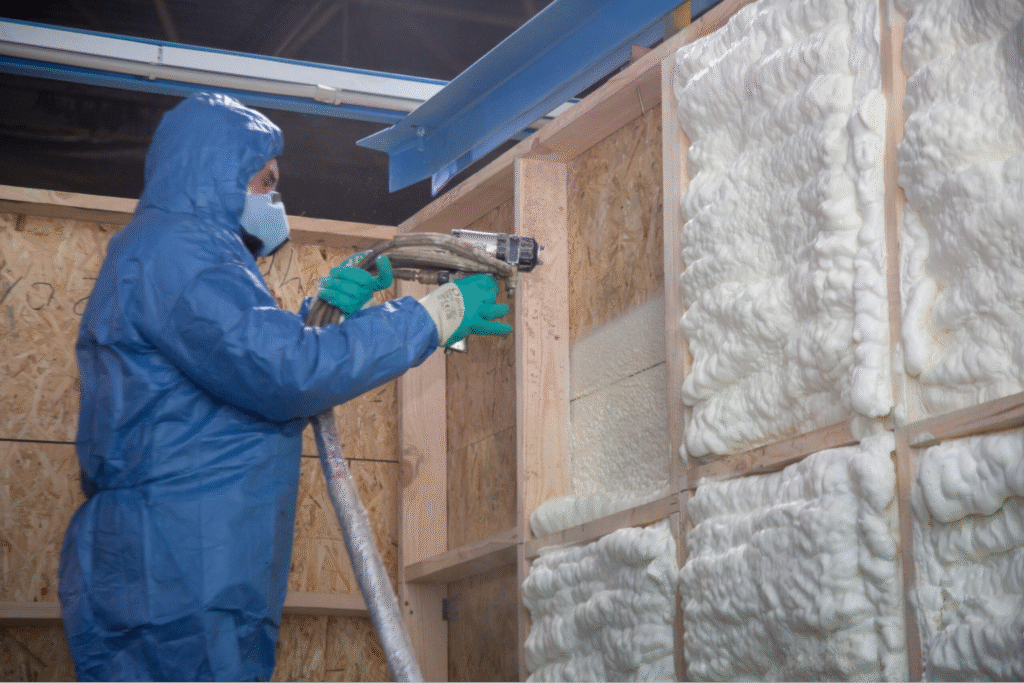
Spray foam is popular for pole barns because it can insulate and air-seal in one step, and it adheres directly to metal and wood surfaces. Precision Insulation & Coatings describes spray foam as creating an airtight seal by expanding into cracks and gaps, and notes that closed-cell foam can act as a vapor barrier at certain thicknesses.
Where it shines:
- Roof decks and wall panels where condensation is a concern
- Shops that will be conditioned (heated/cooled)
- Buildings that need better air sealing and dust control
- Hard-to-reach framing bays
Closed-cell vs open-cell:
- Closed-cell spray foam: higher R-value per inch, more moisture resistance, adds rigidity to assemblies
- Open-cell spray foam: can be useful in some assemblies, but typically isn’t the first choice for direct-to-metal condensation control (your installer should guide this based on your building and climate)
Option B: Fiberglass Batts + Interior Liner (More Traditional)
Fiberglass batts can work well if you also build a dependable air/vapor strategy and protect the batts from moisture and airflow. In pole barns, the risk is that batts get installed with gaps, get exposed to air movement, or get damp, then performance drops fast. This approach often includes:
- Framing a wall system (girts/studs) suitable for batts
- Installing a vapor retarder where appropriate
- Sealing major air leaks before insulation
- Adding an interior liner (steel liner panel or drywall) to protect the insulation
Option C: Hybrid Systems (Common in Real-World Builds)
Many pole barns do best with a hybrid, such as:
- Closed-cell spray foam on the roof/walls for condensation control + batts added later for a higher total R-value
- Spray foam in problem areas (roof deck, rim areas, around doors) + batt insulation in framed walls.
This can be a smart route when you want the moisture control and air sealing of foam, plus the cost efficiency of batts in certain cavities.
Step 4: Insulating the Roof
If your pole barn is metal-sided and metal-roofed, the roof is usually where comfort and condensation issues start.
Roof approach 1: Insulate the roof deck (unvented “hot roof” style)
This is where spray foam is often used directly on the underside of roof panels. The goal is to stop warm, moist air from reaching cold metal and to create an airtight thermal layer.
Precision’s metal-building guide emphasizes that spray foam creates a barrier that reduces condensation on metal surfaces and highlights closed-cell foam for moisture resistance.
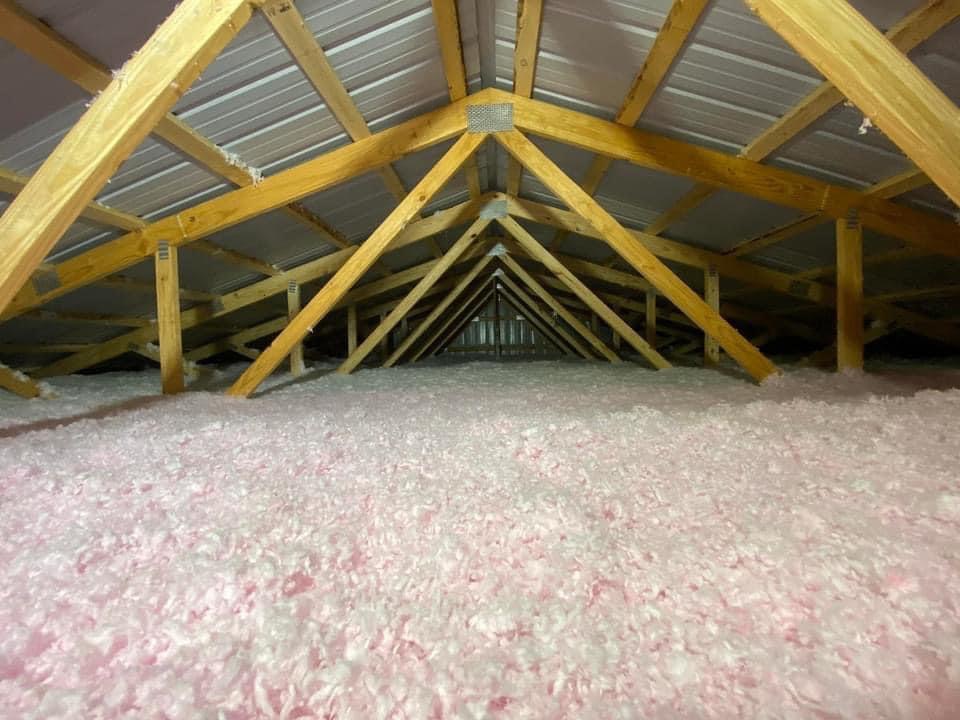
Roof approach 2: Add a ceiling and insulate above it (vented attic style)
If you’re building a ceiling (common for finished shops), you may choose to insulate the ceiling plane instead. If you do, ventilation details matter:
- Make sure the attic space can vent (intake + exhaust)
- Air seal penetrations through the ceiling (lights, wiring, attic access)
- Keep insulation from blocking airflow at the eave.s
A key warning from building-science best practices: adding insulation without adequate air barrier improvements can increase condensation risk because surfaces get colder.
Step 5: Insulating the Walls (Comfort + Durability)
Pole barn walls can be tricky because framing styles vary. Some barns have bookshelf girts, some have standard studs added later, and some have minimal framing that needs upgrading before insulation. Common wall assemblies include:
- Spray foam directly to metal panels (excellent air sealing and moisture control)
- Framed wall with batts + interior liner
- Foam + batts hybrid for better performance
Whichever route you take, pay special attention to:
- Door frames and overhead doors (huge air leak zones)
- Bottom plates and slab edges
- Window openings
- Transitions between wall and roof systems
This is where “air sealing” stops being a buzzword and becomes the difference between a comfortable shop and a drafty, dusty building.
Step 6: Don’t Ignore the Floor (Even If You Can’t Insulate It Easily)
Many pole barns are slab-on-grade. You might not be insulating under the slab (especially in an existing building), but you can still improve comfort:
- Seal slab-to-wall joints
- Consider insulating slab edges where accessible.
- Control interior humidity (especially in winter)
Even with perfect roof and wall insulation, a leaky perimeter can make a shop feel cold and can add moisture issues.
Step 7: Ventilation and Humidity Control
Insulation reduces heat flow. Air sealing reduces uncontrolled air movement. But if you don’t manage humidity, especially in a workshop, you can still get moisture problems.
Practical tips:
- Use exhaust ventilation in areas that generate moisture (wash bay, welding area with combustion byproducts, etc.)
- Consider a dehumidifier if the building stays closed up and conditioned.
- If you add a ceiling, make sure attic ventilation is designed correctly.
- Avoid venting dryers or combustion appliances into the building.
EPA’s moisture control guidance reinforces that moisture management is a core design and construction issue, not an afterthought.
Step 8: The Installation Details That Make or Break Results
No matter which insulation you choose, performance depends on installation quality.
Watch for:
- Gaps, voids, or compressed batts
- Missing air sealing at penetrations
- Unsealed joints at doors and windows
- Wet insulation (even “a little” moisture can reduce performance)
- Poor adhesion or rushed foam application on dirty metal surfaces
Spray foam holds its shape and doesn’t sag or settle like some traditional materials. Also, proper installation and clean surfaces are critical, and references working with certified contractors for the best results.
Wrap-Up: The Smart Way to Insulate a Pole Barn
If you want your pole barn to feel comfortable and stay dry, treat insulation as a system: define how the building will be used, plan for condensation and humidity. Moreover, choose the right insulation type, insulate the roof and walls with attention to air sealing, and don’t ignore ventilation and installation quality.
Precision Insulation & Coatings has a team of professionals working expertly on spray foam insulation practices. Contact us now for a free insulation estimate.
FAQs: Pole Barn Insulation
1) What’s the best insulation for a pole barn?
It depends on how you use the building. For conditioned shops and metal buildings with condensation risk, spray foam is often chosen because it air-seals and helps control moisture.
2) How do I stop condensation in my pole barn?
Focus on a continuous air barrier, correct vapor control for your climate, and (if applicable) proper ventilation. Condensation forms when warm, moist air hits cold metal, so stopping that air movement is key.
3) Should I insulate the roof or the ceiling?
If you’re not adding a ceiling, insulating the roof deck is common. If you are adding a ceiling, insulating the ceiling plane can work, but attic ventilation and air sealing become critical.
4) Can I use fiberglass batts in a pole barn?
Yes, but they need protection from airflow and moisture. The framing must support correct installation, and you still need an air/vapor strategy so batts don’t become damp or underperform.
5) Do I need a vapor barrier in my pole barn?
Sometimes, depending on the climate, building use, and the assembly. DOE notes that vapor diffusion retarders can help prevent moisture problems in many climates, but placement should match local conditions and design.
6) Will insulation make my pole barn quieter?
Often, yes. Air sealing and insulation can reduce outside noise and echo inside the building. Spray foam, in particular, is frequently noted for sealing air leaks and improving comfort.
7) What’s the biggest mistake people make when insulating a pole barn?
Skipping air sealing and moisture planning. Adding insulation without controlling air movement can increase condensation risk in some assemblies.