Are your energy bills eating into your budget? You’re probably wondering what the R-value of spray foam insulation really is. It’s a simple question with a big impact on your comfort and your wallet.
In our experience working on Iowa commercial spaces, getting the R-value right can mean the difference between a space that stays comfortable year-round and one that bleeds money through the walls. As a leading Iowa insulation company, we believe in breaking these concepts down into simple terms.
Understanding R-Values
R-Value measures how well a material resists heat flow. The higher the number, the better your building keeps out cold or heat. Think of it like your winter coat. A thick, well-insulated coat has a higher “R-value” than a thin windbreaker. The same principle applies to your walls and roof.
In Iowa’s brutal winters and sticky summers, this number matters even more for comfort and saving money. Closed-cell spray foam delivers R-6 to R-7 per inch, while open-cell spray foam provides about R-3.6 per inch. That means for the same thickness, closed-cell gives you roughly double the insulating power.
Most builders check “what is the R-value of spray foam insulation” or “R-value of spray foam insulation per inch” before choosing a system that meets code and saves energy bills down the road. At Precision Insulation & Coatings, our crews see firsthand every season just how much difference smart insulation makes for property owners. Year after year, dollar after dollar.
Types of Commercial Spray Foam Insulation
Commercial spray foam insulation comes in two main forms. Each has its own perks for your building. Your choice here will affect the R-value you get and how much energy you can save year-round.
Open-Cell Spray Foam Insulation
Open-cell spray foam acts like a soft blanket inside your walls and ceilings. It uses tiny open cells to trap air, making it excellent for sound control in busy commercial spaces or apartments. With an R-value around 3.5 to 3.7 per inch, this type gives you decent heat resistance. It’s not quite as much as closed-cell options, but it has other strengths.
We’ve brought years of hands-on experience with open-cell spray foam to Iowa jobsites. Think drafty farmhouse walls or echoing gymnasiums that need taming. Spray crews have watched this material fill gaps where fiberglass batts just leave cold spots behind. Open-cell foam expands 100 to 120 times its original volume when applied.
That massive expansion helps it fill irregular spaces and hard-to-reach nooks. While the R-value isn’t the highest for commercial insulation projects, its price point can keep commercial spray foam insulation costs manageable while still boosting comfort and energy efficiency.
Closed-Cell Spray Foam Insulation
Closed-cell spray foam gives you a strong thermal barrier. This type packs tiny, closed bubbles tightly together, blocking air and moisture well. With Commercial Spray Foam R-Values that rank higher than many other options, it slows heat loss in tough Iowa winters. The cells are fully sealed, making the foam rigid and dense. That structure delivers an R-value of R-6 to R-7 per inch, roughly double what you get from open-cell.
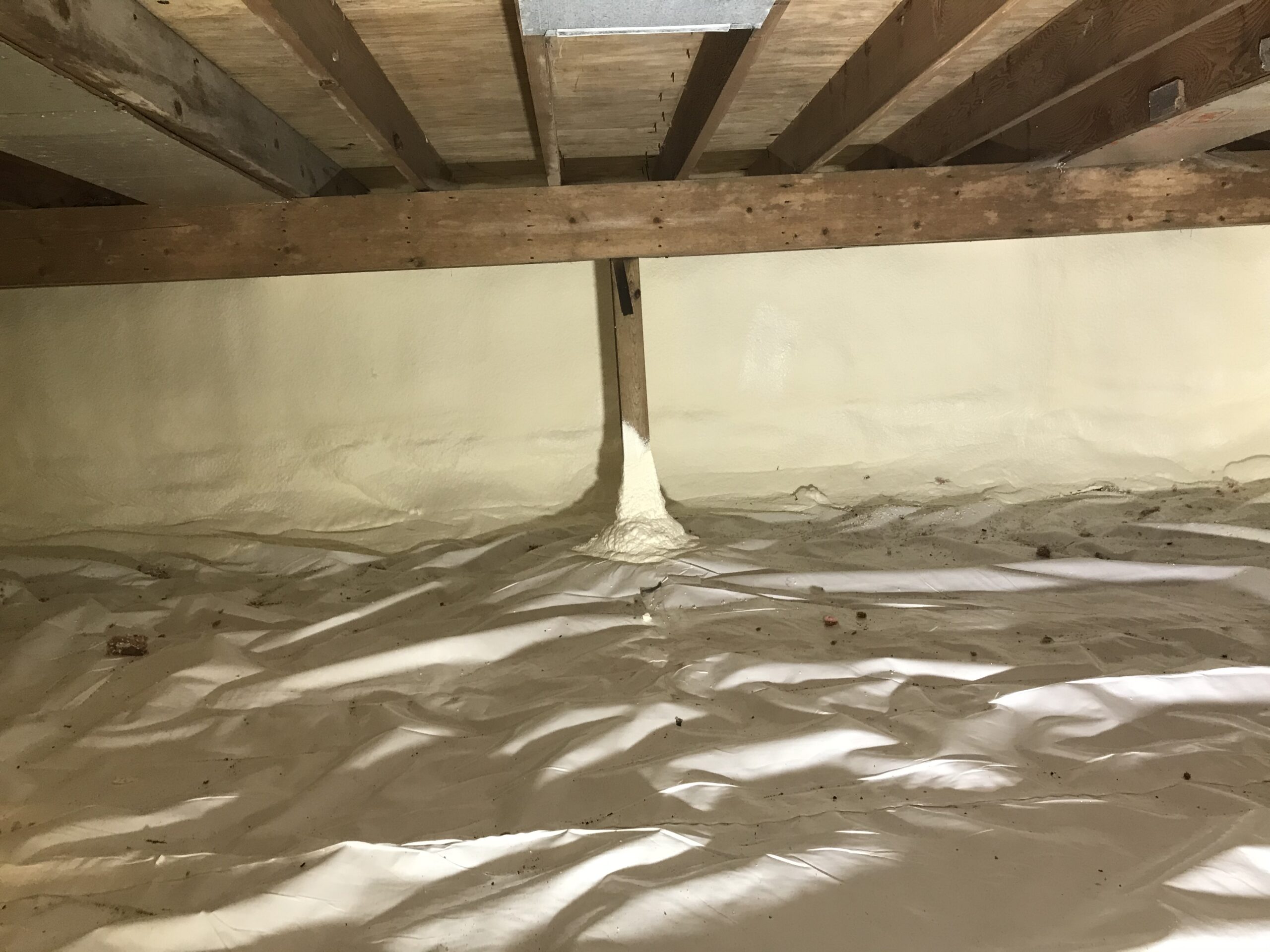
Closed-cell foam also works as a vapor barrier at about 2 inches thick. That moisture resistance makes it ideal for basements, crawl spaces, and any area where humidity or water intrusion is a concern. Property owners often see lower energy bills and greater comfort year-round.
We install this for homes and businesses across Iowa. Both new builds and upgrades can benefit quickly. According to a 2024 industry study, properly installed closed-cell spray foam can reduce heating and cooling costs by 30 to 50 percent compared to buildings with minimal or outdated insulation.
Free on-site insulation estimates help plan the best fit for your project with no surprises later. For those wanting high performance without headaches down the road, our commercial insulation contractors can step in to deliver results you’ll notice each season.
Factors Affecting the R-Value of Spray Foam Insulation
Many variables shape the R-value of commercial spray foam insulation on your property. Understanding these factors helps you get the most out of your energy upgrades.
- Thickness makes a clear difference, like layers in a winter coat. Thicker spray foam creates higher R-values and stops more heat loss.
- Density of the material impacts performance. Higher-density foams, usually found in closed-cell types, pack more punch per inch for resisting heat flow.
- Proper installation is everything. Sloppy work leads to air gaps, uneven surfaces, or missed spots, wasting energy instead of saving it.
- Spray foam formulation changes how well it works. Some products use special blowing agents or chemical mixes that boost the R-value.
- Moisture levels during application affect the final result. A humid day can lower the achieved R-value by trapping water inside the foam.
- Age of insulation enters into play, too. Over time, settling or shrinking may decrease effectiveness and drop what’s called the aged R-value.
- Temperature at installation counts as well. Applying spray foam in colder conditions might not cure properly, leaving you with lower resistance to heat transfer.
- Type matters. Open-cell options usually offer about R-3.5 per inch, while closed-cell varieties hit around R-6 to R-7 per inch. That’s a big swing on your utility bill if you select wrong for your needs.
- Your building’s structure influences both application and coverage. We’ve seen old brick perform differently from new steel framing, impacting what the R-value of spray foam insulation is achieved in real-world jobs.
Use these points before choosing a product or trusting anyone up in your attic with that fancy sprayer gun.
How to Determine the Right R-Value for Your Project
Every building is different, so picking the right R-value takes some thought. You want top-notch energy savings and comfort, not just numbers on a chart.
- Start by checking your local climate zone. Colder areas often need higher R-values for spray foam insulation. The U.S. Department of Energy divides the country into eight climate zones with specific recommendations.
- Review your building’s layout and use. An office with large windows may lose heat faster than a storage room.
- Check local codes in your city or county. Most require minimum R-values that you must follow. For example, the International Energy Conservation Code (IECC) sets baseline requirements that vary by region.
- Set clear energy goals. Do you want lower utility bills or to qualify for rebates in 2024? According to the EPA’s Energy Star program, adding proper insulation and sealing air leaks can save up to 20 percent on monthly energy bills.
- Compare open-cell and closed-cell spray foams. Closed-cell usually gives a higher R-value per inch, which matters in tight spaces.
- Think about moisture concerns. Basements or humid climates benefit from closed-cell options due to their water resistance and better R-value retention.
- Ask a pro with experience, like our team at Precision Insulation & Coatings, to visit your site for a free estimate. We help match the R-value of spray foam insulation to your needs.
- Weigh cost versus performance. While high R-values save money long-term, the upfront price can vary between products. Commercial spray foam typically costs between $1.00 to $3.00 per square foot installed.
- Pencil out plans. Adding more insulation later might be tough once walls are finished, so plan for upgrades now if you expect bigger energy goals down the road.
Benefits of High R-Value Spray Foam Insulation
After choosing the right R-value for your project, you start to see how high R-value spray foam insulation can change the game. This material blocks heat loss better than most options on the market.
You keep indoor temperatures steady all year round, making summers cooler and winters warmer. Properties with closed-cell spray foam feel comfortable in every room. No more cold floors or hot spots near windows.
Lower Energy Bills
Say goodbye to monthly energy bill shocks. High R-value insulation traps heat inside during winter and keeps it out during summer, so your HVAC system does not need to work around the clock.
We bring hands-on experience from projects across homes and commercial buildings throughout our region. With our solutions, energy use drops quickly after installation. Most builders and property owners notice real savings within months.
Studies show that homeowners can save anywhere from 20 to 50 percent on heating and cooling bills after upgrading to spray foam insulation. Utility costs can shrink by up to 40 percent for commercial buildings with properly installed high R-value spray foam.
Long-Term Durability
Unlike fiberglass batts that can settle, sag, or absorb moisture over time, spray foam maintains its performance for decades. It never breaks down, shifts, or needs replacement.
Traditional insulation materials typically need replacing every 15 to 20 years. Spray foam, when installed correctly, lasts for the life of your building. That permanence means you won’t deal with recurring replacement costs down the road.
Free on-site estimates help make this choice clear for residential or commercial needs. All backed by proven building science methods aimed at peak efficiency every single time.
Conclusion
You want solid insulation that works hard and saves money. Spray foam gives your building a strong shield against heat loss, especially with closed-cell options and their higher R-value.
Choosing the right type means lower bills, better comfort, and fewer headaches down the road. Strong insulation can turn any commercial space into a place where energy waste stays outside.
If you need help figuring out which is best, Precision Insulation & Coatings stands ready to lend a hand right here in Iowa. Contact us for a free insulation estimate.
FAQs
1. What is the R-value of closed-cell spray foam insulation for commercial buildings?
Closed-cell spray foam delivers an impressive R-value of about 6.0 to 7.0 per inch. At Precision Insulation & Coatings, we highly recommend it for Iowa warehouses and offices because that dense barrier easily keeps out our bitter winter cold.
2. How does open-cell spray foam R-value compare in commercial applications?
Open cell foam provides roughly an R-3.5 to R-3.8 per inch, meaning it costs less upfront but requires a much thicker application to achieve the exact same climate control as closed cell options.
3. Why does the R-value matter when choosing commercial spray foam insulation?
A higher R-value means stronger thermal resistance against extreme weather. The US Environmental Protection Agency points out that proper insulation and air sealing can slash heating and cooling costs by about 15 percent. Think of a high number as a thick winter coat that stops heat from escaping your retail space.
4. Can spray foam insulation R-value change over time in commercial structures?
High-quality closed-cell foam does experience a minor settling process called thermal drift during its first few years, but it permanently stabilizes around an excellent R-6.5. Professional installation prevents moisture problems and ensures your building stays highly energy efficient for decades.