Does your energy bill keep climbing, even when you haven’t changed a thing? Iowa winters are tough enough on their own. Add rising utility rates to the mix, and the cost of keeping your home warm can feel out of control. We hear this from homeowners across the state every single week.
At Precision Insulation & Coatings, we install spray foam insulation for Iowa homes every day. We’ve walked through thousands of properties and found the same culprit time and again: air leaks quietly draining money through cracks you can’t even see.
We’re going to show you exactly how spray foam fixes that problem. Walk through it with us, step by step.
Key Takeaways
- Spray foam insulation seals air leaks that account for 25% to 40% of a home’s total heating and cooling energy loss, reducing energy bills by 20-30%.
- Closed-cell foam delivers 6-6.5 R-value per inch while open-cell provides 3.5-3.6 per inch, making closed-cell the stronger choice for Iowa’s variable climate.
- Attics, walls, and crawl spaces are the primary energy loss areas where spray foam produces the most significant heating and cooling cost reductions.
- Iowa homeowners typically recoup spray foam installation costs within 8-12 years through energy savings, with annual savings of $300-$600 on utility bills.
- Federal tax credits cover 30% of qualified insulation expenses through 2032, and major Iowa utilities offer additional rebate programs that can be stacked with the federal credit.
How Spray Foam Insulation Reduces Energy Bills
Spray foam insulation stops energy from escaping through the cracks and gaps that traditional insulation misses entirely. According to the National Energy Assistance Directors Association (NEADA) 2026 Winter Outlook, Midwest heating costs are rising to 14.4% for electricity-heated homes this season.
That kind of increase makes stopping energy waste more urgent than ever for Iowa homeowners. We seal your home tight, and that cuts heating and cooling costs in a real, measurable way. The results show up on your very next utility bill.
Sealing Air Leaks and Gaps
Your home loses energy through tiny cracks and gaps you cannot see. According to the U.S. Department of Energy, hidden air leaks account for 25% to 40% of a home’s total heating and cooling energy loss. That’s a serious drain on your budget, month after month. Air leaks form around windows, doors, electrical outlets, and foundation areas. These openings act like open windows in winter, letting warm air pour out into the cold Iowa air.
Our insulation contractors in Iowa have walked through thousands of homes and found this same problem again and again. Spray foam insulation fills every cavity and crack completely, including the spaces that traditional insulation can’t reach. The foam expands to cover gaps that fiberglass batts simply miss. Homeowners pay extra on energy bills simply because air moves freely through their walls and attics.
Air leaks are like leaving your front door open all winter long. Spray foam insulation closes that door permanently. We have completed retrofit projects where homeowners saw their heating costs drop by 20 to 30% after sealing air leaks. The foam hardens into a solid barrier that stops air movement cold. This leads to fewer drafts, more consistent temperatures in every room, and noticeably warmer floors in winter.
Many homeowners don’t realize their attics leak more energy than any other area. We inject spray foam into wall cavities, crawl spaces, and attic corners where air escapes fastest. The process takes hours, not days, and you start saving money on your next energy bill. This isn’t a temporary fix. The foam lasts the life of your home without settling or breaking down.
Improving Thermal Resistance
Spray foam works like a thermal blanket for your Iowa home. We apply it to attics, walls, and crawl spaces where heat escapes during winter and cool air leaks out in summer. The foam expands and fills every crack, crevice, and gap that traditional insulation misses. This complete coverage creates an air-tight seal that stops temperature loss in its tracks.
The R-value, or thermal resistance rating, jumps dramatically when spray foam fills those hidden spaces. A home with poor insulation might have an R-value of 13 in the attic. Spray foam applications push that number to R-38 or higher, depending on thickness and foam type. Closed-cell and open-cell spray foam both improve thermal resistance, but they work differently for Iowa’s climate. Here’s a quick side-by-side:
- Closed-cell foam delivers superior R-value per inch, making it ideal for tight spaces that need maximum thermal protection.
- Open-cell foam costs less and still provides solid thermal resistance while allowing moisture to pass through, which works well in certain interior applications.
- Both types reduce your HVAC system’s workload and cut heating costs noticeably.
We conduct free on-site insulation estimates to identify which option fits your specific needs. Homeowners consistently tell us their heating costs drop 15 to 20% after we seal and insulate their homes properly.
Your HVAC system runs less often because conditioned air stays inside longer. The investment in better thermal resistance pays for itself through energy savings and improved daily comfort.
Areas in Iowa Homes to Insulate with Spray Foam
Certain areas of your Iowa home leak energy far faster than others. Spray foam insulation targets those weak spots and transforms your home’s performance from the ground up. Your attic, walls, and crawl spaces are the biggest culprits. We zero in on each of these areas to stop energy waste at the source.
Attics
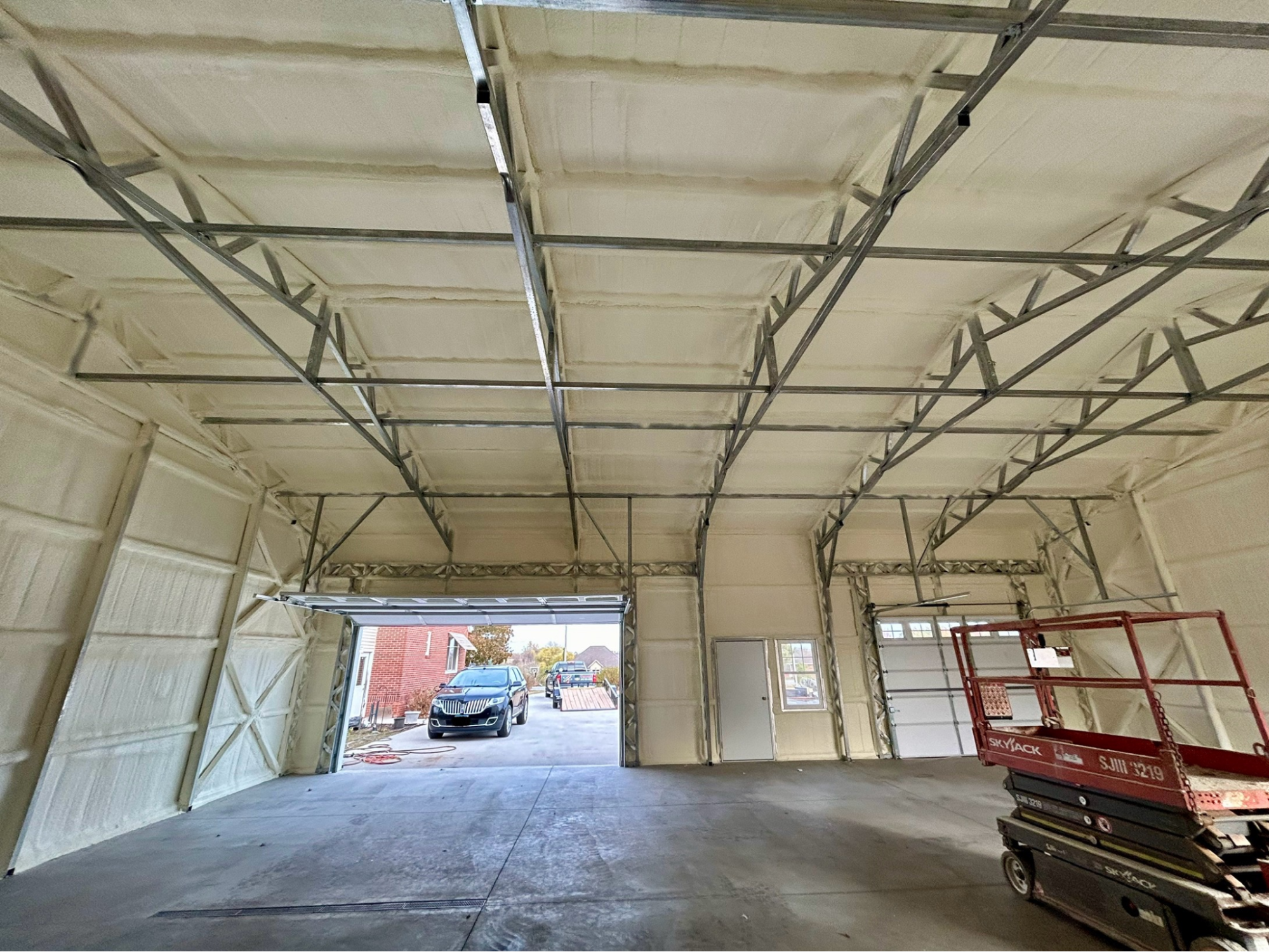
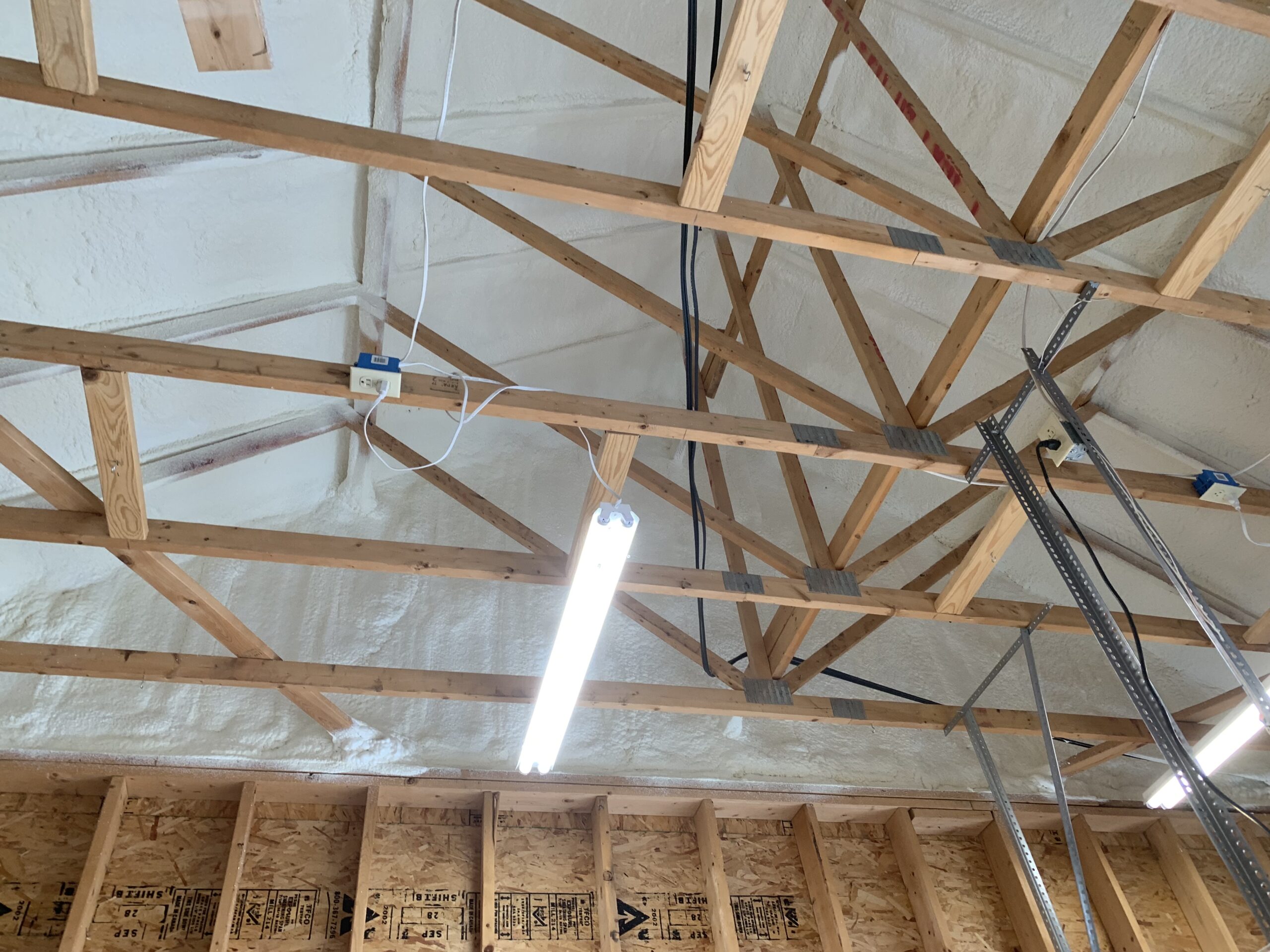
Your attic is the number one spot for energy loss in most Iowa homes. Heat rises and escapes through the roof during winter. Cool air leaks out in summer, forcing your HVAC system to work overtime. At Precision Insulation & Coatings, our team has sealed countless attic spaces where blown-in fiberglass alone couldn’t stop the air leaks.
Spray foam changes the game because it expands into every crack, crevice, and gap around rafters, electrical penetrations, and ductwork. Here’s what you can expect after we spray foam your attic:
- Consistent indoor temperatures from the basement to the second floor.
- Significantly lower energy bills month after month.
- Fewer cold spots and hot zones throughout your home.
- Less strain on your heating and cooling system year-round.
According to the EPA’s ENERGY STAR program, air sealing and insulating the attic can save homeowners an average of 15% on their heating and cooling costs. For most Iowa homes, that adds up to hundreds of dollars every year.
Our attic air sealing services create a thermal barrier that traditional insulation simply cannot match. Contact us for a free on-site estimate, and let our Iowa insulation contractors show you exactly how much you can save.
Walls
Walls are one of the biggest heat escape routes in Iowa homes. Air leaks around electrical outlets, window frames, and door openings create pathways for conditioned air to slip outside. Spray foam insulation fills these tiny gaps that traditional fiberglass batts simply miss.
Building science experts and ENERGY STAR guidelines note that traditional insulation allows for “thermal bridging,” where heat travels directly through wooden wall studs, bypassing the insulation entirely. Spray foam solves this by creating a continuous, airtight barrier over the studs.
We inject the foam directly into wall cavities, where it expands and hardens into a solid thermal barrier. This transforms walls from energy drains into protective shields against Iowa’s harsh winters and hot summers.
- Interior walls: Open-cell foam works well here, especially where moisture management is less of a concern.
- Exterior walls: Closed-cell foam provides superior performance in walls exposed to weather and temperature swings.
- Rim joists and headers: The foam adheres directly to these areas, eliminating the voids that let heat transfer freely between indoors and outdoors.
The insulation cost in Iowa for wall spray foam varies based on square footage and whether we’re retrofitting existing walls or insulating new construction. Our crews have completed hundreds of wall projects across the state and consistently see energy bill reductions once homeowners seal these problem areas.
Homes with properly insulated walls experience fewer temperature fluctuations between rooms. The foam creates an air-tight envelope that works alongside your HVAC system, reducing strain and extending equipment life.
Crawl Spaces
Below your home sits a space that most homeowners forget about. Yet it plays a massive role in your energy bills and indoor comfort. Crawl spaces leak air constantly, letting cold drafts seep into your living areas during Iowa winters. According to indoor air quality experts, due to the “stack effect,” up to 50% of the air you breathe on the first floor of your home originates from the crawl space.
An unsealed crawl space isn’t just an energy drain. It’s a direct pathway for freezing drafts and poor air quality to enter your living areas. We spray foam insulation directly into these areas to seal every crack and gap where air escapes. This stops conditioned air from vanishing into the ground, so your heating system works less hard. Your furnace runs fewer cycles, and your energy costs drop noticeably.
- Dry crawl spaces: Open-cell foam works well and provides solid thermal resistance.
- Moisture-prone areas: Closed-cell foam handles dampness better and blocks both air and water vapor.
- Both options: Far outperform leaving this critical zone unprotected.
Spray foam sticks to the rim joists, band boards, and foundation walls. Unlike traditional fiberglass batts, it doesn’t settle or compress over time in these damp, enclosed areas. It maintains its insulating power for decades, keeping your floors warmer and your wallet fuller.
Open-Cell vs. Closed-Cell Spray Foam: Which is Better for Iowa Homes?
We’ve seen Iowa homeowners struggle with energy bills for years. The choice between open-cell and closed-cell spray foam insulation makes a real difference in solving that problem.
Feature | Open-Cell Spray Foam | Closed-Cell Spray Foam | Best for Iowa Homes |
Density & Structure | Lower density, softer material. Cells remain open and interconnected. Air moves through the foam structure. | Higher density, rigid material. Cells seal completely. Creates an impermeable barrier against air and moisture. | Closed-cell performs better in Iowa’s variable climate. It resists moisture from spring thaws and summer humidity. |
R-Value Performance | Approximately 3.5 to 3.6 per inch. Requires thicker applications to reach desired insulation levels. | Approximately 6 to 6.5 per inch. Achieves higher R-values with less material thickness. | Closed-cell wins for energy savings. Our crews install less material and still exceed performance targets. This matters in attics and walls where space is limited. |
Air Sealing Capability | Seals gaps and cracks moderately well. Some air infiltration occurs through the foam itself. Works adequately for interior applications. | Provides superior air sealing. Blocks air leaks completely. Stops thermal bridging in wall cavities and rim joists. | Closed-cell seals Iowa homes like a cork in a bottle. We’ve measured significant reductions in drafts after closed-cell applications in both older homes and new construction. |
Moisture Management | Absorbs water and moisture readily. Acts as a vapor retarder but not a vapor barrier. Can trap moisture if not installed correctly. | Repels moisture completely. Blocks water vapor and liquid water. Prevents mold growth in damp crawl spaces and basements. | Closed-cell protects against Iowa’s moisture challenges. Spring rains, summer storms, and basement seepage demand this level of moisture resistance. |
Cost Per Board Foot | Lower initial investment per square foot. Budget-conscious homeowners appreciate the upfront savings. Material costs run 40 to 50 percent less than closed-cell. | Higher initial cost per square foot. Premium pricing reflects superior performance. Long-term energy savings offset the higher investment. | Closed-cell delivers better value over time. We calculate payback periods, and closed-cell typically recovers its cost through lower heating and cooling bills within 5 to 7 years for Iowa homes. |
Installation Thickness | Typically installed 5 to 8 inches thick. Requires more material to achieve R-30 or higher ratings. Takes up more space in cavities. | Typically installed 2 to 4 inches thick. Achieves high R-values in confined spaces. Maximizes usable space in attics and crawl spaces. | Closed-cell excels in tight spaces. Our attic projects benefit from closed-cell’s efficiency. Vaulted ceilings and knee walls fit better with thinner applications. |
Sound Dampening | Excellent sound absorption. Reduces noise from outside traffic and weather. Open cells trap sound waves effectively. | Provides minimal sound dampening. Rigid structure reflects sound rather than absorbs it. Better for thermal performance than acoustic control. | Open-cell serves homeowners near highways or airports. We’ve used open-cell in media rooms and bedrooms for noise control. Closed-cell remains the top choice for overall energy performance in Iowa. |
Health & Safety | Contains lower chemical content after curing. Off-gassing is typically minimal. Safe for residential use once fully cured. | Contains higher chemical density during application. Requires proper ventilation throughout the process. Safe for residential use once fully cured. | Both types are safe when professionally installed. Our team always follows proper ventilation protocols and uses appropriate safety equipment on every job. |
Cost and Savings of Spray Foam Insulation in Iowa
Spray foam insulation requires an upfront investment, but the long-term energy savings make it worthwhile for Iowa homeowners and property owners. Our free on-site insulation estimates help you understand the exact costs before committing to any project.
Cost Factor | Details & Impact |
Initial Installation Costs | Closed-cell spray foam ranges from $1.50 to $2.50 per board foot. Open-cell spray foam costs $0.50 to $1.00 per board foot. Attic retrofits typically run $1,500 to $3,500, depending on square footage. Larger projects covering walls and crawl spaces reach $5,000 to $15,000. |
Heating Reduction Benefits | Iowa winters demand significant heating energy. Spray foam blocks air leaks that waste 25 to 40 percent of heated air. Homeowners see 10 to 20 percent reductions in heating costs after installation. A typical home saves $300 to $600 annually on winter utility bills. |
Cooling Savings in Summer | Air conditioning costs drop when spray foam maintains consistent indoor temperatures. The thermal resistance improvement prevents cool air from escaping during hot months. Property owners report 15 to 25 percent lower cooling expenses year-round. |
Return on Investment Timeline | Most Iowa homeowners recoup installation costs within 8 to 12 years through energy savings. Residential retrofits reach payback faster in older homes with poor existing insulation. Commercial properties often see returns within 5 to 7 years due to larger energy consumption. |
Long-Term Property Value Increase | Energy-efficient homes command 3 to 5 percent higher resale values. Buyers recognize lower utility bills as a major advantage. Builders incorporating spray foam insulation attract quality-conscious customers willing to pay premiums. |
Maintenance and Durability Costs | Spray foam requires minimal maintenance over its 80-plus-year lifespan. No settling or degradation occurs, like with traditional fiberglass. One-time installation eliminates repeated replacement expenses that other insulation types demand. |
Closed-Cell vs. Open-Cell Economics | Closed-cell foam costs more upfront but delivers superior air sealing and moisture protection. Open-cell foam offers budget-friendly options for interior applications. Both types reduce energy consumption significantly in Iowa’s climate. |
Available Incentives and Rebates | Federal tax credits cover 30% of qualified insulation expenses through 2032. Based on 2026 incentive programs from providers like MidAmerican Energy and Alliant Energy, major Iowa utilities offer residential rebates and instant discounts that can be stacked directly with the federal tax credit. State programs occasionally provide additional funding for residential and commercial projects. |
Our spray foam insulation services help residential and commercial clients across Iowa get the most out of every dollar they invest. The savings build month after month as your utility bills shrink noticeably.
Property owners who act now enjoy immediate comfort improvements alongside long-term financial gains. Contractors and builders know that quality insulation becomes a strong selling point for buyers who pay close attention to operating costs.
Common Mistakes to Avoid During Installation
Installation mistakes can destroy your energy savings and waste thousands of dollars. We’ve seen plenty of botched spray foam jobs across Iowa that cost homeowners far more than they should have paid. Avoiding these errors is exactly why hiring experienced Iowa insulation contractors matters. Here’s what can go wrong, broken into two clear categories.
Preparation and Application Errors
- Skipping proper surface preparation leaves dirt and moisture trapped under the foam, causing poor adhesion and reduced performance in your walls and attics.
- Applying foam in cold weather below 50 degrees Fahrenheit creates weak bonds that fail to seal air leaks effectively. Timing matters for how spray foam insulation fixes energy bills.
- Overfilling cavities causes the material to expand beyond the space, pushing against framing and creating structural stress that damages your home’s integrity.
- Using incorrect spray pressure settings results in uneven coverage with gaps and thin spots that compromise your thermal resistance throughout the attic or crawl space.
- Mixing incorrect ratios of foam components produces weak, crumbly insulation that doesn’t provide adequate energy efficiency or durability for Iowa’s climate.
Safety and Code Compliance Errors
- Neglecting to wear protective gear exposes installers to harmful chemicals and respiratory irritants that cause serious health complications on the job site.
- Failing to ventilate properly during application traps fumes inside your home, creating dangerous air quality issues for occupants and workers alike.
- Installing foam directly against electrical wiring creates fire hazards since the material can melt or ignite under certain conditions, violating building codes.
- Ignoring local building codes and permit requirements leads to failed inspections, fines, and problems when you sell your property.
- Rushing the curing process by painting or covering foam too quickly traps moisture inside, leading to mold growth and material degradation over time.
Conclusion
Your Iowa home loses money every single month through air leaks and poor insulation. Spray foam stops that waste in its tracks. We’ve watched countless homeowners cut their energy bills by 20 to 30% after upgrading their attics, walls, and crawl spaces with spray foam insulation for Iowa homes. The investment pays for itself, especially during Iowa’s brutal winters and hot summers when your HVAC system works overtime.
Contact Precision Insulation & Coatings today for a free on-site estimate. We’ll show you exactly how much you can save. Stop throwing money out the window. Start sealing it with spray foam.
FAQs
1. Why are energy bills so high in Iowa homes?
Iowa winters regularly drop below zero, and we see most homes leak heat through poorly insulated walls, attics, and crawl spaces. According to the Department of Energy, air leakage alone can account for 25 to 40 percent of heating costs. Old or thin insulation just can’t keep up with Iowa’s extreme cold.
2. How does spray foam insulation lower energy costs?
We’ve seen spray foam seal every gap and crack that fiberglass or cellulose misses, creating an airtight barrier that can reduce your heating and cooling costs by up to 50 percent.
3. Is spray foam insulation worth the cost for Iowa homeowners?
Yes, we typically see Iowa homeowners recoup their investment within 5 to 7 years through lower monthly energy bills, and the savings continue for the life of the home.
4. Where in my home should spray foam insulation be applied?
We recommend focusing on your attic first, since attics are responsible for up to 25 percent of heat loss in most homes, followed by basement walls, crawl spaces, and rim joists where cold air sneaks in.