Have you ever walked from your living room into a hallway next to your garage on a cold Iowa morning and felt the temperature suddenly drop? That chill is no coincidence. Uninsulated garage walls bleed heat out of your home all winter long, and your furnace works overtime trying to keep up.
Our team at Precision Insulation & Coatings has seen this same pattern on job sites across Des Moines and throughout Iowa. Proper garage insulation in Des Moines, Iowa, makes a real, measurable difference, and the energy savings show up on your very first heating bill.
We’ll walk you through which insulation methods work best for Iowa homes, what you can realistically expect to save, and why this upgrade keeps paying you back season after season.
Key Takeaways
- Uninsulated garage walls cause significant heat loss, forcing Iowa heating systems to work overtime and driving energy bills higher each winter month.
- Homeowners report energy savings between 15 and 25% after upgrading garage insulation with spray foam, fiberglass, or rigid foam board materials.
- Three main insulation types, fiberglass, spray foam, and rigid foam board, each provide thermal barriers that reduce heat escape through garage walls.
- Proper garage wall insulation maintains consistent indoor temperatures, prevents cold drafts in adjacent living spaces, and extends HVAC equipment lifespan.
Why Insulating Garage Walls is Important for Iowa Homes
Iowa winters hit hard. Your garage sits right on the front lines of that battle, and uninsulated walls let heat escape faster than your furnace can replace it.
Impact of Iowa’s Climate on Energy Efficiency
Our state experiences dramatic temperature swings that test home insulation year-round. Winter temperatures in Iowa can plunge well below freezing, sometimes reaching minus 20 degrees Fahrenheit or colder.
Summer heat climbs into the 90s, straining cooling systems just as hard. These extreme shifts create serious challenges for any home trying to stay comfortable year-round.
Iowa falls within U.S. Climate Zones 5 and 6, and according to U.S. Department of Energy guidelines for Climate Zones 5 and 6, wall insulation should target R-13 to R-21 to properly combat regional heat loss. That’s a specific, science-backed number worth discussing with your contractor. When your garage walls fall short of that range, furnaces work overtime to compensate.
Garage walls absorb outdoor temperature changes faster than insulated living spaces. Without a proper barrier, that cold air travels straight into your home, and your heating system never quite catches up.
- Cold air seeps into adjacent hallways, bedrooms, and living areas.
- Your HVAC system runs more cycles than it should.
- Monthly energy bills climb higher than they need to.
- Thermostat settings stop reflecting actual room temperatures.
Effective insulation methods, like spray foam and fiberglass, create a thermal barrier that stops this energy waste at the source. Homeowners who invest in garage wall insulation report noticeable reductions in their energy bills within the first heating season. Proper insulation isn’t a luxury in Iowa; it’s a necessity for keeping your home comfortable and your wallet full.
Temperature fluctuations across our region demand solutions specifically designed for Iowa’s climate challenges. We at Precision Insulation & Coatings focus on insulation services in Iowa that address these exact problems.
Spray foam insulation contractors in Iowa, including our team, understand how moisture and temperature variations affect home performance. Rigid foam board and other quality materials help cut the heat loss that costs you money every single month.
Benefits of Maintaining Consistent Temperatures
Consistent indoor temperatures improve overall comfort throughout your home. Stable temperatures mean your family stays comfortable in the living room, bedrooms, and even spaces right next to the garage. Those frustrating hot spots and cold zones that plague poorly insulated homes disappear.
We’ve worked with Iowa homeowners who struggled with temperature swings for years before investing in proper garage wall insulation, and the difference becomes obvious within weeks of completing the project. According to the EPA’s Energy Star program, homeowners can save an average of 15% on heating and cooling costs through proper air sealing and insulation.
Our own field data lines up closely with that figure. We’ve documented energy savings ranging from 15 to 25 percent for clients who upgraded their garage insulation, whether they chose spray foam or fiberglass options.
One Des Moines homeowner with an attached two-car garage dealt with cold adjacent rooms every winter because of uninsulated 2×6 walls. After we installed dense-pack fiberglass in the wall cavities and sealed the rim joist areas, the results were clear:
- Thermostat setback cycles dropped from 18 per day down to just 10.
- Adjacent room temperature climbed by 5.4 degrees Fahrenheit within four weeks.
- Heating energy consumption fell by 16.8 percent in the first heating month.
These measurable improvements show exactly what proper insulation delivers for Iowa homeowners facing similar challenges. Your furnace stops cycling on and off, constantly trying to compensate for heat escaping through uninsulated walls. Air conditioning also runs less frequently during Iowa summers when your home holds stable temperatures.
These savings accumulate significantly over time, making the initial investment in home insulation in Des Moines, IA, properties genuinely worthwhile. Proper insulation also protects your equipment. When your HVAC operates within its ideal range rather than cycling constantly, it lasts longer, and the insulation cost in 2026 looks far more reasonable compared to early replacement of overworked heating and cooling systems.
Types of Insulation for Garage Walls
We work with three main insulation materials that perform well in Iowa garages. Each one brings different strengths, and your choice depends on your budget, your home’s specific needs, and how much thermal protection you want to achieve.
Fiberglass Insulation
Fiberglass insulation is a practical, proven choice for Iowa garage walls. We’ve installed thousands of dense-pack fiberglass systems across the state, and this material consistently delivers strong results.
It works by trapping air pockets within its fibers, creating a barrier that slows heat movement between your garage and living spaces. Our teams blow fiberglass insulation directly into wall cavities, filling gaps that traditional batts often miss entirely.
| Feature | Dense-Pack Fiberglass |
| Application Method | Blown directly into wall cavities |
| Gap Coverage | Fills the voids traditional batts miss |
| Settlement Over Time | Minimal when properly installed |
| Noise Reduction | Yes, dampens outside traffic and equipment sounds |
| Best For | Cost-conscious homeowners, Iowa climate performance |
The process takes just hours and causes minimal disruption. You get consistent R-values throughout the wall assembly and noticeably warmer adjacent rooms come winter. Dense-pack fiberglass handles Iowa’s harsh winters without settling or losing effectiveness over time. Property owners receive a free on-site estimate before any work begins, so there are no surprises about pricing.
Our spray foam insulation contractors in Iowa team can compare fiberglass options with other solutions during your consultation. That way, you choose what fits your budget and performance goals best.
Spray Foam Insulation
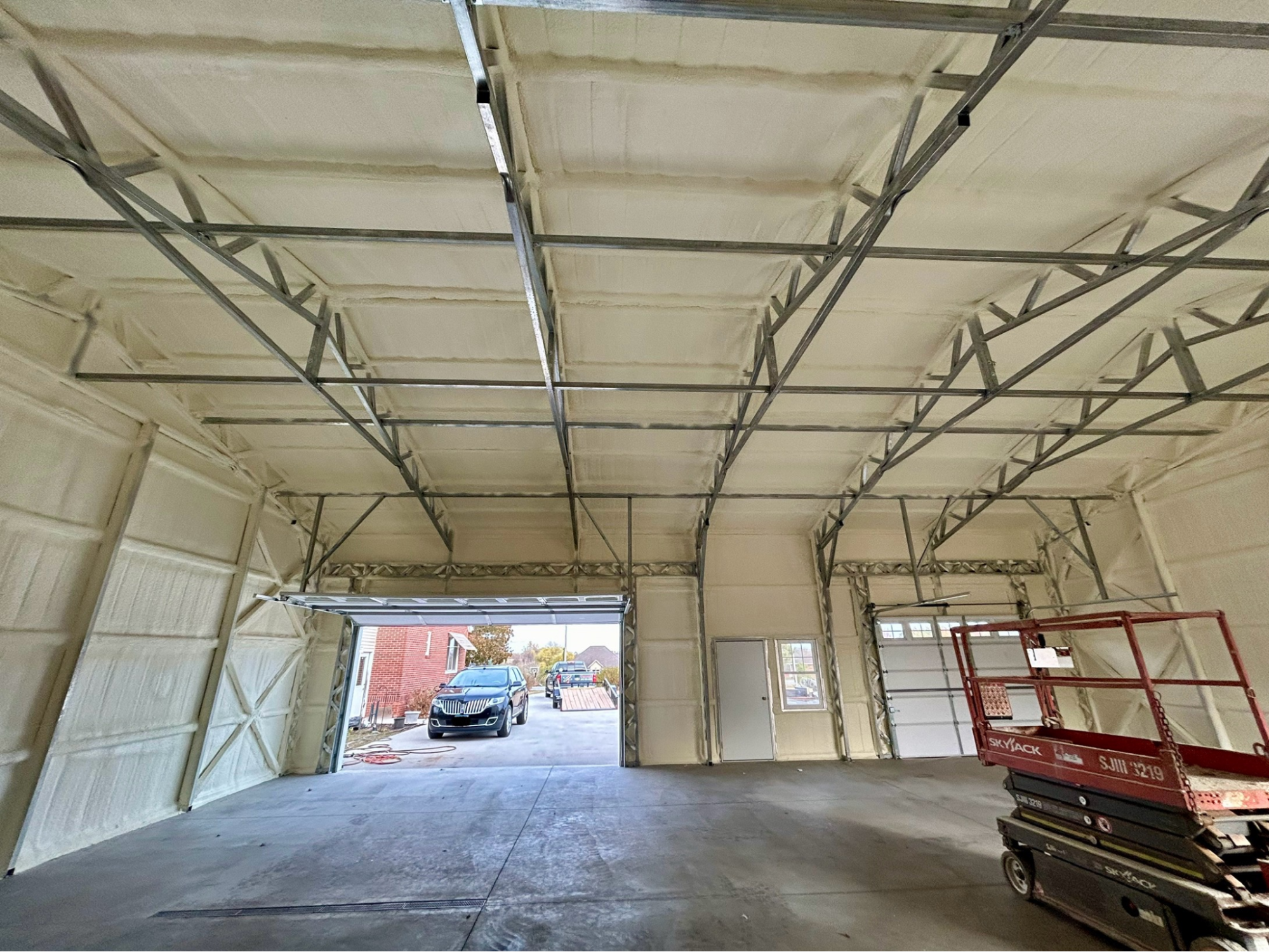
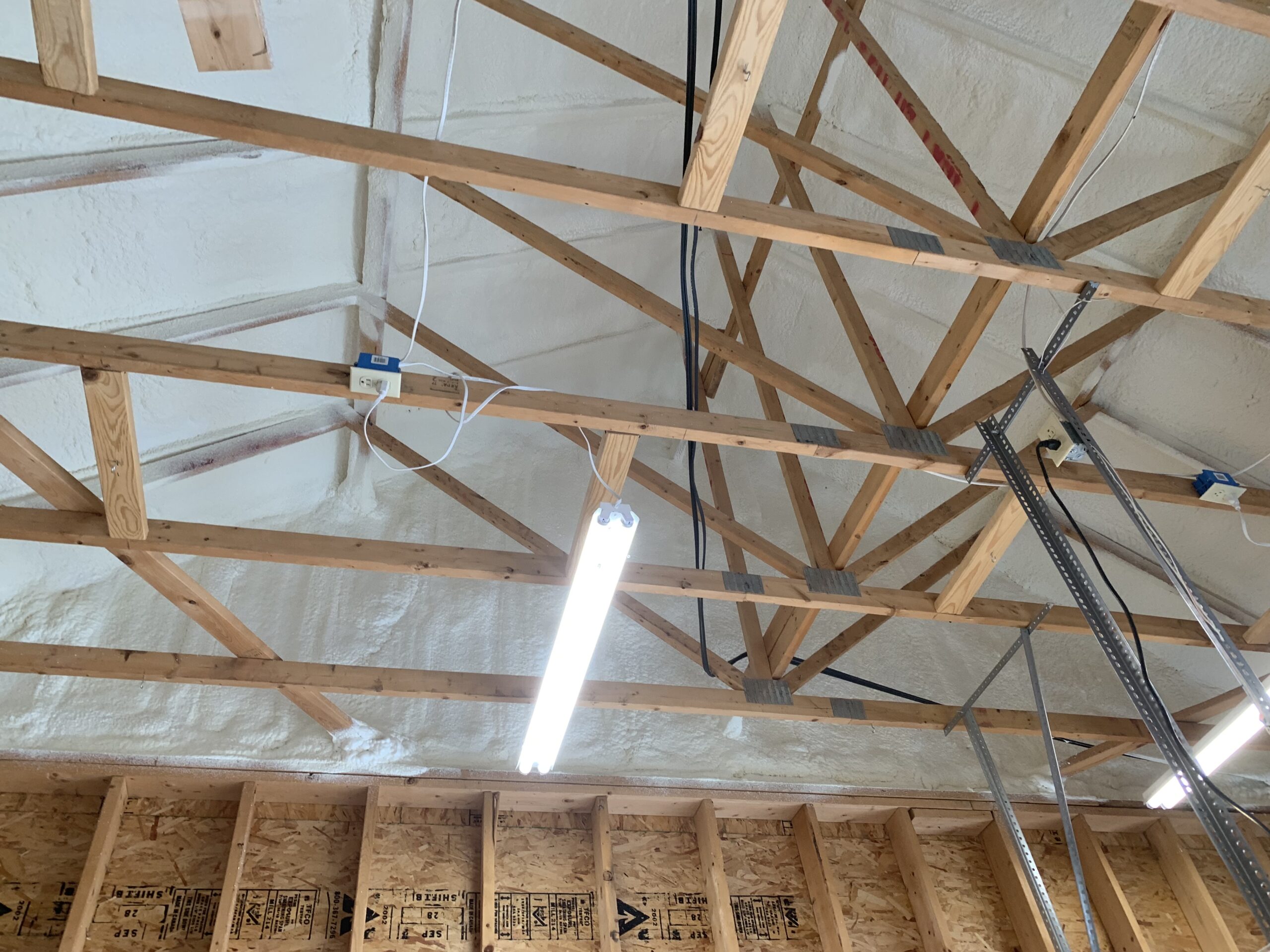
Spray foam insulation is one of the most effective solutions for garage walls across Iowa. We use both closed-cell and open-cell spray foam to deliver superior performance in our region’s demanding climate. Closed-cell foam creates a denser barrier that stops heat from escaping through garage walls. Open-cell foam offers more flexibility and excellent sound dampening.
Our spray foam insulation company Iowa team applies these materials directly to wall cavities, creating an airtight seal that fiberglass cannot match. The foam expands to fill every crack, gap, and void. No cold air slips through, your garage stays warmer during brutal Iowa winters, and your heating system works less hard to maintain comfort.
For a typical single-car attached garage in Des Moines with 320 square feet of wall area and standard 8-foot ceilings, here is how the two spray foam options compare:
| Spray Foam Type | Thickness | Estimated Cost | R-Value Per Inch | Est. Payback Period |
| Closed-Cell | 2 inches | ~$3,600 | R-6 | ~18 months |
| Open-Cell | 3.5 inches | ~$2,200 | R-3.5 | ~30 months |
According to 2026 pricing data for Midwest regional contractors, residential spray foam insulation typically costs between $1.00 and $4.50 per square foot installed. Most homeowners recoup that investment within 3 to 5 years through reduced utility bills. Our free on-site estimates show you exactly what you’ll spend and what you’ll save before you commit to anything. Heat loss through garage walls drains your wallet faster than you might expect.
We’ve seen homeowners reduce their energy bills significantly after upgrading to spray foam insulation for garage walls, and the spray foam insulation cost in 2026 remains competitive when you factor in that payback timeline. Temperature fluctuations that once plagued your garage disappear. Adjacent living spaces benefit directly, since less heat escapes through shared walls, and your whole house feels more comfortable without cranking up the thermostat.
We combine spray foam applications with dense-pack fiberglass and attic air sealing to maximize your home’s energy efficiency. Our garage insulation contractors in Iowa have the expertise to assess your situation and recommend the right foam type for your specific needs.
Rigid Foam Board Insulation
Rigid foam board insulation is a powerhouse option for garage walls across Iowa. These dense panels deliver impressive R-values per inch of thickness and resist both moisture and air leakage. Boards come in various thicknesses, so we customize every installation to your garage’s specific requirements. Unlike fiberglass batts, rigid foam doesn’t settle or compress over time, meaning your insulation performance stays strong year after year.
The material resists moisture absorption, which is a critical advantage since garages experience temperature swings that encourage condensation. Installation requires precision; we cut boards to fit snugly between studs and seal all seams to prevent thermal bridging, where heat escapes through gaps in the framing.
- High R-value per inch of thickness.
- Resistant to moisture and condensation.
- No settling or compression over time.
- Reduces thermal bridging when seams are properly sealed.
- Adds structural rigidity to garage walls.
We’ve worked on countless garage projects in Des Moines and throughout Iowa, and rigid foam board consistently performs well in challenging climates. The panels create an excellent air seal when installed correctly, which matters greatly during our brutal winters and humid summers.
Our roof coating contractor, Iowa division, recognizes that rigid foam works beautifully alongside other energy efficiency improvements, particularly when pairing exterior upgrades with interior wall treatments. The noise reduction benefit is another bonus, since dense materials absorb sound that would otherwise travel straight through your walls.
Key Benefits of Proper Garage Wall Insulation
When you insulate your garage walls properly, heat stays where it belongs. Energy bills drop, living spaces feel warmer, and you gain the bonus of a noticeably quieter home.
Reduced Heat Loss and Energy Costs
Garage walls without proper insulation act like open doors to wasted energy. Heat escapes through those surfaces, forcing your heating system to work overtime during Iowa’s cold winters. We’ve seen homeowners cut their energy bills significantly after installing quality insulation in their garage spaces.
Spray foam insulation, fiberglass insulation, and rigid foam board all create thermal barriers that stop heat from sneaking out. Our team applies building science principles to maximize those barriers and minimize energy costs. The difference shows up on your utility bill within the first heating season.
Improved Comfort in Adjacent Living Spaces
Cold air seeping from an uninsulated garage creates uncomfortable drafts that travel into kitchens, bedrooms, and living areas. Proper insulation stops this problem before it starts. We’ve worked with countless Des Moines, Iowa, homeowners who noticed their adjacent rooms felt noticeably warmer after we installed quality insulation in their garage walls.
The temperature swings that once plagued their homes simply disappeared. Insulated garage walls maintain consistent temperatures throughout your home. Your heating system doesn’t work overtime to compensate for lost warmth, and that thermal stability creates a genuinely comfortable living environment.
- Rooms next to the garage no longer feel like cold zones in winter.
- Children play comfortably in spaces adjacent to the garage.
- Home offices stay at steady temperatures without extra heating.
- Families stop piling on extra blankets near heating vents.
Indoor air quality improves, too. When insulation prevents extreme temperature fluctuations, fewer drafts carry dust and outdoor pollutants into your living spaces. The investment in proper garage wall insulation pays through enhanced comfort, lower energy costs, and a home that feels genuinely pleasant year-round.
Added Noise Reduction
Garage walls without insulation let sound travel straight through to your home. Traffic noise, lawn equipment, and neighborhood activity seep into living spaces without anything to stop them. We install insulation materials that absorb sound waves before they reach your family.
Fiberglass and spray foam both work as acoustic buffers, quieting the spaces around your garage. Based on acoustic engineering standards for home insulation, materials like open-cell spray foam and dense fiberglass can achieve a Sound Transmission Class (STC) rating of 40 or higher, which cuts the perceived volume of outdoor noise by roughly half. This matters especially in
Iowa neighborhoods where winter winds howl, and spring storms rattle windows. Our insulation company, Des Moines, Iowa, clients often mention how much quieter their homes feel after the work is done.
- Spray foam seals every crack and crevice, blocking sound pathways entirely.
- Dense-pack fiberglass absorbs sound waves within wall cavities.
- Rigid foam board adds a solid additional sound barrier layer.
- All three options improve STC ratings and reduce noise transfer.
Conclusion
Properly insulated garage walls are one of the most effective ways to stop heat from escaping your Iowa home. Whether you choose spray foam, fiberglass, or rigid foam board, the investment pays through lower heating costs and warmer living spaces throughout your entire home.
Our team at Precision Insulation & Coatings can evaluate your garage walls and recommend the right insulation services in Iowa for your specific situation. Reach out for a free on-site estimate, and let’s work together to seal in your home’s warmth where it belongs.
FAQs
1. Why do garage walls matter for heat loss in Iowa homes?
Uninsulated garage walls let cold air seep straight into your living space, and with Iowa winter temperatures regularly dropping to 15 to 20°F, your heating system works overtime to keep up. We install insulated garage walls that act like a protective barrier, blocking cold air and keeping heat where it belongs.
2. What type of insulation works best for garage walls in Iowa?
We typically recommend closed-cell spray foam or fiberglass batt insulation with an R-value of at least R-13 for Iowa garage walls. Your best choice depends on your wall thickness and budget.
3. How much heat can proper garage wall insulation actually save?
We’ve seen insulated garage walls cut heat loss by up to 20 percent in Iowa homes, which often translates to $150 to $250 in annual heating cost savings. That means lower energy bills and a more comfortable home all winter long.
4. Can I insulate my garage walls myself, or do I need a pro?
Some homeowners tackle basic insulation projects themselves, but we find that professional installation delivers better long-term results. Our trained installers know how to seal gaps, choose the right materials, and ensure proper coverage the first time.