Iowa’s weather is hard on buildings. A home, shop, crawl space, pole barn, or metal building in Central Iowa has to handle freezing winters, humid summers, spring storms, strong winds, and sharp temperature changes. That makes insulation more than a comfort upgrade. It affects energy use, moisture control, building durability, and how usable a space feels year-round.
That is one reason many property owners look at closed-cell spray foam when they want a stronger insulation solution. It seals gaps, adds R-value in limited space, and helps reduce the air movement that makes rooms feel drafty or uneven. For homeowners searching for closed-cell spray foam Des Moines services, the goal is usually simple: create a tighter, more efficient building without guessing where the problem starts.
At Precision Insulation & Coatings, we look at the building before recommending a system. Some projects call for closed-cell spray foam. Others may need open-cell foam, fiberglass, air sealing, or a combination. The right answer depends on the structure, moisture conditions, use of the space, and budget.
What Is Closed-Cell Spray Foam?
Closed-cell spray foam is a spray-applied insulation material that expands and hardens after installation. The cells inside the foam are tightly packed, which makes the material dense, rigid, and resistant to air movement. Compared with open-cell foam, closed-cell foam typically delivers a higher R-value per inch and stronger resistance to moisture and air leakage.
The U.S. Department of Energy explains that closed-cell foam has a greater R-value and better resistance to moisture and air leakage than open-cell foam, although it is also denser and more expensive. That performance in a thinner application makes closed-cell spray foam useful where space is limited or moisture control matters.
It can be applied to rim joists, crawl space walls, metal panels, roof decks, basement areas, pole barns, garages, and new construction assemblies. Once installed correctly, it helps create a more controlled building envelope.
Why Iowa Buildings Need Better Air Control
Many comfort problems in Iowa come from air leakage, not just missing insulation. During winter, cold air can enter around rim joists, attic bypasses, crawl space openings, garage ceilings, and exterior wall gaps. During summer, humid air can move through many of those same weak points.
The result can be cold floors, hot rooms, damp crawl spaces, rising utility bills, and heating or cooling equipment that runs longer than it should. ENERGY STAR notes that air sealing and insulation improvements in areas such as attics, crawl spaces, and basements can improve comfort and energy efficiency.
ENERGY STAR In Iowa, that matters because a building can have insulation and still feel uncomfortable if outside air keeps moving through the structure. Closed-cell spray foam helps by forming a continuous insulation layer when installed correctly. It can slow heat transfer and reduce uncontrolled air movement at the same time. This is why it is often recommended for drafty, damp, or hard-to-insulate areas.
Strong Performance in Drafty Areas
Traditional insulation can slow heat transfer, but some materials do not stop air from moving through cracks, seams, and penetrations. If a crawl space, attic, or garage ceiling has air leaks, heated or cooled air can escape while outside air enters. Adding more insulation without sealing the leaks may not solve the problem.
Closed-cell spray foam expands into small gaps during installation. Once cured, it creates a tighter seal than many loose-fill or batt insulation methods. This can help reduce drafts around rim joists, crawl space walls, rooflines, garage ceilings, and framing transitions.
For closed-cell spray foam Des Moines projects, we often see these issues in older homes, additions, rooms over garages, and areas above unconditioned spaces. Sometimes the room does not need a larger heating system. It needs better air control.
Moisture Resistance in Crawl Spaces
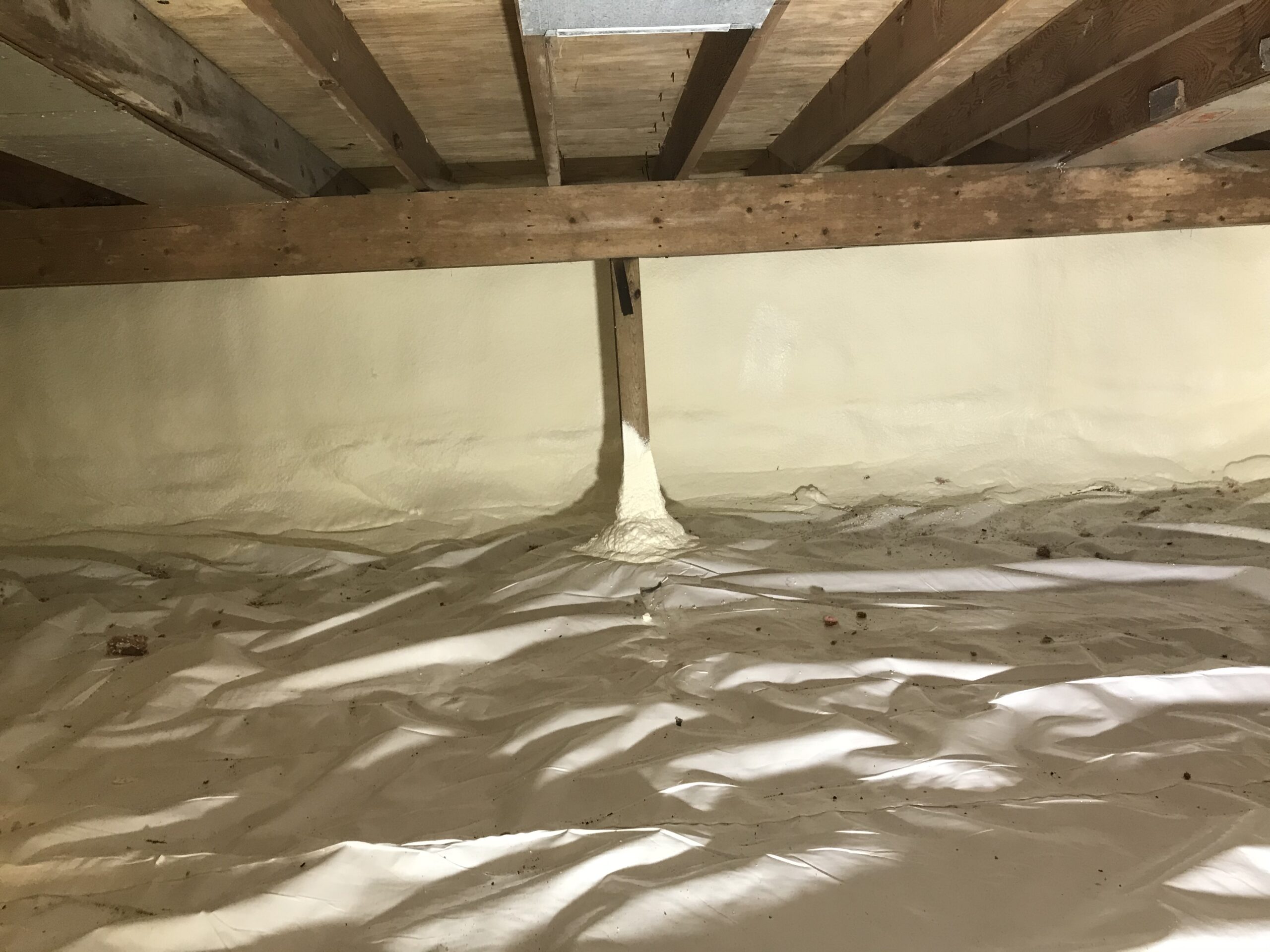
Crawl spaces are one of the most important insulation areas in Iowa homes. Many crawl spaces deal with damp soil, humid air, cold foundation walls, and leaks around the rim joist. If the area is ignored, the effects often show up upstairs as cold floors, musty odors, uneven comfort, or moisture concerns.
Closed-cell foam is often considered for crawl space insulation in Iowa projects because it resists moisture better than many common insulation materials. It can be applied to crawl space walls or rim joists to reduce air movement and improve thermal performance. When paired with proper ground vapor control, drainage, and crawl space planning, it can help create a cleaner and more stable area under the home.
The U.S. Environmental Protection Agency explains that controlling moisture entry and preventing condensation are important steps in protecting buildings from mold and moisture-related problems. That is important for Iowa crawl spaces because the issue is rarely insulation alone. Moisture, air leakage, drainage, and temperature all work together.
A crawl space insulation contractor that Iowa homeowners trust should inspect the full space before recommending foam. The contractor should check for standing water, exposed soil, open vents, framing condition, ductwork, plumbing, and access points.
A Practical Choice for Pole Barns
Pole barns are common across Iowa, and many are used for more than basic storage. Property owners use them as workshops, equipment buildings, hobby spaces, garages, agricultural buildings, and small business spaces. Once a pole barn needs heating or cooling, insulation becomes a serious decision.
Pole barn spray foam insulation Iowa projects often involve metal panels, large open cavities, high ceilings, and seams where wind can push air through the building. Closed-cell spray foam can bond to properly prepared surfaces and create a continuous insulation layer. This helps reduce drafts and can help manage condensation on metal surfaces.
Condensation is one of the biggest reasons pole barn owners choose closed-cell foam. When warm interior air meets cold metal, moisture can collect and drip. Over time, that can affect stored equipment, tools, framing, and comfort. Closed-cell foam helps separate interior air from the cold surface, which can reduce condensation risk when the system is designed and installed properly.
Metal Building Insulation Services for Iowa
Metal buildings gain and lose heat quickly. In winter, the shell can feel cold and drafty. In summer, it can become hot and difficult to cool. Without proper insulation, the building may also struggle with condensation when temperature and humidity change quickly. That is why metal building insulation services require more than simply adding material to the walls.
The insulation has to match how the building is used. A storage building, heated shop, warehouse, agricultural structure, and commercial workspace may all need different plans. Closed-cell spray foam can help because it adheres to metal surfaces, reduces air movement, and adds thermal resistance without taking up too much interior space.
It can be applied to walls, rooflines, and problem areas where condensation or drafts are most noticeable. For Iowa metal buildings, preparation and installation techniques matter. The substrate needs to be suitable, clean, and dry. The installer also needs to account for temperature, foam thickness, safety, and curing. The product performs best when the plan is built around the building’s real use.
New Construction Benefits
New construction gives homeowners and builders the chance to get insulation right before drywall, finishes, and equipment make access more difficult.
- Working with a new construction insulation contractor, Iowa builders can coordinate early in the project, which can help reduce comfort problems after the home or building is finished.
- Closed-cell spray foam can be used in walls, roof decks, rim joists, garages, basements, and other areas where air sealing and high R-value matter.
- In new homes, the goal is not only to meet code. The goal is to build a more comfortable and efficient home from the start.
- A clear insulation plan can help reduce issues with cold rooms, drafty floors, garage comfort, and moisture concerns.
- Builders and homeowners should discuss insulation before framing details are final, especially around cantilevers, bonus rooms, cathedral ceilings, crawl spaces, and mechanical areas.
Precision Insulation & Coatings focuses on practical recommendations. Closed-cell foam can be a strong choice in many new construction areas, but it should be used where it brings clear value. Some assemblies may call for a hybrid system or a different insulation product depending on the project.
What Impacts Closed-Cell Spray Foam Cost in Iowa?
Many people search for closed-cell spray foam cost in Iowa because they want a clear price before scheduling an inspection. While that is understandable, spray foam pricing depends on the project details. The main cost factors include square footage, required foam thickness, access, surface condition, prep work, job location, ventilation needs, and whether old insulation must be removed first.
A simple rim joist project will not price the same as a full crawl space, pole barn, or metal building. New construction may also differ from retrofit work because access is usually easier before finishes are installed.
Closed-cell foam usually costs more upfront than fiberglass or open-cell foam. The higher cost can make sense in areas where moisture resistance, air sealing, and R-value per inch are important. In other areas, a different product may be more cost-effective.
Closed-Cell Foam vs. Open-Cell Foam
Both open-cell and closed-cell spray foam have a place in insulation work. Open-cell foam is lighter, expands more, and can be useful in many above-grade applications. It can fill large cavities well and usually costs less per installed inch. Closed-cell foam is denser, has a higher R-value per inch, and resists moisture and air leakage better.
For Iowa homes and buildings, it often becomes the preferred choice in crawl spaces, metal buildings, pole barns, garages, and areas where moisture or limited space matters.
Open cell may still make sense in certain wall or roof assemblies when project conditions are right. The wrong choice can create problems, especially in areas with moisture exposure, which is why an inspection matters before choosing a foam type.
Where Closed-Cell Spray Foam Makes the Most Sense
Closed-cell spray foam is not needed in every part of every building. It tends to bring the most value in areas with air leakage, moisture concerns, limited space, or metal surfaces. In Iowa, common applications include crawl space walls, rim joists, garage ceilings, bonus rooms, pole barns, metal buildings, basement walls, new construction details, and commercial or agricultural structures.
It can also help where previous insulation has failed. If fiberglass has fallen, settled, absorbed moisture, or left gaps around framing, simply adding more of the same material may not fix the issue. Closed-cell foam can create a more complete seal when the surface is ready and the application is done correctly.
The key is using it with purpose. A good insulation contractor should explain why closed-cell foam is recommended for a certain area and why another product may be better somewhere else.
Why Installation Quality Matters
Closed-cell spray foam performance depends heavily on installation. The product must be mixed, applied, and cured correctly. Thickness should be consistent. Surfaces should be properly prepared. The installer should understand temperature, moisture, ventilation, safety, and building science. Poor installation can lead to gaps, uneven coverage, adhesion issues, odor concerns, or performance problems.
Precision Insulation & Coatings works across Des Moines and Central Iowa on insulation projects for homes, shops, garages, crawl spaces, pole barns, metal buildings, and new construction. Our approach starts with understanding the building first. We want to know what is causing the comfort or moisture issue before recommending a solution.
When to Consider an Inspection
You may want an insulation inspection if you notice cold floors, drafty rooms, high heating or cooling bills, moisture in a crawl space, condensation in a shop, an uncomfortable garage space, or a pole barn that is difficult to heat. New construction projects should bring insulation planning into the conversation early, before access becomes limited.
An inspection can also help determine whether closed-cell foam is the best answer or whether another solution makes more sense. Sometimes the right fix includes air sealing, insulation removal, vapor control, or a combination of materials.
For property owners comparing closed-cell spray foam Des Moines options, the best contractor is not always the one who gives the fastest answer. It is the one who explains the reason behind the recommendation.
The Bottom Line
Closed-cell spray foam has become a popular insulation solution in Iowa because it addresses several problems at once. It adds a strong R-value, helps reduce air leakage, resists moisture, and works well in tough spaces like crawl spaces, pole barns, metal buildings, garages, and new construction details. It does cost more than some traditional insulation options, so it should be used where its strengths matter most.
That is where a professional inspection helps. By understanding the building, the moisture conditions, and the owner’s goals, Precision Insulation & Coatings can recommend an insulation plan that fits the space without overselling unnecessary work. Reach out to us today for a free insulation estimate for your specific insulation needs.
FAQs
1. Is closed-cell spray foam good for Iowa homes?
Yes, closed-cell spray foam works well in Iowa because it helps reduce air leaks, adds a strong R-value, and resists moisture. It is especially useful in crawl spaces, rim joists, garages, pole barns, and areas exposed to seasonal temperature swings.
2. What affects closed-cell spray foam cost in Iowa?
Closed-cell spray foam cost in Iowa depends on square footage, foam thickness, access, prep work, surface condition, and whether old insulation needs removal. Crawl spaces, pole barns, metal buildings, and new construction projects can all have different pricing requirements.
3. Can closed-cell spray foam help with crawl space insulation in Iowa?
Yes, closed-cell foam can improve crawl space insulation Iowa homeowners need by reducing air movement and adding moisture-resistant insulation. It works best when drainage, ground vapor control, and existing moisture problems are reviewed properly before any installation work begins.
4. Is closed-cell foam good for pole barn spray foam insulation in Iowa?
Closed-cell foam is a strong option for pole barn spray foam insulation in Iowa projects because it bonds to surfaces, reduces drafts, and helps control condensation. It can make shops, agricultural buildings, and storage spaces more comfortable and usable year-round.
5. Do metal building insulation services use closed-cell spray foam?
Many metal building insulation services use closed-cell spray foam because it adheres to metal surfaces, limits air leakage, and helps reduce condensation risk. It is often used in shops, warehouses, agricultural buildings, and commercial spaces across Iowa insulation projects.
6. Should I use closed-cell spray foam for new construction in Iowa?
Closed-cell spray foam can be a smart choice for new construction when air sealing, moisture resistance, and high R-value matter. A new construction insulation contractor Iowa homeowners trust can review walls, rooflines, rim joists, garages, and crawl space details.