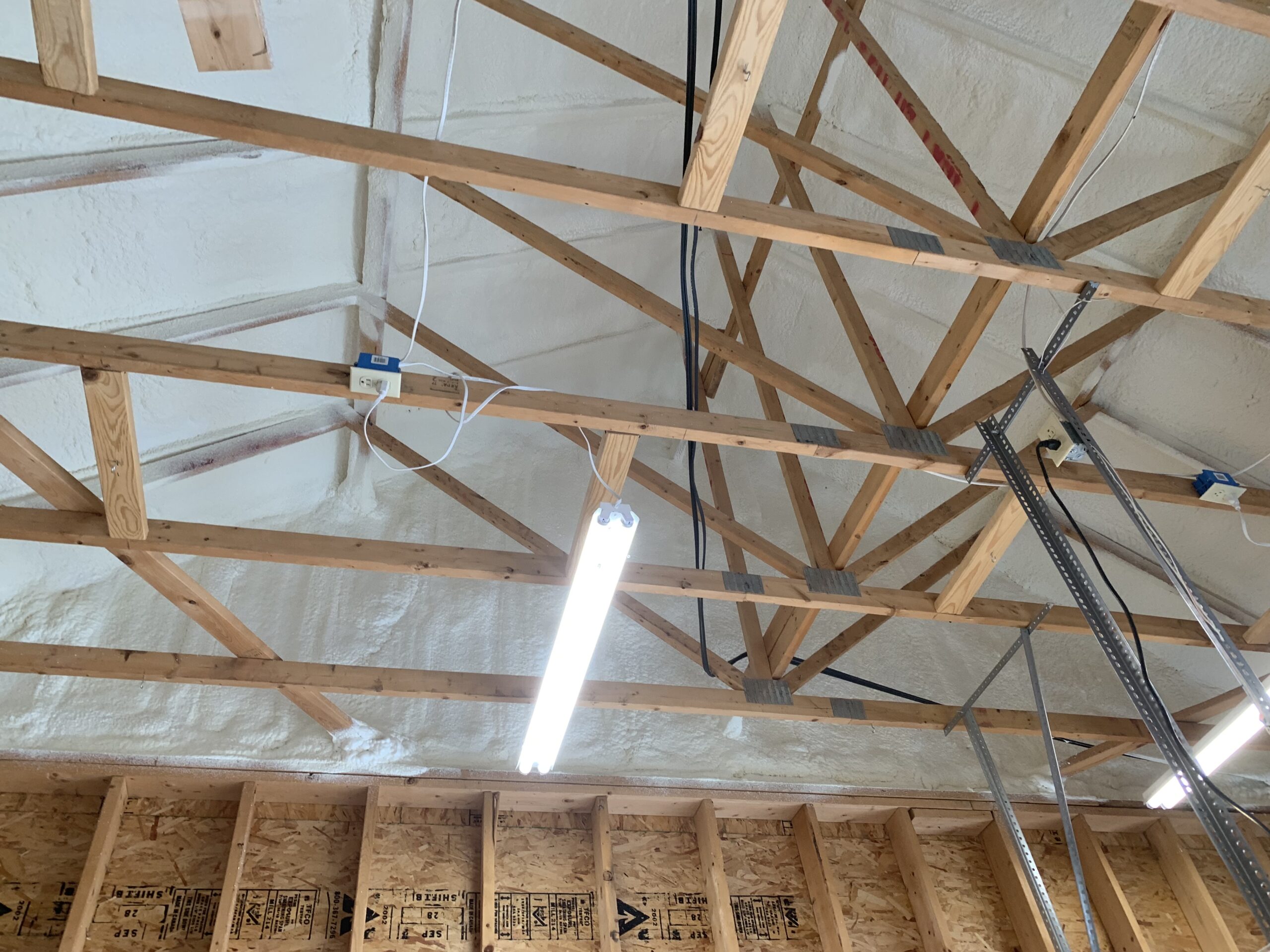
Iowa homes deal with a wide range of weather. A house may face below-freezing winter nights, humid summer afternoons, heavy winds, and fast temperature swings in the same year. That puts real pressure on the attic, walls, rim joists, crawl space, and basement.
When insulation levels fall short, comfort problems usually show up fast. R-value gives homeowners a useful way to understand insulation performance. It measures how well insulation resists conductive heat flow. Higher R-value generally means stronger resistance to heat moving through the building assembly, but the number alone does not tell the whole story.
Installation quality, air sealing, moisture control, and the condition of the existing insulation all matter. The right material and R-value should match the space, the home’s age, the local climate, and the problem the homeowner wants to solve.
This guide explains Iowa insulation requirements, what R-values usually make sense for Central Iowa homes, and when to call a home insulation contractor Iowa homeowners can trust for a closer inspection.
What Does R-Value Mean?
R-value measures resistance to heat flow. The U.S. Department of Energy explains that a higher R-value means greater insulating effectiveness, but it also notes that performance depends on the insulation type, thickness, density, aging, moisture, and how the material was installed.
For homeowners, that means a label on a bag or product sheet only tells part of the story. R-38 attic insulation installed poorly may perform worse than expected if it has gaps, voids, compression, wind washing, or air leaks around can lights and top plates.
A crawl space may technically have insulation, but if air moves freely through the rim joist area, floors can still feel cold. That is why insulation Des Moines, IA projects should start with an inspection, not a guess. The right answer depends on where the heat loss occurs. Attics, crawl spaces, basement walls, and rim joists all behave differently.
Iowa Insulation Requirements vs. Recommended R-Values
When people ask about Iowa insulation requirements, they usually mean one of two things. They may be asking about the minimum level required by code for new work, or they may be asking what level makes sense for comfort and efficiency in an existing home. Those are not always the same answer.
Iowa Code Section 403A.11 lists insulation requirements for certain municipal housing projects, including R-38 ceiling insulation, R-20 floor insulation or R-10 perimeter wall insulation beneath heated areas over unheated spaces, R-6 basement wall insulation, and R-20 box sill insulation.
For private residential projects, exact requirements can depend on the local jurisdiction, the age of the home, the scope of the work, and the adopted energy code used by the city or county. Before a permitted remodel, addition, or new build, homeowners should confirm requirements with the local building department.
For existing homes, national guidance often gives a better starting point for practical performance. ENERGY STAR recommends R-60 for uninsulated attics and R-49 when adding to attics that already have 3 to 4 inches of insulation in Zones 5, 6, and 4C. It also lists R-30 for floors in those same zones and R-15 continuous insulation or R-19 batt for basement or crawl space walls in Zones 4C and 5 through 8.
Common R-Value Targets for Iowa Homes
The table below gives a practical overview for many Central Iowa homes. It should not replace local code review or an on-site assessment, but it helps homeowners understand what a professional may look for during an inspection.
| Area of Home | Common R-Value Target for Iowa Homes |
| Uninsulated attic | Up to R-60 based on ENERGY STAR guidance |
| Attic with a few inches of existing insulation | Often, R-49 added target guidance |
| Floors over unconditioned space | Around R-30 guidance in colder zones |
| Basement or crawl space walls | R-15 continuous or R-19 batt guidance |
| Box sill/rim joist | Often upgraded with air sealing and insulation |
| Exterior walls | Depends on framing depth, siding access, and code scope |
The most important point is that the R-value should fit the assembly. You cannot always add unlimited insulation into a tight wall cavity. You also cannot fix every comfort issue by adding more loose-fill insulation to an attic if the attic floor still leaks air.
Attic Insulation Iowa Homeowners Should Understand First
For many homes, the attic deserves the first look. Heat rises during winter, and attic air leaks can pull conditioned air out of the living space. In summer, attic heat can push down into rooms below, especially when insulation levels are low or uneven. A good attic insulation Iowa project should address both R-value and air movement.
Adding insulation over unsealed gaps can hide problems instead of solving them. Common trouble areas include attic hatches, plumbing penetrations, bath fan openings, wiring holes, recessed lights, duct chases, and top plates. If the attic has old, settled, dirty, or uneven insulation, a contractor may recommend air sealing before adding insulation.
In some cases, insulation removal may make sense when the material has moisture damage, pest contamination, heavy debris, or poor coverage. Once the attic is clean and sealed, the new insulation can perform closer to its intended R-value. Spray foam insulation Iowa homeowners choose for roof decks or attic assemblies can help with both insulation and air sealing when installed properly.
Fiberglass or blown-in systems may also fit certain attic floors. The best choice depends on ventilation, roof design, budget, and whether the attic should remain vented or become part of the conditioned space.
Walls, Rim Joists, and Thermal Bridging
Exterior walls can lose heat through framing, cavities, gaps, and poorly sealed penetrations. Even when wall cavities contain insulation, studs conduct heat more easily than the insulation beside them. The Department of Energy refers to this as thermal bridging, and it explains why the whole-wall R-value can differ from the insulation product’s rated R-value.
For finished homes, wall insulation work can be more involved than attic work because access may be limited. If siding comes off during a remodel, that can create a good opportunity to improve wall performance. If the wall cavities are empty, dense-pack or injection options may be considered depending on the structure.
Rim joists deserve special attention in Iowa homes. This area sits where the foundation meets the floor framing. Cold outdoor air often finds gaps there, and those leaks can affect basements, first-floor rooms, and floor comfort. Closed-cell spray foam can be a strong option for rim joists because it can insulate and seal irregular gaps at the same time.
When a spray foam contractor, an Iowa homeowner hires, inspects a home, they should not only look at open square footage. They should also check the details that cause comfort complaints: band joists, penetrations, cantilevers, kneewalls, attic bypasses, and crawl space transitions.
Crawl Space Insulation in Des Moines Homes
Crawl spaces can create major comfort and moisture problems when they are not insulated correctly. Cold floors, musty smells, high humidity, and drafts around baseboards may point back to the crawl space. For homes needing crawl space insulation Des Moines service, the right plan depends on whether the crawl space is vented, sealed, concrete-floor, dry, damp, or connected to mechanical equipment.
A vented crawl space with insulation in the floor above may need a different strategy than a sealed crawl space with insulated foundation walls. In many Iowa homes, moisture control matters as much as R-value. Insulation that absorbs moisture or sags away from the floor framing can lose performance and create maintenance concerns.
Closed-cell spray foam can be useful in crawl spaces because it provides a strong R-value per inch and helps reduce air leakage. It can also help manage damp conditions when paired with proper preparation. However, no insulation product should be treated as a shortcut around drainage issues, bulk water, or poor grading. Those concerns should be addressed before the insulation work begins.
Why Spray Foam Can Be a Strong Fit for Iowa Homes
Spray foam insulation has become popular in Iowa because it solves two common problems at once: heat transfer and air leakage. Traditional insulation can slow heat movement, but it usually does not stop air movement on its own. Spray foam can seal cracks, gaps, and irregular spaces when installed by trained professionals.
Open-cell and closed-cell foam have different uses. Open-cell foam can work well in some interior applications where sound control and cavity fill matter. Closed-cell foam gives a higher R-value per inch, adds rigidity, and can perform well in rim joists, crawl spaces, metal buildings, and other areas where space or moisture resistance matters.
That does not mean every home needs foam everywhere. A balanced recommendation may include spray foam in high-leakage areas and fiberglass or blown-in insulation in other spaces. A qualified home insulation contractor Iowa homeowners work with should explain why a material fits the area, not just sell one product for every condition.
For insulation contractors, Des Moines, Iowa residents are comparing, the best choice usually comes down to inspection quality, product knowledge, job preparation, safety practices, and clear communication.
Signs Your Iowa Home May Need Better R-Value
Insulation problems are often easy to feel before they are easy to see. A home may need an insulation review if you notice rooms that never match the thermostat, cold floors over a crawl space or garage, high heating bills, ice dams, drafts near trim, or an attic with shallow, patchy, or compressed insulation.
Other warning signs include frozen pipes in edge areas, musty crawl space odors, condensation on cold surfaces, and an HVAC system that runs often without keeping the home comfortable. In older homes around Des Moines and Central Iowa, past remodels can leave hidden bypasses where walls, soffits, and attic spaces connect.
A professional inspection helps separate the cause from the symptom. The issue may be low R-value, but it may also be air leakage, moisture, duct problems, or a combination of several factors.
How Precision Insulation & Coatings Approaches R-Value
Precision Insulation & Coatings serves Des Moines and Central Iowa with insulation, spray foam, fiberglass, roof coating, waterproofing, concrete leveling, and related building performance services. Our insulation work focuses on the real conditions of the property. We look at where energy loss occurs, how the space is built, what materials are already there, and what the homeowner wants to improve.
Our goal is not to overcomplicate the decision. We explain the options, recommend the right material for the area, and complete the work with attention to detail. Whether the project involves attic insulation for winter, crawl space insulation for floor comfort, or spray foam insulation for long-term performance, the recommendation should be clear and practical.
The best insulation plan is the one that fits the home, meets applicable requirements, and solves the comfort problem without unnecessary work.
The Bottom Line
R-value matters, but it works best when paired with proper air sealing, moisture control, and professional installation. Iowa homes need insulation systems that can handle cold winters, humid summers, and changing weather throughout the year. Attics often need the highest R-value, crawl spaces and rim joists need careful air sealing, and walls should be evaluated based on access and project scope.
If you are unsure whether your home meets current needs, start with an inspection. Precision Insulation & Coatings can review your attic, crawl space, rim joists, or other problem areas and explain the best next step for your home. Contact us today to know more about your specific insulation needs.
FAQs
1. What R-value is recommended for attic insulation in Iowa?
Many Iowa homes benefit from attic insulation around R-49 to R-60, depending on existing insulation and local code. ENERGY STAR lists R-60 for uninsulated attics in Zones 5, 6, and 4C. A professional inspection confirms the right target.
2. Does every Iowa home need spray foam insulation?
Not every Iowa home needs spray foam everywhere. Spray foam works well for air sealing, rim joists, crawl spaces, roof decks, and hard-to-insulate areas. Some homes may also use fiberglass or blown-in insulation, depending on access, budget, and project goals.
3. Why are my floors cold over the crawl space?
Cold floors usually mean the crawl space lacks proper insulation, air sealing, or moisture control. Gaps around rim joists, sagging floor insulation, and open vents can let cold air move under living areas. A crawl space inspection identifies the source.
4. How do I know if my attic insulation is too low?
Your attic insulation may be too low if you see exposed joists, uneven coverage, drafts, ice dams, or rising heating and cooling bills. Settled insulation can also lose performance over time. An inspection can measure depth and review air leaks.
5. Are Iowa insulation requirements the same in every city?
No. Iowa insulation requirements can vary by local jurisdiction, adopted energy code, project type, and whether the work involves new construction, remodeling, or existing-home upgrades. Always confirm code requirements with the local building department before starting permitted insulation work.
6. Why hire insulation contractors in Des Moines, Iowa?
Local insulation contractors understand Iowa weather, common home construction, attic problems, crawl space moisture, and code considerations. Hiring a professional helps ensure the correct R-value, proper air sealing, safe installation, and a practical recommendation for long-term comfort and efficiency.