If you’ve ever walked into your pole barn on a January morning and watched your breath fog up right there in the shop, you already know the problem. Iowa doesn’t do mild winters, and it doesn’t do gentle summers either. One season you’re chipping ice off a wrench, the next you’re sweating through your shirt just standing near the workbench. Pole Barn Spray Foam Insulation Iowa turns a building into something you actually use instead of one you avoid.
The good news is that this is one of the easier problems to fix, once you understand the real options on the table. Spray foam, fiberglass, open cell, closed cell, the terms get thrown around a lot, but they don’t all do the same job. Here’s what actually matters for a workshop or garage sitting on Iowa ground.
Why Pole Barns Need Insulation in Iowa’s Climate
Iowa’s climate zone is 5, which means temperatures in winter regularly drop below zero and summer afternoons can climb past 100°F. That temperature swing is hard on any structure, but it’s rough on pole barns because most are built with metal siding over an open frame, with nothing between the outside air and the inside of the shop.
Metal is a fast conductor. It instantly gets cold in minutes and hot just as quickly, and it pulls the temperature of the whole building along with it. Add Iowa’s humidity into the mix, and an uninsulated metal building becomes a magnet for condensation. Moisture beads up on the ceiling, drips onto tools and equipment, and creates the exact conditions mold and rust need to take hold.
- Space heaters can prove to be costly and ineffective in uninsulated pole barns because heat can escape almost as quickly as it’s produced.
- Rust is one of the more common problems of stored tools, machinery, and vehicles, caused by condensation on cold metal surfaces.
- The life of anything that is housed in the shop with an engine, battery, or electronics can be shortened by the temperature swings inside the shop if the shop is not insulated.
None of this is a maybe. It’s just what happens to metal buildings in a continental climate, and it’s why insulation isn’t really optional if you plan to spend real time in space.
Pole Barn Spray Foam Insulation Iowa Homeowners Are Choosing
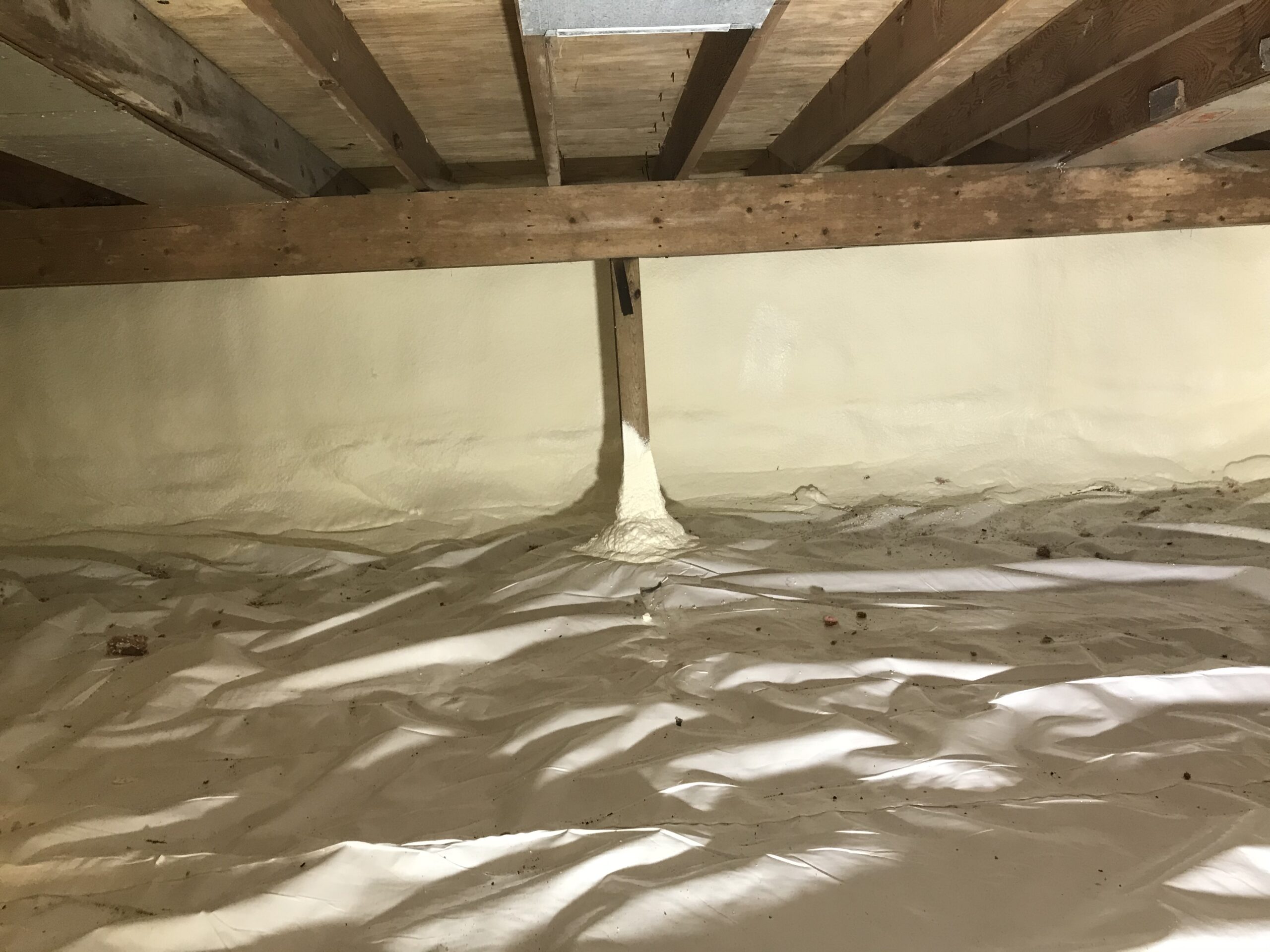
Pole barn spray foam insulation in Iowa is a popular choice, and it’s not just a trend; it solves the specific problems metal buildings create. Spray foam is applied wet, and it expands and fills every gap, seam, and corner, then cures into a solid layer that bonds directly to the metal surface.
That bond is the key difference. Fiberglass batts sit next to a surface; spray foam sticks to it. Because there’s no air gap between the foam and the metal, there’s nowhere for condensation to form. The building stops sweating.
What Spray Foam Actually Does for a Pole Barn
- Creates a continuous air seal, so heated or cooled air doesn’t leak out through seams and fasteners
- Prevents condensation from accumulating on the bottom of metal roofing and siding
- Provides stiffness to the structure by joining panels and/or framing together
- Prevents pests and rodents from nesting in wall openings, as there is no more open area to nest
- Sag-free, settles, and retains R-value for decades of use.
Open Cell vs Closed Cell Foam Insulation Iowa Building Owners Should Know
Not all spray foam is the same, and picking the right type matters as much as choosing spray foam in the first place.
Open-cell foam insulation is often recommended by Iowa contractors for interior walls and ceilings where moisture isn’t a heavy concern. It’s lighter, less expensive per board foot, and still delivers a strong air seal. It’s a solid choice for a heated workshop that isn’t dealing with direct exposure to standing water or heavy humidity.
Closed-cell spray foam Des Moines pole barn owners typically choose for the toughest conditions. It’s denser, adds structural strength, and acts as its own vapor barrier. For a metal building where condensation is the main enemy, closed cell is usually the better long-term investment, even though it costs more upfront.
| Feature | Open Cell Foam | Closed Cell Foam |
| Density | Lighter, softer | Dense, rigid |
| Moisture resistance | Moderate | High acts as vapor barrier |
| R-value per inch | Lower (~3.5–3.6) | Higher (~6–7) |
| Structural strength | Minimal | Adds rigidity to walls/roof |
| Best for | Interior walls, budget projects | Metal buildings, humid areas, floors |
Fiberglass Insulation Iowa Property Owners Still Consider
Fiberglass isn’t obsolete, and for some projects it’s still a reasonable choice, particularly when budget is the deciding factor or the building isn’t heated or cooled year-round.
Where fiberglass makes sense:
- Storage barns with light or no climate control
- Projects with a tight upfront budget
- Areas with easy access for batt installation, like open stud walls in new construction
Where fiberglass falls short in a pole barn:
- It doesn’t seal air gaps, so drafts continue moving through the wall assembly
- It absorbs moisture rather than blocking it, which can lead to sagging and reduced performance over time
- It provides no support against condensation on metal surfaces, which remains the biggest issue in Iowa pole barns
For a garage or workshop where you’re actually working, storing equipment, or spending time in cold months, fiberglass generally can’t keep pace with what spray foam delivers.
Choosing a Spray Foam Insulation Company in Iowa
Not every contractor approaches a pole barn spray foam insulation job in Iowa the same way, and the difference between a rushed job and a proper one shows up the first winter after installation. A few things worth checking before hiring anyone:
- Ask about certification. Look for SPFA-trained applicators, even though Iowa doesn’t legally require it.
- Get an on-site inspection before a quote. Pole barns vary in framing, roof pitch, and ventilation; a real quote needs a real look at the building.
- Ask which foam type they’re recommending and why. A contractor should be able to explain the open-cell versus closed-cell decision for your specific building, not just default to whichever is easier to apply.
- Check reviews for barn and metal building work specifically, not just residential attic jobs, since the application technique is different.
- Confirm they handle proper ventilation planning, since sealing a building tightly changes how it needs to breathe.
Get Your Pole Barn Ready for Iowa Weather
A cold shop, a sweating ceiling, and rusted tools aren’t things you have to live with. Precision Insulation & Coatings has spent 15+ years insulating pole barns, garages, and metal buildings across Des Moines and Central Iowa, with over 1,500 projects completed and a team that shows up in person for every inspection no subcontractors, no guesswork.
Whether you’re deciding between open-cell and closed cell foam or just want an honest opinion on what your building actually needs. Request a quote or call to get started.
Frequently Asked Questions
Should spray foam be used for pole barns in Iowa?
Yes. In Iowa, where temperatures can fluctuate so much and humidity so high, the benefits of spray foam as a roofing material can be realized through reduced heating and cooling costs, avoidance of condensation damage, and a building that can be used year-round, rather than just in the mild fall and spring seasons.
Is it possible to spray foam in a pole barn in winter?
Yes, provided that the surface temperature of the metal is greater than about 40°F for proper adhesion and curing. The colder months are when many contractors in Iowa are in business and just coordinate days for installation around the weather.
What’s the difference between open cell and closed cell for a shop building?
Closed cell is more dense, moisture resistant, and is stronger, so it is the better option for metal buildings. Open cell is less dense and less expensive, and is suitable for interior partition walls where moisture is not a significant concern.
Will spray foam prevent condensation on metal pole barn ceilings?
Yes. The metal surface is closer to the interior temperature of the building than the exterior temperature; therefore, no condensation occurs on the metal surface that would cause dripping and rust.
In any pole barn application, is fiberglass ever superior to spray foam?
Fiberglass may be a viable choice for unheated storage buildings that are on a tight budget. Spray foam does a much better job of resisting the climate in Iowa for any heated, cooled, or working barn.