If you haven’t insulated your pole barn yet, have a quick look at a number. Iowa State research shows that an uninsulated pole barn loses enough heat to double a winter propane bill. This can be a reason for concern for you, but most homeowners don’t realize it until the invoice lands.
Generally, pole barn spray foam insulation in Iowa doesn’t get the necessary attention that it is intended to get. People treat it as a line item, but it plays a major role in how your building will perform for the next twenty years.
Spray foam is of two types: open-cell and closed-cell. They are not interchangeable products, as it appears to many. But they behave very differently when they are cured. While one breathes, the other doesn’t. This single distinction changes how a barn survives in different seasons of Iowa.
In this blog, you will get to know about all the aspects of each type and which one is better with respect to your property.
The Weather Pattern That Breaks Bad Insulation Bets
The weather in Iowa is very uncertain. Sometimes, it is −1°C, and other times it is 31°C. This temperature fluctuation turns out to be brutal on metal buildings. Steel conducts heat almost instantly. The warm air, being lighter than the cold air, rises high and hits a cold roof deck in spring and forms condensation.
The factors that make it worse for the barn owners are discussed below:
- Steel skin with no thermal break between outside air and inside air
- Livestock, wash bays, or stored hay adding constant humidity indoors.
- Wide daily temperature swings during shoulder seasons like April and October
- Older barns built with zero vapor strategy from day one
- Ductwork or heaters running through unsealed, uninsulated cavities
Each factor pushes the decision in a different direction. A dry equipment shed can tolerate more risk. A barn full of hogs or cattle cannot. While considering spray foam in pole barns, conduct a moisture audit before negotiating the price.
Open-Cell and Closed-Cell: Where the Numbers Actually Diverge
Strip away the sales pitch, and you’re left with two materials that behave in opposite ways. Open-cell foam is light and expansive. It fills a stud bay fast, using less raw material by volume. That’s why it’s cheaper to buy because you’re paying for coverage, not density.
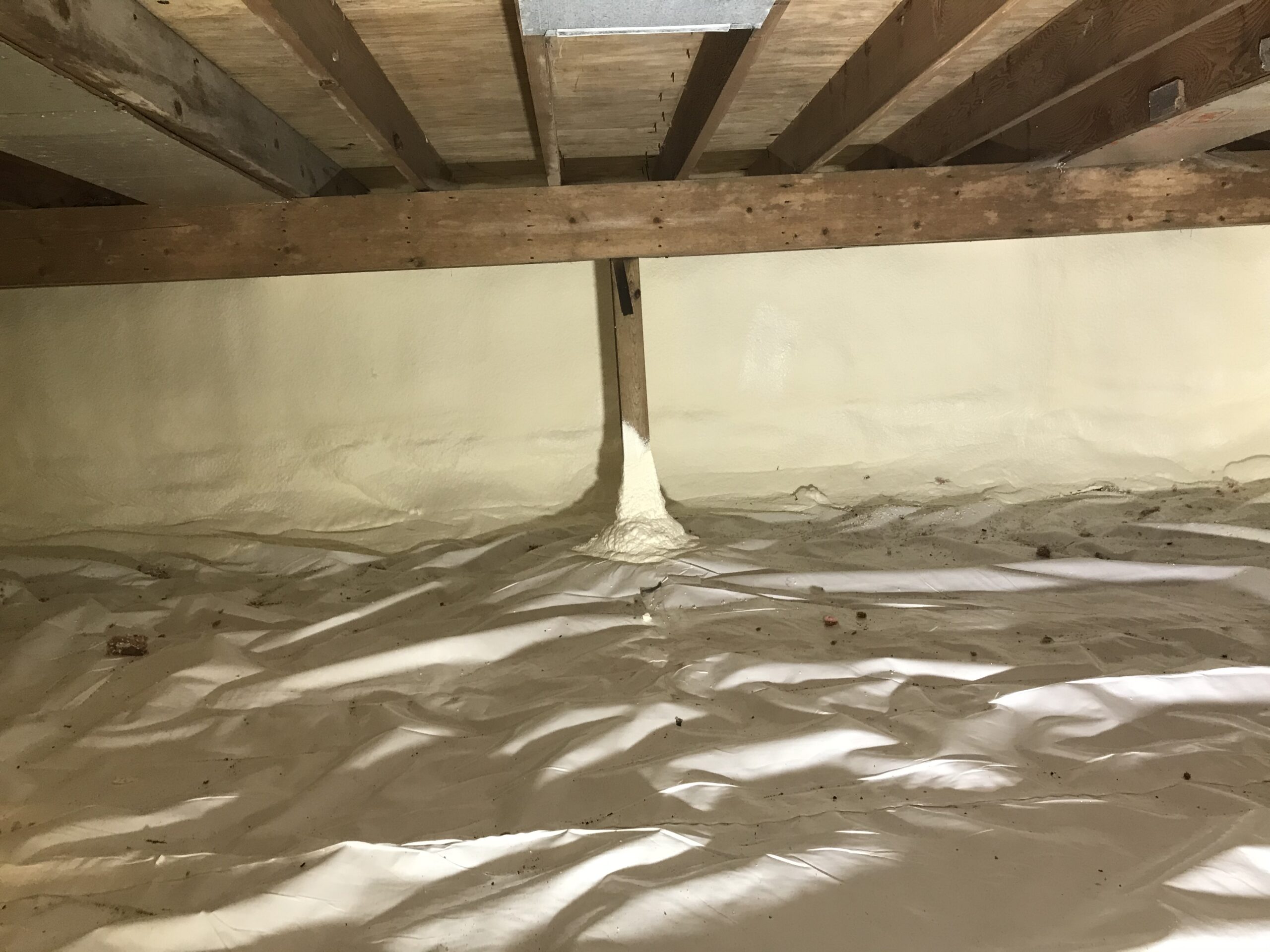
Closed-cell is the opposite. It is a dense, rigid polyurethane insulation that expands minimally upon application. It creates an airtight and watertight seal and provides a high thermal resistance value of R-5.5 to R-7 per inch.
The R-values of both types are described below in numbers:
- Open-cell foam insulation: Iowa installers land around R-3.5 per inch of thickness
- Closed-cell spray foam: It generally delivers R-6 to R-7 per inch.
- Open-cell stays vapor-open, letting moisture pass through under pressure.
- Closed-cell acts as its own air and vapor barrier once fully cured
- Closed-cell adds real rigidity: some engineers count it in wall bracing.
Cost tells the rest of the story. Open-cell runs noticeably cheaper per board foot. Closed-cell spray foam pricing sits higher, sometimes close to double, but the material does two jobs at once — insulating and sealing.
Most pole barn spray foam insulation projects don’t pick one and ignore the other. They layer closed-cell foam where moisture risk runs highest—floor level, near livestock, and around wash areas—and open-cell above, where the fight is mainly heat, not water. That zone-based thinking is what separates a barn that lasts from one that needs redoing.
When Fiberglass Is Still the Right Call
Foam isn’t mandatory everywhere. Fiberglass insulation Iowa dealers still move plenty of batts into barns used purely for dry storage: tractors, hay, tools, and nothing living inside.
It’s inexpensive. Installation goes quickly, even for a weekend project. But it doesn’t seal a single air gap on its own, and once it gets wet, it stops performing almost entirely.
For an unheated, unconditioned building, that trade-off might be acceptable. For anything holding animals, running climate control, or facing real humidity, fiberglass usually can’t keep up long-term.
Errors That Turn a Good Barn Into a Moisture Trap
There are a number of reasons behind the failure of the spray foam. The major one is that the wrong choices are made weeks before the arrival of the installation crew. If there is poor insulation, it can turn a solid pole barn spray foam insulation job into a callback waiting to happen.
The mistakes that turn a good barn into a moisture trap are discussed below:
- Picking open-cell in a livestock barn purely to hit a lower number
- Not conducting a moisture and use-case assessment before quoting anything
- Assuming maximum thickness fixes problems that are actually about placement
- Treating roof ventilation as optional once foam goes in
- Selecting a crew based on price alone, with no local track record checked
The livestock mistake is the costliest by far. Open-cell in a high-humidity barn, with no closed-cell layer for vapor control, invites condensation directly into wood framing. This is not noticed by anyone until there is damage caused by rot.
Also, do not hire a contractor only because they are charging a lower price compared to others. The spray foam insulation company that agrees to work at a lower price frequently hides thinner application, rushed edge work, or gaps at penetrations. The bill you get in hand is usually the same, but the performance of their work is never the same.
Ventilation gets waved off constantly. “It’s sealed, so it’s fine” is a phrase that costs people money two winters later, once trapped moisture finds nowhere left to go.
While hiring a contractor, ask the following questions directly:
- What’s the actual moisture source inside this structure?
- Which sections call for closed-cell versus open-cell coverage?
- Does this roof assembly still need active ventilation after foam?
- What cured thickness will be verified at eaves, not just the center span?
If the spray foam insulation company is reliable and trustworthy, they will answer each question with confidence.
The Only Question That Actually Matters Here
You do not have to get confused between the innumerable options available in the market. The right spray foam insulation solution depends solely on the inner conditions of your barn. Where closed-cell justifies its price tag anywhere moisture, livestock, or heavy temperature fluctuations dominate the space. On the other hand, open-cell is well suited for dry, budget-driven buildings where there is less risk of vapor.
There are different products used in pole barn spray foam insulation. In some areas, open-cell is used, while in others, closed-cell is used. Make sure that you conduct a moisture assessment before getting any quote. Confirm coverage depth at corners and eaves specifically, because these are the surfaces where contractors take shortcuts.
At Precision Insulation and Coatings, our professional team of spray foam insulation contractors specializes in top-quality spray foam solutions tailored to your needs. Contact us today to schedule a free quote and determine which spray foam type is best for your property.
Frequently Asked Questions
Q1. How much warmer does closed-cell foam actually keep a barn compared to open-cell?
Closed-cell foam typically delivers roughly double the R-value per inch versus open-cell foam. In practice, that means tighter temperature control, especially near floor level, where cold air and moisture both tend to settle first in Iowa winters.
Q2. Can open-cell foam handle a barn with livestock inside?
Open-cell foam insulation: Iowa crews can install it, but only with a closed-cell layer added for vapor control. Used alone in a high-humidity space, open-cell allows moisture through, which raises the risk of condensation and slow structural damage over time.
Q3. Is fiberglass a bad option for every pole barn?
Not at all. Fiberglass insulation Iowa batts work well for dry storage buildings with no heating, cooling, or animals. Once humidity, livestock, or conditioned air enters the picture, fiberglass typically underperforms compared to sprayed foam.
Q4. What drives the total price of pole barn spray foam insulation Iowa jobs?
Thickness, square footage, and the ratio of open-cell to closed-cell foam all factor in. Zone-based application, using closed-cell only where moisture risk is highest, often delivers better performance without paying for full closed-cell coverage everywhere.
Q5. Does spray foam remove the need for roof ventilation entirely?
Not automatically. Foam seals air leaks, but many roof assemblies still need designed airflow. Skipping ventilation because the building feels sealed is a common cause of trapped moisture issues discovered well after installation.