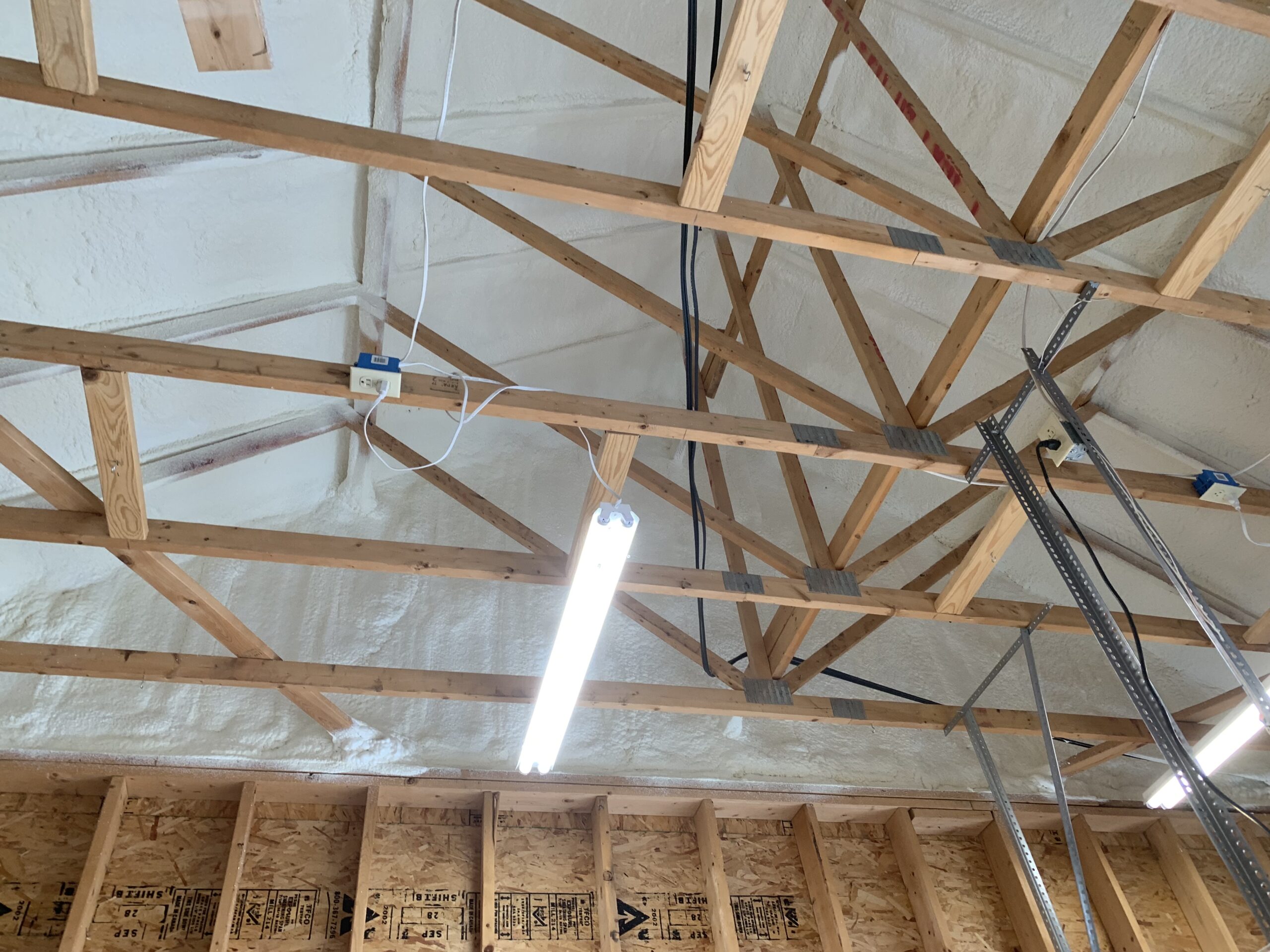
Ever wondered if it is possible to truly seal a drafty old barndominium? This question becomes irresistible when October frost arrives.
Owners of older metal-frame barndominiums often ask the same thing: Can this place be fixed without tearing everything apart? The answer is often yes. Barndominium spray foam Iowa retrofits are a practical option for improving older buildings. In many cases, you don’t need to gut the walls to make a noticeable difference.
In this blog, we will discuss whether spray foam can be installed in an existing barndominium in Iowa or not. So, let’s go ahead and read it out!
The Real Reason Your Barndo Feels Like a Fridge in January
Metal doesn’t insulate. It conducts heat. Steel framing can pull heat out of a room surprisingly fast. Many pole-barn conversions across Iowa were built with only one layer of insulation, and some had none at all.
That setup often struggles during a harsh Midwest winter, especially in areas north of Ames or around Cedar Rapids. These buildings usually struggle in a few key areas:
- Metal roofing installed with no thermal break underneath
- Wall girts left exposed, creating cold bridges throughout
- Vapor barriers missing, or installed on the wrong side
- Gaps around doors, windows, and utility penetrations
- Concrete slabs poured without any perimeter insulation
Each of these weak spots gives outdoor air a direct path into the building. Put them together, and a barndo can struggle to hold a steady indoor temperature. That’s where barndo insulation Iowa projects should begin, not with tearing everything apart, but with finding where air is actually moving through the building shell.
You can take the help of a thermal camera to find out the problem areas easily. Cold streaks along steel purlins generally stand out first. After that, you may find darker areas around outlets. In a thermal camera image, window frames may show bright rings where heat is leaking around the edges.
These types of issues are tackled by an experienced insulation contractor on a daily basis. They’ve seen the same pattern in dozens of converted barns across central Iowa. These problems are not complicated to solve, but it just requires picking the right material for each surface.
How a Retrofit Actually Gets Done, Step by Step
Retrofitting an occupied barndo is a different job from insulating a new build. The walls are already in place. Drywall may already cover the framing. And, in many cases, someone is living there while the work happens.
The following sequence is followed by most projects:
- Inspection first. A contractor checks the roof deck, wall cavities, and slab edges for access points.
- Roof and attic get priority. Heat loss through an uninsulated metal roof outpaces almost every other surface.
- Closed-cell spray foam that Iowa crews apply goes directly onto roof purlins and interior steel panels.
- Wall cavities get filled wherever access allows, often through small injection holes cut and patched later.
- Fiberglass batts are sometimes used to fill exposed stud cavities, keeping in mind budget constraints.
- A final air seal check makes sure that there are no gaps remaining around plumbing, wiring, and vents.
Closed-Cell vs. Open-Cell, Side by Side
Closed-cell foam tends to win for:
- Roofs and exterior walls exposed to moisture
- Metal panels that flex in high Iowa winds
- Areas needing long-term rigidity without sagging
Open-cell foam tends to win for:
- Interior partition walls
- Sound dampening between rooms
- Budget-conscious sections of larger buildings
Generally, people use a mix of insulation materials within the same project. Closed-cell spray foam is a good-to-go option in areas with higher moisture exposure, while open-cell foam or fiberglass insulation Iowa crews commonly install may work elsewhere
That’s the approach behind many barndominium spray foam Iowa projects. The goal isn’t to use one product everywhere. It’s to match the insulation to the surface, moisture conditions, and access available.
Roof condition matters just as much as wall insulation. A leaking or rusting metal roof undermines any foam job installed underneath it. That’s why a roof coating contractor Iowa homeowners already trust often gets brought in first. Sealing the roof surface protects the foam from moisture working its way in from above.
What a Typical Timeline Looks Like
Timing also plays an important role. Most crews prefer spraying in dry, moderate weather whenever a schedule allows it. Winter jobs still happen, but they require tighter temperature control during application.
A mid-sized barndo retrofit generally breaks down like this:
- Inspection and thermal scan: roughly half a day
- Roof and attic spraying: one to two full days
- Wall cavity injection work: one additional day
- Final air-seal check and cleanup: half a day
Where Retrofit Jobs Quietly Fall Apart
The following factors are responsible for the failure of a retrofit job:
- Foam sprayed over rusted metal without any surface prep first
- No moisture testing done on the slab before insulating nearby walls
- Mismatched foam types used across roof and wall surfaces
- Ventilation left unaddressed in bathrooms, kitchens, and laundry areas
- Local code checks skipped for rural Iowa counties outside city limits
The first mistake can cause serious damage with the passage of time. Applying foam over rust can seal in existing corrosion, allowing the metal to keep deteriorating where you can’t see it. Moisture rising through a slab creates another problem. If foam is applied in the wrong area, it can limit drying and keep moisture against nearby wood framing. Consequently, trapped moisture can contribute to mold growth.
Using different foam types without a clear plan can drive up the cost. There’s little reason to pay closed-cell prices in areas where open-cell foam is suitable. A well-planned barndominium spray foam Iowa project should include a written moisture-control plan before any foam is applied.
Ventilation is another detail that often goes unnoticed. Sealing a building without a fresh-air plan can allow indoor humidity to build up throughout the year. That moisture can condense on cold surfaces, including areas around exposed steel framing.
Experienced spray foam insulation crews should check moisture levels and ventilation before giving you a final quote. Those checks help determine what the building actually needs before spraying begins.
What Actually Moves the Needle on an Old Barndo
It is not obvious that every insulation upgrade requires tearing a barndo apart. Sometimes fixing the roof can change how the entire space feels. Other times, the biggest improvement comes from sealing a few gaps that were not noticed earlier.
A good barndominium spray foam Iowa retrofit usually starts with the biggest problems and works outward. Address the roof first, then the walls, and finish around the slab edges. That sequence can make a bigger difference than many owners expect.
Before hiring any insulation contractor, make sure that you ask a few questions to check their credibility. They’ll conduct an onsite examination first. Spray foam won’t repair a leaking roof or solve moisture coming through a wet slab. It’s part of a larger building system, not a fix for every problem.
But with the right preparation, a barndominium spray foam retrofit can make a noticeable difference. A drafty steel shell can become a home that holds indoor temperatures more consistently.
One Approach, Any Size Barndo
The same logic applies regardless of scale:
- Small weekend barns needing a single-roof pass
- Mid-size barndos mixing living and storage space
- Sprawling homes with lofts, shops, and later additions
Quick Recap Before You Call Anyone
- Start with a thermal scan and moisture check, not a quote
- Prioritize the roof before touching interior walls
- Match closed-cell and open-cell foam to the right surfaces
- Confirm code and ignition-barrier compliance in writing
Ready to see what your barndo actually needs? Request a free inspection from Precision Insulation and Coatings today.
Frequently Asked Questions
Q1. Can spray foam be added to a barndominium after it’s already built?
Yes. Injection foam and open-application spray foam both work on existing structures. Contractors access wall cavities through small holes or exposed framing, without requiring a full teardown of finished interior surfaces.
Q2. Is closed-cell or open-cell foam better for an Iowa barndo roof?
Closed-cell foam generally wins for roofs and exterior walls. It resists moisture, adds structural rigidity, and holds up against condensation risk that Iowa’s humid summers and cold winters both create.
Q3. How much does a barndo spray foam retrofit typically cost?
Costs vary by square footage, accessibility, and foam type chosen. Retrofits usually cost more than new-construction spray foam jobs, since crews work around finished walls, existing framing, and occupied living space.
Q4. Does the roof need repair before spray foam gets applied?
Yes, ideally. Active leaks or rust should get addressed first. Applying foam over compromised roofing traps moisture against the metal, which can accelerate corrosion instead of preventing it long-term.
Q5. Can fiberglass and spray foam be combined in one barndo?
Absolutely. Many owners use closed-cell foam on roofs and exterior walls, then fiberglass batts in interior partitions or lower-priority areas. Combining materials balances performance with overall project budget.