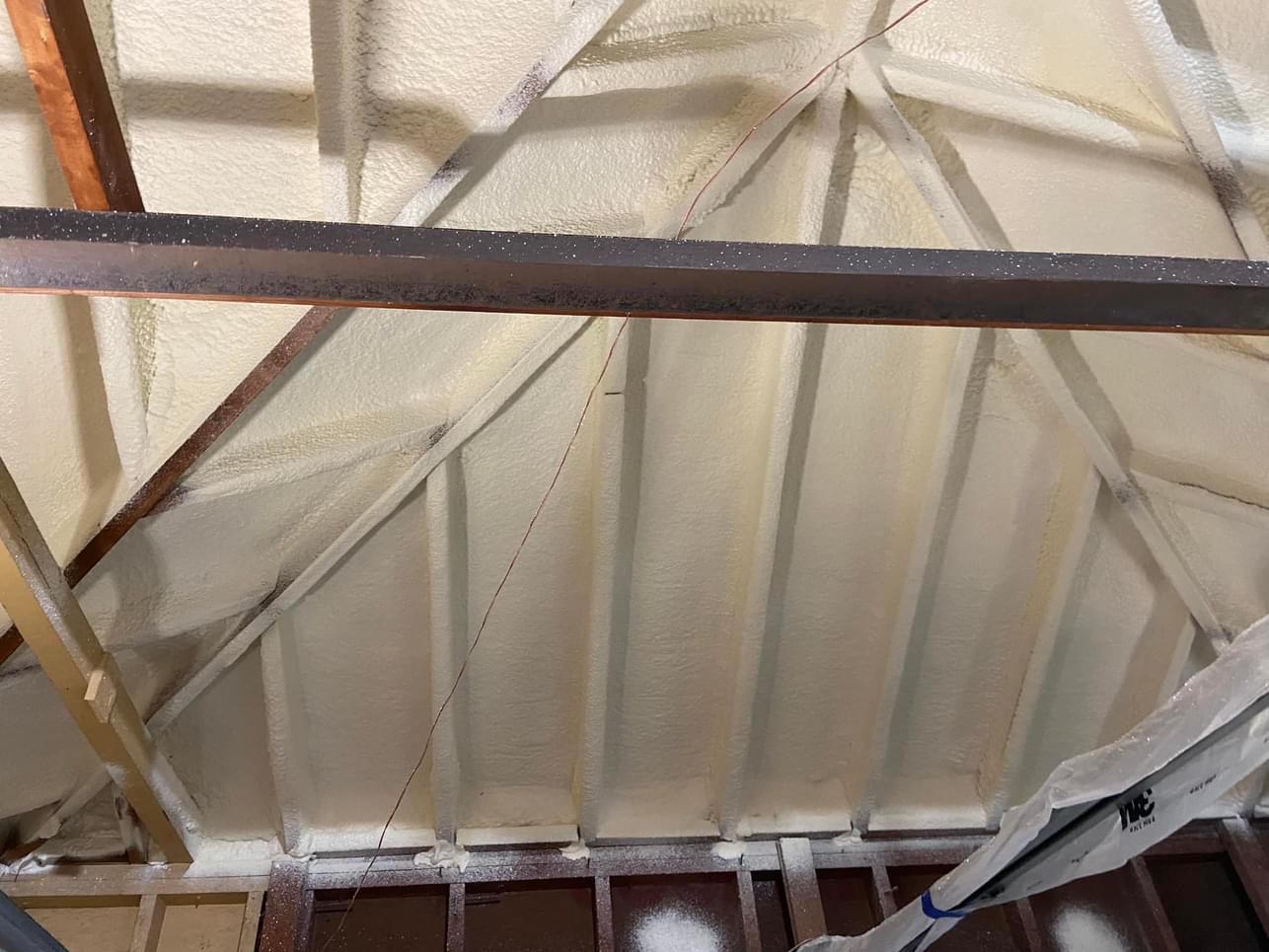
Imagine investing in a pole barn that serves several important purposes. It protects expensive equipment, stores materials, and provides valuable workspace. Yet, its interior remains uncomfortable despite having a strong exterior.
This problem often begins with unsuitable insulation choices. Metal buildings transfer heat quickly without properly designed insulation systems. Condensation can also develop when warm indoor air meets cold metal. These conditions threaten equipment, stored materials, and building components.
Choosing pole barn spray foam insulation in Iowa requires understanding several factors. Building purpose, moisture exposure, and budget all influence insulation decisions. Open-cell and closed-cell foam offer different performance characteristics. Understanding these differences helps property owners make informed decisions.
Understanding Open-Cell Spray Foam Insulation
Open-cell spray foam contains partially open cells within its structure. This creates lightweight insulation with a soft, flexible texture. Its typical R-value ranges between R-3.5 and R-3.7. It expands considerably, filling gaps around framing and irregular surfaces.
Its main characteristics include:
- Air sealing: Proper installation reduces unwanted air movement.
- Sound absorption: Its softer structure helps reduce noise transmission.
- Lower cost: It generally costs less than closed-cell foam.
- Expansion: It fills cavities and reaches difficult installation areas.
- Vapor permeability: Moisture vapor passes through more easily than closed-cell foam.
Open-cell foam can suit interior walls and selected ceiling applications. However, metal building assemblies require careful moisture management. Uncontrolled condensation can damage materials and reduce insulation performance.
For suitable projects, open-cell foam insulation offers practical advantages. Nevertheless, building conditions should determine whether this material works appropriately.
How Closed-Cell Spray Foam Insulation Works
Closed-cell spray foam contains tightly sealed individual foam cells. Its dense structure creates rigid insulation with greater resistance. Typical R-values range from R-5 to R-7 per inch. This higher thermal resistance provides greater insulation within limited spaces.
Important characteristics include:
- Higher R-value: It provides more thermal resistance per inch.
- Moisture resistance: Its structure restricts liquid water absorption.
- Air sealing: Sufficient thickness creates an effective continuous air barrier.
- Vapor control: Appropriate thickness can significantly restrict vapor movement.
- Structural rigidity: It can improve certain assemblies’ resistance to movement.
- Space efficiency: Higher R-values require less installation thickness.
These characteristics make closed-cell foam suitable for many metal buildings. However, proper installation remains essential for reliable performance.
Its vapor resistance also requires careful moisture planning. Trapped moisture can damage materials when assemblies lack proper design. Contractors should inspect metal surfaces before applying any insulation.
Open-Cell vs. Closed-Cell Spray Foam: Key Differences
Both materials provide insulation, but their properties differ considerably. This comparison highlights their most important performance differences.
| Comparison factor | Open-cell foam | Closed-cell foam |
| Cellular structure | Partially open cells | Tightly sealed cells |
| Typical R-value | R-3.5 to R-3.7/inch | R-5 to R-7/inch |
| Density | Approximately 0.5 lb/ft³ | Approximately 2 lb/ft³ |
| Texture | Soft and flexible | Dense and rigid |
| Air sealing | Effective at sufficient thickness | Effective at lower thickness |
| Moisture resistance | Lower | Higher |
| Vapor permeability | More permeable | Less permeable |
| Sound absorption | Generally better | Generally lower |
| Structural contribution | Limited | Greater rigidity |
| Installation thickness | Usually greater | Usually lower |
| Relative cost | Generally lower | Generally higher |
These figures represent typical products, not universal specifications. Actual performance varies between manufacturers and foam formulations.
Which Spray Foam Works Better for Iowa Pole Barns?
Iowa pole barns face changing temperatures and considerable moisture challenges. Therefore, insulation selection should reflect the building’s actual purpose. Neither foam type automatically suits every agricultural or commercial structure.
- Agricultural Storage Buildings
Agricultural buildings protect machinery, supplies, and stored materials. Closed-cell foam provides useful moisture resistance around metal surfaces. Its higher R-value also helps when insulation space remains limited. Unheated storage buildings, however, may require different insulation strategies.
- Workshops and Equipment Buildings
Workshops need comfortable temperatures and effective air sealing. Closed-cell foam performs well when moisture control becomes important. Open-cell foam may also work inside properly designed assemblies. The final choice depends on heating requirements and construction.
- Commercial Pole Barns
Commercial facilities often require consistent indoor temperatures and dependable insulation. Their insulation systems must address air leakage and condensation. Well-designed commercial insulation projects consider occupancy and operating requirements. Closed-cell foam frequently suits buildings requiring greater thermal resistance.
- Buildings With Limited Installation Space
Some pole barns have restricted framing depths and installation spaces. Closed-cell foam provides higher R-values within thinner applications. This makes it useful when additional thickness becomes difficult.
- Buildings Requiring Sound Control
Certain workshops contain equipment that generates considerable operating noise. Open-cell foam generally provides better sound absorption characteristics. Additional sound-control materials might still become necessary.
For many metal pole barns, closed-cell foam offers advantages. Its moisture resistance and higher R-value support practical applications. Nevertheless, professional evaluation should determine the final insulation specification.
How Much Does Open-Cell and Closed-Cell Spray Foam Cost?
Installation costs depend on material selection and application thickness. Building dimensions, surface preparation, and accessibility also influence pricing. Closed-cell foam generally requires a higher initial investment.
A board foot represents one square foot, one inch thick. Contractors commonly use this measurement when calculating spray foam quantities.
| Cost comparison | Open-cell foam | Closed-cell foam |
| Illustrative installed cost per board foot | 0.60–1.30 | 1.30–2.90 |
| Example application thickness | 3 inches | 2 inches |
| Estimated cost per square foot | 1.80–3.90 | 2.60–5.80 |
Example Cost for a 30 × 40-Foot Pole Barn
Consider a pole barn measuring thirty feet wide and forty feet long. Assume ten-foot walls and approximately 2,800 insulated surface square feet. This example includes the walls and roof surfaces together.
| Cost calculation | Open-cell foam | Closed-cell foam |
| Insulated surface area | 2,800 sq. ft. | 2,800 sq. ft. |
| Assumed foam thickness | 3 inches | 2 inches |
| Total board feet | 8,400 | 5,600 |
| Estimated installation cost | 5,040–10,920 | 7,280–16,240 |
Actual expenses depend on roof geometry, framing, and surface preparation. Doors, windows, and protective finishes also affect final estimates. Property owners should request detailed, project-specific installation quotations.
For closed-cell spray foam projects, compare performance carefully. Lower upfront pricing does not always indicate better project value. Consider insulation thickness, moisture management, and expected building usage.
Common Mistakes to Avoid When Insulating Pole Barns
Even quality insulation can underperform when installation mistakes occur. Several avoidable problems deserve attention before starting projects.
- Ignoring moisture: Applying foam over wet metal creates potential problems.
- Choosing solely by price: Cheaper materials might not meet building requirements.
- Overlooking condensation: Poor moisture planning can damage building materials.
- Ignoring ventilation: Appropriate ventilation remains important for certain building assemblies.
- Using incorrect thickness: Insufficient foam may fail thermal performance expectations.
- Neglecting electrical safety: Wiring requires proper installation planning and protection.
- Hiring inexperienced installers: Poor application can create gaps and inconsistent coverage.
Metal surfaces should receive proper inspection before insulation begins. Contractors must address corrosion, leaks, and existing moisture problems.
Fire protection also requires attention during project planning. Applicable codes may require approved thermal or ignition barriers. Requirements depend on occupancy, assembly design, and local regulations.
What Should You Check Before Hiring an Insulation Contractor?
Choosing the right installer matters as much as selecting insulation. Experienced professionals understand metal buildings and their construction requirements.
Before hiring, evaluate these important qualifications:
- Project experience: Ask about previous pole barn insulation installations.
- Product specifications: Request manufacturer documentation and thermal performance ratings.
- Installation thickness: Confirm recommended thickness for walls and roof assemblies.
- Surface preparation: Discuss moisture inspections and necessary metal preparation.
- Safety procedures: Review protective equipment and installation precautions.
- Fire protection: Confirm applicable ignition barriers and thermal protection requirements.
- Written estimates: Request detailed pricing, materials, and project specifications.
An experienced insulation contractor property owners hire should explain options. Compare estimates carefully instead of choosing solely by price.
For closed-cell spray foam projects, verify product specifications. Confirm that the selected foam suits metal building applications. Similarly, open-cell foam insulation applications require proper moisture planning.
A knowledgeable spray foam contractor should explain installation limitations. Property owners planning commercial insulation should consider occupancy requirements.
Making the Right Insulation Decision for Your Pole Barn
Choosing between foam types requires more than comparing prices. Your building’s purpose should guide the final insulation decision. Moisture exposure, framing depth, and heating requirements matter considerably.
Closed-cell foam often provides advantages for metal pole barns. Its higher R-value supports thinner applications and moisture resistance. Open-cell foam offers lower material costs and useful sound absorption. However, its greater vapor permeability requires careful assembly design.
For dependable pole barn spray foam insulation, prioritize building performance. Choose materials according to actual construction and moisture conditions. Professional installation helps achieve consistent coverage and reliable insulation performance.
Precision Insulation and Coatings help property owners evaluate insulation requirements. The right approach begins with understanding your building’s specific needs. Request a professional assessment before selecting your insulation system.
Give your pole barn the insulation its intended use requires. Contact Precision Insulation and Coatings to discuss your project.
Frequently Asked Questions
Q1. Is closed-cell spray foam better for metal pole barns?
Closed-cell foam often suits metal pole barns requiring moisture control. Its higher R-value provides stronger thermal resistance within thinner applications. However, proper installation and moisture management remain essential for lasting performance.
Q2. Can open-cell spray foam cause moisture problems in pole barns?
Open-cell foam allows greater moisture vapor movement through its structure. Poorly designed assemblies can create condensation against cold metal surfaces. Professional moisture assessment helps determine whether this material suits specific applications.
Q3. How thick should spray foam insulation be in a pole barn?
Required thickness depends on building usage, climate, and performance targets. Closed-cell foam generally achieves higher R-values with less material thickness. Contractors should calculate requirements using product specifications and applicable building codes.
Q4. How much does spray foam insulation cost for pole barns?
Pole barn insulation costs depend on foam type and coverage. Closed-cell installations generally cost more because their materials are denser. Request project-specific estimates covering thickness, preparation, labor, and surface area.
Q5. Can open-cell and closed-cell spray foam be combined?
Yes, both materials can sometimes serve different building areas. However, combining them requires careful moisture and vapor control planning. A qualified pole barn spray foam insulation installer should evaluate compatibility before recommending mixed insulation systems.