About to insulate your home this year? Have a look at this fact: An attic can hit R-60 and still leak heat like a sieve. R-Value is a factor that gets all the attention on product labels. It is the number that is used as an example at every hardware store. But it only measures resistance to heat moving straight through a material and nothing else.
Real-life scenarios are different from those shown in an R-value chart. In reality, air transfers through gaps, cracks, and unsealed penetrations that no R-value chart accounts for. This is the reason why two homes with identical insulation perform completely differently in the same season.
This is exactly where experienced insulation contractors in Des Moines, Iowa, and homeowners rely on to start the conversation quite differently. They talk about airflow, moisture, and assembly design first and think about R-value much later.
In this blog, you will learn about other factors homeowners should keep in mind beyond R-value when insulating. So, let’s go ahead and read it out!
Why R-Value Alone Misleads Iowa Homeowners
R-Value measures conductive heat loss under lab conditions where there is static air, no wind, and no gaps. But in reality, real attics and walls rarely match that setup.
Convection changes everything. Air moving through a wall cavity carries heat away far faster than conduction alone. A thin gap around a wiring penetration can undercut thousands spent on thick batts.
There are several factors specific to Iowa that make this worse. These are discussed below:
- Sub-zero wind chills that punish any unsealed gap
- Humid summers that push moisture into wall cavities
- Older housing stock with settled or compressed insulation
- Basements and crawl spaces act as major air leak points
- Attic bypasses around chimneys, plumbing stacks, and can lights
If these factors get integrated, they will make a house technically meet code on paper but lose energy every month. You must be wondering if it is hypothetical. No, it is not. It’s the most common complaint local insulation contractors in Des Moines, Iowa, hear on service calls.
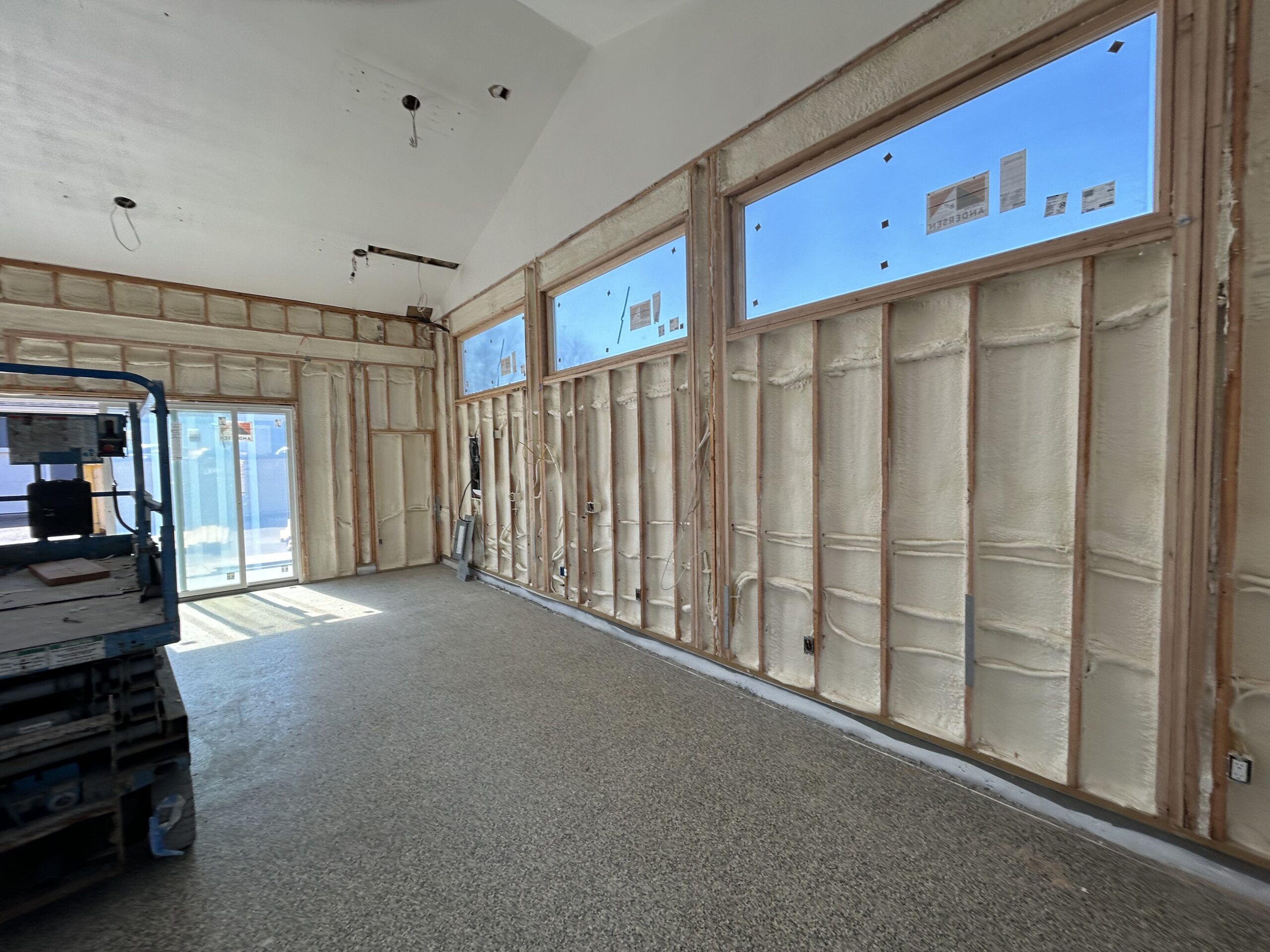
Spray foam insulation solves this problem directly by merging insulation and air sealing into one step. It expands into irregular gaps that batts or loose-fill miss. For older homes with settled walls, that difference is clearly visible when the very first utility bill comes.
Contractors who conduct blower-door tests before and after installation see this pattern constantly. A home sealed with spray foam insulation sharply reduces air leakage.
Building An Assembly That Actually Performs
If you want to make a property that does not require any maintenance for decades, start with smart insulation planning. It means your focus must be on reducing airflow, not on material choice. Ensure that you seal first and insulate later.
A proper assessment usually includes:
- A blower-door test to measure actual air leakage
- Thermal imaging to spot hidden gaps and thin coverage
- Moisture readings in framing before any material goes in
- A review of ventilation paths, especially in bathrooms and kitchens
- Confirmation of proper vapor control for the specific assembly
And then, material selection gets specific. Choose a well-reputed home insulation contractor who matches the product to the location and does not apply a universal solution everywhere. Every project should start with a written scope, not a verbal estimate.
Fiberglass insulation contractors work well in open wall cavities and straightforward attic floors. It’s affordable, widely available, and easy to inspect later. It doesn’t seal air leaks on its own, though.
Cost comparisons often favor fiberglass insulation products for large, uncomplicated attic spaces. Once framing gets irregular, though, foam usually earns back its price difference through better sealing performance.
Spray foam earns its premium price in trickier spots. Rim joists, attic decking, and irregular framing all benefit from foam’s expansion and adhesion. Spray foam new construction builders increasingly specify foam at the framing stage, before drywall closes everything in.
Timing plays a major role in insulation projects. In new construction, spray foam can seal every penetration while walls stand open. That’s nearly impossible once a home is finished and occupied.
Crawl spaces deserve their own strategy entirely. Ground moisture rises constantly, and vented spaces often pull humid outside air straight into a home’s floor system. Crawl space encapsulation seals that space off, adds a vapor barrier, and sometimes conditions it directly.
If crawl space encapsulation is done properly, the investment made by the homeowners is recovered early. It’s one of the highest-impact fixes available in older Iowa housing stock.
Where Homeowners And Contractors Go Wrong
Like most homeowners, you must be thinking that insulation failures happen due to improper material choice. But that is wrong, as it can be because of the decisions made before the arrival of the insulation crew. Various mistakes that contribute to nearly every project are as follows:
- Adding new insulation over old, compressed, or damp material
- Neglecting air sealing completely and relying on thickness alone
- Ignoring bathroom and kitchen ventilation while tightening everything else
- Using the wrong vapor barrier for a given wall assembly
- Choosing a bid based purely on price per square foot
The first point causes more damage than people expect. Old insulation traps moisture, hides pest activity, and blocks airflow paths silently. This is where the services of an experienced insulation removal contractor become necessary. They will first remove the deteriorated material before applying anything new.
Skipping removal to save a few hundred dollars almost always costs more later. New material stacked over a damp, degraded layer performs poorly within a year or two. A careful insulation removal contractor relies on inspecting framing thoroughly, flagging rot or mold before it spreads further.
Price-first decisions cause similar trouble. A rock-bottom quote that skips blower-door testing or uses minimal thickness might look fine at signing. It won’t hold up through a brutal Iowa February. Homeowners comparing insulation contractors in Des Moines, Iowa, should ask about testing procedures, not just square-footage pricing.
The Real Standard For A Well-Insulated Iowa Home
A well-performing home does three things at once. It blocks conductive heat loss, stops air leakage, and manages moisture before it becomes a problem. R-Value covers exactly one of those three. Ignoring the other two explains why so many “well-insulated” Iowa homes still feel drafty every winter.
If you are looking for a dependable insulation contractor to improve your home’s comfort, Precision Insulation and Coatings can help you. For more than the last 15 years, we have been delivering reliable insulation solutions to ensure your home or business gets the right treatment every time.
Contact us now to get a free estimate.
Frequently Asked Questions
Q1. Why does R-Value alone fail to predict real home comfort?
R-Value measures conductive heat loss only, ignoring air leaks entirely. A well-sealed home with moderate R-Value often outperforms a poorly sealed one with much higher numbers on paper.
Q2. Is spray foam worth the added cost over fiberglass?
Often yes, especially in rim joists, attics, and irregular framing. Foam seals gaps while insulating, reducing air leakage that fiberglass alone cannot address, which frequently offsets the higher upfront price.
Q3. When should old insulation be removed instead of topped off?
Remove old material whenever moisture damage, pest evidence, or heavy compression appears. Layering fresh insulation over compromised material traps problems underneath and shortens the entire system’s effective lifespan.
Q4. Does crawl space encapsulation really reduce indoor humidity?
Yes, significantly. Sealing a crawl space stops ground moisture and humid outside air from entering a home’s floor system. Humidity and musty odors throughout the living space often drop as a result.
Q5. What’s the biggest mistake Iowa homeowners make with insulation?
Focusing entirely on R-Value while ignoring air sealing and moisture control. That approach leaves gaps unaddressed, causing drafts, higher bills, and potential moisture damage despite technically meeting insulation code