Have you noticed your utility bills creeping higher each season? You’re definitely not alone. High energy costs hit hard, especially during Iowa’s scorching summers and frigid winters.
Here’s something we’ve learned from years of working on commercial buildings across central Iowa: commercial spray foam insulation can slash heating and cooling costs by up to 40%, according to the U.S. Department of Energy. That’s real money staying in your pocket every single month.
In this post, we’ll walk you through exactly how spray foam insulation for commercial buildings delivers those savings. We’ll also answer the big question: Is it really worth the investment?
Stick with us. Saving money doesn’t have to be complicated.
Key Features of Commercial Spray Foam Insulation
Commercial spray foam insulation packs serious energy-saving power. It’s one of the smartest ways to cut those sky-high heating and cooling bills. Curious how it works? Let’s break down the two features that make all the difference.
High R-Value for Superior Thermal Resistance
Spray foam stands out because of its impressive R-value. Think of R-value as your building’s thermal armor. The higher it is, the better it blocks heat transfer. Here’s what the numbers look like. Closed-cell spray foam delivers an R-value between R-6 and R-7 per inch, while open-cell foam comes in around R-3.5 to R-3.8 per inch. Compare that to fiberglass batts at only R-2.9 to R-3.8 per inch, and you can see why spray foam is the champion.
Iowa’s weather puts buildings to the test. We see winters that bite hard and summers that push triple digits. That’s why this kind of thermal resistance matters so much. Every extra point on the R-scale means less energy slipping through walls or roofs. We’ve seen the proof on job sites across central Iowa. Customers tell us their shops stay warm enough to work comfortably with half the heat they used before.
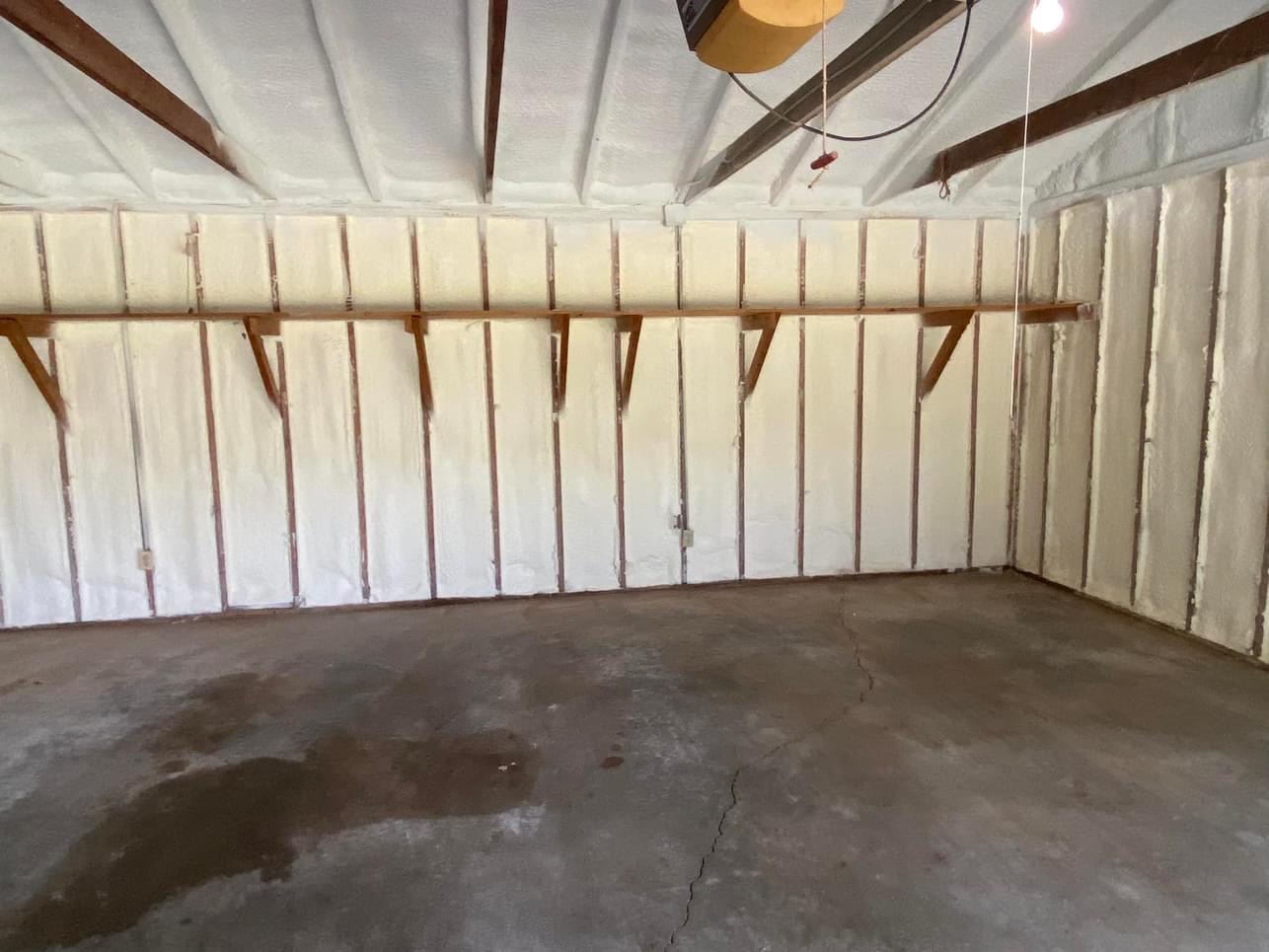
The secret lies in the way spray foam hugs surfaces tightly. It doesn’t leave gaps or weak spots that let air sneak by. A garage using fiberglass often leaks more energy than one wrapped in high R-value spray foam. The numbers back this up, too. Buildings with proper spray foam can see up to 40% less heat loss compared to traditional insulation.
So when people ask us, “Does spray foam insulation lower commercial energy bills?” the answer is simple. Yes, quite a bit.
Air Sealing Properties to Prevent Energy Loss
High R-value is great, but it’s only half the story. Air sealing is just as important for real energy savings. Tiny gaps and cracks in walls, ceilings, or around windows let air slip out. It drains money right along with it. Think of heated or cooled air escaping like water leaking from a cracked hose. Wasteful, frustrating, and costly.
We see this problem every day on job sites. Some older commercial buildings leak like sieves because of poor seals. Spray foam fixes that fast. It expands into all the nooks and crannies, blocking those hidden openings. We often say spray foam acts like putting a lid tightly over your coffee mug. Nothing gets through where you don’t want it to. Sealing up these leaks means less work for your heating and cooling systems.
According to the EPA’s Energy Star program, adding insulation and sealing air leaks can save up to 20% on monthly energy bills. That answers the big question: “How much can spray foam reduce energy costs?” Quite a lot, actually. Business owners who wonder if spray foam is worth it for commercial buildings should know this.
Strong air sealing cuts drafts and stops unpredictable temperature swings inside. That means better comfort for employees and customers, plus lower monthly bills. It’s no secret among professionals. A solid air barrier equals better comfort plus lower expenses. It’s a combo anyone can appreciate when selecting the best commercial insulation for energy savings.
Energy Cost Reductions with Spray Foam Insulation
Cutting energy costs is high on everyone’s list, right? We see spray foam insulation work wonders for commercial buildings. It makes every dollar stretch a bit farther, and the savings add up month after month.
Reduced Heating and Cooling Expenses
Spray foam stops air leaks better than most materials. That means heating and cooling systems work less. Bills drop because our insulation keeps warm air inside in winter and blocks summer heat outside. According to the U.S. Department of Energy, HVAC systems account for roughly 34% of energy consumption in commercial buildings. When you reduce that load, the savings show up fast.
Many Iowa property owners report up to 40% savings right after upgrading. That’s a number that speaks for itself. One of our local clients said it best: “Our warehouse used to feel like an oven in July and a freezer by January. Now the temperature stays steady, and we’re not cranking the thermostat every hour.”
People often ask us, “Is spray foam worth it for commercial buildings?” Based on our experience across dozens of projects in central Iowa, the answer is yes. Lower monthly energy use pays you back, and it also limits stress on HVAC units. That can help them last longer, too.
Long-Term Operational Savings
Insulating a building with commercial spray foam insulation means steady energy savings for years to come. We see it over and over again. In Iowa’s freezing winters, our clients notice their furnaces don’t have to run around the clock. Studies show that high R-value products can cut heating and cooling bills by up to 40% in some cases. That’s real money back in your pocket, month after month.
Heating and cooling systems work less because air leaks get sealed tight as a drum. Equipment lasts longer since it cycles on and off less often. That saves property owners repair costs while lowering utility bills at the same time. Energy prices tend to creep upward each year. Locking in savings now helps keep budgets predictable down the road. Iowa’s commercial electricity costs sit at about 16 cents per kilowatt-hour as of January 2026, which ranks among the lowest 10 states.
Even with those lower rates, reducing your consumption by 30% to 40% makes a big difference in annual expenses. Building owners ask us all the time, “What is the best commercial insulation for energy savings?” Our experience points right at spray foam. It blocks drafts and holds temperature like no other material we’ve used in tough Midwest climates.
Additional Benefits Supporting Energy Efficiency
Spray foam insulation lasts for years, keeping spaces sealed tight and comfortable. That long life means better control over air quality and temperature all year round. Sounds good, right?
Durability and Longevity of Insulation
Commercial spray foam insulation holds up year after year, even in tough conditions. We’ve seen buildings from the early 2000s where this insulation still performs well and keeps its shape. When properly installed, spray foam can last between 80 and 100 years. For most property owners, that’s the entire life of the building.
Moisture can’t break it down easily, so rot or mold is rare with proper installation. Bugs don’t chew through it like some other options we’ve worked with in the past. Our teams notice that a single application lasts decades without sagging or losing thermal resistance. Property owners save on maintenance since there’s no settling or cracking to repair every few years.
Spray foam’s sturdy structure stands strong against daily wear. It keeps energy costs stable over time and protects your investment longer than fiberglass batts or blown-in products we’ve installed before.
Improved Indoor Environmental Control
Spray foam insulation forms a tight seal against air leaks. That means fewer drafts, cold spots, or hot patches around the building. It helps maintain steady temperatures and prevents outside noises from sneaking indoors. We’ve seen schools stay quieter even during rush hour, thanks to solid spray foam barriers.
This type of insulation also controls moisture better than many old materials out there. Mold and mildew have less chance to grow in these dry walls. Healthier air fills each room, which is good news for anyone with allergies or breathing problems. Energy savings keep stacking up while we enjoy more comfortable workspaces all year round.
Comprehensive Services for Commercial Spray Foam Insulation
We handle every step of commercial spray foam insulation, from planning to cleanup.
Our team visits your site, checks for air leaks and weak spots, then maps out the right solutions. We use high-quality materials made to boost energy savings and fit tough spaces. Think steel beams or cinder block walls in busy warehouses.
Our crews show up on time, follow strict safety rules, and work fast. You can keep your business running with little interruption. We offer removal of old material when needed, especially in buildings built before 1980 that may have outdated insulation holding back energy performance.
After installation, we inspect our work top to bottom. We also provide tips on how best to maintain efficiency year-round. You see the benefits at once: fewer drafts, steady indoor temperatures, and lower bills each month. Plus, you get peace of mind knowing everything’s up to modern code.
Conclusion
Spray foam insulation cuts down those energy bills and helps keep money in your pocket month after month.
Our team at Precision Insulation & Coatings has seen how it seals every crack, fights off drafts, and makes heating or cooling much easier. Staying comfortable inside becomes simple, no matter the season outside.
The smart choice is clear for anyone wanting steady savings and better building performance.
FAQs
1. How does spray foam insulation cut energy costs for commercial buildings?
Our spray foam application creates a seamless air barrier that seals the leaks responsible for up to 40% of the energy loss in typical commercial structures. This airtight seal significantly lowers your HVAC load, so your equipment runs less often and uses less electricity.
2. What makes spray foam better than traditional insulation for saving money?
Traditional fiberglass often sags and leaves gaps that let air pass through, but our spray foam expands to seal every crack and creates a rigid thermal barrier. This superior coverage eliminates the drafts and air infiltration that traditional materials simply cannot block effectively.
3. How long does it take to see energy cost savings after installing spray foam?
Most of our clients see a full return on their investment within three to five years, thanks to immediate reductions in monthly heating and cooling bills.
4. Does spray foam insulation work in both hot and cold weather?
Yes, spray foam provides a consistent thermal break that keeps expensive heated air inside during the winter and prevents solar heat gain during the summer. We find this year-round performance stabilizes your indoor temperature so your HVAC system does not have to fight the external weather conditions.