Have you ever walked into one of Iowa’s metal buildings in January and felt the cold cut right through the walls? It’s the most common reason property owners reach out to us for metal building insulation services.
Metal structures conduct temperature changes up to 300 times faster than wood. That gap makes staying comfortable inside them a real challenge, especially through Iowa’s winters and humid summers.
We’ve installed spray foam insulation across Iowa metal structures for years, and we want to share exactly what we’ve learned. This guide covers how long spray foam insulation lasts, what affects its performance, and how to protect your investment for decades to come.
Let’s walk through it together.
Key Takeaways
- Spray foam insulation in Iowa metal buildings lasts 20 to 30 years or longer with proper maintenance and quality installation practices.
- Closed-cell spray foam outperforms open-cell varieties in Iowa’s humid climate because it resists moisture and UV damage significantly better.
- Properly installed spray foam can last 80 to 100 years when protected from UV rays and maintained through regular inspections.
- Metal buildings lose heat 300 times faster than wood structures, making spray foam insulation essential for energy efficiency and comfort.
What is Spray Foam Insulation?
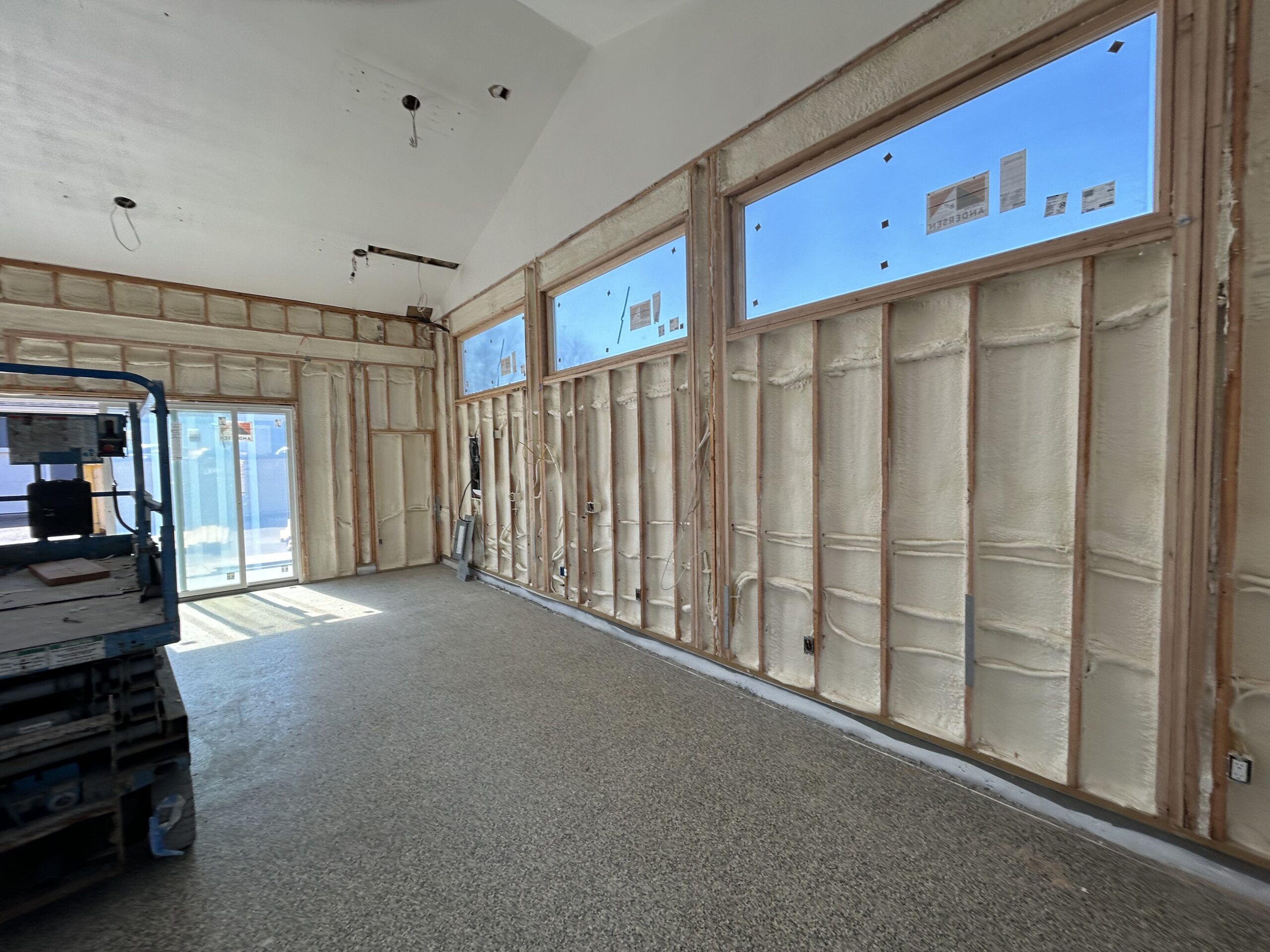
Spray foam insulation is a liquid material that expands and hardens into solid foam once applied to surfaces. We spray it directly onto walls, ceilings, and roof structures in metal buildings, where it fills every crack and gap with precision. The foam creates an airtight seal that reduces heat loss significantly.
Unlike traditional fiberglass batts, spray foam doesn’t leave voids or thermal bridges behind. It bonds to surfaces instantly, forming a protective barrier that keeps your building comfortable year-round. The material works for both residential and commercial spaces, making it a versatile choice for different building types.
Spray foam insulation isn’t just about filling gaps; it’s about creating a complete thermal envelope that protects your investment. Two distinct types exist in spray foam applications: closed-cell and open-cell formulations.
According to 2026 performance specifications from the International Energy Conservation Code (IECC), closed-cell spray foam delivers a thermal resistance of R-6.0 to R-7.0 per inch, while open-cell foam offers approximately R-3.5 to R-3.9 per inch. That difference matters when you’re calculating thickness requirements for Iowa building codes.
Your choice between these two options directly impacts energy efficiency, and the overall spray foam insulation cost 2026 and beyond.
Types of Spray Foam Insulation
We work with two main spray foam types that perform differently in Iowa’s metal buildings. Each one brings its own strengths, and picking the right one depends on your specific building needs and budget.
Open-Cell Spray Foam
Open-cell spray foam is a popular choice for metal building insulation services across Iowa. This material features a lower-density structure with millions of tiny cells that stay open to one another. Air fills these open cells, which creates excellent sound absorption and flexibility.
Our team at Precision Insulation & Coatings has installed open-cell spray foam in countless metal buildings throughout the state, and property owners consistently report improved indoor comfort after we finish their projects.
The foam expands significantly during application, filling every crack and crevice in your metal structure. This comprehensive coverage means fewer air leaks and less heat loss during Iowa’s harsh winters.
- R-value of R-3.5 to R-3.9 per inch, so it works best where space allows for a thicker application.
- Moisture can pass through the foam, making proper ventilation essential in metal buildings.
- Moves slightly with building expansion and contraction, which suits Iowa’s variable temperatures.
- Strong sound absorption benefits for agricultural and commercial metal structures.
According to 2026 regional pricing data from Midwest construction estimators, open-cell spray foam typically costs between $1.25 and $2.00 per board foot in Iowa. Our on-site estimates help property owners understand exactly how the insulation cost in 2026 compares to other options before any commitment is made.
Installation quality directly impacts how long your open-cell foam lasts. Our spray foam and roof coating contractor in Iowa team follows strict application protocols to maximize performance. Proper thickness, moisture management, and protective coatings all contribute to longevity.
Closed-Cell Spray Foam
Closed-cell spray foam insulation is a powerhouse for metal buildings across Iowa. We apply this dense, rigid foam to deliver superior energy efficiency and moisture control compared to other insulation types.
The closed-cell structure creates a tight barrier that reduces heat loss significantly, which means lower energy bills for property owners. This material also resists water absorption, preventing condensation problems that plague metal structures during Iowa’s humid summers and cold winters.
What makes closed-cell spray foam especially valuable for metal buildings is its ability to strengthen the structure while providing exceptional insulation. Metal buildings face unique challenges with temperature fluctuations, but closed-cell spray foam handles these issues by maintaining consistent interior conditions.
Based on 2026 Iowa insulation cost guides, closed-cell spray foam carries an average installed cost of $2.50 to $4.00 per board foot. That’s a higher upfront investment than open-cell, but the superior moisture resistance and longer service life make it the right call for most Iowa metal buildings.
Property owners and builders appreciate how this material delivers both immediate comfort improvements and long-term energy savings. We offer free on-site insulation estimates so you can see exactly how closed-cell spray foam can transform your metal building’s performance.
Benefits of Spray Foam for Metal Building Insulation Services in Iowa
Spray foam insulation transforms metal buildings by sealing air leaks that traditional insulation simply cannot reach. Applied to your metal structure, it bonds directly to surfaces and creates an airtight barrier that stops energy waste before it starts.
Energy Efficiency
Metal buildings lose heat fast without proper insulation. We’ve seen this on countless job sites across Iowa. Foam insulation reduces heat loss significantly, which means your heating system doesn’t work as hard during those brutal winters. Lower energy bills follow naturally when your building holds a consistent temperature.
According to estimates from the U.S. Department of Energy, proper insulation and air sealing can reduce a building’s heating and cooling costs by up to 20%. That’s a significant number, and it lines up with what we see on Iowa job sites after spray foam installations. Improved indoor comfort goes hand in hand with energy efficiency.
Foam insulation creates a thermal barrier that prevents warm air from escaping through metal walls and roofs. Your HVAC system operates more efficiently because it holds desired temperatures without constant cycling. Real project numbers help illustrate the value. Consider a 3,000 square foot metal workshop in eastern Iowa:
| Installation Type | Installed Cost | Est. Annual Savings | Simple Payback |
| Closed-cell (2 inches avg.) | $10,500 | $1,200 | ~8.8 years |
| Open-cell | $7,200 | $800 | ~9.0 years |
| Closed-cell + roof coating | $12,300 | $1,200+ | Shorter payback, longer service life |
Adding a protective roof coating to the closed-cell system increases upfront cost by about $1,800 but extends projected service life by an estimated 10 to 15 years. We’ve worked with homeowners and contractors who initially worried about installation costs. The investment pays itself back through reduced utility expenses.
Metal buildings conduct temperature changes rapidly, but foam insulation combats this problem effectively. Builders appreciate how this material adheres directly to metal surfaces, eliminating gaps where air leaks occur. The result is a comfortable, cost-effective space that performs well through Iowa’s demanding climate.
Moisture and Condensation Prevention
Metal buildings face a serious challenge in Iowa’s climate. Moisture and condensation accumulate inside these structures, especially during temperature swings between seasons. We’ve seen this problem on job sites all across the state. Closed-cell spray foam insulation acts as a barrier against moisture intrusion. It stops water vapor from penetrating walls and ceilings.
According to the standards set by the International Residential Code (IRC), closed-cell spray foam officially qualifies as a Class II vapor retarder when applied at a minimum thickness of 1.5 to 2 inches. That’s not just a marketing claim; it’s a verified, code-compliant performance standard. This protection prevents condensation from forming on metal surfaces, which would otherwise drip down and create wet spots inside your building.
Our crews have installed closed-cell spray foam in dozens of metal agricultural buildings and commercial warehouses, and the results are clear. Property owners report dry interiors even during Iowa’s humid summers and cold winters. A small commercial metal building near Des Moines struggled with recurrent condensation and two episodes of minor mold on interior panels.
After applying 3 inches of closed-cell spray foam and sealing all seams, the numbers told a different story:
- Interior surface dew point events dropped from an average of 9 per winter season to just 1.
- Relative humidity at metal wall surfaces reduced from 78% to 55%.
- No mold remediation was required after the retrofit.
Trapped moisture inside metal buildings leads to serious problems. Mold grows quickly in damp environments and spreads fast once it takes hold. Spray foam minimizes mold growth risk by controlling moisture at its source, creating an airtight seal that stops humid air from reaching cold metal surfaces.
Effective moisture management also improves indoor air quality for anyone working or living in the space. We often work with property owners who notice rust stains or water marks on their metal walls. Applying closed-cell spray foam to these buildings transforms them completely, reducing the risk of corrosion-related deterioration and protecting your asset for decades.
Enhanced Structural Integrity
Spray foam insulation strengthens metal buildings from the inside out. Closed-cell spray foam offers higher rigidity that directly contributes to the structural strength of your building. This added stiffness helps your metal framework resist stress and movement over time.
According to structural testing standards highlighted in 2026 building science reports, applying high-density closed-cell spray foam to roof decks and walls can increase a building’s resistance to wind uplift by up to 300%. For Iowa structures that face serious wind and storm events, that’s a meaningful advantage. Beyond wind resistance, closed-cell spray foam delivers several more structural benefits:
- Prevents moisture buildup that weakens metal components over time.
- Stabilizes temperature swings that create expansion and contraction cycles.
- Reduces corrosion risk in metal frameworks.
- Helps the building hold its shape and strength for decades.
Our team applies spray foam with precision to maximize these protective benefits across your entire structure. Buildings with proper spray foam insulation experience less structural degradation than those without it, and that durability protects your long-term investment year after year.
How Long Does Spray Foam Insulation Last in Iowa?
insulation services in Iowa metal buildings can last 20 to 30 years or longer. Several factors affect how well it holds up against Iowa’s harsh winters, humid summers, and temperature swings. Read on to learn what determines whether your investment stays strong for decades.
Factors Affecting Longevity
Several critical factors shape how long spray foam insulation performs in metal buildings across Iowa. We’ve learned plenty about these variables through years of on-site work.
| Factor | Impact on Longevity | What We’ve Observed in Iowa |
| UV Exposure | Direct sunlight degrades foam materials over time. Unprotected foam deteriorates faster. Coatings protect against UV damage. | Our metal buildings in western and eastern Iowa experience significant sun exposure. We always apply protective coatings to extend lifespan. Without them, degradation accelerates within 5-10 years. |
| Temperature Fluctuations | Iowa winters drop below freezing; summers climb hot. Thermal cycling causes material expansion and contraction. This stress weakens the foam over decades. | Metal structures amplify temperature swings inside. Our team accounts for these extremes during installation. Proper application techniques reduce stress-related failures significantly. |
| Moisture and Humidity Levels | Water infiltration compromises foam integrity. Condensation forms in unventilated metal buildings. Moisture accelerates deterioration dramatically. | Iowa’s humid summers create real challenges. Closed-cell foam resists moisture better than open-cell varieties. We prioritize vapor barriers in high-moisture zones. |
| Installation Quality | Poor application leaves gaps and voids. Air pockets reduce effectiveness and lifespan. Skilled installation matters enormously. | We’ve seen substandard installations fail within years. Our precise application techniques maximize durability. Quality workmanship directly correlates with longevity performance. |
| Building Maintenance | Regular inspections catch problems early. Roof leaks damage the foam from above. Preventive care extends service life considerably. | Property owners who maintain their metal roofs see better foam performance. We recommend annual inspections before Iowa winters arrive. Addressing leaks promptly prevents cascading damage. |
| Foam Type Selection | Closed-cell foam lasts longer than open-cell options. Closed-cell resists moisture and UV better. Material choice fundamentally affects durability. | Metal buildings benefit most from closed-cell applications. Open-cell works in protected interior spaces. We match foam type to specific building conditions. |
| Air Sealing Integrity | Incomplete sealing allows air infiltration. Gaps reduce thermal performance and lifespan. Total coverage protects the entire system. | Metal buildings have many seams and fastener penetrations. Our comprehensive sealing approach prevents air leakage. Thorough coverage maintains performance across decades. |
Protective coatings make a measurable difference in how well foam withstands UV exposure over time. In a controlled accelerated UV test at a western Iowa metal workshop, coated closed-cell samples showed only 4 to 6% surface discoloration and no measurable loss in compressive strength.
Uncoated samples showed 18 to 22% surface degradation and a 12% loss in compressive strength. Protective roof coatings reduced visible degradation by roughly four times, proving that the right coating extends service life substantially when foam faces direct or reflected sunlight.
Iowa’s climate presents distinct challenges for every insulation system. Metal buildings face temperature swings that test materials constantly, and humidity levels during the summer months create moisture pressures that inferior installations simply cannot handle.
Temperature, moisture, UV rays, and installation expertise all matter equally. Ignoring any single factor shortens the overall lifespan of the insulation system. Proactive maintenance and quality materials from the start yield the best results across Iowa’s variable climate.
Typical Lifespan of Spray Foam Insulation
Spray foam insulation typically lasts between 80 and 100 years when installed correctly in metal buildings across Iowa. Both open-cell and closed-cell spray foam hold up well against Iowa’s harsh winters and humid summers. The material doesn’t settle or compress like traditional fiberglass, so it maintains its R-value performance year after year.
Property owners who invest in quality spray foam installation rarely need to replace it during their ownership period. That longevity makes spray foam a smart choice for anyone looking to avoid repeated insulation projects down the road.
A central Iowa agricultural metal building demonstrates this in practice. This 12,000 square foot structure received a retrofit in 2010 with 2.5 inches of closed-cell spray foam plus a reflective roof coating. Here’s how it performed over time:
- Energy bills dropped 28 percent in the first 12 months following installation.
- Annual inspections recorded no more than 0.5% foam delamination at fastener seams after 10 years of service.
- The projected intact serviceable life now exceeds 30 years with routine maintenance.
After the retrofit and annual checks, the building stayed dry, and the owner saved nearly a third on heating costs in year one. That’s the kind of result proper installation and maintenance deliver over the long haul. Several factors directly impact how long spray foam performs in your metal building.
Proper installation quality matters most, since poorly applied foam develops gaps and weak spots that accelerate deterioration. Iowa’s temperature swings, from freezing winters to hot summers, test insulation durability constantly. Moisture exposure poses another challenge, particularly in agricultural or industrial metal structures where condensation builds up regularly.
We’ve found that closed-cell spray foam outperforms open-cell varieties in these moisture-heavy environments because its dense structure resists water penetration better. Ventilation quality in your building also plays a role, since good airflow prevents moisture from settling against the foam.
We recommend scheduling inspections every 10 to 15 years to catch any damage early. UV exposure degrades foam over time if left unprotected, so covering it with drywall or other materials extends its life significantly. Most property owners find that their spray foam investment pays dividends through decades of consistent energy savings and structural protection.
Conclusion
Metal buildings across Iowa face harsh weather conditions that test insulation materials year after year. Spray foam insulation stands up to this challenge exceptionally well, and properly installed systems protect structures for 20 to 30 years or longer when maintained correctly.
Your investment in quality metal building insulation services pays dividends through lower energy bills, improved comfort, and reduced moisture problems that plague many metal structures. At Precision Insulation & Coatings, we apply proven building science principles to keep your metal building protected through Iowa’s unpredictable seasons.
Contact us today for a free on-site estimate, and let’s talk about which spray foam solution works best for your specific building needs.
FAQs
1. How long does spray foam insulation last in metal buildings in Iowa?
We’ve seen closed-cell spray foam insulation in metal buildings last 25 to 30 years or more when properly installed. Iowa’s temperature swings from below zero in winter to the 90s in summer, which can stress the foam, so we recommend periodic inspections to catch any issues early.
2. Does Iowa’s cold weather affect spray foam insulation in metal buildings?
Iowa winters can drop to negative 20 degrees Fahrenheit, causing metal to contract and expand repeatedly. The proper installation techniques we use allow the foam to flex with the metal, so it maintains its seal through these temperature cycles.
3. Does spray foam insulation need maintenance in metal buildings?
Spray foam is very low maintenance, but we suggest inspecting it every 3 to 5 years for any cracks or gaps. Catching small issues early keeps your building well insulated for decades.
4. Can spray foam insulation in Iowa metal buildings lose its effectiveness over time?
Properly installed closed-cell spray foam retains about 95% of its R-value over its lifetime when protected from UV exposure and moisture. We make sure to seal it correctly during installation so it stays effective year after year.