Have you been staring at your energy bill and thinking, “There has to be a better way”? We hear this all the time from homeowners here in Iowa. The truth is, proper insulation can be a total game-changer.
According to the U.S. Environmental Protection Agency’s Energy Star program, by adding insulation and sealing air leaks, you could save up to 20% on your monthly energy bills. That’s real money back in your pocket every single month.
Right now, we’re seeing spray foam insulation costs settle into a pretty predictable range for 2026, which makes planning your project a lot easier. In this guide, we’re going to walk you through everything you need to know: real numbers, tips from our job sites, and the factors that actually move the needle on your total cost.
We’ll also share advice on choosing between energy-efficient home upgrades and show you where we’ve seen Iowa families save the most. So grab a cup of coffee, and let’s go through it together.
Average Cost of Spray Foam Insulation in 2026
Spray foam insulation prices in 2026 have seen a modest increase. Industry analysts project a 4 to 7 percent increase due to raw material costs, labor availability, and continued demand for energy-efficient solutions. Here in Iowa, we’ve been tracking these changes closely on our job sites. Let’s break down what you can expect to pay.
| Type | Average Cost per Square Foot | Typical Cost for 1,000 Sq. Ft. | Notes from Our Iowa Jobs |
| Open-Cell Spray Foam | $1.30 – $2.10 | $1,300 – $2,100 | We see open-cell most popular for attics and interior walls. It has an R-value of about R-3.7 per inch. Provides solid air sealing, but not a moisture barrier. Works well above garages in Des Moines, especially for ranch-style homes. |
| Closed-Cell Spray Foam | $2.00 – $3.75 | $2,000 – $3,750 | Used in basements, rim joists, pole barns, and areas needing higher R-value or moisture control. Closed-cell has an R-value of R-6 to R-7 per inch, nearly double that of open-cell. It shines in Iowa farm buildings where wind and moisture want to sneak inside. |
| Average Labor & Materials (All Types) | $2.05 – $3.05 | $2,050 – $3,050 | Our 2026 projects in Johnston and Ames hit this range. Price includes prep, clean-up, and waste disposal. Labor typically accounts for 40 to 60 percent of the total cost. Tight crawl spaces or odd layouts can push this up a few cents per foot. |
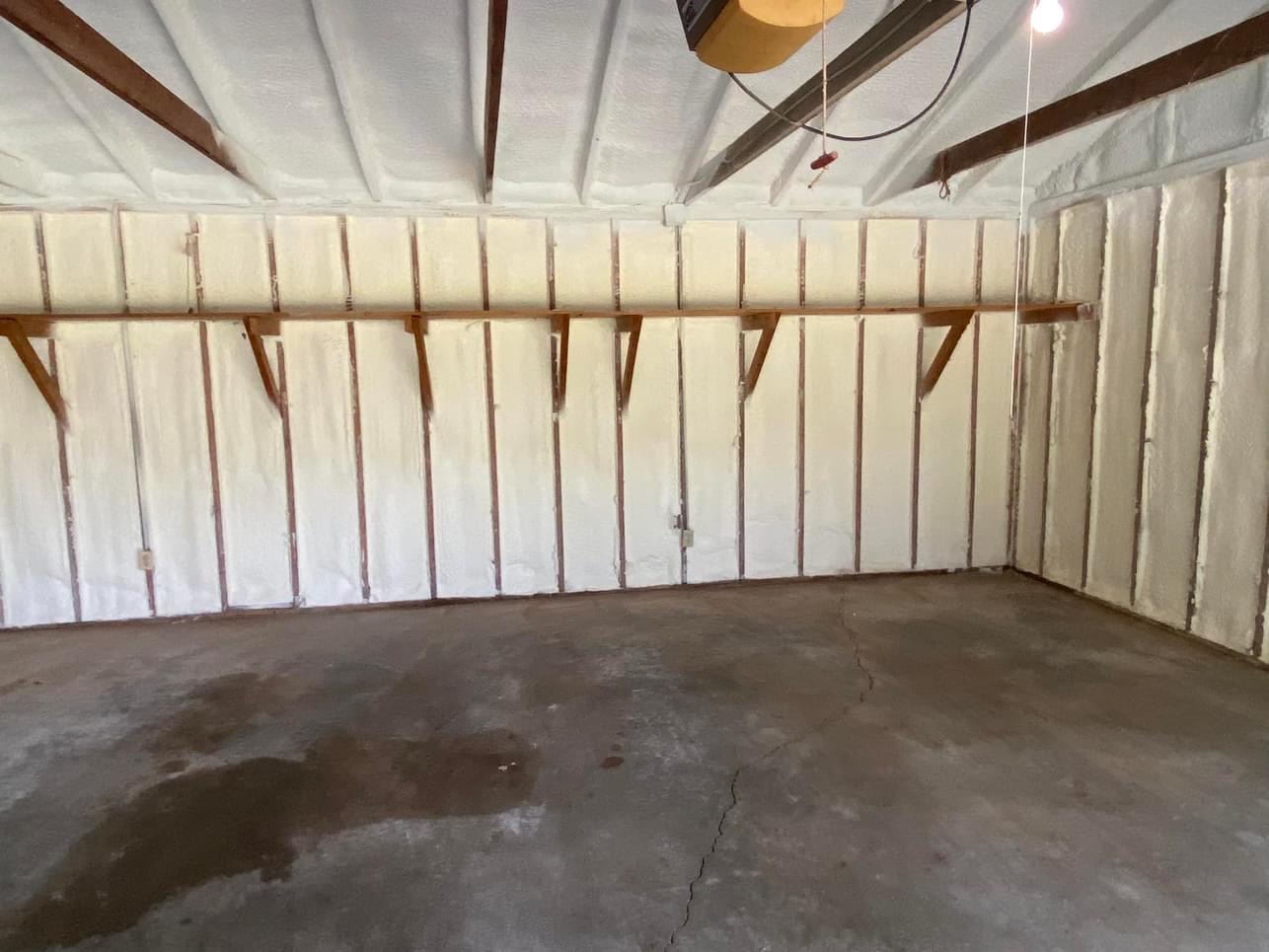
| Garage Walls (Single Bay) | $1,000 – $1,500 total | N/A | Fastest turnaround, especially in newer builds. Older garages with exposed wiring or strange framing may cost more. |
Material cost makes up around 60 percent of your bill. Labor and prep are about 40 percent. For spray foam insulation in Iowa in 2026, budgeting $2 to $3 per square foot is realistic for most jobs. A two-story home in Iowa City, say 2,500 square feet, may run $4,500 to $8,000 total, depending on foam type and access. Thicker applications for higher R-values will cost more per square foot.
We’ve found price drops for larger jobs over 3,000 square feet. Most contractors offer better rates for larger projects since they can complete the work more efficiently, often saving 10 percent or more from standard rates. That’s a nice bonus for builders planning new developments or home additions.
Energy rebates or local incentives sometimes lower costs, too. Iowa expects to receive over $60 million in funding for the Home Owner Managing Energy Savings rebate program, which could provide $2,000 to $8,000 for individual households.
Spray foam cost is rarely one-size-fits-all. Some projects surprise us, like that funky 1900s farmhouse outside Cedar Rapids, which needed creative application and a few workarounds. Still, these numbers should help with early planning and realistic budgeting.
Factors That Influence Spray Foam Insulation Costs
Plenty of things can affect spray foam insulation cost per square foot in 2026. We see big price swings, even between homes right next to each other.
Type of Spray Foam (Open-Cell vs. Closed-Cell)
Open-cell and closed-cell spray foams play different roles. They affect energy savings and change the cost of spray foam insulation in 2026.
Open-cell foam has a spongy feel and expands more, so it fills gaps more easily. It expands 100 to 120 times its original volume. It costs less per square foot, usually around $0.90 to $1.60 per sq ft here in Iowa, based on our job sites last winter.
Closed-cell foam packs a punch with a higher R-value. It expands only 30 to 35 times its original volume but provides much denser coverage. Closed-cell works great for basements or pole barns where structural strength matters, too. It also acts as a vapor barrier, meaning it stops moisture from passing through.
Costs do climb up. We see prices from $1.50 to over $3 per square foot for closed-cell as materials are denser and tougher to apply right on the first go-around. Many builders ask us if going cheap on material quality is worth it long-term. It just isn’t in this climate.
Choosing between these two types changes your installation cost calculator results fast, sometimes by thousands across a large shop or home addition. Whether you want soundproofing or strict vapor control, we will steer you every step of the way during your project estimate process.
Application Thickness
Spray foam insulation price in 2026 changes with thickness. Thicker layers mean a higher spray foam insulation cost per sq ft 2026, but also better energy savings long term. We often see Iowa homes needing at least two inches of closed-cell or three inches of open-cell spray foam to hit building code requirements for R-value.
To achieve the required R-value, open-cell foam needs greater thickness than closed-cell foam because of the difference in insulating power per inch. Some projects use more material due to climate needs or old walls that leak heat like a sieve.
More thickness boosts the cost of spray foam insulation in 2026, yet it cuts drafts and lowers winter bills, making those extra dollars well-spent over time. Each home is different, so we use a spray foam insulation cost calculator and factor in the application thickness before starting any job.
Size of the Area
Bigger spaces need more spray foam, which means the cost of spray foam insulation in 2026 goes up with every extra square foot.
Whether we are insulating a two-car garage or an entire home attic, the total area drives both material and labor costs higher. In Iowa homes last year, we saw insulation jobs range from $1,800 for small crawlspaces to over $7,200 for large pole barns.
A small project gets done faster and uses less product. A larger space stretches out work time and can mean bulkier equipment on-site. We always measure carefully before quoting any spray foam insulation installation cost because a few hundred square feet can make a big difference in your bill. Sizing right saves surprises later. No one likes sticker shock.
Labor and Installation Costs
Everyone wants to know about labor and installation costs for spray foam insulation in 2026. These costs usually make up a big slice of the total bill.
In Iowa, we often see labor and setup range from $1.00 to $2.50 per square foot, depending on factors like job complexity, location, or if specialized equipment is needed for tight spots. Professional installation requires certified technicians with specialized equipment, and labor rates in our region vary from $45 to $95 per hour.
Trained crews work fast but must prepare surfaces well before spraying starts. Prep includes taping off areas, handling wiring or plumbing obstacles, and wearing safety gear for protection during the job. High demand can push prices higher in busy seasons since skilled installers are limited statewide.
Speed matters because professional teams can finish most projects in just one day, which saves money on prolonged site visits. Labor fees reflect expertise. Installers need sharp eyes and steady hands for even coverage that delivers maximum energy efficiency benefits as promised by spray foam insulation price 2026 estimates.
We keep lines open with clients so there are no surprises about how much spray foam insulation costs until it’s time for the final invoice.
Accessibility of the Space
Tight crawl spaces, low attics, or rooms packed with pipes and wires can increase the cost of spray foam insulation in 2026. We encounter this frequently across Iowa.
Our team spends extra hours moving equipment into these challenging spots, which means higher labor charges for us to complete the job properly. Areas that are difficult to reach require more time, specialized equipment, and careful maneuvering. Open basements or straightforward wall cavities tend to keep costs more consistent.
Better access helps crews work efficiently while applying spray foam evenly. On difficult jobs where we need ladders, scaffolding, or specialized equipment just to reach certain areas, prices increase because more work goes into preparing the space before spraying begins.
The cost of spray foam insulation in 2026 often reflects how easily our crew can access areas without delays. That’s why builders who plan the layout help save everyone time and money on installation day. Even a few confined corners or hidden mechanicals will lead us to include that difficulty directly into your estimate.
Local Building Codes
Local rules can shift the cost of spray foam insulation in 2026 by quite a bit. Some towns require extra fire barriers, thick layers, or special materials for attics and walls. We have seen projects where code updates added $0.20 to $0.50 per square foot, just from new rules alone.
Our Iowa crews often double-check job plans before spraying anything at all. If we skip those steps, inspectors may ask us to redo work or order costly changes after the fact. That’s not something anyone wants on their tab.
Staying up-to-date with every twist in building codes keeps our customers safe and prevents surprise costs down the line. Always wise to ask your city office about any recent changes before setting your budget for spray foam insulation cost in 2026.
How to Save on Spray Foam Insulation Costs
Spray foam insulation is an investment, but the price tag can make us sweat. We can lower the cost of spray foam insulation in 2026 with some smart choices.
- Choose open-cell spray foam for interior walls instead of closed-cell. This type costs less and still offers good air sealing.
- Get multiple quotes from local, licensed Iowa contractors. Rates often vary for the same job, so comparing saves money. Securing contractor quotes in early 2026 may offer better pricing before seasonal demand spikes.
- Insulate during warmer months if possible. Contractors tend to offer better deals in spring or summer than in late fall.
- Prep the site before installers arrive. Clear out clutter and give easy access to work areas to help crews finish faster.
- Combine projects like attic upgrades or fiberglass insulation add-ons at once. Bundling services lowers labor fees per square foot.
- Prioritize key areas such as attics, rim joists, and crawl spaces first. These spots usually bring the greatest comfort and energy savings per dollar spent.
- Look into Iowa’s energy rebates or tax credits for 2026. Many programs send money back after installation wraps up. The state expects to receive approximately $60 million for the High-Efficiency Electric Home Rebates program, offering up to $14,000 per household for qualifying efficiency projects.
- Hire professionals with real building science knowledge. A proper job helps us skip costly repairs down the road.
- Ask about using recycled-content spray foams where allowed by code. Sometimes these options reduce material prices while staying efficient.
- Stay up-to-date with state codes affecting insulation thickness or R-value requirements because stricter codes may raise or lower total project costs each year.
DIY vs. Professional Spray Foam Installation
We’ve looked at ways to trim insulation expenses. Let’s lay out the facts when choosing between handling spray foam insulation ourselves or hiring a pro crew.
| DIY Spray Foam Installation | Professional Spray Foam Installation |
|
|
The Bottom Line
Spray foam insulation costs in 2026 continue to change with the market, but smart planning keeps projects on track. We have seen that choosing the right type and thickness makes a huge difference. Picking skilled pros brings peace of mind and fewer costly fixes later.
Careful choices get us lasting comfort, better savings, and strong protection for Iowa homes or any building we improve together. Contact Precision Insulation & Coatings now for a free insulation estimate.
FAQs
1. What is the average cost of spray foam insulation in 2026?
For 2026, open-cell spray foam typically costs between $1.60 and $2.90 per square foot, while the denser closed-cell option runs from $3.30 to $5.25 per square foot. The final price depends on your project size, as we can often provide better rates for larger square footage due to setup efficiencies.
2. Does the cost of spray foam insulation in 2026 vary by location?
Yes, local labor rates heavily influence the price we quote. In areas with a higher cost of living, installation fees naturally rise to cover the increased wages and disposal costs required for the job.
3. What factors affect spray foam insulation costs in 2026?
Material thickness is the main cost driver, since hitting a higher R-value requires more passes with the spray gun to build up the necessary depth. Accessibility also matters, as we have to budget extra time for crews working in hard-to-reach attics or tight crawl spaces.
4. Is spray foam insulation worth the cost in 2026?
Most homeowners find the investment pays off quickly, as spray foam seals air leaks so effectively that it can lower monthly energy bills by 30% to 50%.