Have you ever walked into your Iowa garage in July and been met with intense, trapped heat? This is a common issue.
Uninsulated garages and workshops can reach temperatures of 120°F or more during peak summer days, making them uncomfortable and difficult to use.
The good news is that effective solutions are available without relying on costly air conditioning systems. At Precision Insulation & Coatings, our team brings years of hands-on experience delivering garage insulation services across Iowa. We work with homeowners, property owners, and builders to address heat challenges using proven methods grounded in building science and tailored to the Midwest climate.
In the following guide, we’ll outline practical cooling strategies to help you create a more comfortable and functional garage or workspace, even during the height of summer.
Key Takeaways
- Spray foam insulation creates an airtight seal that blocks heat and maintains its R-value for decades without settling or compressing.
- For Iowa’s climate zones, target R-13 to R-21 for garage walls and R-30 to R-40 for ceilings with batt or loose-fill insulation.
- A properly sized exhaust fan can drop garage temperatures by 20 to 30 degrees when you use the right CFM calculation for your space.
- Reflective roof coatings can keep a roof surface more than 50 degrees cooler under direct sun, lowering interior temperatures by 10 to 15 degrees.
- Look for a high Total Solar Energy Rejected (TSER) rating on window films for maximum heat blocking performance.
- Combining insulation, ventilation, and reflective materials creates a layered cooling approach that transforms sweltering garages into genuinely usable workspaces.
Insulate Your Garage or Shop
Insulation is your garage’s first line of defense against Iowa’s brutal summer heat. Whether you’re in Des Moines or anywhere across the state, the right garage insulation for Iowa’s climate traps cool air inside and blocks hot air from sneaking in through walls, ceilings, and doors.
Spray Foam Insulation
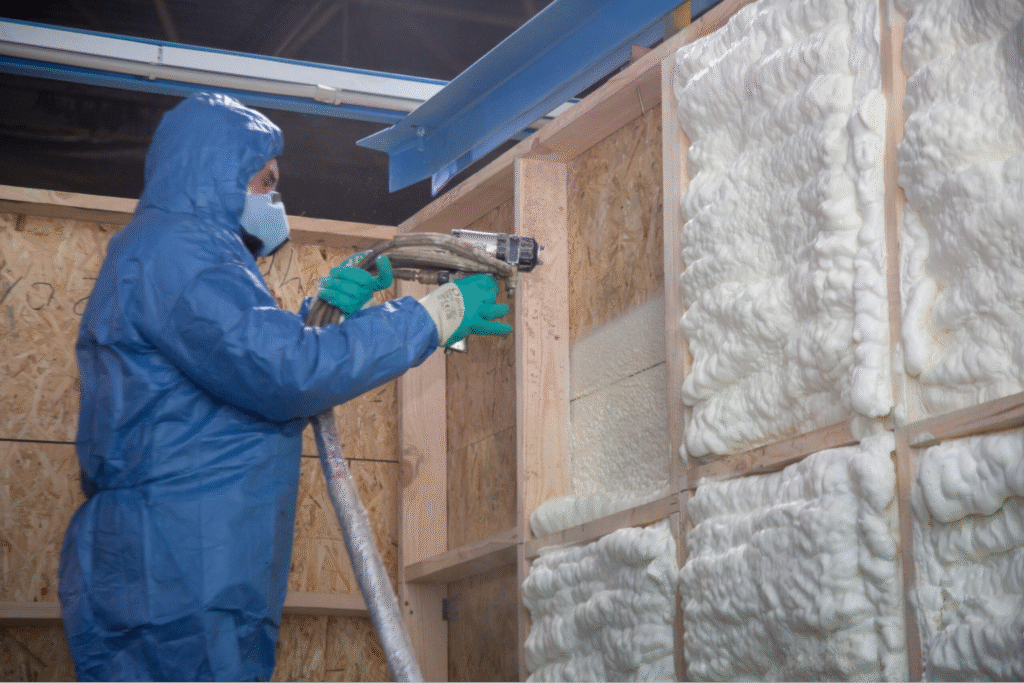
Spray foam insulation is one of the most effective ways to keep an Iowa garage or shop cool without air conditioning. We’ve installed both closed-cell and open-cell spray foam across Des Moines and surrounding areas, and the performance difference is clear.
Closed-cell foam creates an airtight seal that stops heat from entering your space. Open-cell foam offers more flexibility and solid sound absorption. Our spray foam insulation contractor team applies this material directly to walls, ceilings, and roof areas, sealing every gap where summer heat sneaks through.
The foam expands to fill every crack and crevice, creating a thermal barrier that works year-round. On those scorching Iowa days, that barrier makes a real difference in keeping temperatures manageable inside your workspace. Here’s what makes spray foam stand out from other insulation options:
- Bonds permanently to your structure without settling or compressing over time
- Maintains its R-value performance for decades after installation
- Reduces energy bills by cutting cooling demand during hot summer months
- Works for both new construction and retrofitting older garages or shops
If you’re budgeting for insulation cost in 2026, a February 2026 pricing index shows that closed-cell spray foam in Des Moines averages between $1.30 and $3.10 per board foot. Compared to years of expensive cooling bills, that investment pays for itself steadily over time.
We offer free on-site estimates for garages and shops, so you’ll know exactly what your project costs before we start anything. Retrofitting an existing garage also happens faster than most people expect. Our team works efficiently and keeps disruptions to your routine minimal.
Commercial insulation in Des Moines sees especially strong results from spray foam technology, particularly in facilities where temperature control directly affects daily operations.
Batt and Loosefill Insulation
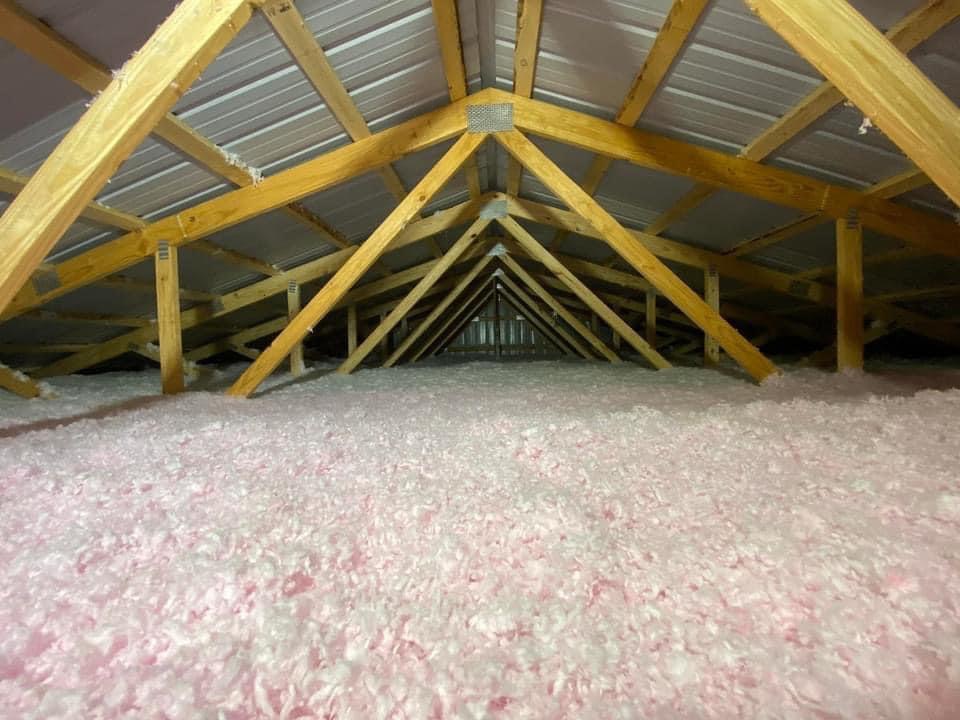
Batt insulation is a reliable solution for garage and shop cooling across Iowa. We install pre-cut fiberglass batts between wall studs and ceiling joists to create a solid thermal barrier. The material comes in standard widths that fit most framing layouts. Loose-fill insulation gets blown into cavities with specialized equipment, which makes it ideal for irregular spaces and tight spots where batts won’t fit properly.
Our blown-in fiberglass insulation works especially well in attic areas and hard-to-reach corners. Both options reduce heat transfer during summer months, keeping your workspace noticeably cooler without running an air conditioning system constantly.
Based on a September 2025 assessment by Precision Insulation & Coatings, Iowa’s climate zones 5 and 6, which cover Des Moines and central Iowa, call for R-13 to R-21 for garage walls and R-30 to R-40 for ceilings. Meeting those targets makes a measurable difference in how comfortable your space stays during peak summer heat.
Proper insulation transforms a sweltering garage into a genuinely usable workspace, and the energy savings speak for themselves. Our team has completed hundreds of garage insulation projects in Iowa. Homeowners and property owners consistently report lower energy bills after upgrading to quality batt and loose-fill products.
Our insulation contractors near me can assess your specific space and recommend whether batt, loosefill, or a combination works best for your situation. Free on-site estimates mean you know exactly what your project costs before we begin.
Improve Ventilation
Moving air around your garage or shop makes a massive difference in keeping temperatures down. The right ventilation strategy gets hot air out and pulls cooler air in, without complicated or expensive equipment.
Install Exhaust Fans
Exhaust fans pull hot air straight out of your garage or shop, giving you immediate relief during Iowa summers. According to a December 2025 sizing guide, a properly sized exhaust fan can drop garage temperatures by 20 to 30 degrees. Getting the sizing right is what makes the biggest difference.
Here’s the formula professionals use: multiply your garage’s cubic volume (length x width x ceiling height) by 4 air changes per hour, then divide by 60. That gives you the minimum CFM (cubic feet per minute) rating your fan needs. For example, a 500-square-foot garage with a 9-foot ceiling requires at least 300 CFM to cycle air effectively.
Beyond sizing, setup, and placement matter just as much:
- Mount exhaust fans on the highest wall or roof section, where hot air naturally rises and collects
- Install intake vents on lower walls to let cooler outside air replace the exhausted hot air
- Use variable speed controllers to match fan output to temperature throughout the day
- Install dampers on exhaust ducts to stop outside air from flowing back in when fans aren’t running
- Clean fan blades and intake vents monthly during summer to keep airflow at peak performance
Pairing exhaust fans with roof coating services in Des Moines amplifies your cooling results significantly. If the installation requires electrical work, our team handles wiring safely and to Iowa building code standards.
Use Natural Ventilation Techniques
Exhaust fans do the heavy lifting, but natural ventilation works with Iowa’s own temperature swings to cool your space for free. The key is knowing when and how to use it. As noted in a December 2024 analysis, Midwestern summer nights regularly drop into the 60s and 70s, even after days that top 90 degrees.
Opening your vents and windows in the early morning lets you flush out the heat your garage absorbed the previous day, resetting its temperature before the sun climbs again. It’s a simple, free habit that genuinely works. These strategies pair well with that morning ventilation routine:
- Position windows on opposite walls to create cross-ventilation that pulls cool air through naturally.
- Install louvers or vents near the roof peak so hot air escapes upward while cooler air enters below.
- Plant shade trees on the south and west sides of your garage to cool the surrounding air and reduce heat absorption on exterior walls.
- Angle roof overhangs to block direct sunlight from windows while still allowing airflow.
- Use landscape features strategically to channel prevailing breezes toward your garage entrance and vents.
Thermal mass materials like concrete floors absorb daytime heat and release it overnight, helping your garage stay cooler the following day. Combining natural ventilation with your insulation efforts pushes your cooling performance further throughout the summer months.
Use Reflective or Heat-Blocking Materials
Your roof and windows absorb most of the solar heat that turns your garage into an oven. Smart material choices can stop that heat before it ever reaches the inside of your space.
Apply Reflective Roof Coatings
Reflective roof coatings work like a shield against Iowa’s intense summer sun, bouncing solar energy away before it heats your garage or shop interior. Uncoated metal or concrete roofs can reach 150 degrees Fahrenheit under direct summer sun, but a reflective cool coating can keep that same surface more than 50 degrees cooler.
That’s a dramatic reduction in how much heat your building absorbs throughout the day. We’ve applied these coatings to hundreds of properties across Iowa. In many cases, interior temperatures fall by 10 to 15 degrees within days of application. Here’s what to know before you schedule a coating application:
- Light-colored coatings reflect solar energy into the atmosphere instead of letting it penetrate your building structure.
- Apply in late spring, before peak Iowa summer temperatures arrive.
- The process typically takes one to two days, depending on roof size and current surface condition.
- These coatings last five to ten years before needing reapplication, making them a cost-effective long-term choice.
- Moisture barriers under the coating prevent water damage and extend your roof’s lifespan.
Energy bills drop when you combine reflective coatings with proper insulation. Professional application matters here because incorrect technique reduces both the coating’s reflective effectiveness and its durability.
Precision Insulation & Coatings specializes in reflective coating application for residential and commercial properties throughout Iowa. Heat-blocking window films offer another layer of protection when paired with reflective roof coatings on your space.
Install Heat-Blocking Window Films
Heat-blocking window films stop solar heat from entering your garage or shop, keeping temperatures down without running an air conditioner. We’ve installed these films on countless Iowa properties and watched owners reclaim their spaces from summer heat. Most product labels reference “solar rejection” percentages, but the metric professionals actually use is Total Solar Energy Rejected, or TSER.
TSER measures how much of the sun’s total heat energy a film blocks, covering both UV light and heat-producing infrared rays. As highlighted in an October 2025 review by North American Tint, high-quality ceramic films can achieve a TSER rating of up to 78%. That gives you a far more complete picture than UV blocking percentages alone. Follow these steps for a clean, effective installation:
- Measure all window surfaces carefully before ordering film, accounting for irregular shapes or multiple panes.
- Clean windows thoroughly with soap and water to remove dust and debris that prevents proper adhesion.
- Apply a slip solution of water and a small amount of soap to both the window and the adhesive side of the film so you can reposition it easily.
- Use a squeegee to press out air bubbles and water, working from the center outward in smooth strokes.
- Allow the film to cure for 24 to 48 hours before opening or closing the windows.
Inspect seams and edges monthly, pressing down any areas that start lifting from temperature swings or moisture exposure. Test the film’s effectiveness by measuring interior temperatures on hot days and comparing filmed versus unfilmed window areas.
Conclusion
Keeping your Iowa garage or shop cool without air conditioning comes down to smart choices about insulation, ventilation, and heat reflection. We’ve walked you through proven garage insulation Iowa methods and beyond, from spray foam insulation to reflective coatings that bounce summer heat right back outside.
Call Precision Insulation & Coatings for a free on-site estimate, and let our team show you which cooling solutions fit your space and budget. Taking action now means you’ll notice the difference by next month.
FAQs
1. What is the easiest way to cool a garage or shop in Iowa summers without AC?
We always recommend opening windows and doors early in the morning to pull in that cool air, then closing everything up before the afternoon heat rolls in. A box fan positioned in a window can drop your garage temperature by 10-15 degrees by pushing hot air out fast.
2. Do insulated garage doors really help keep the heat out?
Yes, insulated garage doors with an R-value of at least R-12 block a significant amount of heat from getting inside your workspace. We’ve seen this make a noticeable difference in our Iowa projects.
3. How can I reduce heat buildup in my Iowa shop during summer?
Keep direct sunlight out by adding reflective window film or hanging light-colored curtains, which can reduce heat gain by up to 60%. Less sunlight means way less heat trapped inside.
4. Are portable fans enough to keep a large garage cool in Iowa’s heat?
Portable fans help move air around, but for a bigger space, we recommend ceiling fans or whole-room ventilation fans rated at 1,000 CFM or higher to keep the air fresh and cool all day.