
If you live anywhere from Des Moines and West Des Moines to Cedar Rapids, Iowa City, Ames, Waterloo, Davenport, or Sioux City, you know the routine: summer turns your attic into an oven, winter sends drafts crawling along your floors, and metal buildings sweat when temperatures swing. Iowa’s mixed-humid/continental climate (zones 5–6) punishes leaky, under-insulated homes and farm shops. This guide from Precision Insulation & Coatings lays out, in plain English, how spray foam—paired with a smart air-sealing plan—solves the comfort, condensation, and durability problems our teams see every week across the state. We’ll cover R-values that make sense here, how to keep moisture where it belongs, and where spray foam delivers the best return.
Why “Air Sealing + Insulation” beats insulation alone
Insulation slows heat flow. But if your house leaks like a sieve, adding fluffy R-value is like putting on a thicker sweater in a windstorm. The stack effect pulls air in at the bottom (crawlspace/basement), pushes it out at the top (attic/roofline), and drags moisture and dust along the way. Spray polyurethane foam is different: it fills and seals gaps while it insulates, creating a continuous air barrier in the cavities we target. When we tighten the building shell and then insulate, rooms feel even, equipment runs easier, and assemblies stay drier. The U.S. Department of Energy and ENERGY STAR both stress that reducing air leaks is a cost-effective path to better comfort, durability, and energy control—and that air sealing and insulation go hand in hand. See DOE’s “Air Sealing Your Home” and ENERGY STAR’s attic air-sealing guidance for the fundamentals.
What Iowa’s climate means for R-values and vapor control
Most of Iowa sits in climate zone 5A with some northern counties in 6A. In these zones, a typical retrofit target is about R-49 to R-60 in attics, with floors near R-30, and wall decisions that consider continuous exterior insulation or hybrid cavity strategies. ENERGY STAR’s latest table—based on the 2021 IECC—lays out practical R-levels for attics, floors, and walls in zones 5–6, which align with what we recommend on assessments.
Thermally, Iowa brings freeze–thaw cycles, wind-driven rain, and ice-dam risk where warm, moist air escapes and condenses at the roof deck. On the moisture side, the vapor retarder class you choose matters. The DOE explains three classes: Class I (very low permeance) includes polyethylene; Class II includes materials like plywood or certain foam products; Class III includes latex-painted gypsum and unfaced fiberglass. The right class depends on assembly and climate. In colder parts of Iowa, a Class II interior layer or sufficient closed-cell thickness can help limit winter condensation risk, but specific code requirements and permitting vary by municipality—your assembly and inspector may require a different approach.
Building Science Corporation’s spray foam guide notes that in climate zones 5–6, high-density closed-cell foam provides added condensation control and can qualify as a Class II vapor retarder at modest thickness; low-density open-cell can work in walls when paired with an interior vapor retarder. That’s why our designs for Iowa often favor closed-cell at the roofline or against concrete and metal, while using open-cell strategically for sound control or interior walls—always with the assembly and code context in mind.
Attic & roofline upgrades that actually work
Vented attic, done right. Most Iowa homes—from 1950s ranches to 1990s two-stories—have a vented attic. The right sequence is simple: air-seal first, insulate second. We detail the rim of the ceiling—the top plates—then chaseways, bath and kitchen vent penetrations, recessed lighting, and the attic hatch. Where needed, we create an airtight “bathtub” at the ceiling plane with spray foam so wind can’t wash through the loose-fill insulation we add on top. That’s how you stop the drafts and ice-dam formation—not by piling fluff over leaks but by sealing those leaks and then meeting your R-value target. ENERGY STAR’s attic air-sealing project materials echo this: plug the big holes, then insulate; many households see fewer ice-dam issues after this sequence.
Unvented roofline (when it’s the better choice). Converting to an unvented, conditioned attic makes sense when you have ductwork or mechanicals upstairs, complex roofs, or chronic wind-washing. In zones 5–6, closed-cell foam at the roof deck is typically required for condensation control; hybrid assemblies (a layer of closed-cell for dew-point control, then open-cell or blown insulation inward) can also work when designed correctly. The goal is simple: keep humid interior air from reaching a cold roof deck in January. BSC’s guidance lays out the climate-based thickness needed for condensation control and shows hybrid options that pair foam with cellulose or fiberglass—often the most cost-effective route. If we create an unvented attic, we also ensure the space is truly conditioned—moisture has to be managed with balanced ventilation or designed air change, not trapped.
Odors, VOCs, and re-entry. During installation, our crews use PPE and active ventilation. Manufacturers and the EPA advise vacating until products cure and the space is fully ventilated; recommendations vary by product and conditions, and 24 hours is a common—but not universal—guideline for re-occupancy without PPE. We’ll give you the specific re-entry timing for your project and maintain airflow until it’s safe.
Crawlspaces, basements, and rim joists: where comfort starts
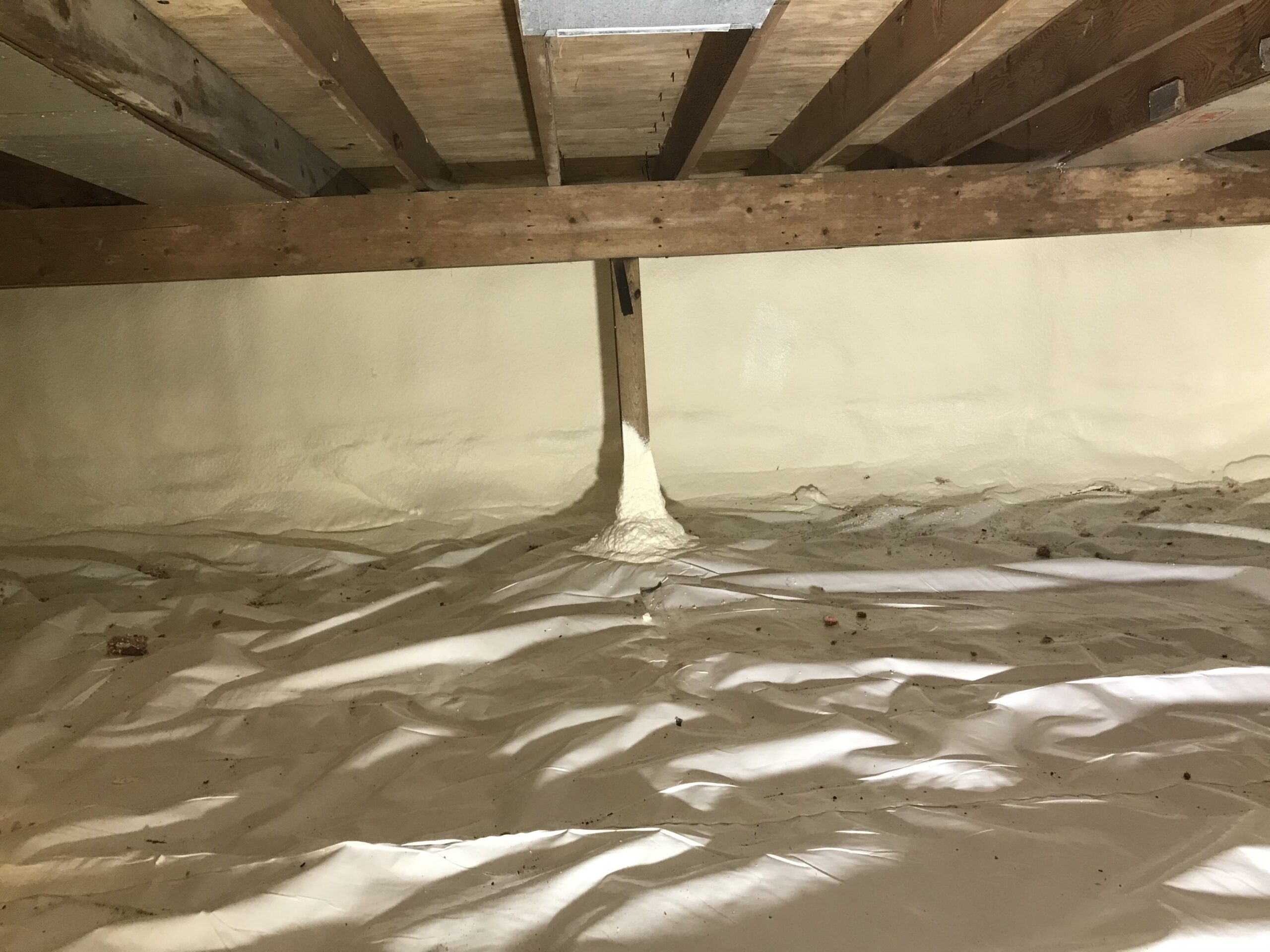
Vented crawlspaces bring summer humidity and winter cold into your home’s belly. That moisture can condense on cool joists and rim areas, creating musty odors and comfort complaints. A better approach in Iowa is a sealed, insulated crawlspace with a continuous 6-mil poly ground vapor retarder lapped and sealed, and rigid or closed-cell foam at the perimeter walls. The DOE’s Building America Solution Center details how to line the floor and walls, handle pest inspection strips, and provide a small, code-compliant air supply or exhaust to keep conditions stable. It’s the same logic in basements: use closed-cell foam against concrete in zones 5–6, then layer additional insulation as needed.
At the rim joist, the “critical seal” matters. Spray foam excels here because it blocks air leakage and warms the coldest band in your structure, helping reduce condensation risk at that junction. Building Science Corporation’s “Critical Seal” resource explains the approach and notes code considerations; local rules vary on ignition and thermal barriers, so we coordinate with your inspector.
Metal buildings & pole barns: stop the sweating
Metal shops and pole barns across Iowa—from farm service buildings in Dubuque County to commercial bays in Ankeny—often “sweat” in shoulder seasons. The physics are straightforward: warm, moist indoor air hits a cold metal panel, crosses the dew point, and water forms. Closed-cell spray foam solves this two ways: it air–seals the assembly so moist interior air can’t reach the panel, and it’s a vapor retarder at practical thicknesses, keeping condensation off the steel. Proper thickness at the roof and walls, plus attention to transitions (overhead doors, window flanges, and base trims), turns that clammy shop into a predictable, cleanable workspace.
Mini case study (Ames, hypothetical but realistic): A 2,400-sq-ft metal shop reported dripping in late winter and spring thaws. We confirmed air leakage at eave lines and panel laps and found cool panels behind tool benches where propane heaters ran. The fix: 2 inches of closed-cell foam at the roof panels and 1½–2 inches on walls, wrapping tricky corners and door jambs. We also sealed the ridge transitions and advised a modest continuous ventilation strategy. The client reported dry surfaces, quieter workdays, and easier temperature control after the upgrade.
Open-cell vs. closed-cell: where each shines
Closed-cell (high-density) delivers higher R per inch, added structural rigidity, and Class II vapor retarder performance at relatively thin lifts—ideal for roof decks in CZ5–6, metal buildings, basements, and crawlspace walls. Open-cell (low-density) is excellent for sound control and interior partitions; it can work in walls and some roof applications when the assembly includes an interior vapor retarder and the design accounts for winter dew-point control. In many Iowa projects, the sweet spot is hybrid: a layer of closed-cell for condensation control plus cost-effective blown fiberglass or cellulose to reach the target R. We’ll match the material to the assembly, not the other way around.
Safety, ventilation, and re-entry (what to expect)
On install day, we protect adjacent surfaces, manage airflow, and monitor temperatures and humidity. We follow the product manufacturer’s cure guidance and EPA recommendations on ventilation and safe re-entry. If sensitive individuals (infants, elders, respiratory conditions) are present, we plan around that with clear timing and ventilation before anyone returns. You’ll receive re-entry guidance in writing—with a contact number if conditions change.
Rebates, credits, and right-sized budgets
Rebates and incentives change. Iowa customers can explore MidAmerican Energy and Alliant Energy efficiency offerings and marketplaces, and some projects may qualify for the Energy-Efficient Home Improvement Credit for insulation and air-sealing measures. We’ll point you to the official pages and provide itemized estimates that your tax professional or utility can review. (We don’t provide legal or tax advice; availability and terms vary.)
How Precision Insulation & Coatings gets it done
Every project begins with a free on-site spray foam assessment and estimate. Where appropriate, we bring thermal imaging to spot hidden bypasses, cold corners, and damp surfaces. You’ll get a plain-spoken scope that spells out target R-values, air-sealing priorities, and a vapor-control approach suitable for your assembly and jurisdiction. We schedule quickly, coordinate access (from tight basements in older Cedar Falls homes to high bays in Council Bluffs), maintain jobsite cleanliness, and conduct a post-check so you’re confident in the result. References? Plenty—across ranches, two-story homes, pole barns, and commercial interiors statewide.
FAQ
Will spray foam fix my ice dams?
It can help—if we air-seal the ceiling plane first and meet the attic’s R-value target. That combination reduces heat loss that drives ice dams. Venting still matters in vented attics; in unvented designs, moisture control and adequate conditioning are critical.
Is the house safe to occupy after you spray?
Yes—after ventilation and curing are complete per the product and site conditions. EPA points out that re-entry timing varies; 24 hours is common guidance for many two-component systems, but we’ll specify your exact re-entry window.
Do I need a vapor barrier with spray foam?
Sometimes. Closed-cell foam often provides Class II vapor control at practical thickness, especially valuable in CZ5–6; open-cell may need an interior vapor retarder or a hybrid design.