Your energy bills keep climbing, and your home feels drafty no matter how much you adjust the thermostat. Roof insulation can reduce your heating and cooling costs by up to 30% while making your home more comfortable year-round.
This guide will walk you through the key benefits of proper roof insulation, explore different material options, and share practical installation tips from our team at Precision Insulation & Coatings.
Ready to transform your home into an energy-efficient haven?
Key Benefits of Roof Insulation
Roof insulation transforms your residential or commercial building into a fortress against Iowa’s harsh winters and sweltering summers. Smart homeowners discover that proper roofing insulation delivers benefits that extend far beyond basic temperature control, creating a ripple effect of improvements throughout your property.
Energy efficiency and cost savings
Proper residential or commercial roof insulation benefits your home by cutting energy costs significantly. Your heating and cooling systems work less to maintain comfortable temperatures when heat loss stays minimal. Precision Insulation & Coatings enhances energy efficiency through professional installation techniques that target problem areas.
Quality roofing insulation creates a thermal barrier that keeps warm air inside during the winter months and blocks heat during the summer. Lower energy bills become a reality with effectively insulated roof systems. Spray foam roof insulation delivers superior performance compared to traditional materials.
Your monthly utility expenses drop as your HVAC system operates more efficiently. We offer free on-site estimates across Iowa, making cost-effective insulation project planning simple for homeowners and contractors alike.
Improved indoor comfort
Beyond saving money on energy bills, roof insulation creates a more comfortable living space year-round. Your home becomes a sanctuary where temperatures stay consistent, drafts disappear, and hot spots become a thing of the past. Quality insulation roofing acts like a thermal blanket, keeping your family cozy during Iowa’s harsh winters and cool during sweltering summer months.
Building science principles show that proper thermal barriers eliminate those annoying temperature swings that make certain rooms unbearable. Air sealing combined with effective insulation prevents cold drafts from sneaking through gaps, creating stable indoor conditions throughout your property.
From our experience installing spray foam insulation on metal roof systems across Iowa, homeowners immediately notice how much more comfortable their spaces feel once heat loss issues are resolved.
Enhanced property value
Your roof insulation investment pays dividends when you decide to sell your property. Quality insulated roof panels boost your home’s market appeal, making it stand out in today’s competitive real estate landscape. Buyers actively seek energy-efficient homes that promise lower utility bills and year-round comfort.
Smart property owners recognize that insulation upgrades increase the long-term value of homes and commercial buildings significantly. Modern buyers appreciate properties with reduced heat loss, knowing they’ll enjoy lower energy bills from day one. Enhanced energy efficiency through insulation makes properties more attractive to potential purchasers, often leading to faster sales and better offers.
Free on-site insulation estimates help you understand exactly how much value these improvements add to your investment, whether you’re planning metal roof insulation or spray foam insulation and roofing upgrades.
Types of Roof Insulation
Choosing the right roof insulation material can feel like picking the perfect winter coat for your home. Each type offers different benefits, price points, and installation methods that work better for specific situations and roof insulation costs.
Blanket: Batt and Roll Insulation
Batt and roll insulation represents the most common type of blanket insulation you’ll find in Iowa homes. This fiberglass material comes in pre-cut sections (batts) or continuous rolls that fit snugly between roof rafters and wall studs. During our installations across Iowa, we’ve seen how this insulation delivers solid thermal performance while keeping roof insulation costs reasonable.
The material works by trapping air pockets within its fibers, creating a barrier that slows heat transfer through your roof structure. Installation proves straightforward for most contractors and experienced DIY homeowners. You simply unroll or unfold the material between framing members, making sure it fills the entire cavity without compression.
The paper or foil facing acts as a vapor barrier when installed correctly with the facing toward the heated space. We’ve found that proper installation technique makes all the difference in performance, as compressed insulation loses much of its effectiveness. Batt insulation gives homeowners the best bang for their buck when installed properly, but cutting corners on installation technique can cut your energy savings in half.
Rigid Foam Board Insulation
While blanket insulation works well for many homes, rigid foam board insulation offers different advantages for your Iowa property. This type of insulation comes in solid panels that you can cut to fit specific spaces.
Rigid foam boards provide excellent thermal resistance and create a continuous barrier against heat loss. The panels resist moisture better than many other insulation types, making them perfect for basement walls and exterior applications.
Building science principles show that rigid foam insulation enhances energy efficiency while improving indoor comfort levels. You’ll see lower energy bills after installation, and the material adds value to your property investment.
Spray Foam and Foamed-In-Place Insulation
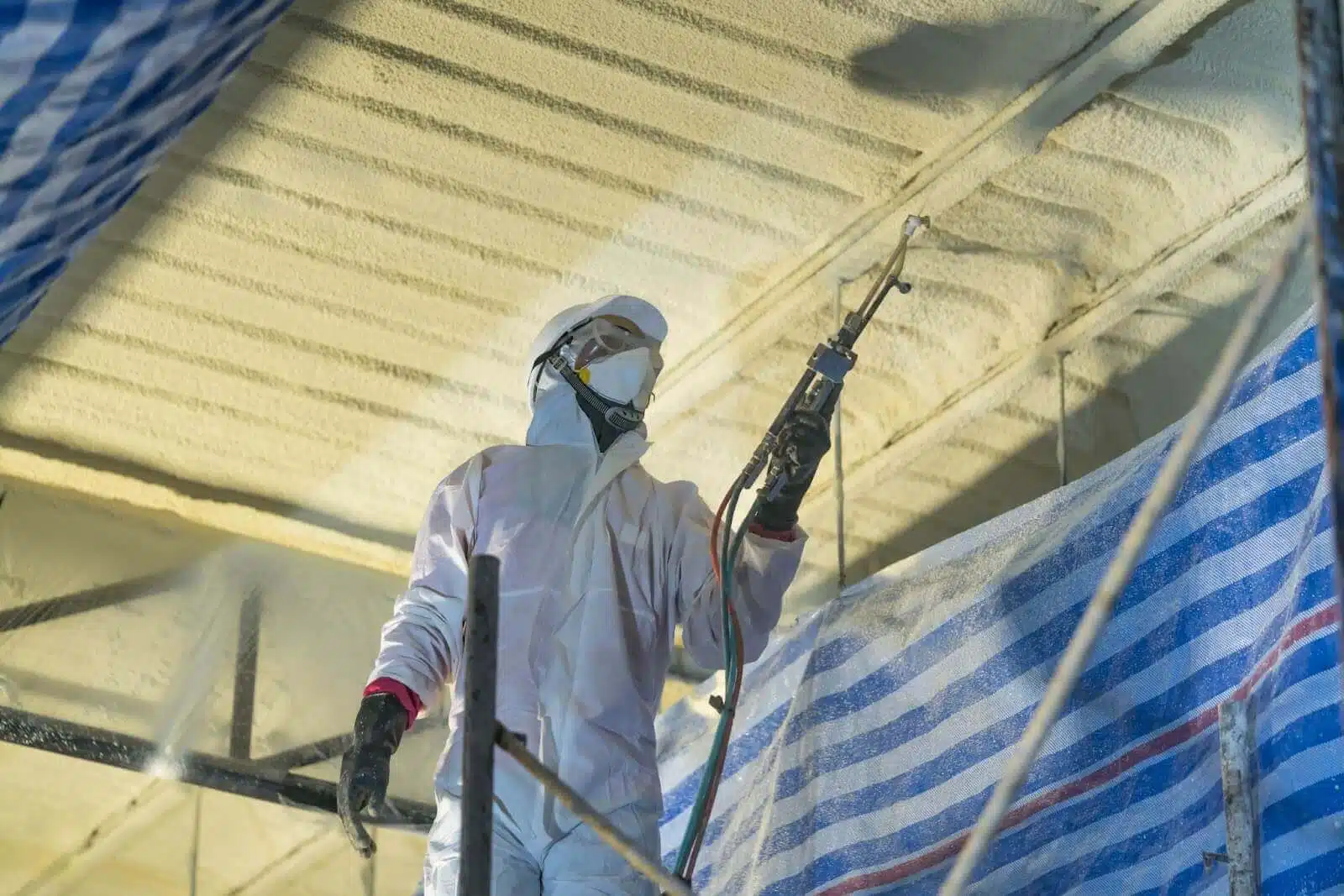
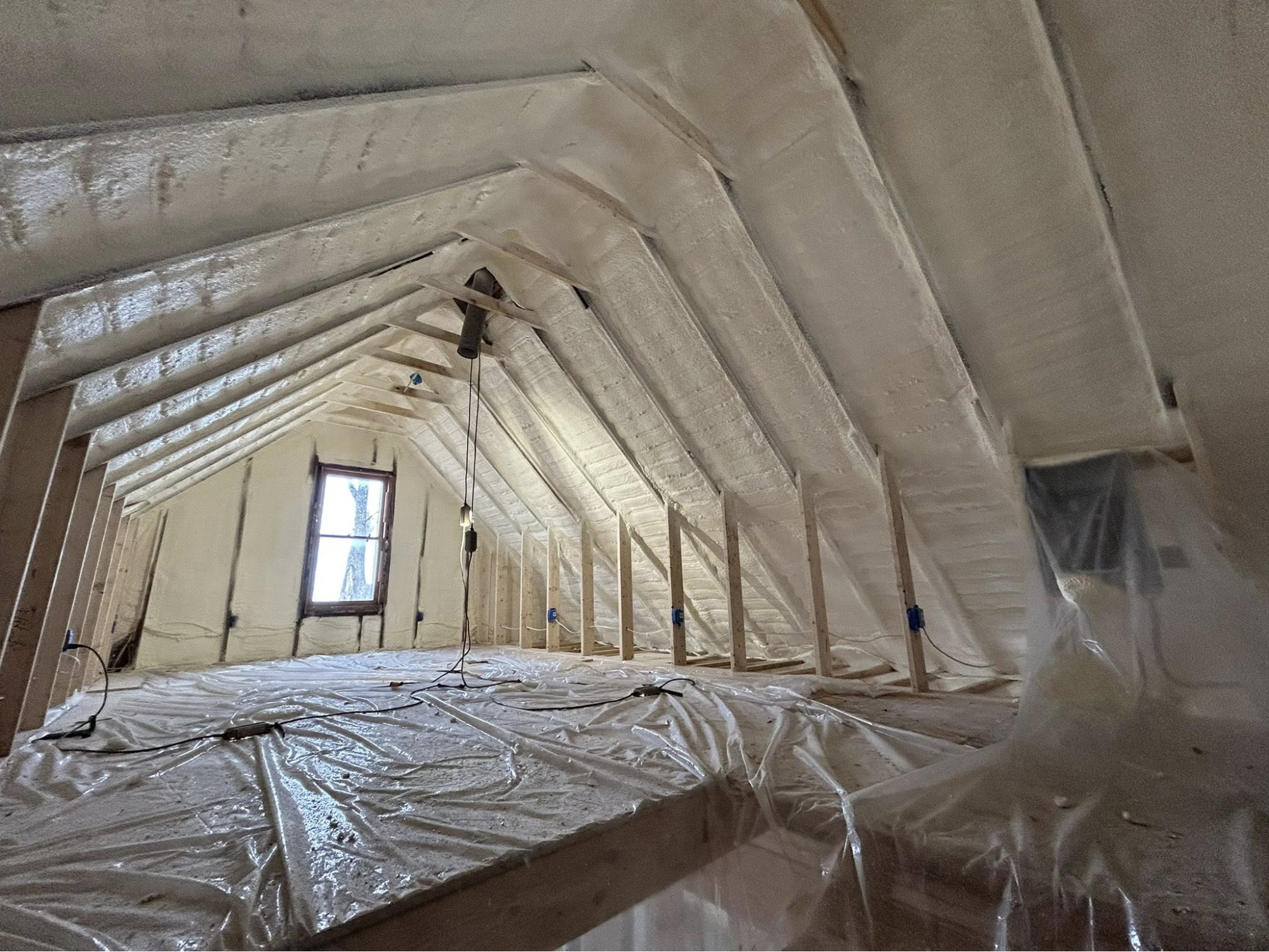
Unlike rigid foam boards that come in fixed sheets, spray foam insulation expands to fill every crack and crevice in your roof structure. This liquid application transforms into a solid barrier that seals air leaks completely. We offer both closed-cell and open-cell spray foam options, each serving different purposes in Iowa’s challenging climate.
Closed-cell foam provides maximum insulation value and acts as a vapor barrier, while open-cell foam allows moisture to pass through naturally. Professional installation makes all the difference with spray foam systems. The material requires precise mixing ratios and proper application techniques to achieve optimal performance.
Building science principles guide the installation process, helping minimize heat loss throughout your home. Free on-site estimates help determine which spray foam type works best for your specific roof structure and energy goals.
Radiant Barriers and Reflective Insulation
Radiant barriers work differently from traditional insulation materials. These shiny, metallic surfaces reflect heat away from your home instead of absorbing it. You’ll find them most effective in hot climates where cooling costs eat up your energy budget. The reflective material bounces radiant heat back toward its source, keeping your attic cooler during scorching summer months.
Installing radiant barriers makes sense if your home sits in a warm region with high cooling demands. The material typically comes as foil-backed sheathing or reflective paint that goes directly on roof decking.
Your attic temperature can drop by 10 to 25 degrees with proper installation. This cooling effect reduces the workload on air conditioning systems, which translates to lower monthly utility bills for homeowners in southern states.
Detailed Look at Insulation Types
Now that you know the main insulation categories, let’s explore two popular options that dominate Iowa homes. These materials offer distinct advantages, and understanding their unique properties helps you make the right choice for your specific situation.
Exploring the Benefits of Spray Foam Insulation
Spray foam insulation delivers superior air sealing for residential or commercial roofs compared to traditional materials like fiberglass batts.
You get two main options: closed-cell spray foam offers maximum R-value per inch, while open-cell spray foam provides excellent sound dampening at a lower cost. Both types expand to fill every crack, gap, and void that lets conditioned air escape from your home.
Your energy bills drop significantly after spray foam installation because the material creates a continuous thermal barrier. Unlike fiberglass insulation that can shift or settle over time, spray foam maintains its performance for decades without maintenance. The material also acts as a moisture barrier, preventing condensation issues that plague many Iowa homes during harsh winters.
Professional installers from experienced companies can complete most attic upgrades in a single day, making this investment both practical and efficient for busy homeowners.
Understanding the Advantages of Fiberglass Insulation
While spray foam offers excellent sealing properties, fiberglass insulation brings its own set of compelling advantages to your roofing project. Fiberglass stands as one of the most cost-effective insulation materials available, making it an attractive choice for budget-conscious homeowners.
This pink or yellow material comes in convenient batts or rolls that fit easily between roof rafters and ceiling joists. Fiberglass insulation performs exceptionally well in Iowa’s climate conditions, providing reliable thermal resistance year after year. Installation becomes straightforward since the material cuts easily with a utility knife and doesn’t require special equipment or protective gear beyond basic safety measures.
Fire resistance ranks as another significant benefit, as fiberglass won’t burn or support combustion. From our experience installing thousands of square feet across Iowa homes, fiberglass maintains its R-value over decades without settling or degrading like some other materials. The material also allows for easy access to electrical wiring or plumbing repairs since you can simply move batts aside and replace them afterward.
Installation Tips for Roof Insulation
Getting your roof insulation right can make or break your home’s comfort and energy bills. The installation process requires careful planning, the right materials, and often professional expertise to achieve optimal results.
Assess your roof type and structure.
You need to know what type of roof sits above your head before picking insulation. Different roof styles handle insulation differently, and your home’s structure plays a big role in what works best. Flat roofs need different materials than steep-pitched roofs, and older homes often have quirks that modern houses don’t.
Your roof’s age tells you a lot about what you’re working with. Houses built before 1980 might have asbestos or other materials that require special handling. Check for any sagging areas, water damage, or structural issues before you start.
A wobbly roof won’t hold heavy insulation properly, and moisture problems will ruin even the best materials. Take a flashlight up to your attic and look around carefully.
Choose the appropriate insulation material.
Selecting the best insulation material for your roof depends on several key factors. Your roof’s structure, local climate conditions, and budget all play crucial roles in this decision. We specialize in spray foam and blown-in fiberglass insulation, two proven options that deliver excellent results.
Closed-cell spray foam works best for areas needing moisture protection and structural support. Open-cell spray foam costs less but provides superior sound dampening. Fiberglass insulation offers reliable performance at a budget-friendly price point. Building science principles guide smart material choices for maximum energy efficiency.
Attic spaces often benefit from blown-in fiberglass due to easy installation around obstacles. Spray foam excels in cathedral ceilings and complex roof geometries where air sealing matters most. Consider your home’s specific needs before making this important decision.
Ensure proper ventilation during installation.
Proper ventilation prevents moisture buildup during roof insulation installation. You need adequate airflow to maintain the effectiveness of your insulation materials. Poor ventilation traps humidity, which can lead to mold growth and reduced insulation performance.
Most contractors we’ve worked with stress at this point because moisture damage costs homeowners thousands in repairs later. Ventilation improves indoor comfort and energy efficiency during and after installation. You should keep existing vents clear and add new ones if needed. The air needs to flow freely from soffit vents to ridge vents.
This creates a natural circulation pattern that keeps your attic dry. Smart homeowners check their ventilation system before starting any insulation project, saving themselves headaches down the road.
Hire professional installers for complex projects.
Complex roof insulation projects require skilled hands and specialized knowledge. Professional installers bring years of experience, proper tools, and safety equipment to your job site. We understand building codes, ventilation requirements, and moisture barriers that DIY attempts often miss.
Spray foam installation, for example, demands precise temperature control and protective gear that most homeowners don’t possess. Hiring experts saves you time, money, and potential headaches down the road. Licensed contractors carry insurance that protects your property during installation.
Professional work comes with warranties that give you peace of mind for years to come. Your investment in expert installation pays dividends through better performance and fewer callbacks.
Conclusion
Your home deserves the best protection against energy loss, and proper roof insulation delivers exactly that. Smart choices about insulation types and professional installation create lasting comfort while cutting your monthly bills.
Precision Insulation & Coatings brings the expertise you need to transform your property into an energy-efficient haven.
Take action today by scheduling your free on-site estimate and discover how the right insulation solution can make your space more comfortable year-round.
FAQs
1. What are the main benefits of roof insulation?
Roof insulation cuts your energy bills like a hot knife through butter. It keeps your home cozy in winter, cool in summer, and reduces noise from outside.
2. Which types of roof insulation work best for most homes?
Fiberglass batts are popular because they’re cheap and easy to install. Spray foam costs more but seals every crack and gap perfectly.
3. Can I install roof insulation myself, or do I need a pro?
You can tackle basic batt insulation if you’re handy with tools. However, spray foam and blown-in types need professional installation for safety and best results.
4. How much money will roof insulation save on my energy bills?
Most homeowners save 10 to 50 percent on heating and cooling costs. The exact savings depend on your home’s age, size, and local climate conditions.