If your metal building is difficult to heat in winter or uncomfortably warm in summer, the issue likely comes down to insulation, or the lack of it. Iowa’s climate, with its cold winters and warm, humid summers, places significant demand on metal structures that aren’t properly insulated.
The consequences are practical and costly. Uninsulated metal buildings are prone to energy loss, moisture buildup, and temperature inconsistency, which makes the space difficult to use year-round.
Our team at Precision Insulation & Coatings has been providing metal building insulation that Des Moines property owners rely on for years. We understand what Iowa’s climate demands and which solutions consistently deliver results.
This guide covers everything you need to know, from climate challenges to the most effective insulation options available.
Key Takeaways
- Iowa’s extreme temperature swings cause uninsulated metal buildings to lose 30 to 50 percent of their energy without proper protection.
- Closed-cell spray foam seals air gaps and prevents interior condensation, stopping the rust and structural damage that moisture causes.
- Insulated metal buildings cut heating and cooling costs significantly while extending building lifespan through decades of reliable performance.
- Fiberglass blanket insulation offers a cost-effective starting point, while closed-cell spray foam provides superior air and vapor sealing for maximum protection.
Why Insulating Metal Buildings in Iowa is Important
Iowa’s brutal winters and humid summers put metal buildings through the wringer. Without proper insulation, your building becomes a money pit. Condensation sneaks in during temperature swings, moisture builds up inside your walls, and your energy bills skyrocket faster than a July thermometer.
Managing Iowa’s Weather Extremes
Temperature swings here in Iowa are no joke. Winters drop below zero. Summers climb into the nineties. Metal buildings without proper insulation turn into ovens in July and freezers in January.
Our team has worked on countless metal building insulation projects across Des Moines and throughout Iowa. We’ve watched uninsulated structures lose massive amounts of heat through their walls and roofs, and the damage adds up fast. Metal conducts temperature like a highway for cold and heat.
According to thermal transmission data, an uninsulated corrugated metal roof has a U-value of 1.5, meaning it transfers heat at an extremely high rate compared to an insulated surface. That’s the science behind why your building feels so extreme in both summer and winter.
Insulation acts as a barrier, stopping that transfer in its tracks. We install closed-cell spray foam insulation that seals air leaks and creates a protective layer against these extreme shifts. This material works hard to maintain stable interior temperatures, irrespective of what nature throws at us.
Condensation becomes a serious problem when metal buildings lack insulation. Temperature differences between the outside and inside cause moisture to form on metal surfaces, and over time, that moisture leads to rust, mold, and structural damage. Proper insulation reduces interior condensation before it spirals into costly repairs.
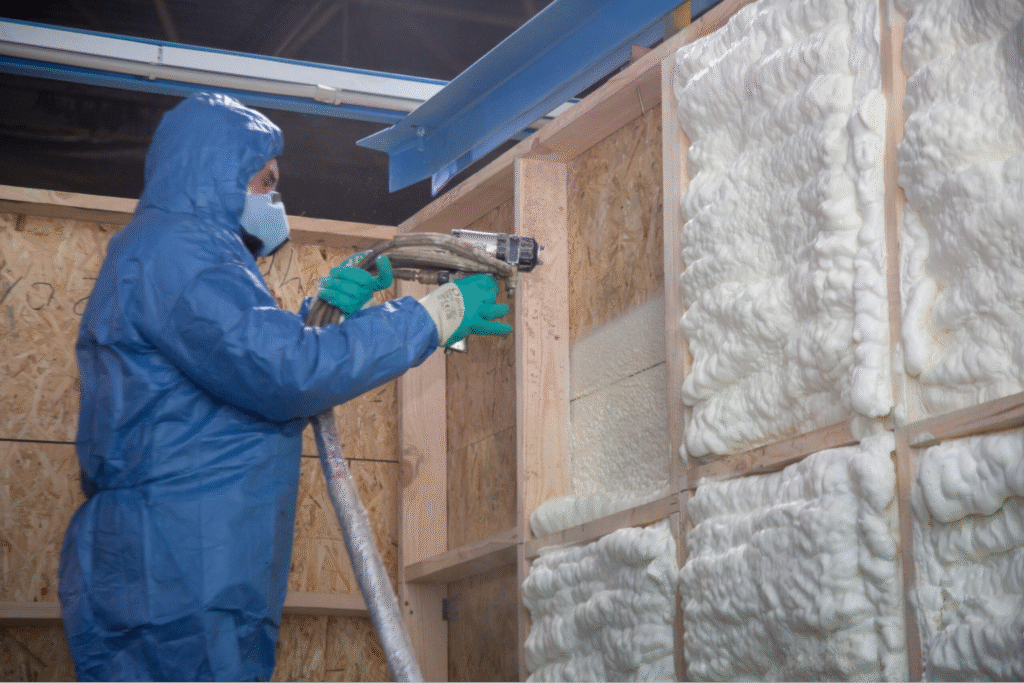
Closed-cell spray foam is highly effective for air and vapor sealing in steel-framed buildings, which makes it our go-to solution for commercial building insulation that Iowa property owners request. Our spray foam insulation company Iowa specialists apply this material to walls, ceilings, and roof systems with precision, and it expands to fill every gap and crack, leaving no room for moisture to settle.
- Seals air leaks to stop rapid temperature transfer through metal surfaces.
- Reduces interior condensation and prevents rust damage.
- Keeps buildings cool in summer and warm in winter.
- Lowers energy costs by cutting heat loss significantly.
Severe temperature shifts drain your wallet through energy loss. Insulated metal buildings can lower energy bills by thirty to fifty percent in extreme weather, depending on the system. Metal roof spray coating, Iowa contractors on our team combine spray foam with reflective coatings to maximize performance. Laminated fiberglass blankets and continuous insulation systems offer further options for managing Iowa’s weather extremes.
Preventing Condensation Issues
Cold winter nights followed by warmer days cause moisture to collect inside metal structures. Metal surfaces act like magnets for condensation. Water droplets form on the interior framing when warm air meets cold metal, then drip onto equipment, stored items, and structural components below.
Over time, this leads to rust, mold growth, and structural damage that costs thousands to fix. Our work on metal workshops across the Des Moines area shows measurable moisture reduction after closed-cell spray foam installation. It is the solution we recommend most often.
The material adheres directly to metal surfaces and creates an airtight envelope that prevents warm, humid air from ever reaching cold metal. Laminated fiberglass blankets offer another solid option, working by reducing heat loss and improving indoor comfort levels, which minimizes the temperature differences that cause condensation to form.
Proper sealing of fiberglass systems becomes critical during humid conditions, so we take extra care with every seam and edge during installation. Condensation in metal buildings isn’t just annoying; it’s expensive.
Our team knows that metal building insulation installers across Iowa must address condensation head-on. Effective insulation reduces heat loss while creating stable interior temperatures that prevent moisture problems from ever starting. Whether you’re protecting a workshop, storage facility, or agricultural building, controlling condensation protects your investment and extends your building’s lifespan significantly.
Enhancing Energy Efficiency
Metal buildings in Iowa face extreme temperature swings that drain energy and inflate utility bills all year. Effective insulation methods like closed-cell spray foam, laminated fiberglass blankets, and continuous insulation systems work together to minimize heat loss throughout all four seasons.
Closed-cell spray foam provides superior air and vapor sealing. It stops heat from escaping during brutal winters and keeps cool air inside during hot summers. Property owners who take action see their energy bills drop significantly, and those savings compound year after year.
Fiberglass blankets offer an affordable path to lower energy costs, though proper sealing remains critical to avoid moisture problems. Radiant barriers and reflective foam increase R-value without taking up valuable interior space, blocking radiant heat and improving overall energy performance.
| Insulation Type | Energy Efficiency Strength | Best For |
| Closed-Cell Spray Foam | Highest (air + vapor seal) | All metal building types |
| Fiberglass Blanket | Good (cost-effective option) | Barns, storage, agriculture |
| Radiant Barrier | Strong (blocks radiant heat) | Hot climate, metal roofs |
According to 2026 regional pricing data for the Midwest, closed-cell spray foam in Iowa typically costs between $2.50 and $4.00 per board foot. The spray foam insulation cost in 2026 runs higher than fiberglass upfront, but when you factor in the energy savings and long-term durability, it pays for itself over time.
The insulation cost in 2026 varies based on your building size and material selection, and our professionals assess your specific building to recommend solutions that match your budget and performance goals.
Insulation minimizes heat loss, enhances indoor comfort, and reduces energy bills for years to come. Investing in the right system today means real savings showing up on your utility bill every single month going forward.
Benefits of Insulating a Metal Building
When you insulate your metal building, you create a more comfortable space and cut your heating and cooling bills significantly. A well-insulated structure also protects your investment by preventing rust, moisture damage, and structural deterioration that Iowa’s harsh seasons cause.
Improved Indoor Comfort
Iowa’s weather swings from scorching summers to brutal winters, and metal buildings feel every degree of that temperature roller coaster. Without proper insulation, your building becomes a thermostat nightmare, swinging wildly between hot and cold zones that make it miserable to work in.
Closed-cell spray foam creates an effective air and vapor seal that stops these temperature shifts. It keeps your space consistently comfortable year-round, which means the people inside, whether that’s your crew, your family, or your customers, actually want to be there. Here’s what proper insulation delivers for indoor comfort:
- Stable temperatures with no wild swings between hot and cold zones.
- Dry interiors free from moisture and condensation on walls and ceilings.
- Fewer cold spots near walls and ceilings during the winter months.
- A space people feel genuinely comfortable working or spending time in.
Our metal building insulation Des Moines projects show that proper insulation stops condensation before it starts, keeping interiors dry and pleasant. Fiberglass blanket insulation and radiant barrier systems work alongside spray foam to manage moisture and maintain stable conditions throughout the year.
The difference hits you the moment you step inside a properly insulated metal building. The air feels stable, the temperature feels right, and the whole space just works better for whatever purpose you have in mind.
Reduced Energy Costs
Lower energy bills follow naturally once you tackle comfort issues in a metal building. Our team at Precision Insulation & Coatings has watched property owners cut their heating and cooling expenses significantly after adding proper insulation. When your building envelope is tight, your HVAC system stops working overtime, and that’s money staying in your pocket.
Laminated fiberglass blankets also offer a cost-effective path to lower energy costs for many Iowa property owners. Closed-cell spray foam takes it further, creating a seal that minimizes energy loss and protects against rust at the same time.
Radiant barriers and reflective foam increase thermal resistance without taking up much space, giving you another tool to maximize efficiency. The numbers don’t lie: insulation works, and Iowa’s extreme weather makes it a smart investment that pays dividends year after year.
We recommend getting a free on-site insulation estimate to assess your potential energy cost reductions. Our professionals walk through your space, identify where heat escapes, and show you exactly what savings you might expect.
Increased Longevity of the Building
A metal building in Iowa faces serious threats from harsh weather and moisture. Proper insulation protects against rust and moisture issues that can compromise the structural integrity of metal buildings over time.
Closed-cell spray foam offers an ideal air and vapor seal, which is crucial for steel framing. That barrier stops condensation from forming inside your walls. Condensation is the silent killer of metal structures, eating away at your investment year after year.
Thermal bridging is the most common source of thermal loss and condensation damage in metal buildings. This happens when heat and cold bypass insulation by traveling directly through highly conductive steel framing.
Continuous insulation or spray foam that covers the framing itself, not just the cavities between it, solves this problem directly and prevents the structural wear that comes with it.
- Stops rust caused by interior condensation on steel framing.
- Addresses thermal bridging through the metal frame itself.
- Reduces stress from constant expansion and contraction cycles.
- Extends building lifespan through decades of reliable protection.
Your metal building experiences extreme temperature fluctuations in Iowa, and that constant expansion and contraction weakens connections and fasteners over time. Insulation stabilizes interior temperatures, reducing that stress on the entire structure.
Common Insulation Options for Metal Buildings
Several proven methods work well for metal buildings across Iowa, and each one brings its own strengths. The best choice depends on your budget, your building’s use, and how serious your moisture and energy challenges are.
Fiberglass Blanket Insulation
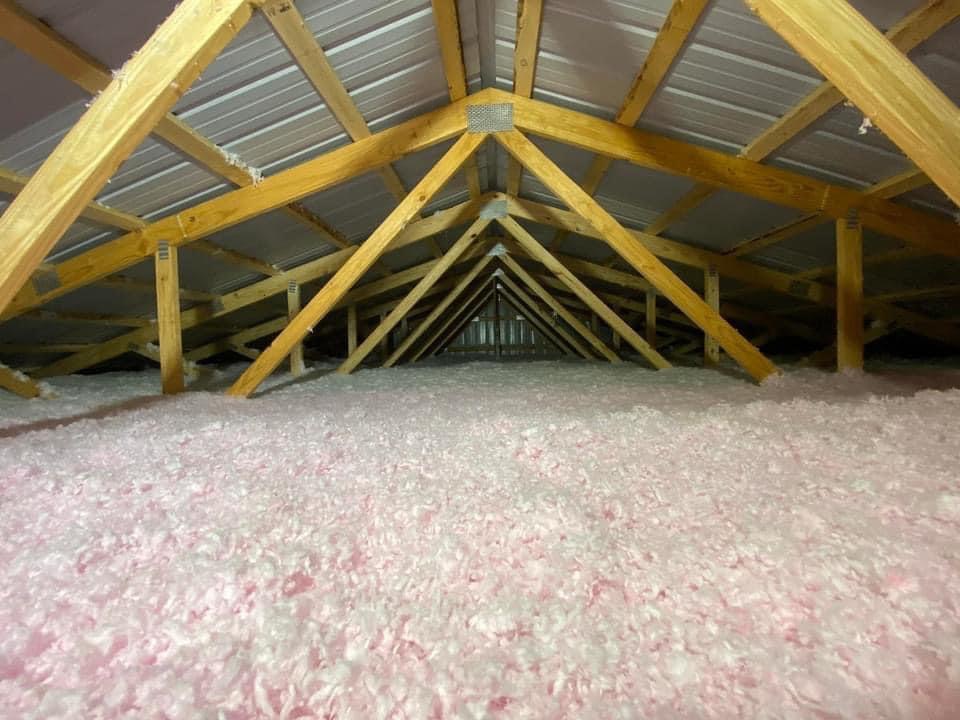
Fiberglass blanket insulation stands as one of the most practical solutions for metal buildings across Iowa. It comes in rolls or batts that fit snugly between the metal framing, creating an effective thermal barrier at a price point most property owners appreciate.
The cost-effectiveness of fiberglass makes it accessible for tight budgets. Installation moves quickly, which means less labor time on your project. Our team has installed fiberglass systems in barns, workshops, and agricultural structures throughout Iowa, and the energy performance results are consistent.
We typically face fiberglass blankets with white vinyl to boost interior brightness and cut energy costs. This white finish reflects light throughout your space, reducing the need for extra lighting during daylight hours. The vinyl layer also serves as a vapor barrier.
Iowa’s humid summers demand proper sealing at seams and edges. Gaps and unsealed joints allow warm, humid air to penetrate the insulation, creating condensation that leads to rust and structural damage over time. Attention to detail during installation makes all the difference in protecting your metal building investment.
Here’s why property owners across Iowa choose fiberglass for their metal buildings:
- Lower upfront cost compared to spray foam options.
- Fast installation with less labor time on site.
- White vinyl facing improves interior lighting and acts as a vapor barrier.
- Reliable thermal performance when properly sealed and installed.
Pairing fiberglass with proper ventilation and sealing techniques creates a system that keeps your building comfortable year-round while protecting the metal structure underneath.
Closed-Cell Spray Foam
If fiberglass blanket insulation is like putting on a light jacket, closed-cell spray foam is like wrapping your building in a thermal cocoon. The difference is real, and we’ve seen it across Iowa’s metal buildings time and again.
Closed-cell spray foam creates an ideal air and vapor seal that fiberglass simply cannot match. Standard 2026 building science specifications show that closed-cell foam delivers an R-value of R-6.0 to R-7.0 per inch of thickness. That’s significantly higher than most other insulation materials available for metal buildings, and it explains why spray foam outperforms everything else in Iowa’s extreme climate.
Our teams apply this material directly to metal building framing, and it expands to fill every crack, crevice, and gap. The result is immediate: interior condensation disappears, water dripping from the ceiling stops, and metal buildings stop sweating, which makes rust prevention automatic rather than a constant battle.
- R-6.0 to R-7.0 per inch, the highest thermal resistance available for metal buildings.
- Bonds permanently to metal framing for long-lasting protection.
- Eliminates condensation and prevents rust without ongoing maintenance.
- Reduces energy bills dramatically by sealing the entire building envelope.
Iowa’s fluctuating climate throws temperature swings at your building daily. Closed-cell spray foam regulates those severe shifts like nothing else can. Yes, the upfront cost runs higher than other insulation methods, but property owners who’ve invested in this solution consistently tell us the long-term protection is worth every penny.
As a spray foam insulation company serving Iowa, Precision Insulation & Coatings brings hands-on expertise to every project. The material bonds to metal framing permanently, creating a barrier that lasts decades. For anyone serious about protecting their investment, reducing energy costs, and maintaining indoor comfort through Iowa’s unpredictable seasons, closed-cell spray foam is the clear choice.
Radiant Barrier Systems
Radiant barriers work like a shield against heat radiation in metal buildings. A high-quality radiant barrier reflects up to 97% of radiant heat before it even enters the building. In Iowa’s fluctuating climate, where temperatures swing dramatically between seasons, that kind of performance makes a real difference.
We have installed radiant barriers across Iowa properties, and we see real results in temperature regulation and condensation prevention. The best part is that radiant barriers require minimal space. They slip into tight spots without eating up valuable interior room, making them ideal for metal buildings where every square foot counts.
Our team combines radiant barriers with other insulation options to create a complete system that performs at its peak. This layered approach gives your metal building comprehensive protection against Iowa’s weather extremes.
- Reflects up to 97% of radiant heat per ASTM International testing standards.
- Requires minimal space, ideal for tight metal building installations.
- Enhances the overall R-value when combined with spray foam or fiberglass.
- Improves year-round temperature stability and condensation control.
Including a radiant barrier in your insulation design enhances the overall R-value of the system. Think of it as adding a specific tool that targets heat traveling through radiation. In our experience with metal buildings throughout Iowa, radiant barriers significantly improve indoor comfort by maintaining more stable temperatures year-round.
We offer customized radiant barrier solutions that fit your specific metal building. We assess your building’s orientation, your usage patterns, and Iowa’s climate demands to recommend the right system for your investment.
Conclusion
Insulating your metal building in Iowa makes solid financial and practical sense. Iowa’s temperature swings, from scorching summers to brutal winters, demand protection that only proper insulation provides. Metal buildings without insulation become condensation factories and energy-draining liabilities.
With the right system in place, they transform into comfortable, efficient spaces built to last through decades of Iowa weather.
Our team at Precision Insulation & Coatings is ready to help you find the right fit for your needs and budget. Schedule a free on-site estimate for metal building insulation that Des Moines property owners trust, and stop letting your building work against you.
FAQs
1. Should I insulate my metal building in Iowa?
Yes, Iowa winters drop below -20°F, and uninsulated metal buildings lose up to 70% of their heat. Insulation keeps heat in during winter and cool air in during summer.
2. What type of insulation works best for metal buildings in Iowa?
Closed-cell spray foam with R-values of R-6 to R-7 per inch works best, though fiberglass batts are also effective. Spray foam seals gaps better, which matters a lot in Iowa’s harsh wind and cold.
3. Will insulation help lower my energy bills?
According to the Department of Energy, insulated buildings can reduce heating and cooling costs by up to 20%, so your monthly bills drop significantly.
4. Can I insulate my metal building myself, or do I need a pro?
Small projects are doable yourself, but we recommend a professional for larger metal buildings. Proper vapor barriers and air sealing are critical in Iowa’s climate, and improper installation leads to condensation damage.