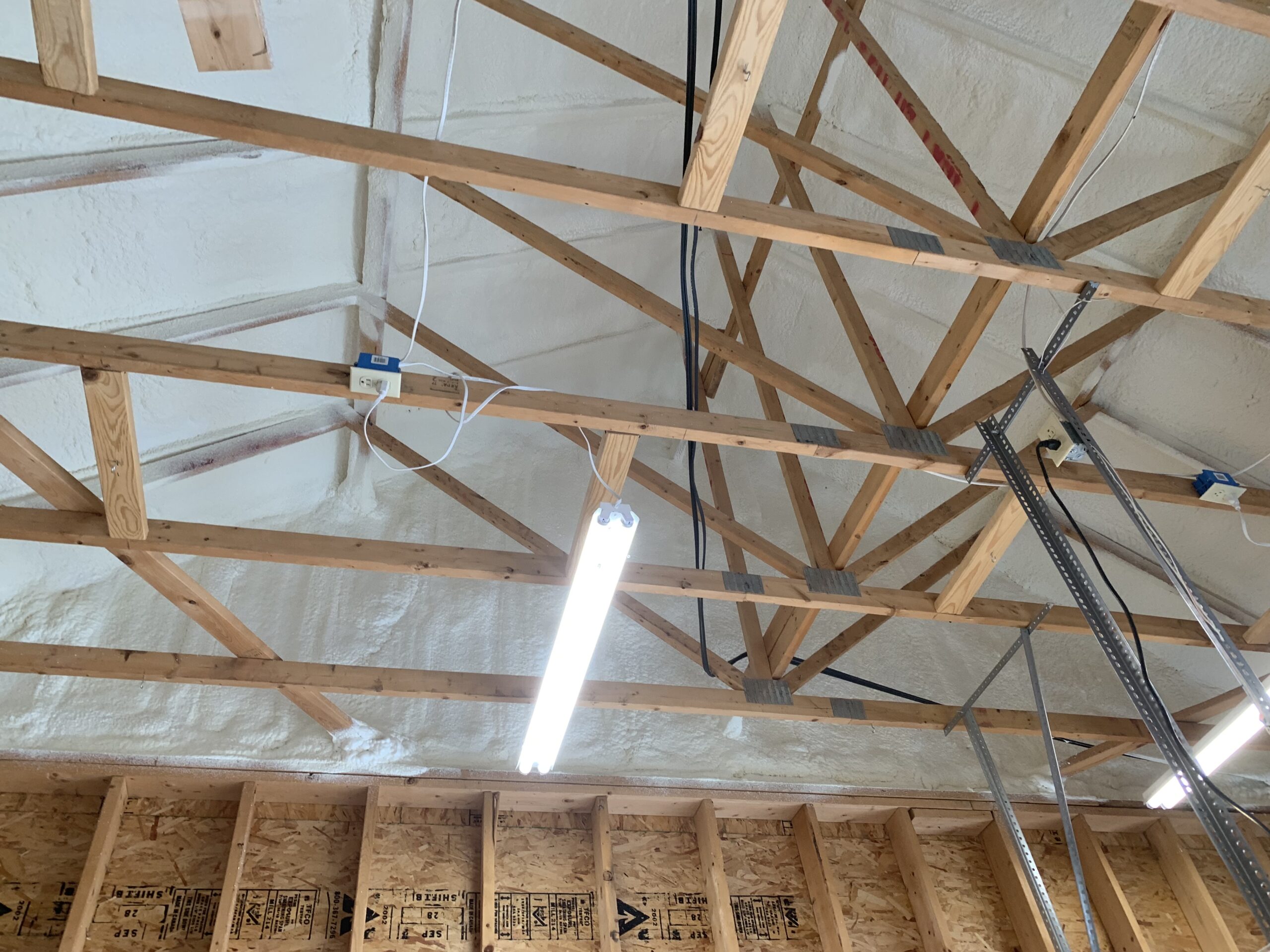
If your home feels drafty, rooms don’t match, or your HVAC runs too much, the attic is often where the fix starts, because heat loss and air leaks stack up there. The most reliable upgrade is air sealing first, then bringing insulation depth up to the recommended range for your climate zone. This guide is written for homeowners comparing quotes for attic insulation in Des Moines and wanting a clear, practical scope, not vague promises.
How Do You Know Your Attic Insulation Is Actually The Problem (Not Your Furnace)?
Common mistake: Treating comfort symptoms like a mechanical issue first. Sometimes it is, but if the building shell is leaky, even a brand-new system struggles.
Quick 5-minute checklist (no tools):
- Put your hand around ceiling fixtures on a cold day, feel movement? That’s an attic bypass.
- Check the attic hatch/pull-down stairs; if it’s unsealed or uninsulated, it’s a big leak.
- Look at the insulation surface; dark/dirty streaks often indicate air moving through it.
Decision rule: If you have uneven rooms and a cold ceiling line near exterior walls, start with attic air sealing and insulation evaluation before replacing equipment.
Local factor: Polk County is IECC Climate Zone 5A (cold, moist), which puts more pressure on air sealing + adequate attic R-value.
How Much Attic Insulation Should Homes In Climate Zone 5a Aim For?
Common mistake: Focusing on “inches” without knowing what it equals in R-value.
ENERGY STAR’s retrofit guidance shows Zone 5 typically targets R-49 when adding to an attic that already has a few inches, and R-60 for an uninsulated attic. DOE’s insulation guidance shows similar attic targets by zone.
Quick depth sanity check: If you can clearly see the tops of attic joists across most of the attic, you’re usually below today’s recommended levels.
Cost/timeline driver: Reaching target R-value can be quick in open attics, but slows down in tight, low-clearance areas or where there’s storage decking that must be removed and reinstalled.
Should You Remove Old Insulation Or Add More On Top?
Common mistake: “Topping off” insulation that’s wet, pest-contaminated, or hiding air leaks.
Decision rule:
- Remove and start clean if insulation is wet/matted, heavily soiled, compressed, or you’re dealing with recurring pests.
- Top off if it’s dry, mostly uniform, and you can still access air-seal points (top plates, chases, penetrations).
Quick test: Grab a handful with a gloved hand. If it’s damp, clumpy, or smells musty, don’t bury it.
Local factor: Winter roof leaks can go unnoticed until thaw cycles; wet insulation loses performance and can lead to staining on ceilings. (Insulation doesn’t fix a roof leak; fix moisture first.)
Which Material Fits Your Attic: Fiberglass, Spray Foam, Or A Hybrid?
Common mistake: Asking, “What’s the best insulation?” instead of “What assembly solves my problem?”
Here’s a simple comparison that matches real attic conditions:
Option | Where it shines | What can go wrong | What to verify before you pay |
Blown-in fiberglass | Fast coverage in open attics; good for topping off | Underperforms if attic bypasses are left open | Air sealing is included + even depth across the attic |
Blown-in cellulose | Fills around small obstructions well | Can hide issues if not paired with air sealing | Photos of sealed penetrations + consistent depth |
Spray foam (targeted) | Seals tough leaks (rim areas, chases, roofline assemblies) | Needs correct ventilation and proper application | Ventilation plan + coverage at transitions |
Hybrid (seal + blow) | Most common “high value” approach | Scope confusion between trades | Written scope: what’s sealed vs what’s insulated |
DOE notes common insulation material categories and typical uses (batts, loose-fill, foam).
Cost driver: Spray foam is typically used where air leakage is hardest to control. In many homes, the best ROI is sealing the bypasses and attic hatch, then using blown-in insulation for depth.
What Does A Professional Attic Insulation Upgrade Look Like?
If you’re hiring a attic insulation contractor in Des Moines, the scope should read like this:
- Assessment: Photos, existing depth check, and identification of major bypasses (bath fans, plumbing stacks, chases, attic hatch).
- Air sealing (bypass sealing): Seal top plates, penetrations, and large chases before adding insulation. ENERGY STAR emphasizes air sealing paired with insulation to improve performance.
- Ventilation check (not “more vents” automatically): Confirm bath fans vent outside and the attic hatch is sealed. Don’t let insulation block soffit vents if they exist.
- Insulation install: Blow to target depth, maintain clearance around heat-producing fixtures per manufacturer requirements, and keep access paths where needed.
- Verification: Post-work photos of sealed bypasses + depth rulers in multiple attic locations + a final walkthrough.
Timeline driver: Most straightforward jobs are “one visit.” Add time when removal, tight clearances, or extensive air sealing is required.
What Drives Cost And Timeline The Most In Real Attics?
Common mistake: Comparing bids that aren’t the same scope.
Big cost drivers:
- Removal/cleanup (and disposal) vs top-off only
- Air sealing scope (some bids barely include it)
- Access (tight hatch, low slope, no walk boards)
- Target R-value and attic square footage
- Storage decking, HVAC platforms, or complex framing
Decision rule: If a bid doesn’t list air sealing tasks and verification deliverables, assume it’s a basic “blow and go” quote.
What Mistakes Make Attic Insulation Underperform After The First Winter?
- Skipping air sealing is the #1 reason people “add insulation” and don’t feel a difference.
- Blocking ventilation paths unintentionally (especially at eaves).
- Leaving the attic hatch unsealed/underinsulated.
- No plan for spray foam ventilation. EPA guidance emphasizes ventilating during and after SPF application, and that occupant re-entry should occur only after the building is fully ventilated; timing depends on product and conditions.
- Insulating over moisture problems (roof leaks, bath fans venting into attic).
Conclusion
A solid attic upgrade isn’t complicated; it’s just specific: seal the bypasses, hit the right R-value range for Zone 5A, and verify coverage. If you’re comparing options for attic insulation Des Moines, insist on a written scope and post-job verification photos. That’s how you avoid paying twice.
For homeowners wanting a clear plan, Precision Insulation & Coatings can evaluate the attic, recommend the right mix of spray foam and fiberglass, and document the work so you know what you bought.
FAQs
How much attic insulation is recommended in Zone 5A?
ENERGY STAR’s retrofit guidance commonly points to R-49 for many existing attics and R-60 for uninsulated attics, depending on what’s already there.
Is blown-in fiberglass or blown-in cellulose better?
Both can work well when air sealing is done first. The “better” choice usually depends on attic layout, depth targets, and installer quality.
Do I need to remove old insulation?
Remove it when it’s wet, pest-contaminated, compressed, or hiding problems you need to seal. Otherwise, topping off after air sealing can be effective.
Is spray foam safe after it cures?
During installation, ventilation matters. EPA guidance says to ventilate until curing/off-gassing has stopped and vapors are removed, and to follow manufacturer guidance for re-occupancy timing.
Will attic insulation help with ice dams?
It can, especially when paired with air sealing, because it reduces heat escaping to the roof deck. Ice dams can also involve roof/ventilation details, so treat this as a whole-assembly issue.
What should my quote include?
At minimum: target R-value, areas included, air sealing tasks, any removal scope, ventilation protections, and verification (photos + depth markers).
I’m also looking for garage insulation contractors in Des Moines, should I do that first?
If the garage shares walls/ceilings with living space, insulating and air sealing those shared surfaces can help comfort. Most homeowners still start with the attic because it’s typically the largest heat-loss area.