Crawl spaces are one of those “out of sight, out of mind” parts of a home, until the floors get cold, the humidity creeps up, or you start noticing that musty smell that never really goes away.
In Iowa, crawl spaces take a beating. We get humid summers, cold winters, and shoulder seasons where everything feels damp. If your crawl space isn’t sealed and insulated correctly, your home’s comfort and energy efficiency will always be fighting an uphill battle.
At Precision Insulation & Coatings, we work with homeowners across Central Iowa who want warmer floors, lower utility bills, and fewer moisture problems. This guide breaks down the most effective ways to insulate a crawl space, what works best, when it makes sense, and what to avoid.
First, Figure Out What You’re Dealing With
Before you pick an insulation method, take a hard look at your crawl space conditions. The “best” insulation approach depends on a few key things:
- Is the crawl space vented or sealed?
- Is the ground dirt, gravel, or concrete?
- Do you see standing water, damp soil, or condensation?
- Are there ducts, plumbing lines, or HVAC equipment down there?
- Do you have a history of musty odors or mold?
One important note: insulation is not a magic eraser for water problems. If bulk water is coming in through poor grading, leaks, or drainage issues, you handle that first. The U.S. Department of Energy is blunt about it: moisture control matters for comfort, durability, and preventing mold.
Method 1: Crawl Space Encapsulation
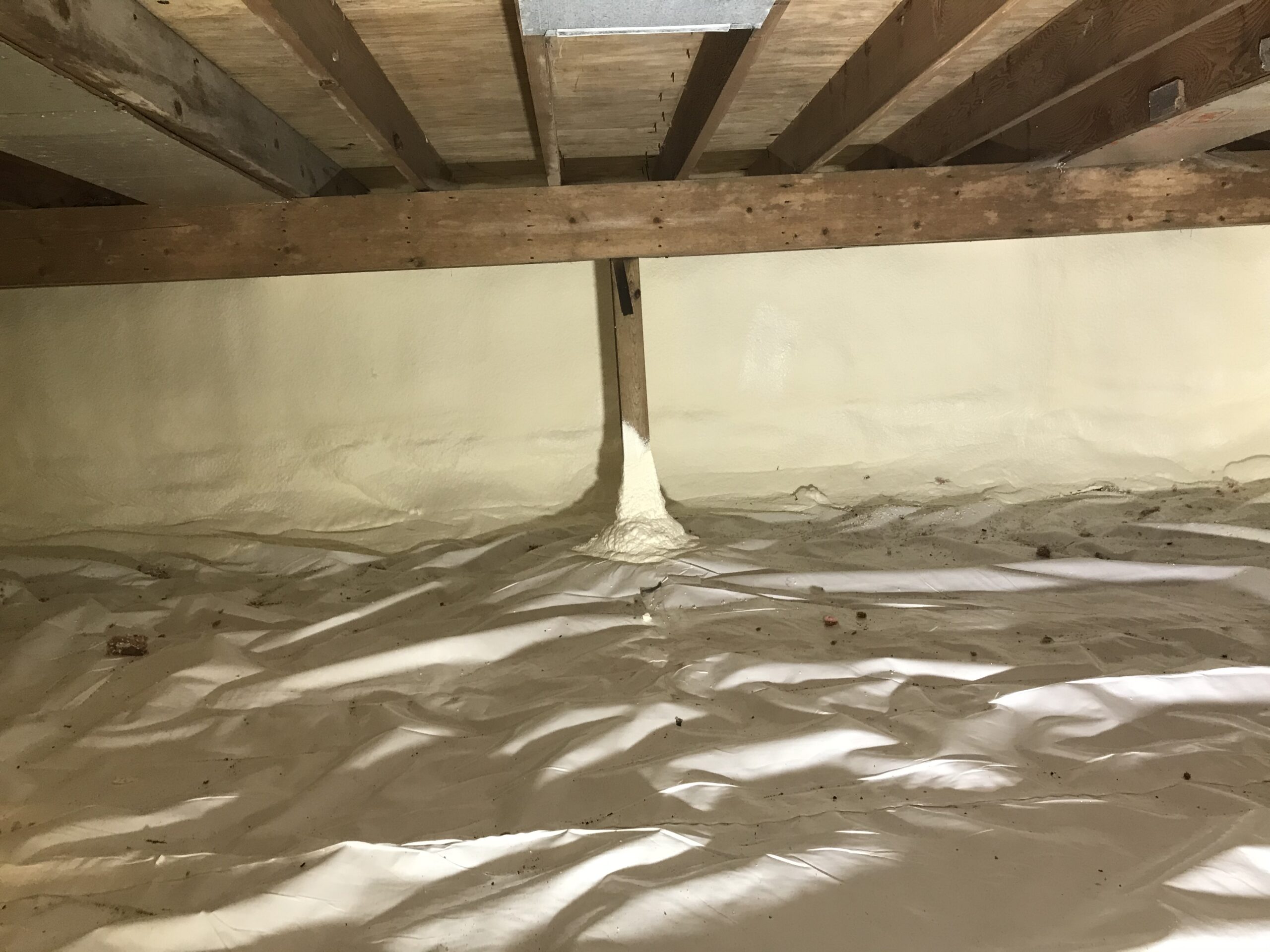
If you want the most comprehensive crawl space upgrade, encapsulation is usually the top contender. Encapsulation means turning the crawl space into a clean, dry, controlled environment by sealing it off from the outside and covering the ground (and often the walls) with a durable vapor barrier.
What encapsulation typically includes
- Heavy-duty vapor barrier over the crawl space floor (and sealed seams)
- Vapor barrier runs up the foundation walls and is sealed
- Sealed vents and air leaks
- Insulated foundation walls (often with rigid foam or spray foam)
- Humidity management (often a dehumidifier or conditioned air strategy)
Encapsulation tackles the two biggest crawl space enemies at once: outside air leaks and ground moisture. When it’s done correctly, it can noticeably reduce that “damp crawl space” smell, help protect wood framing, and make the whole house easier to heat and cool.
ENERGY STAR has long emphasized that improving and insulating crawl spaces is about more than comfort; it’s also about durability and healthier indoor air, especially when moisture is involved.
When encapsulation makes the most sense
- The crawl space stays damp most of the year
- You must notice musty odors inside the home
- Floors are cold, and rooms feel drafty
- You have ducts/HVAC equipment in the crawl space
- You want the “done once, done right” approach
Precision Insulation & Coatings often recommends encapsulation when the crawl space has ongoing humidity problems or when homeowners want a long-term solution instead of patchwork fixes.
Method 2: Insulate The Crawl Space Walls
If you seal/encapsulate the crawl space, the next step is usually insulating the foundation walls instead of the floor. Wall insulation brings the crawl space inside the home’s thermal “envelope,” meaning the space stays closer to indoor temperatures year-round.
Best materials for crawl space wall insulation
Rigid foam board (EPS/XPS/polyiso)
- Solid R-value per inch
- Works well on masonry walls
- Must be properly sealed at edges and joints
Closed-cell spray foam
- High R-value per inch
- Excellent air sealing
- Adds moisture resistance and helps reduce drafts
The U.S. Department of Energy provides specific guidance on insulating conditioned crawl spaces and highlights details like rim joist treatment and air sealing continuity.
Why wall insulation is so effective
- Reduces cold floors by cutting heat loss at the perimeter
- Helps protect pipes from freezing
- Improves humidity control when paired with a sealed ground barrier
- Keeps ductwork and mechanicals in a more stable environment
This approach is a common “best practice” for closed crawl spaces, especially when moisture is a concern.
Method 3: Insulate The Crawl Space Ceiling
Floor insulation, insulating between the joists under your subfloor, can work well when the crawl space remains vented, and you’re not converting it to a sealed space.
Common options for crawl space ceiling insulation
Fiberglass batts
- Familiar and affordable
- Must be installed tightly to the subfloor
- Needs support (wire stays or netting) to prevent sagging
- Can perform poorly if it gets damp or if air moves through it
Spray foam under the subfloor
- Better air sealing than batts
- Helps cut drafts significantly
- More expensive, but often more consistent performance
The big mistake with floor insulation
A lot of crawl spaces have fiberglass batts that look “fine” from a distance, but they’re sagging, torn, or damp. Once air moves through insulation (or moisture gets into it), the real-world performance drops fast.
If you go the floor-insulation route, details matter:
- Seal plumbing/electrical penetrations first (air leaks)
- Install batts flush and supported
- Address vapor/ground moisture so you’re not insulating over a damp environment
At Precision Insulation & Coatings, we see plenty of Iowa crawl spaces where floor insulation was installed, but the underlying moisture and air leakage issues were never addressed, so the home still feels uncomfortable.
Method 4: Rim Joist And Band Joist Insulation
If you want one of the highest “bang for your buck” crawl space upgrades, look at the rim joist area. The rim joist is where your house framing meets the foundation wall, and it’s notorious for air leakage. When that band area leaks air, you feel it upstairs as cold floors, drafts, and temperature swings.
Best approach: air seal + insulate
Closed-cell spray foam is often the cleanest solution because it does both jobs at once. DOE guidance also calls out proper insulation and sealing at rim joists as part of keeping the air barrier continuous. Even if you’re not doing a full crawl space project right now, addressing the rim joist can make a noticeable difference.
Method 5: Vapor Barrier On The Ground
If your crawl space has exposed soil, the ground is constantly releasing moisture upward. That moisture becomes humidity, then condensation, then mold risk.
A properly installed ground vapor barrier helps:
- Reduce crawl space humidity
- Protect wood framing
- Improve insulation performance (because insulation hates moisture)
Moisture control is central to preventing mold and indoor air issues. EPA’s mold guidance makes it clear: controlling moisture is the key.
A vapor barrier that’s loosely tossed on the ground with gaps at the seams isn’t doing much. Seams need overlap and sealing, and edges should be secured. This is one reason encapsulation tends to outperform partial fixes, because it’s designed as a system.
Method 6: Air Sealing: Because Insulation Alone Won’t Stop Drafts
Insulation slows heat flow. Air sealing stops the moving air. If you only insulate without air sealing, you’re leaving comfort (and energy savings) on the table.
Common crawl space air leaks
- Plumbing penetrations
- Wiring holes
- Gaps at the rim joist
- HVAC chases
- Access doors/hatches
- Vent openings (especially if converting to sealed)
Air sealing is also part of why spray foam performs so well in crawl spaces: it naturally seals the small gaps that are hard to chase down one by one. DOE notes that air sealing helps create a continuous air barrier on the warm side of the thermal boundary, which is what prevents drafts and uneven temperatures.
Method 7: Moisture Management Tools
Sometimes the smartest crawl space insulation plan includes moisture tools that aren’t insulation at all. Depending on the home, that may include:
- Improving exterior grading and downspout extensions
- Adding or repairing drainage systems
- Installing a sump pump (when needed)
- Using a crawl space dehumidifier after sealing/encapsulation
EPA’s moisture-control guidance for buildings emphasizes designing and maintaining systems to prevent moisture problems, because moisture doesn’t just cause comfort issues; it can lead to long-term building damage.
At Precision Insulation & Coatings, we consider moisture part of the insulation conversation because in crawl spaces, the two are tied together.
Which Crawl Space Insulation Method Is “Best” For Most Iowa Homes?
Here’s the honest answer: the best method is the one that matches the conditions of the crawl space and solves the real problem.
Most effective “system” for damp crawl spaces
- Encapsulation + sealed vents
- Wall insulation (rigid foam or closed-cell spray foam)
- Rim joist insulation
- Humidity control (as needed)
Practical approach for dry, vented crawl spaces
- Air sealing at penetrations
- Floor insulation (properly supported)
- Ground vapor barrier improvement
If you’re not sure which category your home falls into, that’s exactly where an experienced contractor helps. Crawl spaces vary more than people think, even within the same neighborhood.
A Quick Word On Safety And Code Details
Crawl spaces aren’t a place for guesswork. A few important reminders:
- Some areas require ignition barriers or fire-protection measures depending on insulation type and exposure.
- Termite inspection requirements can affect how and where foam or rigid board is installed (especially near sill plates).
- Vent sealing and conditioned crawl space strategies should be done carefully to avoid trapping moisture.
This is why Precision Insulation & Coatings approaches crawl space work as a full system, not just “add insulation and hope.”
How Precision Insulation & Coatings Can Help
If you’re ready to stop guessing and get a crawl space that stays dry and performs the way it should, Precision Insulation & Coatings can help you map out the right solution, whether that’s spray foam, fiberglass, crawl space wall insulation, or full encapsulation. If you want to talk to a real person, our team is easy to reach.
FAQs
1) Is crawl space encapsulation better than insulating the floor?
Often, yes, especially when moisture is a recurring issue. Encapsulation addresses ground moisture and outside air intrusion as a system, which usually improves comfort and humidity control more than floor insulation alone.
2) Should crawl space vents be open or closed in Iowa?
It depends on the crawl space strategy. If you’re keeping the crawl space vented, vents remain part of that design. If you’re encapsulating or building a sealed crawl space, vents are typically sealed as part of controlling moisture and outside air. ENERGY STAR notes that conventional vented crawl spaces can have issues and provides prescriptive improvement measures.
3) What insulation works best for crawl space walls?
Rigid foam board and closed-cell spray foam are common choices for crawl space walls because they perform well on masonry surfaces and help manage air leakage. DOE guidance also highlights proper attachment and air sealing details for crawl space wall insulation.
4) How do I stop my crawl space from smelling musty?
Musty odors are usually a moisture problem. Improve drainage, add a properly sealed ground vapor barrier (or encapsulate), seal air leaks, and manage humidity. EPA’s guidance is clear: moisture control is the key to mold control.