Have you ever hired a contractor for a major home project, only to find out later that there were things they never mentioned? That’s a frustration many Iowa homeowners know well, especially with spray foam insulation.
At Precision Insulation & Coatings, we’ve worked with countless property owners who felt caught off guard by what happened during and after installation. Research shows that improper spray foam application can release volatile organic compounds, or VOCs, that affect your indoor air quality for months.
This article covers the spray foam insulation safety facts that matter most to Iowa families, from installation risks to long-term health concerns. We’ll walk you through everything clearly so you can make informed decisions that protect both your home and your family.
Key Takeaways
- Spray foam insulation releases volatile organic compounds for weeks or months, affecting indoor air quality and potentially causing headaches, respiratory irritation, and eye discomfort in Iowa homes.
- Isocyanate chemicals in spray foam can irritate skin, eyes, and respiratory systems; occupants must vacate homes during installation and for several hours afterward to prevent health risks.
- Closed-cell spray foam achieves R-6.0 to R-6.5 per inch, outperforming open-cell’s R-3.5 to R-3.6 rating while providing superior moisture barriers for Iowa’s humid climate conditions.
- Proper ventilation during and after application is critical; homeowners should maintain open windows and active fans for 24 to 48 hours after installation to prevent fume accumulation.
What is Spray Foam Insulation?
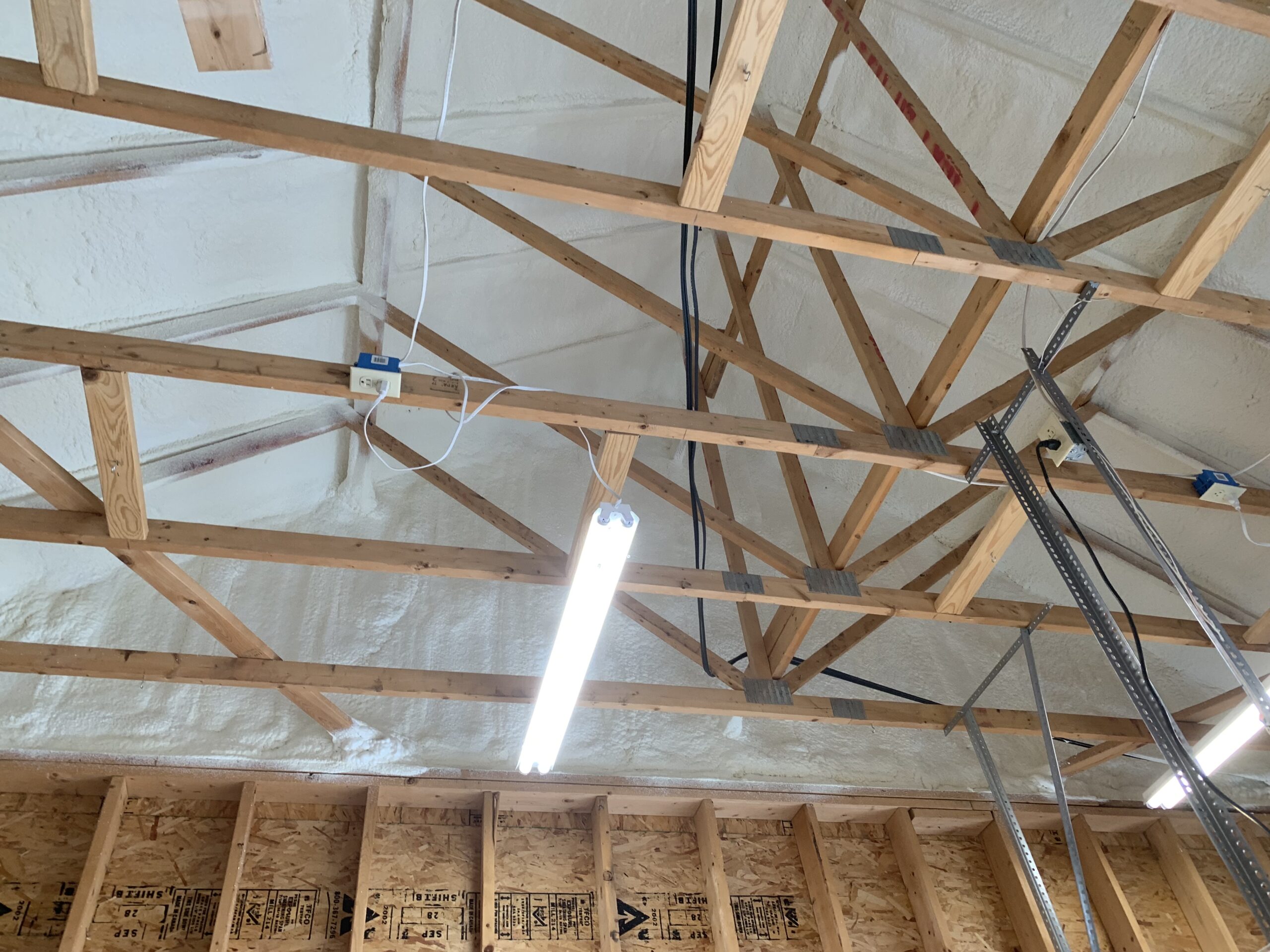
Spray foam insulation is a liquid material that we apply directly to walls, attics, and crawl spaces in homes across Iowa. The substance expands rapidly after application, filling gaps and cracks that traditional fiberglass insulation simply cannot reach. This expansion creates an air-tight seal that reduces heat loss and improves indoor comfort throughout your home.
We’ve watched spray foam transform energy efficiency in Des Moines, Iowa, homes, particularly in attic air sealing projects where older insulation left countless air leaks. According to the U.S. Department of Energy’s insulation guidelines, Iowa homeowners need attic insulation rated between R-49 and R-60 for our climate zone.
Many older fiberglass installations only reach R-20 or R-30. That gap is exactly why so many Iowa homes struggle with heating costs and cold spots each winter. The material comes in two main types: closed-cell and open-cell spray foam insulation. Each offers different benefits depending on your specific needs and budget.
Closed-cell foam provides superior insulation value and acts as a moisture barrier, making it ideal for basements and pole barns. Open-cell foam costs less and allows moisture to pass through, working well in interior walls where vapor management matters.
The material bonds to surfaces permanently, creating a durable barrier that lasts decades without settling or degrading like traditional insulation can. Property owners and builders throughout Iowa trust spray foam for its superior performance, though understanding the safety considerations is critical before any installation begins.
Types of Spray Foam Insulation
Spray foam insulation comes in two main varieties, and each one performs differently in Iowa homes. Here’s how open-cell and closed-cell options compare, so you can choose what makes the most sense for your property.
Open Cell Spray Foam
Open-cell spray foam is the lighter, more flexible of the two options. Its internal cells are not fully enclosed, which gives the foam a soft, sponge-like texture. This open structure lets air and moisture vapor pass through, making it a good fit for interior walls where some vapor movement is desirable. The R-value falls between R-3.5 and R-3.6 per inch.
That’s a solid rating for interior applications, and it also does a great job absorbing sound, which is a nice bonus in multi-room homes and larger buildings. Based on 2026 Midwest contractor pricing estimates, open-cell spray foam typically costs between $1.60 and $2.90 per square foot.
One reason it’s so practical for large spaces is its expansion rate: it expands 100 to 120 times its original liquid volume. That means it fills deep wall cavities and irregular gaps in a single application, making it highly cost-effective for whole-house interior projects.
Closed Cell Spray Foam
Closed-cell spray foam takes insulation protection to another level. Our team at Precision Insulation & Coatings uses it when a project demands superior thermal resistance and moisture control, which Iowa’s demanding climate conditions often require.
Aspect | Details for Homeowners, Property Owners, Builders & Contractors |
What Closed-Cell Spray Foam Is | Closed-cell spray foam contains millions of tiny, sealed cells packed tightly together. This dense structure creates a powerful moisture and air barrier. We apply it as a liquid that expands and hardens into rigid insulation. The material bonds directly to framing, creating a seamless thermal envelope. Installation requires specialized equipment and trained professionals. |
Heat Loss Reduction | Closed-cell spray foam helps reduce heat loss significantly in Iowa homes. Winter temperatures drop below zero, making superior insulation critical. This product maintains consistent indoor comfort during brutal cold snaps. Energy bills drop noticeably when we install closed-cell properly. Homeowners report lower heating costs year after year. |
R-Value Performance | Closed-cell spray foam typically achieves R-6.0 to R-6.5 per inch. This outperforms open-cell spray foam’s R-3.5 to R-3.6 per inch rating. Builders appreciate the higher thermal resistance in less space. Attic insulation upgrades benefit from this superior performance. Existing homes transformed through insulation retrofits gain noticeable efficiency improvements. |
Moisture and Air Barrier Properties | Closed-cell formulations block moisture infiltration completely. Water vapor cannot penetrate the sealed cell structure. This prevents mold growth and wood rot in Iowa’s humid summers. Air leakage stops at the application point. |
Structural Strength | We offer closed-cell spray foam that adds structural rigidity to walls and attics. The rigid foam reinforces framing and resists impacts. Contractors value this added strength during construction. Building codes recognize the structural contribution in many applications. |
VOC Emissions During Installation | Closed-cell spray foam releases volatile organic compounds during application. Proper ventilation is necessary throughout the process. Off-gassing continues for 24 to 72 hours after installation. Homeowners must vacate the premises during application and for the recommended cure period. Professional installers manage ventilation protocols to protect indoor air quality. |
Installation Requirements | Only licensed professionals should apply closed-cell spray foam. Improper application creates safety hazards and performance failures. Protective equipment for installers includes respirators, suits, and gloves. Temperature and humidity conditions affect application success. Our team conducts free on-site insulation estimates to assess each property’s specific needs. |
Long-Term Energy Efficiency | Closed-cell spray foam maintains performance for decades. Energy bills remain lower than traditional insulation methods. The material resists settling and degradation over time. Homeowners see consistent savings on heating and cooling costs. Long-term energy efficiency translates to substantial financial returns on investment. |
Attic Insulation Applications | Attic insulation upgrades using closed-cell spray foam deliver dramatic results. Unfinished attics become thermally controlled spaces. Heat loss through attic areas drops substantially. We serve homeowners and businesses throughout Iowa with these specialized upgrades. Insulation retrofits in existing homes benefit greatly from closed-cell performance. |
Service Coverage Area | Precision Insulation & Coatings provides closed-cell spray foam insulation services throughout Iowa. We specialize in both residential and commercial applications. Our experience covers new construction and retrofit projects. |
Safety Concerns with Spray Foam Insulation
Spray foam insulation brings real benefits to Iowa homes, but it also carries safety issues that many homeowners never hear about. We want to be upfront about what actually happens during installation and what lingers in your home afterward.
VOC Emissions and Indoor Air Quality
Many Iowa homeowners don’t realize that spray foam releases volatile organic compounds, or VOCs, during and after installation. These chemical vapors escape into your home’s air and can stick around for weeks or even months. Your indoor air quality takes a hit when VOCs linger in your living spaces. We’ve seen homeowners experience headaches, respiratory irritation, and eye discomfort after installation.
The problem gets worse in homes with poor ventilation or tight construction. You might not notice the smell after a few days, but that doesn’t mean the VOCs have disappeared. They continue off-gassing at lower levels, quietly affecting the air you breathe every single day. Open-cell spray foam tends to off-gas more than closed-cell, though both types release VOCs during application.
According to Environmental Protection Agency (EPA) safety guidelines, safe re-entry times for homes treated with two-component high-pressure spray foam typically range from 24 to 72 hours, provided proper mechanical ventilation is actively maintained. That’s a federally backed standard you can hold your contractor accountable to, and it matters a lot when making decisions about insulation costs in 2026 and beyond.
Your home’s air quality directly impacts your family’s health. Poor indoor air quality can trigger allergies, asthma, and other respiratory issues that linger long after the installation crew leaves. Transparent conversations about off-gassing timelines and ventilation requirements separate trustworthy contractors from those cutting corners.
You deserve to know exactly what happens to your home’s air before, during, and after spray foam installation. This knowledge helps you make smart choices that protect both your family and your wallet.
Potential Health Risks During Installation
According to safety bulletins from the National Institute for Occupational Safety and Health (NIOSH), isocyanates are powerful chemical sensitizers. Inhaling these fumes without proper protective equipment can trigger severe, long-term asthma and mucous membrane irritation. For some people, chemical sensitization becomes a permanent condition, not just a temporary reaction.
Workers without proper protective equipment face breathing problems, asthma-like symptoms, and allergic reactions. Our team has observed homeowners in Des Moines who stayed in their homes during application and suffered headaches, dizziness, and nausea for days afterward.
Some groups face greater risk from these chemical exposures. We strongly recommend that all of them leave the property during installation and stay away for the full curing period:
- Children and infants
- Elderly family members
- Pregnant women
- Anyone with existing asthma or lung conditions
- People with known chemical sensitivities
When exterior openings are sealed and ventilation is reduced, foam emissions persist far longer than expected. That creates unsafe conditions for both occupants and crew. Installers must wear respirators, gloves, and full-body suits to shield themselves from chemical contact.
Your insulation company in Des Moines, Iowa, should provide detailed safety protocols before any work begins. Professional installation guidelines exist for good reason: they protect both workers and your family.
Best Practices for Safe Installation
Certified professionals who follow strict protocols make all the difference in how a spray foam project goes. Proper ventilation systems run before, during, and after application to keep your indoor air quality safe and your family protected throughout the process.
Professional Installation Guidelines
Precision Insulation & Coatings brings deep building science expertise to every spray foam project across Iowa. Following the right steps from the start protects your family and ensures the insulation performs the way it should. Before you hire anyone, make sure these boxes are checked:
- Hire licensed professionals who hold current certifications and insurance coverage for spray foam insulation in Des Moines, Iowa, and surrounding areas.
- Verify that your contractor has completed training in both closed-cell and open-cell spray foam application techniques specific to Iowa’s climate conditions.
- Confirm the installation company performs pre-project inspections to identify potential hazards, moisture issues, and structural concerns before spraying begins.
- Require written documentation outlining the exact products, application rates, and safety measures your contractor will use during the job.
- Ask your insulation company in Des Moines, Iowa, about their experience with attic air sealing and thermal barrier improvements in residential homes.
Scheduling and project planning also play a big role in how smoothly things go:
- Schedule installation during favorable weather conditions, since temperature and humidity levels directly affect spray foam curing and performance outcomes.
- Verify your insulation costs 2026 estimates include labor, materials, equipment, and any necessary repairs or modifications to existing structures.
- Confirm the contractor obtains proper permits and passes local inspections for spray foam pole barns in Iowa projects and residential applications.
- Ask about the company’s experience with insulation retrofits for existing homes versus new construction projects in your specific region.
For the actual installation day and the period after the job is complete:
- Demand that workers wear appropriate personal protective equipment, including respirators, gloves, and protective clothing, throughout the application process.
- Establish clear communication about project timeline, work areas, and any temporary relocation your family may need during installation.
- Request a detailed post-installation report covering square footage treated, material specifications, and warranty information.
Proper Ventilation During and After Application
Proper ventilation makes or breaks your spray foam insulation project in Des Moines, Iowa, and across the state. Fumes and airborne particles can create serious indoor air quality problems when airflow isn’t managed correctly from the start. Before and during the application, these steps are non-negotiable:
- Open all windows in the work area before our crew arrives to create cross-ventilation that pulls fumes out of your home naturally.
- We position fans strategically throughout the space to increase airflow during application, pushing harmful chemicals and particles toward open windows and exterior doors.
- Our team keeps ventilation systems running continuously while we spray, preventing the buildup of volatile organic compounds that affect your family’s health.
- Homeowners should stay out of treated areas during the application process so we can maintain maximum airflow without disruption.
- Our professionals consult with you about ventilation strategies specific to your home’s layout, ensuring we remove fumes effectively based on your space’s unique characteristics.
After the application is complete, ventilation stays just as important:
- We maintain open windows and active fans for at least 24 to 48 hours after spraying, allowing the foam to cure without trapping fumes inside.
- Post-application ventilation prevents the accumulation of harmful chemicals, protecting your indoor air quality during the critical curing period.
- We recommend running exhaust fans and keeping doors open between rooms to establish proper air circulation throughout your entire home.
- Homeowners must avoid sealing up their homes immediately after installation, as trapped fumes can linger and create respiratory issues for occupants in the Des Moines area.
- Our team monitors curing progress and advises you on when it’s safe to close windows and return to normal ventilation patterns in your Iowa home.
The benefits of spray foam insulation become clear once installation is done safely and the foam has fully cured.
Benefits of Spray Foam Insulation When Used Safely
We’ve watched homeowners across Des Moines, Iowa, transform their homes with spray foam insulation that actually delivers. The material seals air leaks that traditional insulation simply cannot reach, and this makes a bigger difference than most people expect.
Your attic, walls, and crawl spaces develop tiny gaps over time. These gaps steal your heating and cooling energy like water through a sieve. Spray foam fills every crack, every corner, and every hidden void with precision. This air sealing capability means your furnace and air conditioner work less hard.
According to early 2026 reports from the National Energy Assistance Directors Association (NEADA), Midwestern households heating with natural gas saw winter heating bills rise by over 8%, averaging $186 or more per month during peak winter. Lower energy bills follow naturally when your home stops bleeding conditioned air into the outdoors, which makes this upgrade especially timely right now.
A 2,200 square foot suburban Des Moines home we worked with shows these benefits clearly. Before closed-cell spray foam installation, the homeowners paid an average winter monthly heating bill of $240, and their furnace ran 14 hours per day. After professional installation with proper ventilation and cure protocols, their average winter heating bill dropped to $165 per month, and furnace run-time fell to just 9 hours per day. They estimated annual heating savings of $900 in the first year alone.
Energy efficiency gains are just one part of the story. Spray foam also makes indoor spaces more comfortable throughout the year:
- Eliminates cold spots and drafty areas in living spaces
- Reduces temperature swings between rooms
- Improves moisture control in basements and crawl spaces
- Adds structural rigidity to walls and attics with closed-cell applications
- Lasts for decades without settling or degrading
Open-cell and closed-cell spray foam each offer distinct advantages depending on your situation. Closed-cell provides superior moisture resistance and a higher R-value per inch, making it ideal for basements and areas prone to moisture. Open-cell costs less and allows walls to breathe, which works well for interior applications.
Our team at Precision Insulation & Coatings specializes in spray foam insulation with a focus on safety, and we offer free on-site estimates for homeowners and businesses throughout Iowa. We assess your attic air sealing needs, your insulation retrofits, and your climate-specific challenges to recommend the right solution.
Conclusion
Spray foam insulation Iowa homeowners rely on delivers real energy savings and lasting comfort, but only when installers follow proper safety protocols. We’ve covered the critical facts that many homeowners miss, from VOC emissions and isocyanate risks to the importance of ventilation and professional application.
Getting the job done right means hiring licensed contractors who understand Iowa’s climate challenges and apply industry best practices. Your home deserves protection from our harsh winters and unpredictable weather, so don’t cut corners on this investment.
Reach out to experienced professionals in Des Moines and throughout Iowa to schedule a free on-site estimate. Let’s get your home properly insulated the safe way.
FAQs
1. Is spray foam insulation in Iowa homes actually safe?
Yes, when installed correctly by a licensed professional, spray foam is safe once fully cured. We always follow the EPA’s recommendation that the installer use proper ventilation during application, because improper mixing ratios can release volatile organic compounds (VOCs) that linger in your home.
2. How long should I stay out of my home after spray foam is applied?
We recommend staying out for at least 24 to 48 hours after application. The American Chemistry Council states that spray foam typically cures within 24 hours, but we suggest waiting the full 48 hours to ensure all off-gassing is complete before you return.
3. Are there hidden risks Iowa homeowners miss with spray foam insulation?
The biggest risk we see is when contractors don’t use the correct 1:1 chemical mix ratio for two-part spray foam. If the ratio is off by even 10%, the foam won’t cure properly and can continue releasing isocyanates into your indoor air for weeks.
4. Can spray foam insulation cause problems in Iowa’s cold winters?
Yes, if you use open-cell foam in an unheated space like an attic or crawlspace. Open-cell foam can absorb moisture when temperatures drop below freezing, and in Iowa’s average winter lows of 10 to 20 degrees Fahrenheit, that moisture can freeze and cause the foam to break down or grow mold.