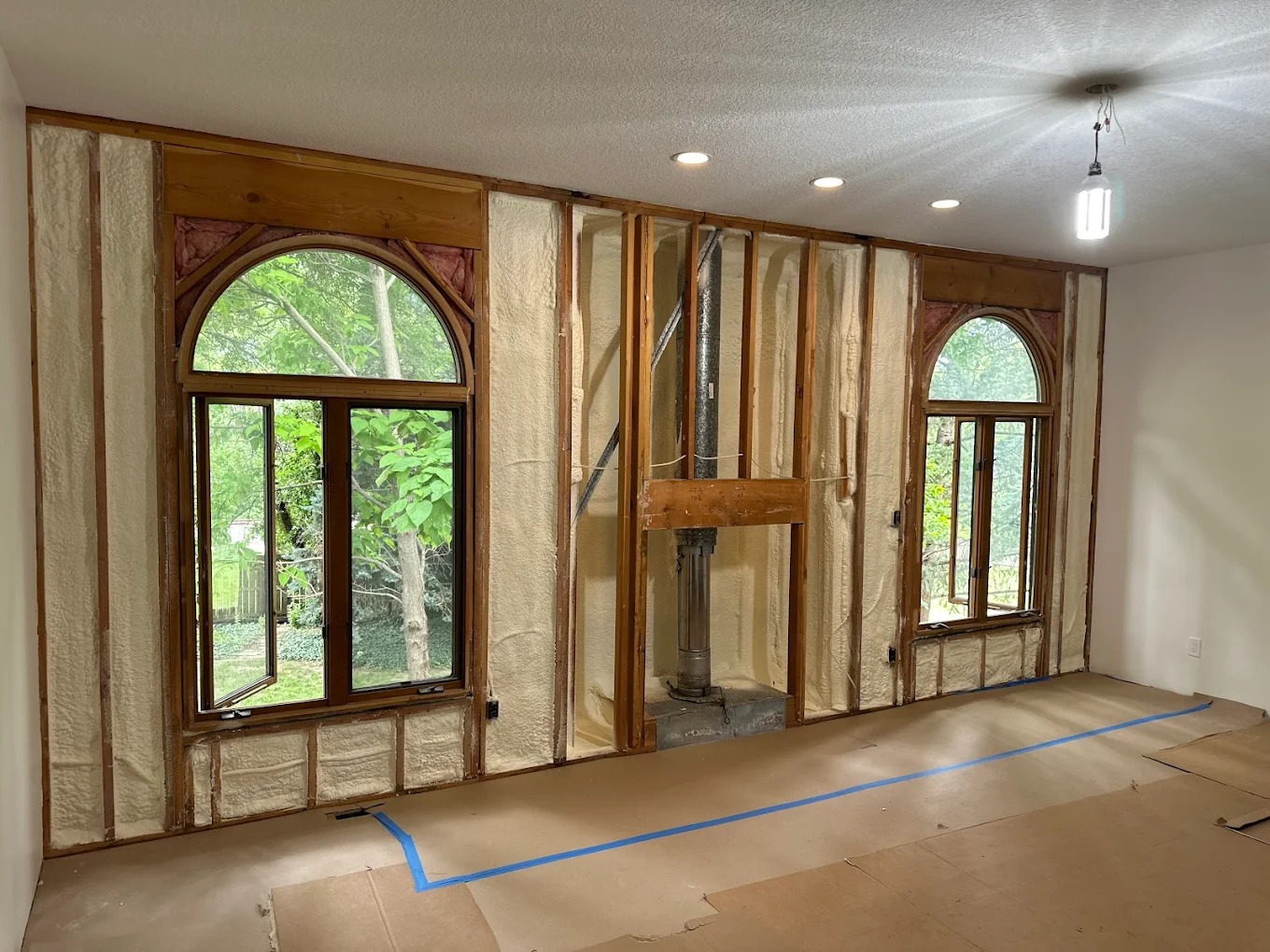
Hiring for commercial building insulation in Iowa is less about picking a material and more about preventing expensive surprises: moisture issues, failed inspections, missed schedule windows, and warranties that don’t cover the real risks. This guide shows what to ask, what to verify, and how to compare proposals so you can hire with confidence.
What Problem Are You Aiming To Solve In Your Facility?
Start with a quick decision rule: If your biggest pain is high bills, focus on the envelope (roof/walls/air leaks). If your biggest pain is frozen lines or sweating ducts, focus on mechanical insulation.
Common mistake: owners ask for “more insulation” without naming the problem. That leads to vague bids and vague results.
Quick checklist (10 minutes on-site):
- Walk the perimeter on a cold or windy day. Feel for drafts at dock doors and wall penetrations.
- Look for ceiling stains or rusted fasteners in roof decks (possible moisture path).
- Check for condensation on exposed cold piping or supply ductwork in warm months.
- If your facility has a lot of door cycles, note where the temperature swings are worst.
Local factor: big winter/summer swings and wind can turn small air leaks into big comfort complaints. If air is moving, insulation alone won’t fix it.
What To Expect From A Commercial Insulation Contractor’s Scope
Commercial insulation isn’t one category. A commercial insulation contractor in Iowa might be great at one scope and average at another. Here are the main buckets to clarify before you request bids:
- Roof/roof deck insulation (including foam systems and roof coatings where appropriate)
- Wall insulation (interior, exterior continuous insulation, or cavity fill, depending on construction)
- Metal building insulation (condensation control matters as much as R-value)
- Mechanical insulation (piping, ductwork, boilers, vessels—often the quickest ROI in process spaces)
- Fireproofing/fire protection coatings (sometimes a separate trade, sometimes paired with insulation)
Decision rule: If your building has exposed ductwork, chilled water lines, or process piping, get a mechanical-insulation scope in writing. Otherwise, your “insulation bid” may only cover walls/roof and skip the systems that bleed energy.
Common Mistakes That Cost Commercial Owners The Most
These are the repeat mistakes that show up after the contractor is gone.
1) Skipping moisture thinking.
A tighter building can be a better building, but only if moisture has a planned path out; if the proposal doesn’t mention existing roof leaks, vapor drive, or condensation risks, pause.
2) Comparing bids that aren’t for the same job.
One bidder includes prep, penetrations, and protection of equipment. Another bidder doesn’t. The cheaper number wins, and you pay later.
3) Ignoring fire and code documentation.
Commercial work commonly ties into energy-code requirements such as IECC or ASHRAE 90.1, depending on the project and compliance path. If your contractor can’t talk about how their scope supports code compliance, you’re taking on risk.
4) No verification plan.
If nobody measures thickness, density (where relevant), and coverage, you are buying a promise.
What Should Be Inside A Real Commercial Insulation Proposal?
If you want apples-to-apples bids, require bidders to answer the same scope questions. Use this simple table as your bid template.
| Proposal item you should see | Why it matters | What to ask for (proof) |
| Defined assembly + areas included/excluded | Stops scope gaps | Marked-up plan or roof map; sq. ft. by area |
| Target performance (R-value/thickness/coverage) | Sets an installation standard | Product data + minimum thickness everywhere |
| Prep work and substrate condition | Prevents adhesion and moisture failures | Notes on repairs, cleaning, and penetrations |
| Fire-protection approach where foam is used | Avoids failed inspections | Listed thermal/ignition barrier plan + product approvals |
| QA checks | Prevents “looks fine” installs | Hold points: depth checks, photos, sign-off |
| Schedule + access plan | Protects operations | Work hours, shutdown needs, and areas restricted |
| Warranty terms + exclusions | Prevents surprise non-coverage | Written warranty + exclusions list |
How Do You Vet A Contractor Step-By-Step?
Use this workflow. It keeps the process simple and cuts out weak bidders early.
1. Define the outcome in one sentence.
Example: “Reduce roof heat gain and stop condensation above the production line.” If you can’t say it, you can’t buy it.
2. Request a site walk with photos.
Decision rule: If they won’t walk the site, don’t hire them. Commercial scopes hide surprises.
3. Force a written scope using the table above.
No table answers = no bid review.
4. Ask for product submittals up front.
You want data sheets and application limits before install day, not after.
5. Require a verification plan.
Ask how they will document thickness/coverage and what they do if an area is missed.
6. Confirm closeout deliverables.
Photos, material lot info, warranty docs, and a final scope sign-off protect you later.
What Credentials And Safety Practices Should You Verify?
A common mistake is treating credentials as a “nice to have.” On commercial sites, it’s a risk filter.
- If spray foam is part of the scope, ask whether installers hold an industry certification such as SPFA’s Professional Certification Program (PCP). SPFA explains that PCP certifications validate knowledge, skills, and abilities through testing and requirements.
- Ask for a written safety plan that fits your site (roof access, fall protection, confined spaces, if applicable).
- Ask who supervises the crew and who signs the QA checks.
How To Safeguard Schedule, Tenants, And Operations During Installation
Commercial insulation installation fails when the work disrupts the business.
Quick checklist to protect operations:
- Confirm work hours and noise/odor controls.
- Identify shutdown windows (dock doors, production lines, refrigeration, server rooms).
- Require protection of inventory and sensitive equipment.
- Set “no-go” zones and traffic paths for crews.
If foam is used inside occupied areas, a written plan for isolation and re-entry timing based on the product and application method is required. Keep it procedural and documented.
The Bottom Line
If you can do three things, you’re ready to hire commercial building insulation contractors in Iowa with far less risk: define the outcome, force a written scope that matches every bidder, and require verification and closeout documents. If any bidder won’t do those basics, the “deal” is rarely worth the cleanup.
For a bid that’s built around documentation, verification, and a clear scope, contact Precision Insulation & Coatings.
FAQs
How many bids should I get?
Three is usually enough if you force the same scope template. If bids vary wildly, it’s a scope problem, not a pricing mystery.
Is spray foam always the best option?
No, spray foam can be a strong tool in the right assembly, but roofs, walls, and mechanical systems all have different constraints. Match the method to the problem you’re solving.
Do I need to worry about energy codes on a retrofit?
Often, yes, especially when you alter parts of the envelope. Commercial projects commonly use IECC or ASHRAE 90.1 paths, depending on the job and jurisdiction.
What’s the biggest red flag in a proposal?
A proposal that lists a material but doesn’t define thickness/coverage, prep, and verification. You can’t manage what isn’t written.
Do I need a thermal barrier over foam plastic insulation?
Foam plastics often have thermal barrier requirements in code language, and alternative approaches may rely on specific testing or approvals. Ask your contractor to provide the exact compliance path and documentation for your assembly.
How long does a typical project take?
Many projects are driven by access, prep, and cure/return-to-service timing, not just square footage. Get a schedule that shows hold points for inspection and QA.
What should closeout documentation include?
At minimum: photos, product data/submittals, warranty paperwork, and a signed scope completion statement. If you ever sell the building, this packet matters.
Can Commercial Building Insulation in Iowa reduce condensation problems?
Yes, when the scope targets the real cause (surface temperature, air leakage, vapor drive, or cold mechanical lines). If the proposal doesn’t mention condensation control, ask for that plan in writing.