Have you noticed your heating bills creeping up every winter, even though nothing in your home has changed? That’s a frustrating feeling, and it’s one we hear from Des Moines homeowners constantly.
Here’s the thing: poor insulation accounts for 25 to 30% of residential heat loss. Your home might be leaking warmth through the attic, walls, and crawl spaces right now.
That’s exactly why we put this guide together. It breaks down the real spray foam insulation costs in Des Moines for 2026, so you know what to expect before you call a contractor.
We’ll cover foam types, project sizes, tax credits, and how to spot a great contractor. Everything you need is right here.
Key Takeaways
- Open-cell spray foam costs $0.40 to $0.60 per board foot, while closed-cell runs $1.00 to $1.50 per board foot in Des Moines.
- Residential attic insulation ranges from $1,800 to $5,400, depending on foam type and the coverage area of 1,200 to 1,800 square feet.
- Poor insulation accounts for 25 to 30% of residential heat loss, making spray foam a smart upgrade for Iowa homes.
- Spray foam insulation lasts 30 to 80 years, and most homeowners recover their investment through energy savings within five to seven years.
- Project size, labor costs, material removal, and add-on services like vapor barriers all shape your total investment.
Factors Influencing Spray Foam Insulation Costs
Several factors work together to shape what you’ll pay for spray foam insulation in Des Moines. Your final bill depends on the choices you make, the scope of your project, and the labor involved in getting the job done right.
Type of Spray Foam: Open Cell vs. Closed Cell
Picking the right spray foam type makes all the difference between a good insulation job and a great one. Open-cell and closed-cell spray foam serve very different purposes for homeowners, property owners, builders, and contractors. Having installed thousands of applications across Iowa, we know exactly when each one delivers the best results.
| Feature | Open-Cell Spray Foam | Closed-Cell Spray Foam |
| R-Value Per Inch | 3.5 to 3.6 R-value | 6.0 to 7.0 R-value |
| Moisture Resistance | Absorbs moisture; allows vapor transmission | Superior moisture barrier; resists water intrusion |
| Cost Range (Per Board Foot) | $0.40 to $0.60 | $1.00 to $1.50 |
| Weight | Lightweight; approximately 0.5 lbs per cubic foot | Denser; approximately 2.0 lbs per cubic foot |
| Sound Dampening | Excellent acoustic properties | Limited sound absorption |
| Air Sealing Capability | Good air sealing at the application point | Outstanding air sealing; creates a complete thermal envelope |
| Best Applications | Interior walls, attics, and soundproofing needs | Basements, crawl spaces, exterior walls, and moisture-prone areas |
| Installation Thickness | Requires 5.5 to 7 inches for an R-21 rating | Requires 3.5 to 4 inches for an R-21 rating |
| Structural Support | Provides minimal structural reinforcement | Adds significant structural rigidity to walls and roofs |
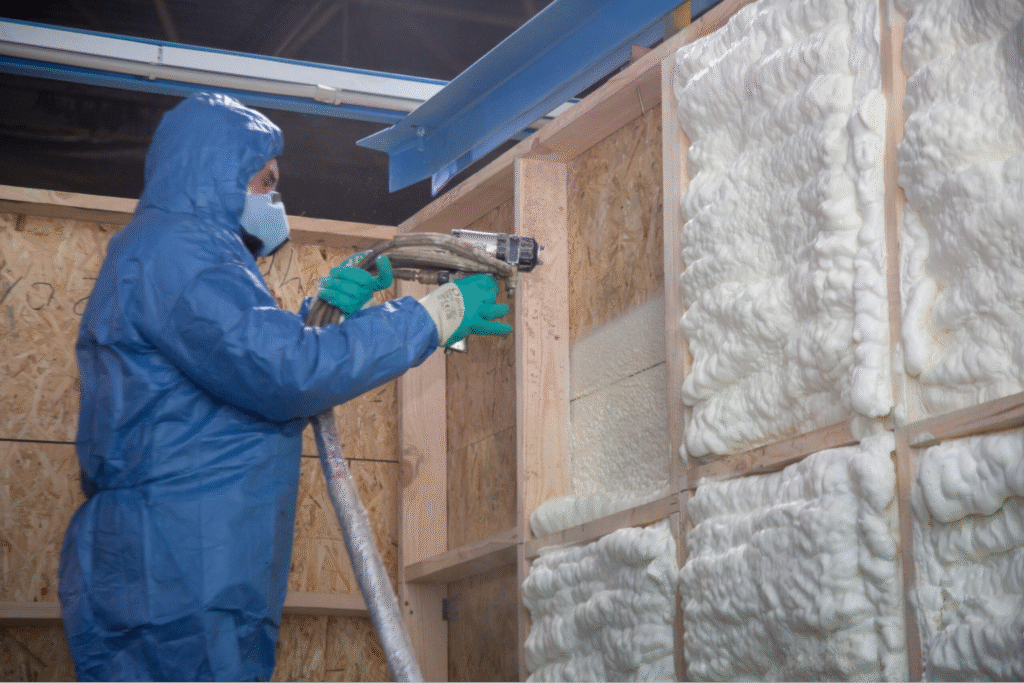
Open-cell spray foam works well for homeowners who want affordability and sound control. We apply it in attics and interior cavities where moisture isn’t a major concern. The lower material cost makes it a solid choice for budget-focused projects, and its soundproofing qualities make it ideal for home offices and media rooms.
Closed-cell spray foam is the premium option for demanding applications. We recommend it for basements, crawl spaces, and exterior walls where water intrusion poses real threats. Its higher R-value means thinner application depths still deliver strong insulation performance, which matters in space-constrained areas.
Size of the Area to Be Insulated
The square footage of your space directly shapes your spray foam insulation costs in Des Moines. Larger areas require more material and labor, which pushes your overall project expenses higher. We’ve seen residential spray foam insulation projects range from small attic upgrades to complete home encapsulation, and every one demands precise measurement.
Accurate measurement is critical for an accurate cost estimate. A 1,500 square foot attic costs significantly less than a 3,000 square foot basement retrofit. We measure every inch, account for obstacles, and calculate material needs based on your specific space dimensions.
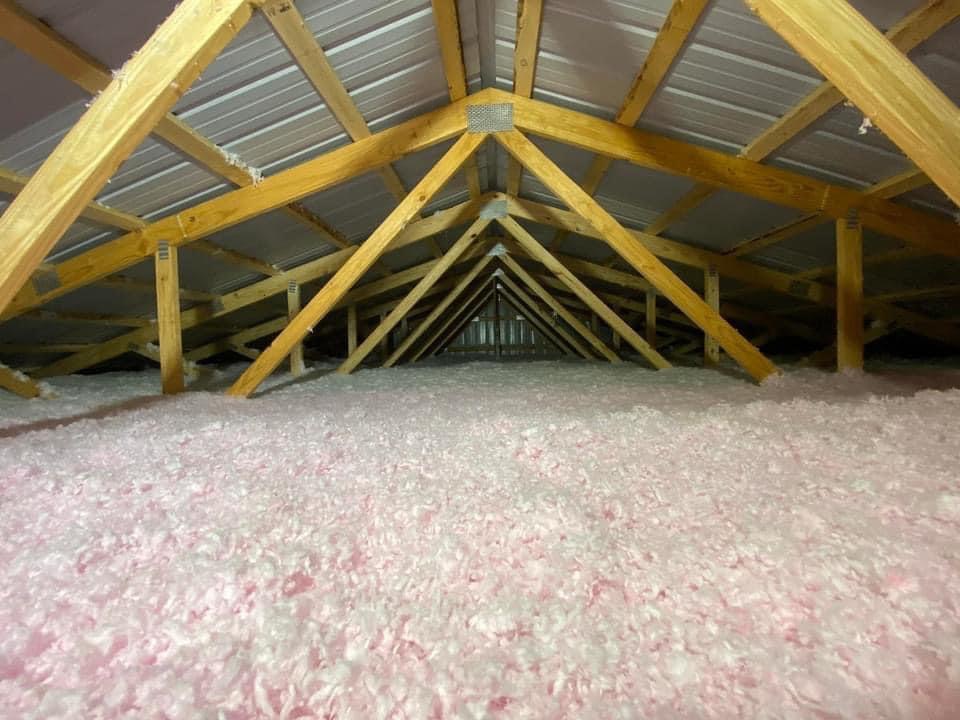
Attic insulation upgrades are heavily shaped by the size of the existing space. Your attic’s footprint, rafter spacing, and ventilation requirements all affect both commercial insulation in Des Moines pricing and the residential spray foam insulation Iowa approach we recommend.
Here’s something that surprises many homeowners: smaller spaces sometimes cost more per square foot than larger projects. Setup, equipment mobilization, and crew time stay relatively constant regardless of project size. A modest 800 square foot attic might need four to six inches of closed-cell foam, while a 2,500 square foot space demands more material and extended labor hours.
Expansive commercial spray foam insulation Iowa contracts spread those fixed costs across more square footage, which lowers your per-unit price. We measure twice and estimate once, so your attic insulation Des Moines project gets a fair, transparent quote based on real measurements.
Labor and Installation Costs
Labor and installation costs are real money movers in your insulation cost 2026 budget. At Precision Insulation & Coatings, we’ve learned that labor rates for spray foam insulation shift significantly based on project scope and scale. Local market conditions in Des Moines play a real role here, and they don’t follow a simple formula.
Accessibility matters tremendously. Crews work faster in open attics than in cramped crawl spaces or finished basements. The crew’s travel time and equipment setup don’t shrink just because your project is small, which is why we always provide on-site estimates to assess your specific labor and installation needs.
Surface preparation, existing insulation removal, and structural obstacles all add time to the job. We’ve completed jobs where removing old insulation doubled the labor hours required. Several factors stack onto your final labor bill:
- Air sealing work completed before foam application
- Vapor barrier installation
- Working around electrical systems or plumbing lines
- Managing roof pitch and wall configuration
- Protective coating applications after the foam is set
Our team mobilizes specialized equipment for every spray foam job, and that equipment cost factors into your estimate. Getting an on-site assessment is the only reliable way to pin down labor costs for your specific project.
Additional Materials or Services Required
Beyond labor, several materials and services can add to your total spray foam insulation investment in Des Moines. Knowing about these extras helps you budget accurately from the start. Before the foam goes on, you may need:
- Vapor barriers and protective sheeting, which typically cost between $0.50 and $1.50 per square foot
- Air sealing services to identify and close gaps before application
- Removal of old insulation materials, adding $1 to $3 per square foot to your project
- Mold remediation if moisture damage exists in your attic or walls
- Ventilation system modifications to ensure proper airflow, especially for closed-cell applications
- Permits and inspections required by Des Moines building codes typically range from $200 to $500 for residential projects
After the foam is applied, you may also consider:
- Drywall repair and finishing work to restore your interior surfaces
- Electrical outlet and fixture adjustments to prevent hazards near wiring
- Radiant barriers or reflective foil to reduce cooling costs during Iowa summers
- Ductwork sealing to improve HVAC performance alongside your new insulation
- Blown-in fiberglass insulation in areas where spray foam needs a complement
- Follow-up energy audits to measure the improvements and guide future upgrades
We offer on-site insulation estimates that account for all these materials and services, so you’ll know exactly what your project requires before work begins.
Average Spray Foam Insulation Costs in Des Moines, Iowa (2026)
Here are the real numbers homeowners and property owners in Des Moines pay for spray foam insulation in 2026, so you can plan your investment with confidence.
Residential Insulation Costs
Cost depends on several moving parts, so let’s break down what residential spray foam typically runs in our market. Having installed spray foam in hundreds of residential projects throughout Iowa, we see clear pricing patterns year after year.
| Project Type | Coverage Area (sq. ft.) | Foam Type | Average Cost Range | Cost Per Square Foot |
| Attic Insulation | 1,200 to 1,800 | Open Cell | $1,800 to $3,600 | $1.50 to $2.00 |
| Attic Insulation | 1,200 to 1,800 | Closed Cell | $3,600 to $5,400 | $3.00 to $3.50 |
| Basement Walls | 800 to 1,200 | Open Cell | $1,200 to $2,400 | $1.50 to $2.00 |
| Basement Walls | 800 to 1,200 | Closed Cell | $2,400 to $4,200 | $3.00 to $3.50 |
| Crawl Space | 600 to 1,000 | Open Cell | $900 to $2,000 | $1.50 to $2.00 |
| Crawl Space | 600 to 1,000 | Closed Cell | $1,800 to $3,500 | $3.00 to $3.50 |
| Rim Joist Sealing | 100 to 300 | Closed Cell | $300 to $1,050 | $3.00 to $3.50 |
Open-cell foam is lighter on your wallet, typically running $1.50 to $2.00 per square foot installed. Most homeowners choose open-cell for attic work because it handles Iowa’s temperature swings well and delivers solid air sealing performance.
Closed-cell foam costs more, but it earns that premium. At $3.00 to $3.50 per square foot installed, it delivers a higher R-value, superior moisture resistance, and added structural rigidity. All three of those qualities matter greatly in Iowa’s climate.
Commercial Insulation Costs
Commercial spray foam insulation costs operate on a different scale than residential projects. Commercial insulation in Des Moines demands careful planning, larger crews, and specialized equipment that shapes your total budget from the start.
| Cost Category | Details |
| Project Scale Impact | Larger commercial spaces typically cost less per square foot than smaller residential jobs. Economies of scale work in your favor when spray foam covers warehouses, office buildings, or retail spaces. We pass those savings directly to property owners managing substantial square footage. |
| Labor and Crew Requirements | Commercial installations require multiple technicians working simultaneously. Our crews coordinate timing, safety protocols, and quality checks across expansive areas. This coordinated approach ensures consistent application and proper curing throughout your property. |
| Equipment and Mobilization | Setting up commercial spray foam rigs involves specialized machinery and protective systems. We transport equipment to your site, establish safety perimeters, and configure ventilation systems. These mobilization costs factor into your total project investment. |
| Material Volume Pricing | Bulk orders of spray foam materials attract volume discounts. Purchasing 10,000 square feet carries a different price than purchasing 500 square feet. Material efficiency improves with larger applications, reducing waste and expense. |
| Open Cell vs. Closed Cell Selection | Open-cell spray foam costs less but provides a lower R-value per inch. Closed-cell spray foam commands premium pricing but delivers superior insulation performance. Your commercial building’s purpose and climate control needs drive this selection. |
| Site Preparation and Accessibility | Some commercial spaces require extensive preparation work. Removing old insulation, clearing obstructions, or managing occupied buildings adds labor hours. Difficult access points increase scope and project timelines. |
| Vapor Barriers and Additional Materials | Commercial installations often include protective coatings and fire-rated barriers. These supplementary materials protect your foam and meet building codes. Installation of these components requires skilled application and proper sequencing. |
| Inspection and Compliance | Commercial projects need building department approvals and inspections. We coordinate these processes and ensure all work meets Iowa building standards. Compliance verification adds time but protects your investment legally. |
| Seasonal Variations | Winter months can increase spray foam costs due to environmental controls. Maintaining proper temperatures for curing requires specialized heating equipment. Summer projects typically offer more favorable pricing conditions. |
| Long-Term Value Proposition | Commercial spray foam reduces energy consumption significantly. Lower heating and cooling costs accumulate over the years, offsetting installation expenses. We’ve seen property owners recover their investment through operational savings within five to seven years. |
Commercial insulation represents a substantial capital investment for your property. Getting an accurate quote means discussing your building dimensions, foam type preference, current insulation status, and accessibility challenges with our team. Each commercial project carries its own financial profile based on these variables. Our Des Moines-based professionals can review pricing specifics once we evaluate your actual space.
Benefits of Spray Foam Insulation
Energy Efficiency and Cost Savings
Spray foam insulation reduces heat loss in your home, which means your heating and cooling systems work less hard to maintain comfortable temperatures. Lower energy bills follow naturally when your home stays warmer in winter and cooler in summer.
The material creates an air-tight seal that fiberglass insulation simply cannot match. This barrier stops drafts from sneaking through walls, attics, and crawl spaces. The core reasons spray foam delivers those savings come down to a few key performance factors:
- It creates a continuous air barrier that fiberglass batts leave full of gaps
- It stays in place for decades without settling or compressing
- Closed-cell foam adds a moisture barrier that prevents heat loss through humid walls
- Attic coverage stops warm air from rising and escaping through the roof
Your furnace and air conditioner run fewer hours each year as a result, which keeps more money in your pocket over time. The investment in spray foam pays for itself through those consistent savings.
Durability and Longevity
Spray foam insulation itself lasts for decades, giving homeowners and property owners real, lasting value from their investment. Properly installed spray foam maintains its R-value performance for 30 to 80 years, depending on the type selected. Both closed-cell and open-cell options deliver impressive longevity, though closed-cell typically outlasts open-cell by several years because of its denser structure.
What makes spray foam especially valuable for Des Moines properties is how it handles our region’s moisture and temperature swings. Unlike fiberglass insulation, spray foam doesn’t settle, compress, or degrade over time. That stability is a big deal in a climate like Iowa’s. Here’s a quick look at what gives spray foam its staying power:
- Dense cell structure resists moisture absorption and mold growth.
- No fiber breakdown means the R-value holds steady for decades.
- Closed-cell foam adds structural rigidity to framing and roof systems.
- Airtight bonding prevents the air gaps that let fiberglass deteriorate.
Property owners appreciate knowing their investment won’t need replacement in five or ten years. Spray foam protects homes and buildings for generations. Builders and contractors who work with new construction or retrofits also benefit from spray foam’s reliability, since consistent performance reduces callbacks and warranty concerns over the long haul.
Tips for Choosing a Spray Foam Insulation Contractor in Des Moines
Choosing the right spray foam insulation contractors in Iowa makes a real difference in your project’s outcome and your home’s long-term energy performance. Here’s what to look for when evaluating your options.
- Verify that the contractor holds proper licensing, insurance, and active certifications. This confirms continuous training in chemical safety and application protocols, protecting both you and the people doing the work.
- Ask for references from recent residential and commercial projects completed in Des Moines so you can speak directly with past customers about their experience and results.
- Request free on-site insulation estimates from multiple contractors so you can compare pricing, materials, and recommendations for your specific space.
- Confirm the contractor understands building science principles and Iowa’s climate challenges, which directly shapes how well your insulation performs through every season.
- Ask about their experience with attic insulation Des Moines projects, insulation retrofits for existing homes, and new construction work, since these require different approaches and skill sets.
- Confirm the contractor provides detailed written estimates that break down labor costs, material costs, and any additional services required, so there are no surprises at the end of the job.
Conclusion
Spray foam insulation costs in Des Moines for 2026 depend on your project needs, property size, and the foam type you choose. Open-cell and closed-cell options offer different price points and performance levels, and knowing that difference puts you in a stronger position when comparing quotes.
Your best move is to contact local spray foam insulation contractors in Iowa for free on-site estimates so you can compare pricing and services. At Precision Insulation & Coatings, we’re ready to assess your space and give you honest guidance based on real-world experience in Iowa’s climate.
Get in touch with us today, and let’s get your property properly insulated.
FAQs
1. What is the average cost of spray foam insulation in Des Moines, Iowa, in 2026?
We typically see homeowners in Des Moines invest between $1,500 and $4,500 for spray foam insulation, depending on the area size. Open-cell foam costs less upfront, while closed-cell foam runs higher but delivers superior air sealing and moisture protection.
2. Is spray foam insulation worth the cost in Des Moines?
Absolutely. We’ve seen clients reduce their heating and cooling costs by 30 to 50 percent after installation, and spray foam lasts the lifetime of your home without settling or losing effectiveness.
3. What factors affect spray foam insulation costs in Des Moines?
The biggest factor we see is the square footage of your project, followed by whether you choose open-cell or closed-cell foam. Labor costs in the Des Moines area and the complexity of accessing your attic or crawl space also play a role.
4. How much does it cost per square foot for spray foam insulation in Des Moines in 2026?
We price open-cell spray foam at around $0.44 to $0.65 per board foot, and closed-cell foam typically runs $1.00 to $2.00 per board foot in Des Moines. We always recommend getting at least three quotes from licensed local contractors to compare your options.