Picture a wall before it’s a wall. Just studs, wiring, plumbing lines, and gaps you’ll never see again. That’s the moment that decides whether a house performs or leaks energy for decades. After you install drywall, you can no longer see the small openings and spaces behind the wall. But they don’t disappear from the energy bill.
A spray foam insulation company in Iowa understands this timing problem better than anyone standing on a job site months later. Framing creates dozens of small openings around outlets, headers, and joints. Those areas are a tiny highway for outdoor air.
So, it is necessary to seal them with proper material like spray foam. This blog post has been created to provide knowledge about how that sealing actually happens, why timing matters, and where things commonly go sideways.
Why Wall Cavities Leak More Than People Think
Wall cavities may look simple from the outside. But from inside, they’re full of openings and obstacles. These openings become a pathway once the wall closes up.
Consider what’s typically working against a standard Iowa wall assembly:
- Top and bottom plate gaps where framing meets subfloor and ceiling
- Electrical box penetrations that were never meant to be airtight
- Plumbing chases running vertically through multiple floors
- Window and door rough openings with inconsistent shimming
- Rim joist areas where foundation meets framed wall
None of these gaps are dramatic on their own. Stacked together across a 2,000-square-foot home, they add up fast. Traditional batt insulation was never designed to solve this problem. It only insulates the open cavity and is ineffective around the irregular gaps around it.
Choosing the right material is more important in Iowa than in other areas. Because winters swing well below freezing and summers push into humid, sticky heat. Air leaking through unsealed gaps carries both cold drafts and summer moisture straight into living spaces. Homeowners often blame their furnace or their windows first, but the real culprit is disguised in the form of insulation.
Many older Iowa homes still have fiberglass insulation installed decades ago. Back then, builders focused on insulation without paying much attention to air sealing. The fiberglass may still work, but it doesn’t seal the gaps around it. Air can move through those cracks, holes, and openings. That can leave rooms uncomfortable and make the heating or cooling system work harder.
A licensed spray foam insulation company can inspect the walls before installing the drywall. Their crews know where hidden gaps and air leaks commonly occur. They may spot problems that a general contractor’s routine inspection can miss. Finding those weak points early makes them much easier to fix.
How Spray Foam Covers Every Opening
In this entire process, timing is the key. If you conduct a pre-drywall spray foam project now, you will not have to do retrofit work years later.
Most pre-drywall spray foam projects follow the same basic sequence:
- Walk-through inspection of framing, wiring, and plumbing rough-ins
- Masking off surfaces that shouldn’t receive overspray
- Application of closed-cell or open-cell foam into each cavity
- Foam expansion, filling every gap
- Trimming excess foam flush with the framing for a clean drywall surface
The chemistry does the real work here. Two liquid components combine at the spray tip and react instantly. Within seconds, the mixture expands into a much bigger volume. This expansion results in sealing of gaps rather than filling them. Foam fills every penetration and wraps around wiring instead of leaving a shadow gap behind it.
An experienced closed-cell foam contractor Iowa crews rely on will also watch cavity depth carefully. Overfilling wastes material and creates uneven surfaces, and underfilling leaves thermal gaps.
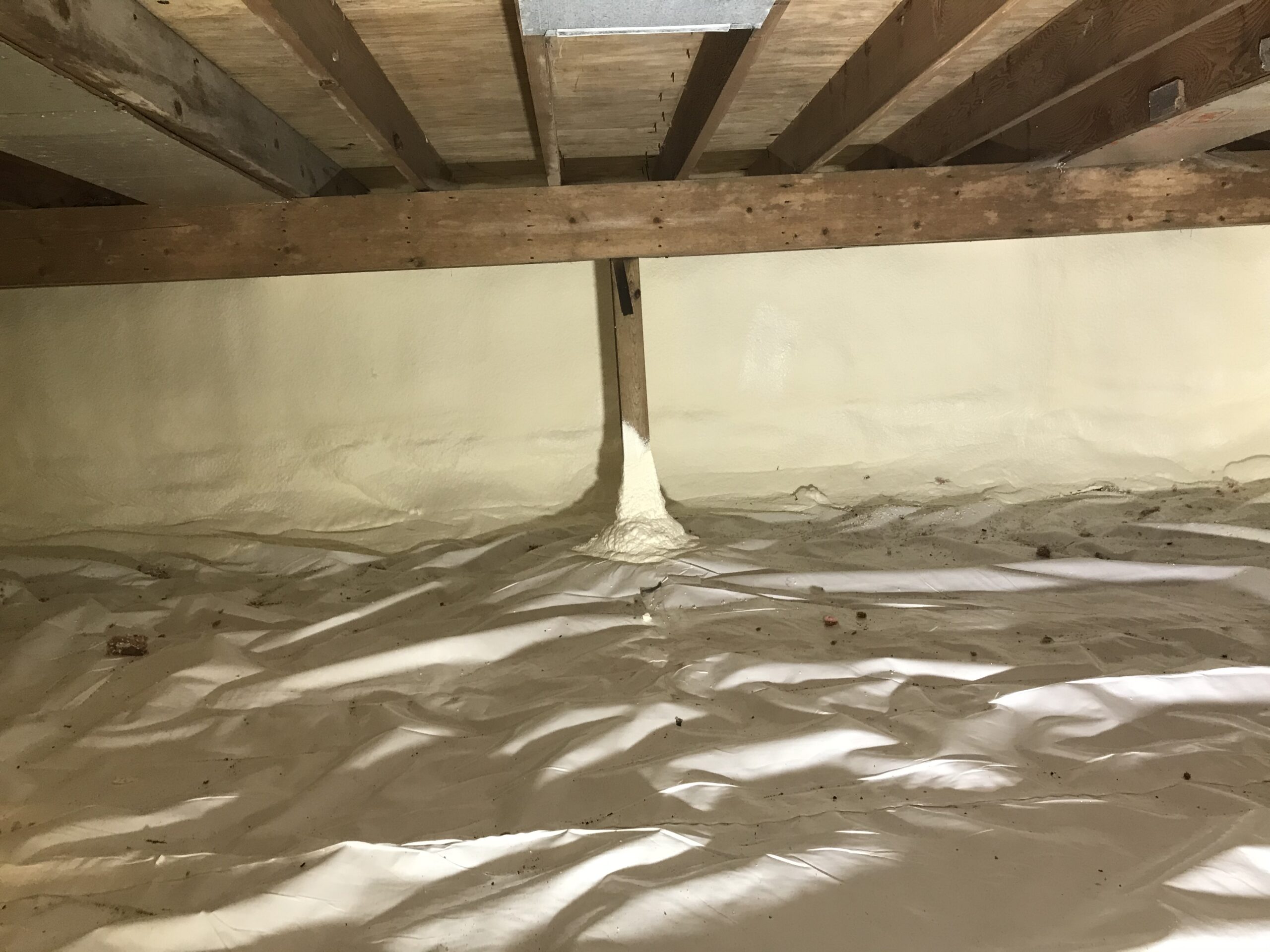
You have to pay particular attention to rim joists during this stage. This narrow band where foundation meets framed wall is notoriously drafty. Foam bonds directly to concrete and wood alike, closing every seam.
Second applications of pre-drywall spray foam in Iowa crews sometimes happen around bump-outs, dormers, and other framing quirks. Standard cavities are easy. Odd geometry is where technique actually gets tested.
Commercial projects follow similar logic at a larger scale. Commercial building insulation work often involves metal studs, tighter code requirements, and larger continuous runs where consistency is very important.
Where Projects Quietly Go Wrong
An interesting fact is that good insulation can also fail if the installation process is not right. Poor ventilation planning is one of the easiest mistakes to avoid. A tightly sealed home still needs a proper supply of fresh air. Rushing the curing process can cause problems. Spray foam needs enough time to set before drywall crews cover the walls.
The following are the mistakes that appear on poorly handled projects:
- Mixing foam types incorrectly for a given wall assembly
- Spraying over damp or contaminated framing without addressing the source
- Leaving mechanical penetrations unsealed after the main application
- Assuming existing insulation in Des Moines, IA homes is fine to spray over
- Treating attic and wall cavities as identical problems needing identical solutions
That last point trips up a lot of well-meaning renovators. An attic and a wall cavity behave completely differently under thermal load.
Older homes present their own complications entirely. Decades-old fiberglass insulation attics still in place often need removal before new material goes in. Compressed, moisture-damaged batts don’t just underperform; they can trap moisture.
That’s where an insulation removal service provider earns its reputation. Pulling out failed material properly, checking for hidden damage, and prepping the cavity correctly sets up everything that follows.
Skipping that removal step to save time almost always costs more later. New foam applied over compromised material doesn’t fix the root cause of the problem. For older Iowa homes, comparing several insulation removal service quotes can quickly reveal differences in pricing and service.
This problem is also common in commercial buildings, but in a different way. A crew that skips proper prep on a metal-stud shell ends up fixing air leaks for years. Choosing a closed-cell foam contractor property managers already trust helps avoid that entire headache. Commercial building insulation projects rarely get a second chance if walls close up.
Getting the Sequence Right From Day One
High-quality building construction requires planning insulation from the very beginning, rather than treating it as an afterthought. Coordinating with an insulation contractor builders already trust, early in the framing schedule, avoids last-minute compromises. Site visits before drywall let crews catch problems while walls are still open and fixable.
A reputable spray foam insulation company will conduct an on-site inspection. They’ll figure out missing fire-blocking, unsealed penetrations, and cavity depths that need adjusting. This upfront diligence will contribute to the formation of a wall that performs well for the next thirty years.
Whether the project is a single-family remodel, a new build, or a commercial shell, the principle remains the same. Seal it right before it disappears behind drywall, because nobody’s opening that wall again very soon. A spray foam insulation company families call for pre-drywall work today is the same crew they’ll want on speed dial for anything that comes up later.
Ready to Seal It Right the First Time?
Precision Insulation & Coatings works alongside builders and homeowners across Iowa to get pre-drywall sealing done correctly, on schedule, and built to last. Reach out to us before drywall gets installed, and let us handle gaps that are of utmost importance.
Frequently Asked Questions
Q1. Does spray foam really seal better than fiberglass behind drywall?
Yes. Foam expands into irregular gaps, wiring penetrations, and rim joist seams that batts simply bridge over. Fiberglass insulates open cavities well but leaves small air pathways that foam closes completely once it cures.
Q2. What’s the best time to schedule spray foam before drywall goes up?
Right after rough electrical and plumbing inspections pass, and before drywall crews arrive. This window gives applicators full access to every stud bay, wire run, and awkward corner without cutting into finished surfaces later.
Q3. Can old fiberglass be sprayed over instead of removed first?
Generally, no. Compressed or moisture-damaged batts trap dampness against framing and reduce foam adhesion. Removing old material first lets crews inspect for hidden damage and prep a clean, dry cavity before applying anything new.
Q4. Is closed-cell foam necessary for every wall, or just some areas?
Not every wall needs it. Closed-cell foam earns its cost in rim joists, crawl spaces, and moisture-prone areas. Interior walls with lower moisture exposure often perform fine with open-cell foam at a lower price point.
Q5. Does commercial insulation work differently than residential spray foam?
The chemistry stays similar, but scale and code requirements shift the approach. Metal stud cavities, larger continuous runs, and stricter fire-rating rules mean commercial projects usually require more detailed planning before spraying begins.