If you’ve ever walked into a pole barn on a cold February morning near Ames or Cedar Rapids and found water dripping from the underside of the metal roof, you’ve met Iowa’s condensation problem up close. Cold steel meets warm, humid indoor air and—like a glass of iced tea in July—you get “sweating” panels, rusty fasteners, and slick floors. The right spray-foam plan stops the cycle by warming the metal, sealing the air leaks that feed moisture to the surface, and setting smart vapor control for our four-season climate. This guide explains how Precision Insulation & Coatings (Since 2010) solves condensation in metal buildings—and where spray foam also shines in Iowa homes and commercial interiors.
What causes pole-barn and metal-building condensation in Iowa?
Condensation is less about “moisture out of nowhere” and more about physics. In winter, warm air inside your shop or farm building rises and seeks the path of least resistance. If there are gaps at eaves, girts, overhead-door frames, or roof penetrations, that air (and the water vapor it carries) reaches the back of a cold steel panel. The moment the panel is below the dew point of that air, moisture condenses—and sometimes rains back down. Building-science research shows that most cold-weather condensation is driven by air leakage, not just vapor diffusion through materials. That’s why controlling air movement is step one. Iowa’s location in IECC Climate Zones 5 and 6—long, cold winters with real freeze–thaw—makes this particularly important.
Add our windy shoulder seasons and summer humidity, and you have a building that sees big temperature swings across the year. In Davenport, Waterloo, or Sioux City, a poorly sealed metal shell will swing from soaking-wet to bone-dry and back again, stressing fasteners, finishes, and anything you store inside. The fix is a system, not a single product.
Closed-cell vs. open-cell: picking the right foam for steel
Spray polyurethane foam comes in two primary families. Closed-cell foam provides three control layers at once—air, vapor, and thermal—at relatively modest thicknesses. When you spray it directly to the back of steel panels or the underside of a metal roof deck, you warm that surface, shut down air transport of moisture, and significantly slow vapor diffusion. In simple terms: you remove the cold condensing surface from the interior environment. Open-cell foam is an excellent air sealer with sound-deadening benefits, but it remains “vapor open,” which can be risky in colder climates unless you add a suitable interior vapor control layer and design the assembly thoughtfully. Building Science Corporation and the Building America Solution Center both note closed-cell’s suitability across all climate zones for roof decks and metal substrates, while open-cell options in colder zones require careful detailing and sometimes additional vapor control.
What about vapor retarders? Codes define “classes” by permeance: Class I (≤0.1 perm), Class II (>0.1 and ≤1 perm), and Class III (>1 and ≤10 perms). Closed-cell foam, at sufficient thickness, typically performs as a Class II vapor retarder; open-cell is usually Class III and may need an added vapor retarder on the warm side in cold climates. The right choice depends on your assembly and local permitting—what works in West Des Moines might not be identical to a barn outside Decorah—so we design and document each project accordingly.
Homeowners and facility managers also ask about odors and safety. During installation, professional crews wear PPE and manage ventilation because isocyanates and aerosols can irritate eyes, skin, and lungs. Other trades and occupants should stay out until the area is ventilated and the foam cures. That’s standard practice—and we’ll review it with you before work begins.
The building-science game plan for metal buildings
1) Make the surface warm.
If the metal skin is cold, it will condense moisture when humid indoor air reaches it. Spraying closed-cell foam directly to the steel warms the interior surface above dew point during normal operation and glues the assembly, reducing panel flutter. In many metal buildings, this single move—continuous closed-cell on the roof deck and upper wall bays—eliminates the “indoor rain” that ruins workdays.
2) Control air first.
Air is a freight train for moisture. We address big leakage sites: panel laps, corner posts, penetrations, the meeting rail of overhead doors, and transitions at eaves and ridge. At the interior, we pay special attention to high leaks because of stack effect: holes near the top of the building leak far more in winter than equal-sized holes low down. Sealing the “ceiling plane” (or the roofline in a conditioned-attic approach) often produces outsized gains in comfort and moisture control.
3) Get vapor control right.
Closed-cell spray foam at adequate thickness usually provides Class II vapor retardance, a good fit for Iowa’s climate. In hybrid assemblies (say, some foam plus supplemental batts), we may specify a smart interior coating or membrane to keep winter vapor in check while allowing some drying in shoulder seasons. Details vary by assembly and jurisdiction; your local permit office has the final say.
4) Right-size R-value for Iowa.
There isn’t a universal number—R-value targets depend on building use, the rest of the assembly, and local requirements. For context, ENERGY STAR and U.S. DOE publish climate-based recommendations that help set expectations; we use these as a starting point, then tailor to your building and budget.
Mini case study (hypothetical): Ames farm shop with winter “rain”
An Ames-area owner called about a 40×60 pole barn used as a repair shop. On cold mornings, the roof literally dripped onto tools and workbenches. Heat came from a propane tube heater; the building had vinyl-faced fiberglass at the roof, with gaps at laps and around the overhead door.
Scope. Our team removed loose, failing insulation at the roof and prepped the steel. We sealed ridge and eave penetrations, then applied 2–3 inches of closed-cell spray foam to the roof deck and upper wall bays, paying careful attention to transitions and framing penetrations. We gasketed the overhead door, tuned infiltration points, and set a simple ventilation strategy to manage indoor humidity during heavy-use days.
Results. The space went quiet and dry. Surfaces stopped weeping; the tube heater cycled less often; and the owner could schedule finish carpentry without tarps over every bench. That’s the power of warming the condensing surface, controlling air movement, and giving water vapor fewer places to crash. (Every building is different; design and results vary.)
Beyond pole barns: where spray foam shines in Iowa homes
Attics and rooflines.
In many 1950s–2000s ranch and two-story homes across Des Moines, Ankeny, and Cedar Falls, the attic is the biggest comfort and energy opportunity. A “conditioned attic” approach brings insulation and air sealing to the roof deck—great when ducts or air handlers live upstairs—reducing losses and keeping roof sheathing warmer in winter. Whether open-cell or closed-cell is used, an unvented roofline needs the right vapor strategy for Iowa; the Building America Solution Center outlines the high-level conditions for unvented assemblies (local permitting applies).
Basements, crawlspaces, and rim joists.
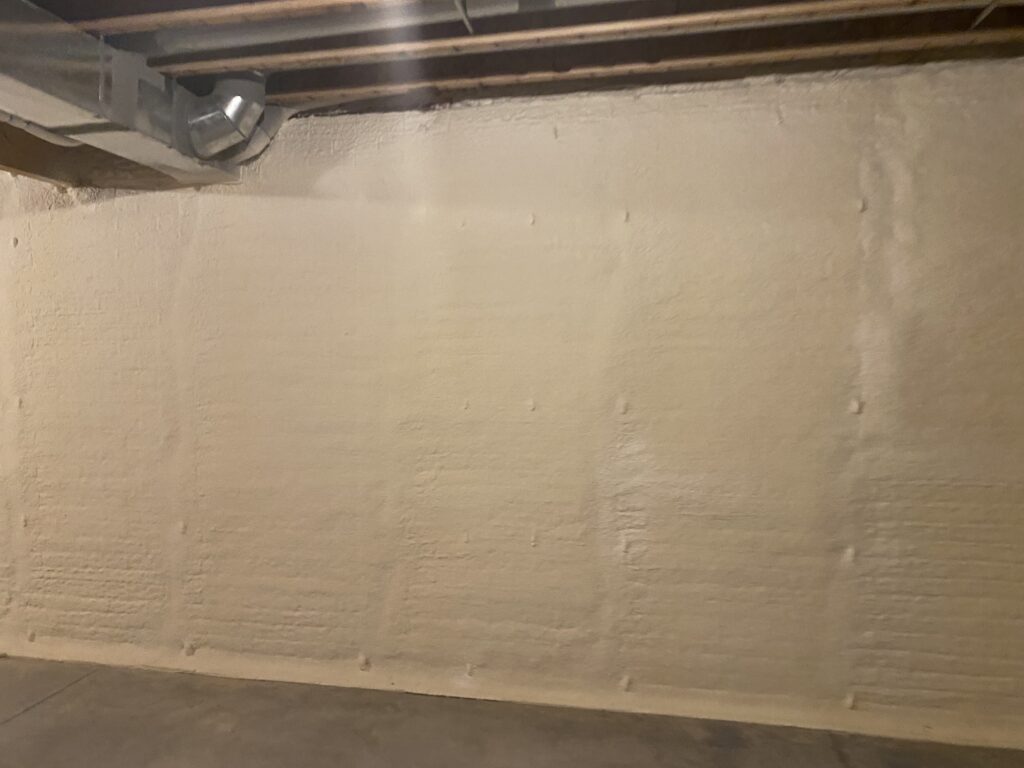
Cold floors and musty odors often trace back to rim-joist leakage and uninsulated or damp crawlspaces. Air-sealing and insulating these areas with spray foam reduces drafts and keeps the band/rim above dew point. DOE and ENERGY STAR guidance emphasize addressing air leaks as part of any insulation upgrade. We also keep clearances and fire-safety details in mind around flues, can lights, and mechanicals.
Walls and remodels.
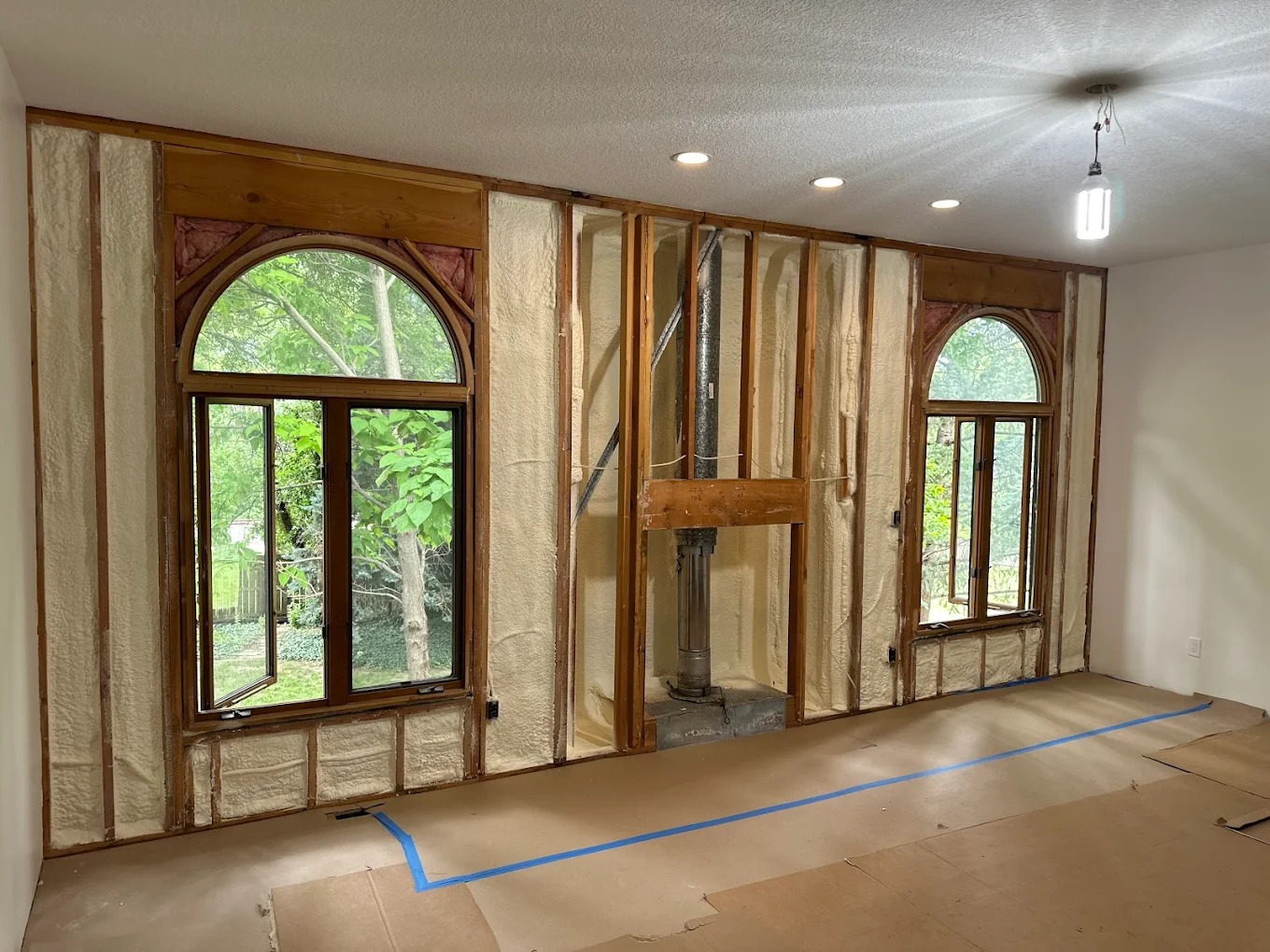
During renovations in West Des Moines or Iowa City, spray foam creates a continuous air barrier in tricky geometries—behind tubs on exterior walls, around top plates, or in cathedral ceilings. Hybrid assemblies (closed-cell against the sheathing, fluffy insulation inward) are often a cost-effective path to higher R-values and good condensation control. Again, vapor control and permitting vary; we design for the specific assembly and municipality.
Safety, schedule, and what to expect during installation
Professional spray-foam work is a controlled process. During application, our crew uses PPE and manages airflow because isocyanate-containing aerosols can irritate the respiratory system and skin. We keep other trades and occupants out of the work area and ventilate until aerosols have cleared and foam has cured, then clean and re-open the space. If you’re planning a commercial tenant build-out in downtown Des Moines or a farm-shop upgrade outside Dubuque, we’ll sequence work to minimize disruption and keep the site safe.
Rebates and incentives in Iowa (high-level)
Many Iowa customers ask about rebates. MidAmerican Energy and Alliant Energy both offer evolving programs for efficiency improvements. Availability, eligibility, and amounts change—sometimes annually—so we point you to their official pages and help you document the job. Precision Insulation & Coatings provides rebate guidance as a courtesy; we don’t provide legal/tax advice and we don’t promise specific dollar amounts.
Ready for a quieter, drier building?
If you’re converting a pole barn near Council Bluffs, finishing a farm shop in Waterloo, or tackling a roofline upgrade in Bettendorf, our team brings building-science rigor with a neighborly touch. Book a free on-site spray-foam assessment and estimate—we’ll bring thermal imaging when appropriate, outline a vapor-control plan, and give you a clear schedule. Precision Insulation & Coatings has served Iowa since 2010; we’re ready to help you end condensation and take back comfort statewide.
FAQ
Will open-cell foam work on a metal roof in Iowa?
Open-cell is a strong air sealer but remains vapor-open; in cold climates it needs additional interior vapor control and careful assembly design. Closed-cell generally simplifies condensation control on steel because it’s an air, thermal, and low-perm layer in one. Always verify details with your local permitting office.
Do I need to ventilate the attic if I insulate the roofline with foam?
If you convert to a conditioned (unvented) attic, the ventilation strategy changes—venting at the roof deck is typically removed, and moisture control is handled by the assembly and the home’s mechanical ventilation. Requirements vary; see high-level guidance and consult local code officials.
What about odors or VOCs during installation?
During spraying and trimming, there can be odors and airborne chemicals; we isolate the work area, use PPE, and ventilate. Once the foam cures and the area is aired out, work proceeds. We’ll review re-entry timing based on site conditions.
How do I know the right R-value for my building?
We start with DOE/ENERGY STAR climate guidance, then tailor to your use case (shop vs. storage vs. office) and assembly. There’s no one-size-fits-all answer—especially for metal buildings.
Are there Iowa rebates for insulation?
Programs change. Check MidAmerican Energy and Alliant Energy for current offerings; we’ll help with documentation.