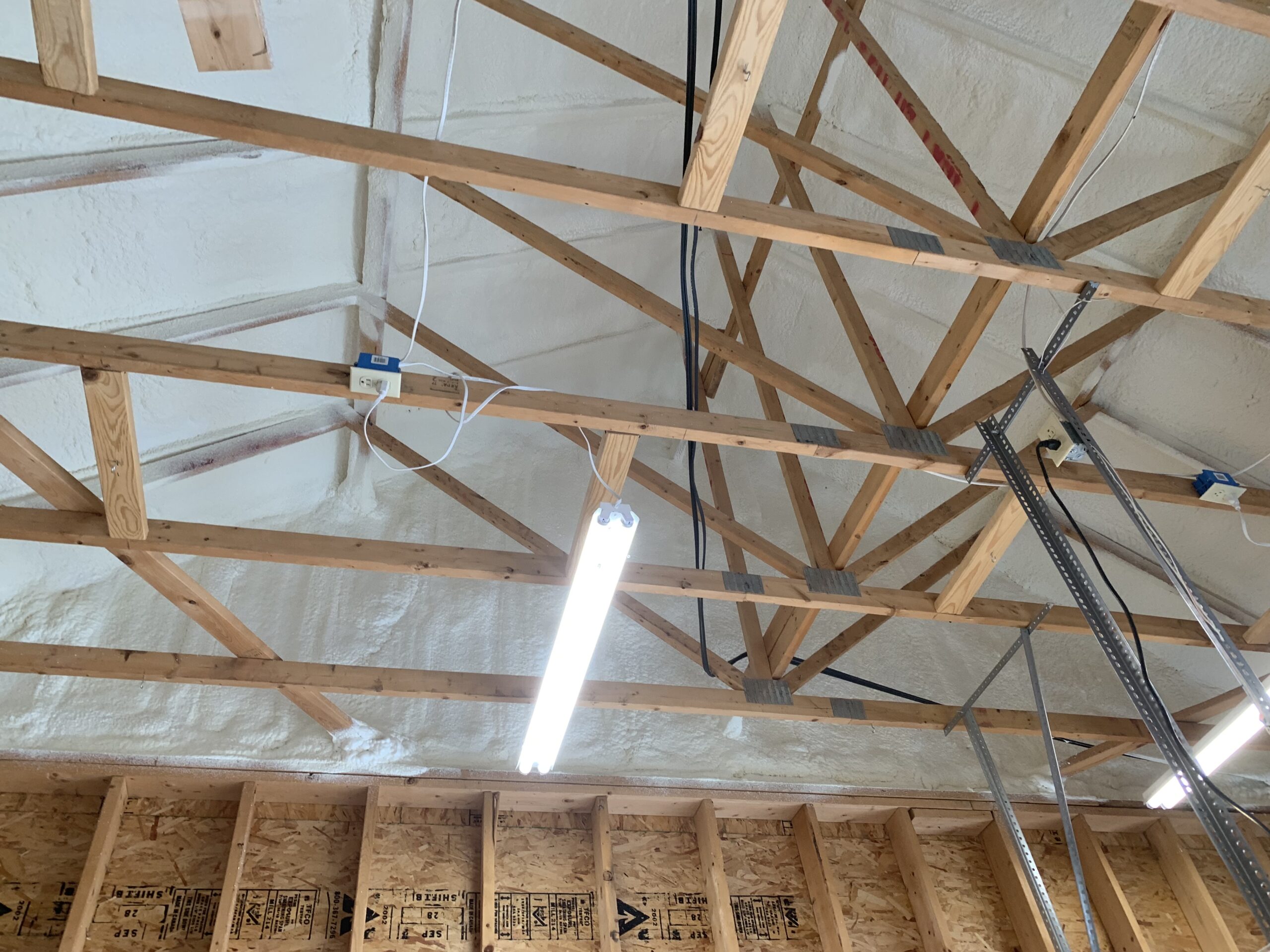
Are you tired of paying sky-high utility bills every month? We completely understand. Living in a barndominium is incredible, but keeping it comfortable during our freezing winters and hot summers can feel like a losing battle.
As insulation professionals at Precision Insulation & Coatings, right here in Iowa, we found that choosing to insulate a barndominium with spray foam completely changes the game. This simple upgrade can reduce those huge energy costs by up to 50 percent.
Grab a cup of coffee, and let us go through this together. We will show you everything you need to know to make your home comfortable.
Why Choose Spray Foam for Barndominium Insulation
The National Energy Assistance Directors Association projects that Midwest winter heating costs will average $938 this year. Spray foam insulation stands out as the superior choice to combat those bills because it seals your entire structure like a second skin. Traditional insulation materials leave gaps and air leaks that waste energy.
Spray foam expands to fill every cavity, crack, and void in your walls, ceilings, and roof. This complete air sealing prevents heated or cooled air from escaping. You achieve maximum efficiency with spray foam insulation because premium closed-cell products deliver an impressive R-value of 6 to 7.4 per inch.
Open-cell spray foam offers an R-value of 3.5 to 4 per inch and costs less. This makes it a solid option for interior applications where moisture control is less critical.
| Feature | Open-Cell Spray Foam | Closed-Cell Spray Foam |
| R-Value Per Inch | R-3.5 to R-4.0 | R-6.0 to R-7.4 |
| Average Cost Per Board Foot | $0.45 to $0.70 | $1.20 to $1.60 |
| Moisture Resistance | Low (Breathable) | High (Class II Vapor Retarder) |
Moisture control represents another critical advantage that makes spray foam insulation for Iowa homes a practical necessity. The foam resists moisture absorption and prevents condensation from forming inside your walls. The material also provides structural reinforcement. It adds rigidity to your wooden framing while improving durability against strong winds.
When you search for Insulation contractors near me, you will find that professionals prefer this method. We can rapidly apply foam to hard-to-reach areas, irregular spaces, and complex architectural features. This adaptability makes spray foam the perfect solution for transforming unconventional spaces into efficient homes that perform perfectly year-round.
Key Benefits of Spray Foam Insulation
Spray foam insulation transforms your barndominium into an energy fortress. It seals every single gap that lets conditioned air escape. You will experience superior thermal performance, moisture control, and structural support that older fiberglass batts simply cannot match.
High R-value for Energy Efficiency
R-value measures how well insulation resists heat flow. Higher numbers mean better energy performance for your barndominium. To meet the 2024 International Energy Conservation Code requirements for Climate Zone 5, which covers all of Iowa, your wood-framed walls need at least an R-20 rating.
Closed-cell spray foam delivers exceptional performance, with brands like Huntsman Heatlok HFO Pro achieving R-7.4 per inch. You can easily exceed state building codes with just three inches of material.
- Lower heating costs: Your furnace runs less frequently during brutal winters.
- Reduced cooling expenses: Your air conditioning unit does not have to fight against incoming summer heat.
- Space savings: You get maximum thermal resistance without needing extra-thick walls.
We measured real energy savings on dozens of barndominium projects across Iowa. One property owner in central Iowa reduced their annual heating costs by 40 percent after applying closed-cell spray foam insulation to their entire structure.
Moisture and Air Sealing Properties
Spray foam insulation tackles moisture problems that traditional materials completely fail to handle. Your barndominium sits exposed to wet springs and humid summers. Closed-cell spray foam creates an airtight seal that stops moisture dead in its tracks. At just 1.5 inches thick, it acts as a Class II vapor retarder, which means it blocks condensation from pooling inside your walls.
Air leakage drains your heating and cooling budget faster than a bucket with holes in it. Spray foam fills every crack and irregular space in your barndominium’s structure. Spray foam doesn’t just insulate; it seals your barndominium like a thermos, keeping the inside conditions exactly where you want them.
We see air leakage reductions of up to 95 percent in barndominiums after spray foam installation. This airtight envelope translates directly into real savings on your utility bills.
Structural Reinforcement
Closed-cell spray foam does far more than keep your living space warm. It actually strengthens your building’s framework by bonding tightly to the studs and exterior sheathing. Recent studies by the National Association of Home Builders show that closed-cell spray foam can increase the racking strength of a wood-framed wall by up to 300 percent.
The added structural rigidity helps your walls resist high winds and heavy snow loads. This stability means less cracking in your drywall and less long-term damage to the building envelope. You get a protective layer that delivers both thermal performance and physical durability when you insulate a barndominium with spray foam.
Preparing Your Barndominium for Insulation
Before any foam is sprayed, you must get your barndominium completely ready. If you are wondering how to insulate a barndominium with spray foam insulation properly, it starts with finding every crack and surface problem that could mess with your insulation’s performance.
Inspecting the Space for Gaps and Cracks
Your barndominium’s energy efficiency starts with a thorough inspection. Most energy loss happens through tiny openings you might completely miss on your first pass. Many professional crews use a Flir TG165-X thermal imaging camera to spot hidden cold drafts. You can also hire a professional to run a blower door test to identify exactly where air escapes.
- Grab a flashlight and examine all exterior walls from top to bottom, looking for visible cracks in the existing structure or previous insulation materials that have settled or deteriorated over time.
- Check around window frames and door openings carefully, since these areas commonly develop gaps where air leaks escape your conditioned space into the outdoors.
- Inspect the roof line where walls meet the ceiling, paying special attention to corners and angles where builders often leave small voids during construction.
- Look at penetrations for electrical outlets, switches, and junction boxes on exterior walls, as these openings create direct pathways for outdoor air to enter your living space.
- Examine foundation walls and the band board area where your structure sits on the foundation, since settling can create separation over the years.
- Scan for gaps around pipes, ductwork, and HVAC lines that pass through walls or the attic space, as contractors rarely seal these areas properly during initial installation.
- Test your hands along seams where different building materials meet, feeling for air movement that indicates gaps you cannot see with your eyes alone.
- Identify any water stains, discoloration, or visible mold growth on walls or ceilings, which signal moisture problems that spray foam will help prevent.
- Document all findings with photos and measurements, creating a detailed map of problem areas that your insulation contractor will address during the spray foam application process.
- Note any previous repair attempts or patched sections, since these areas often hide larger gaps underneath that need proper sealing before spray foam installation begins.
Cleaning and Prepping Surfaces
Once you identify those gaps, the next critical step involves getting your surfaces completely clean. Proper preparation makes the difference between insulation that performs beautifully and insulation that fails prematurely.
Wood moisture content is your biggest enemy here. You must use a professional tool, like the Delmhorst BD-2100 moisture meter, to verify that your wooden framing is below 18 percent moisture before spraying.
- Remove all loose debris, dust, and dirt from walls, ceilings, and roof areas using a shop vacuum or compressed air system to create a clean foundation for adhesion.
- Scrape away any peeling paint, old insulation remnants, or deteriorated materials with a putty knife or wire brush so the spray foam bonds directly to solid surfaces.
- Fill large holes or damaged sections with caulk or foam backer rod before spraying, preventing the spray foam from flowing into cavities where it cannot create an effective seal.
- Wipe down all surfaces with a damp cloth to remove final dust particles, then allow adequate drying time before contractors arrive for application.
- Seal any electrical outlets, light fixtures, and HVAC openings with painter’s tape or foam blocks to protect these components from overspray during the insulation process.
- Check that all wooden framing, metal studs, and structural components are dry and free from moisture, as wet surfaces compromise spray foam adhesion and performance.
- Cover floors, furniture, and any items you want protected with plastic sheeting or drop cloths, since spray foam application creates overspray that sticks permanently to unprotected surfaces.
- Inspect the temperature and humidity levels in your barndominium space; spray foam installation works best when temperatures stay between 50 and 85 degrees Fahrenheit with moderate humidity levels.
- Clear pathways and access points throughout the building so application crews can move equipment and hoses safely without obstacles or tripping hazards.
- Open windows and doors to establish proper ventilation before spraying begins, allowing fumes to escape and helping the foam cure correctly throughout your space.
Applying Spray Foam Insulation
Applying spray foam insulation requires precision and specialized equipment. Your building’s unique layout requires professional knowledge to ensure a perfect seal.
Closed-Cell Spray Foam for Walls and Roof
Closed-cell spray foam stands as your absolute best defense against our brutal temperature swings. This dense material, usually applied at 2.0 pounds per cubic foot, seals every crevice tightly. The upfront investment typically runs between $1.20 and $1.60 per board foot. That cost pays for itself quickly through massive reductions in heating and cooling bills.
- Closed-cell spray foam expands to fill wall cavities completely, leaving no gaps where cold air sneaks through during harsh winters or hot air escapes in summer months.
- Your roof receives superior protection because closed-cell foam adheres directly to the underside of sheathing, preventing warm air from rising and escaping through the peak.
- The material achieves an impressive R-value of 6.5 to 7.4 per inch, meaning you need less thickness than open-cell alternatives to reach your target insulation levels.
- Moisture cannot penetrate closed-cell foam, which matters tremendously in Iowa, where spring thaws and summer humidity create condensation problems in poorly insulated spaces.
- Installation crews spray the foam in layers, building up thickness gradually to ensure complete coverage around electrical wiring, plumbing, and structural beams.
- Hard-to-reach corners where walls meet the roof become fully insulated because the foam flows into spaces that traditional batts simply cannot reach.
- Structural support improves dramatically since closed-cell foam adds rigidity to your walls and roof system, actually strengthening the building envelope against wind and snow loads.
- The cured foam creates a vapor barrier on its own, eliminating the need for separate plastic sheeting that often tears or shifts over time.
- Your energy bills drop noticeably because this airtight seal prevents the constant air exchange that forces your HVAC system to work overtime.
- Professional contractors apply closed-cell foam at high densities, creating the optimal balance between performance and cost-effectiveness for barndominiums.
Insulating Hard-to-Reach Areas
Spray foam excels at reaching spaces that traditional insulation simply cannot access. Corners, cavities between walls, and tight spots under eaves present a huge challenge for standard rigid boards. Your contractor applies the material using advanced, heated proportioning machines like the Graco Reactor series. These machines direct the material through specialized nozzles into confined spaces with exact precision.
Closed-cell foam expands to roughly 30 to 40 times its liquid volume in seconds. It flows into these gaps perfectly, expanding to fill every void and creating a permanent airtight seal. Accessing difficult areas requires skilled spray technicians who understand exactly how the foam behaves. We protect surrounding surfaces with plastic sheeting before spraying, preventing overspray from damaging your finishes.
Additional Insulation Strategies for Maximum Efficiency
Combining spray foam with other insulation materials takes your building’s energy performance to the highest level. If you want to know how to get maximum efficiency with spray foam insulation, these winning combinations work exceptionally well in our local climate.
Combining Spray Foam with Rigid Board Insulation
Many builders use a hybrid approach commonly called the flash and board method. This gives you maximum protection against harsh winter weather without stretching your budget.
- Airtight foundation: Apply a one-to-two-inch flash layer of closed-cell spray foam first to seal all air leaks.
- Thermal addition: Install Extruded Polystyrene rigid boards over the foam to add an extra R-5 per inch of thermal resistance.
This two-layer approach stops cold air from sneaking through your barndominium. Your heating system operates effortlessly because heat stays trapped inside where it belongs.
Using Vapor Barriers and Reflective Insulation
Vapor barriers work like a powerful shield against moisture. They stop water vapor from creeping into your exterior walls during freezing weather. While closed-cell foam acts as its own vapor barrier, open-cell spray foam requires a separate layer to protect it from moisture damage. Getting this detail right prevents costly mold repairs down the road.
Reflective radiant barriers can block up to 97 percent of radiant heat transfer when installed correctly with a proper air gap. You can install foil-faced reflective barriers on top of your spray foam in attic spaces. You must maintain at least a half-inch air gap between the foil and the foam so the radiant barrier functions perfectly during hot summers.
Spray Foam Insulation for Iowa’s Climate
Our local weather swings wildly from freezing blizzards to scorching heat waves. Your barndominium demands an insulation strategy that fights back against both extremes.
Managing Temperature Extremes
Average January temperatures often drop to 14 degrees Fahrenheit in cities like Des Moines. Spray foam insulation handles these extreme drops effortlessly. Traditional wood framing has a very low thermal resistance of about R-1.25 per inch.
Spray foam wraps around these wooden studs to stop thermal bridging, preventing the cold from transferring inside. Your heating and cooling systems will not run constantly to compensate for drafts. The superior R-value maintains consistent interior temperatures regardless of the severe weather outside.
Preventing Condensation Issues
Condensation is your biggest enemy in a metal building or barn conversion. It happens when warm indoor air meets a cold metal roof or wall. Spray foam insulation stops condensation before it starts. The material keeps the interior surface temperature above the dew point, so moisture never has a chance to form into water droplets.
The American Society of Heating, Refrigerating, and Air-Conditioning Engineers recommends keeping indoor humidity between 30 and 50 percent during winter. Proper ventilation paired with spray foam ensures your building materials stay perfectly dry.
Hiring Professional Insulation Contractors in Iowa
Finding the perfect insulation contractors in Iowa requires more than picking the first name on a search engine. You need someone with proven experience, solid references, and proper state licensing. Your contractor’s experience with our local climate matters significantly.
Local professionals understand exactly how spray foam must perform during freezing winters and humid summers. Before you sign a contract, always request written estimates from at least three companies to compare pricing side by side. Make sure you verify these specific credentials:
- Industry certification: Check if they hold credentials from the Spray Polyurethane Foam Alliance.
- High-quality equipment: Ensure they use commercial-grade proportioners for accurate chemical mixing.
- Safety protocols: Ask about their ventilation plans and how long you must vacate the property.
- Comprehensive insurance: Confirm they carry active liability and workers’ compensation coverage.
Maintenance Tips for Long-Term Efficiency
Keeping your spray foam insulation in top shape requires a little attention, but the payoff in energy savings makes it worthwhile. Follow these steps to protect your investment.
- Inspect your attic and walls twice yearly, ideally in spring and fall, to catch any damage before it spreads. Look for cracks, settling, or areas where the foam may have separated from surfaces.
- Check all seams and joints where spray foam meets other materials, as these spots tend to develop gaps over time. Seal any visible cracks with caulk designed for foam insulation applications.
- Monitor your interior humidity levels throughout the year, keeping them between 30 and 50 percent to prevent moisture buildup. High humidity can compromise foam performance and create conditions for mold growth.
- Clear any debris, dust, or cobwebs from ventilation areas near your insulation. Blocked vents reduce airflow and force your HVAC system to work harder than necessary.
- Test your home’s air tightness annually by noticing drafts around windows, doors, and electrical outlets. Spray foam seals most gaps, but new ones can develop as your home settles.
- Examine roof penetrations like vents, chimneys, and flashing for gaps or deterioration. These areas are common entry points for air leaks and moisture.
- Keep your HVAC system maintained with regular filter changes and professional tune-ups each season. A well-functioning system works better with quality insulation.
- Document your insulation installation with photos and contractor reports for future reference. This record helps you track performance and prove the work quality if you sell your property.
- Schedule professional inspections every three to five years, especially after severe weather events. Contractors can identify problems you might miss and recommend repairs.
- Avoid storing items directly against insulated walls, as this can trap moisture and reduce effectiveness. Leave at least six inches of clearance around foam surfaces.
Conclusion
Your barndominium will transform into a comfortable, highly efficient haven once you insulate it with spray foam to seal every gap. We have watched homeowners cut their utility bills drastically by making this smart investment. Our brutal winters and humid summers demand serious solutions, and spray foam delivers exactly what your property needs.
Reach out to local professionals at Precision Insulation & Coatings who understand the Hawkeye State’s climate challenges. Let us handle the technical work while you enjoy the incredible results. Your wallet and your daily comfort level will thank you for taking action today.
FAQs
1. Why is spray foam a smart choice for insulating a barndominium in Iowa?
Spray foam seals every gap and crack in your barndominium, creating an airtight barrier that traditional insulation can’t match. Based on our Iowa projects, most clients see their heating and cooling costs drop by 30-40% after we spray their walls and roof.
2. How thick should spray foam insulation be for maximum energy efficiency?
For Iowa’s climate, we typically apply 3 inches of closed-cell spray foam on walls to reach R-20 and 6-7 inches on the roof for R-40 or higher. This thickness handles everything from sub-zero January nights to humid July afternoons.
3. Can I install spray foam myself, or do I need a professional?
Spray foam installation requires professional equipment and training because the two chemical components must mix at exact ratios to cure correctly. We’ve cleaned up many DIY attempts where improper mixing left gaps or created foam that never fully hardened.
4. Does using spray foam help with humidity control inside my barndominium?
Yes, closed-cell spray foam acts as both insulation and a vapor barrier, blocking humid outdoor air from getting inside. In Iowa’s sticky summers when humidity often hits 70-80%, that protection prevents condensation on cool surfaces and stops mold before it starts. You’ll see the difference right away on your walls and ceilings after a thunderstorm rolls through.